
Second only to water as the most widely consumed beverage on planet Earth, tea has sustained human civilizations across millennia. From ancient Chinese Tang dynasty imperial courts and Japanese Zen monastic ceremonies to the centuries-old herbal apothecary traditions of the Mediterranean, tea has bridged the gap between daily culinary pleasure and preventive botanical medicine.
In contemporary molecular pharmacology and nutritional biochemistry, tea is no longer viewed merely as flavored hot water. It is classified as an exceptionally rich infusion of bioavailable polyphenolic flavan-3-ols, catechins, theaflavins, and non-proteinogenic amino acids that exert measurable systemic effects across human cardiovascular, neurological, metabolic, and microbial pathways.
However, extracting maximal therapeutic longevity benefits from tea requires understanding the biological differences between leaf processing methods, steeping water temperatures, and the synergistic interplay between compounds like EGCG and L-theanine. Below is an exhaustive, evidence-based clinical guide to the eight validated health benefits of tea, the precision brewing matrix, and how to source pure, unadulterated loose-leaf tea safely.
Evidence-Based Clinical Summary
True tea (Camellia sinensis) delivers a dense matrix of bioactive catechins (EGCG), theaflavins, and the neuroprotective amino acid L-theanine. Rigorous clinical trials confirm that daily consumption improves endothelial nitric oxide production, activates mitochondrial autophagy via AMPK signaling, and fosters “calm alertness” through synergistic alpha-wave modulation with caffeine. To maximize polyphenol extraction and preserve thermolabile bioactives, brew using temperature-controlled water rather than boiling.
1. The Botanical Spectrum: One Plant, Infinite Chemistry
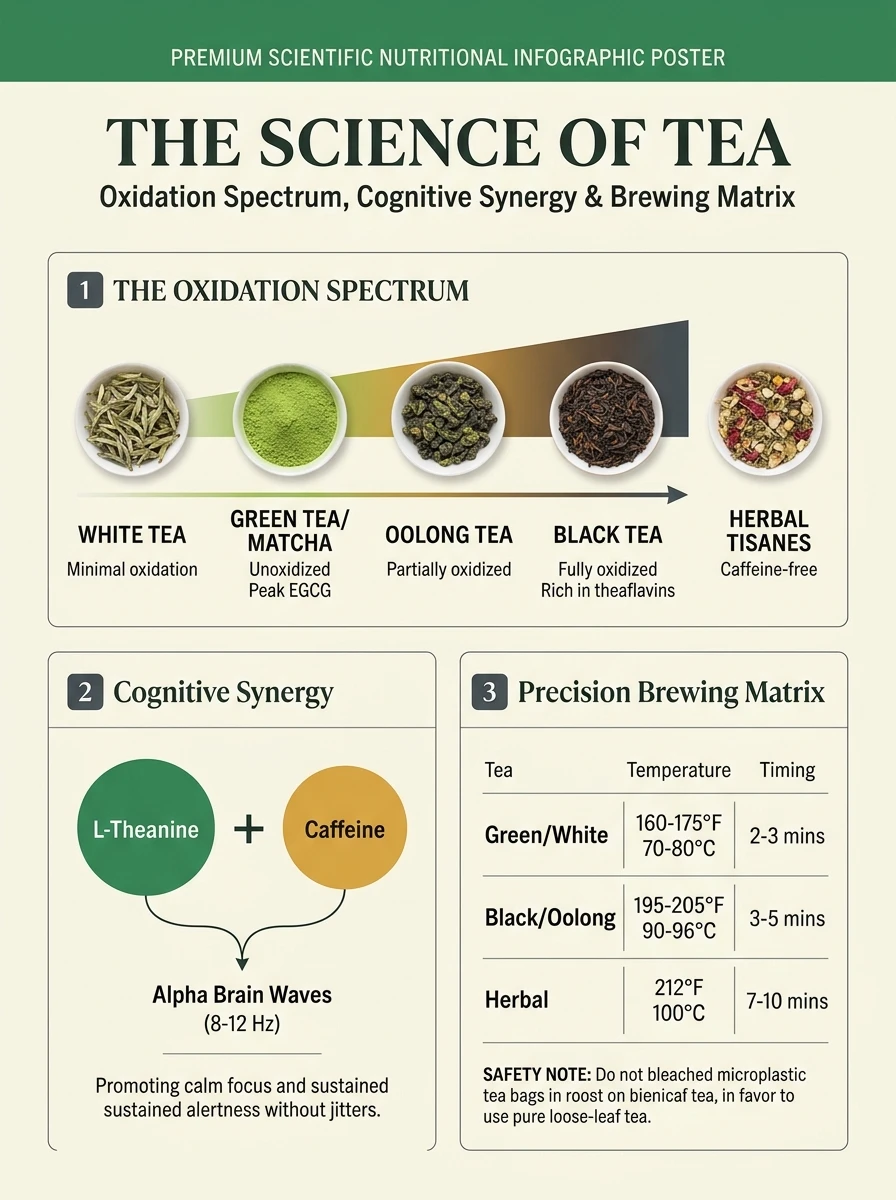
A common consumer misconception is that white, green, oolong, and black teas derive from different botanical species. In truth, all authentic teas originate from the exact same evergreen shrub: Camellia sinensis. The profound divergence in their flavor, color, and medicinal properties is governed strictly by the enzymatic action of polyphenol oxidase (PPO) during harvesting and curing:
2. The 8 Clinically Proven Health Benefits of Tea
1. Cellular Protection & Longevity via Epigallocatechin Gallate (EGCG)
Unoxidized green tea and shade-grown stone-ground Matcha are the richest dietary sources of Epigallocatechin Gallate (EGCG), a polyphenol exhibiting antioxidant potency estimated to be 25 to 100 times greater than vitamins C and E. In a comprehensive clinical review published in Life Sciences (PubMed PMID: 28864169), researchers demonstrated that daily green tea consumption reduces lipid peroxidation, improves glycemic biomarkers, and supports systemic cellular longevity. EGCG actively neutralizes reactive oxygen species (ROS), prevents oxidative cross-linking of cellular proteins, and downregulates nuclear factor-kappa B (NF-kB), the master genetic switch of chronic systemic inflammation.
At the mitochondrial level, EGCG activates AMP-activated protein kinase (AMPK), stimulating cellular autophagy—the body’s innate cellular recycling program that clears damaged mitochondria and misfolded proteins associated with accelerated aging.
From a pharmacokinetic perspective, the bioavailability of tea catechins depends heavily on digestive pH and co-ingestion factors. Research confirms that adding a squeeze of fresh lemon juice (ascorbic acid) significantly stabilizes green tea catechins in the acidic gastric environment, enhancing intestinal absorption by up to threefold. Conversely, consuming tea with iron-rich meals can form insoluble ferric-tannate complexes, blunting both non-heme iron and catechin bioavailability.
2. The “Calm Focus” Cognitive Synergy: L-Theanine & Caffeine
While coffee delivers an abrupt central nervous system spike frequently followed by jitteriness and tachycardia, tea produces a state neuroscientists describe as “relaxed alertness.” A double-blind human electroencephalographic (EEG) trial published in the Asia Pacific Journal of Clinical Nutrition (PubMed PMID: 18296328) confirmed that tea’s natural L-theanine rapidly crosses the blood-brain barrier, significantly increasing calming alpha brain-wave activity (8 to 12 Hz) while modulating caffeine’s peripheral adrenergic stimulation.
L-theanine binds to glutamatergic NMDA receptors, directly stimulating the generation of Alpha Brain Waves (8 to 12 Hz) in the parietal and occipital cortices. Alpha waves characterize states of deep mental absorption, meditation, and flow states. When combined naturally with tea’s modest caffeine dose, L-theanine antagonizes caffeine’s peripheral vasoconstriction, promoting smooth cerebral blood flow, sustained cognitive endurance, and enhanced working memory without nervous system agitation.
3. Cardiovascular Endothelial Function & Arterial Compliance
During the full oxidation of black tea leaves, catechins polymerize into complex polyphenols known as theaflavins and thearubigins. Clinical cardiology trials demonstrate that consuming 2 to 3 cups of black or green tea daily significantly improves Flow-Mediated Dilation (FMD)—the gold standard metric of arterial endothelial flexibility.
Tea polyphenols stimulate endothelial nitric oxide synthase (eNOS), ensuring blood vessels can relax and dilate efficiently. Concurrently, tea catechins inhibit the oxidative modification of low-density lipoprotein (LDL) particles, directly preventing the formation of oxidized foam cells that trigger atherosclerotic arterial plaque buildup. For complementary vascular nutrition, explore our guide on 10 super seeds for cardiovascular health and longevity.
4. Metabolic Regulation & Thermogenic Lipid Oxidation
In metabolic research, green tea extract and oolong tea have been shown to accelerate daily basal metabolic rate and fat oxidation. This occurs through a dual biochemical mechanism: tea catechins inhibit catechol-O-methyltransferase (COMT), an enzyme that degrades norepinephrine. Sustained synaptic norepinephrine levels upregulate hormone-sensitive lipase (HSL), signaling adipocytes to liberate stored triglycerides into the bloodstream for energy utilization during physical activity.
5. Gut Microbiome Remodeling & Prebiotic Activity
Approximately 85% to 90% of ingested tea polyphenols are not absorbed in the small intestine. Instead, they travel into the large intestine, where they function as selective botanical prebiotics. Specialized colonic bacteria convert tea polyphenols into bioavailable phenolic acids while utilizing the compounds as fuel.
Randomized human microbiome sequencing reveals that regular tea consumption selectively increases the abundance of beneficial, mucin-degrading Akkermansia muciniphila and Bifidobacterium species while suppressing opportunistic pathogens like Clostridium perfringens. To explore living fermented gut tonics, read our complete guide on how to make sparkling probiotic lemonade.
6. Oral Health & Cariogenic Biofilm Suppression
The Camellia sinensis plant naturally hyper-accumulates organic fluorine minerals from soil, concentrating bioavailable fluoride within its mature leaves. When combined with natural tea tannins and catechins, tea acts as a potent antimicrobial mouth rinse.
Clinical dental assays confirm that unflavored, unsweetened green and black tea strongly inhibits the glucosyltransferase enzyme produced by Streptococcus mutans, the primary bacterium responsible for dental caries and tartar formation. Rinsing with or sipping green tea reduces salivary acidity and eliminates volatile sulfur compounds that cause halitosis. For botanical oral hygiene protocols, see our clinical review on neem leaves and periodontal plaque defense.
7. HPA-Axis Stress Dampening & Cortisol Recovery
In a rigorous double-blind, placebo-controlled trial conducted at University College London, healthy male subjects underwent standardized acute psychological stress tests. Subjects who drank black tea daily for six weeks exhibited a 47% drop in salivary cortisol levels within 50 minutes of the stressor, compared to only a 27% reduction in the control group. Tea drinkers also reported significantly greater subjective relaxation, demonstrating tea’s capacity to buffer neuroendocrine recovery after stress.
8. Bone Mineral Density & Osteoblast Activation
Longitudinal epidemiological studies involving postmenopausal women consistently link long-term tea consumption with significantly higher bone mineral density (BMD) in the lumbar spine and femoral neck. In vitro bone biology confirms that tea flavan-3-ols and epigallocatechin stimulate osteoblastic alkaline phosphatase activity (promoting new bone mineral matrix deposition) while simultaneously suppressing osteoclastic bone resorption.
3. The Precision Brewing Matrix: Preserving Polyphenol Bioavailability
Pouring boiling water over delicate tea leaves is the most common home brewing mistake. Scalding temperatures oxidize and destroy fragile catechins, releasing harsh, overly astringent tannins that ruin both flavor and therapeutic potency. Follow this clinical brewing protocol:
- White & Green Tea (and Matcha): 160°F to 175°F (70°C to 80°C) for 2 to 3 minutes. Water should show gentle rising steam, never vigorous bubbling. This preserves heat-sensitive EGCG and delicate aromatic esters.
- Oolong Tea: 185°F to 195°F (85°C to 90°C) for 3 to 4 minutes. Unfurls tightly rolled leaves, extracting complex partially oxidized catechins.
- Black & Pu-erh Tea: 200°F to 205°F (93°C to 96°C) for 3 to 5 minutes. Fully dissolves robust theaflavins and thearubigins.
- Herbal Tisanes (Chamomile, Peppermint, Hibiscus): 212°F (100°C) for 7 to 10 minutes covered. High heat and extended steeping are required to draw heavy medicinal glycosides and essential oils from tough roots, flowers, and barks.
- The Iron Absorption Rule: Tea tannins bind to non-heme dietary iron (plant-based iron), reducing intestinal absorption by up to 60%. Individuals with clinical iron deficiency or anemia should drink tea at least one hour before or after meals, rather than directly alongside food.
4. Curated Tea & Brewing Equipment Buyer’s Guide
Recent chemical food-safety analyses have revealed that a single commercial plastic pyramid tea bag can release over 11 billion microplastics and 3 billion nanoplastics into a single cup of hot tea. Transitioning to pure, loose-leaf organic teas and borosilicate glass teapots guarantees pure, toxin-free botanical medicine:
Artisanal Loose Leaf & Brewing Essentials Showcase
100% Microplastic-FreeHiware 1000ml Borosilicate Glass Teapot with Removable Stainless Steel Infuser
Handcrafted heat-resistant borosilicate glass with ultra-fine food-grade stainless mesh. Allows whole leaf teas to expand fully for maximum polyphenol extraction with zero plastic contact.
Check Teapot on Amazon →Jade Leaf USDA Organic Ceremonial Grade Japanese Matcha (First Harvest)
Authentic shade-grown green tea leaves stone-ground in Uji and Kagoshima, Japan. Consuming the entire suspended leaf delivers 137 times more EGCG than standard bagged green tea.
View Matcha on Amazon →Vahdam Teas Imperial Darjeeling & Himalayan Green Loose Leaf Sampler
Direct-from-source single-estate whole loose leaves. Unblended, chemical-free teas rich in natural theaflavins, catechins, and complex aromatic floral notes.
Check Loose Leaf on Amazon →Herbal and botanical infusions also offer profound endocrine modulation during midlife transitions; see our complete reference on 13 menopause signs and helpful herbal remedies.
Related Clinical Botanical & Cognitive Guides
- Daily Tea & Cognition: Protection Against Cognitive Decline in Older Adults
- Clove Water Benefits: What Happens If You Drink It Daily? (Scientific Guide)
- Moringa Leaves Guide: Nutrient Density, Side Effects & Safe Usage
- Ashwagandha Warnings: Who Should NOT Take It? Critical Contraindications
- Optimize Blood Pressure Naturally: 10 Evidence-Based Circulatory Methods
Frequently Asked Questions (FAQ)
Does adding milk to black tea destroy its antioxidant benefits?
Yes, to a measurable degree. Dairy proteins (particularly casein) bind avidly to tea theaflavins and catechins, forming stable protein-polyphenol complexes that prevent them from being absorbed into human systemic circulation. To preserve maximal vascular benefits, enjoy black and green tea plain, or use a splash of unsweetened plant-based milk (such as almond or oat) which exhibits far less polyphenol binding.
How many cups of tea should you drink daily for therapeutic benefits?
Extensive clinical and cohort data establish that 3 to 5 cups (approx. 24 to 40 ounces) of green or black tea daily provides the optimal therapeutic range of roughly 300 to 500 mg of catechins and polyphenols. This intake level consistently correlates with the lowest risks of cardiovascular events and all-cause mortality without disrupting sleep.
Is decaffeinated tea as healthy as regular tea?
It depends on the decaffeination method. Chemical decaffeination utilizing ethyl acetate or methylene chloride solvents strips away up to 70% of beneficial catechins. However, naturally decaffeinated teas using the supercritical carbon dioxide (CO2) or pure water method preserve over 90% of active EGCG and theaflavins while removing 99% of the caffeine, making them ideal for evening consumption.
Final Medical Verdict: Ancestral Medicine in a Modern Cup
In a world saturated with synthetic energy drinks and hyper-processed beverages, the ancient simplicity of steeping whole tea leaves in hot water remains one of the most scientifically validated longevity practices available. By choosing microplastic-free whole loose leaf, honoring precise water temperatures to preserve EGCG, and enjoying the mindful ritual of tea daily, you provide your cardiovascular system and brain with profound botanical protection with every sip.