
Over the past two decades, few nutritional trends have commanded as much devoted enthusiasm, and equally ferocious scientific debate, as the alkaline diet. Endorsed by Hollywood celebrities, wellness gurus, and bestselling authors, the premise sounds remarkably seductive: by replacing “acid-forming” foods like meat, dairy, and grains with “alkaline-forming” fruits, vegetables, and seeds, you can purportedly alter your body’s pH, boost energy, shed stubborn fat, and immunize yourself against chronic degenerative disease.
Yet whenever mainstream nutrition scientists examine the alkaline diet, they are quick to point out a fundamental biological reality: you cannot change the pH of your blood through diet. As thoroughly detailed in our medical investigation into body pH and systemic acidosis, your respiratory and renal systems maintain arterial blood pH strictly between 7.35 and 7.45. Any food that truly altered your blood pH would induce a medical crisis, not wellness.
Does this mean the alkaline diet is complete nonsense? Remarkably, no. While the underlying physiological theory of “alkalizing your blood” is thoroughly debunked, dozens of clinical trials confirm that people who adopt an alkaline dietary pattern experience marked improvements in blood pressure, cardiovascular markers, kidney stone risk, and lean muscle preservation. The real magic has nothing to do with shifting blood pH, it stems from the extraordinary biochemical power of high-potassium, polyphenol-dense whole plant foods. Here is the objective, science-backed truth about the alkaline diet.
The Origins and Myths of the Alkaline Diet
The alkaline diet (historically termed the “alkaline-ash diet”) originated in the early twentieth century when biochemists discovered that burning foods in a laboratory crucible produced an ash that was either acidic or basic when dissolved in water:
- Acidic Ash: Foods high in sulfur-rich amino acids and phosphorus (meats, poultry, seafood, dairy, and grains) leave an acidic residue containing sulfates and phosphates.
- Alkaline Ash: Fruits, vegetables, and tubers leave an alkaline residue rich in mineral cations, primarily potassium, magnesium, and calcium.
Proponents made an intuitive, but medically flawed leap: they assumed that eating “acidic-ash” foods turned the body’s tissues acidic, while eating “alkaline-ash” foods turned them healthy and basic.
This premise collapses upon encountering human digestion. When food enters the stomach, it plunges into hydrochloric acid with a pH of 1.5 to 2.5 (an environment crucial for proper protein digestion, as explored in our guide to natural acid reflux remedies). By the time this digestive mixture enters the small intestine, the pancreas neutralizes it with bicarbonate secretions regardless of what you ate. Blood pH remains immutably defended at 7.4.
The Real Science: Potential Renal Acid Load (PRAL)
Where the alkaline diet genuinely impacts human health is in the kidneys and urinary tract. When dietary proteins break down, sulfur-containing amino acids (methionine and cysteine) yield sulfuric acid. This non-volatile acid cannot be exhaled by the lungs; it must be neutralized by chemical buffers and excreted by the kidneys.
Nutritional biochemists measure this metabolic demand through the Potential Renal Acid Load (PRAL) score:
- High Positive PRAL (Net Acid-Forming): Hard parmesan cheese (+28), processed salami (+12), steak (+10), and white flour crackers (+4) add acid burden that renal nephrons must eliminate.
- Negative PRAL (Net Base-Yielding): Spinach (-14), beet greens (-16), celery (-5), bananas (-5), and sweet potatoes (-6) supply organic potassium salts that spare renal buffers.
When you eat a diet rich in negative-PRAL plant foods, you are not alkalizing your cells; you are dramatically reducing the chronic metabolic workload placed upon your kidneys, preserving renal filtration function over a lifetime.
The Alkaline Diet Science & Food Spectrum
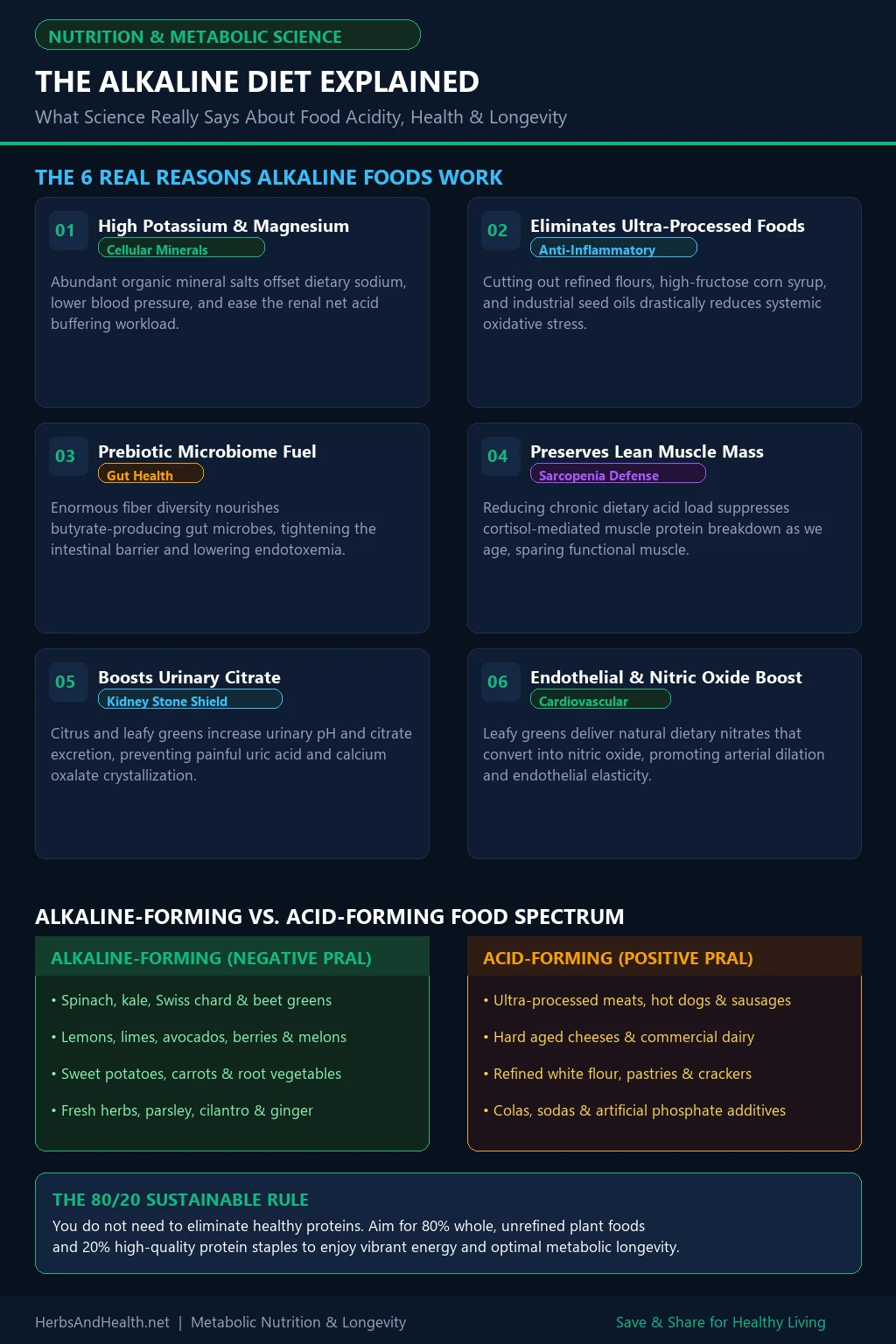
Save this visual alkaline roadmap to Pinterest or your phone to plan nutrient-dense, kidney-protective daily meals.
Top 6 Evidence-Based Benefits of an Alkaline-Pattern Diet
1. Cardiovascular Protection and Blood Pressure Regulation
The standard Western diet contains an inverted mineral ratio: modern humans consume roughly three times more sodium than potassium. An alkaline-focused dietary pattern completely flips this dangerous imbalance. Vegetables, dark leafy greens, and avocados deliver massive quantities of potassium and magnesium, which promote vascular smooth muscle relaxation, stimulate endothelial nitric oxide production, and blunt the hypertensive effects of excess sodium.
2. Preservation of Lean Skeletal Muscle in Aging
One of the most fascinating clinical discoveries regarding low-PRAL diets is their ability to protect lean muscle tissue. In landmark clinical studies published in The American Journal of Clinical Nutrition, researchers found that older adults consuming high-potassium, alkaline-forming plant diets retained significantly more lean muscle mass over a three-year period.
Why? Chronic metabolic acid load stimulates subclinical cortisol release and activates the ubiquitin-proteasome pathway, which catabolizes skeletal muscle proteins to generate glutamine for renal ammonia synthesis. Neutralizing dietary acid load with plant citrates acts as a natural anticatabolic shield, preventing age-related sarcopenia.
3. Prevention of Painful Kidney Stones
The kidneys respond to a high-acid diet by excreting acidic urine (pH 5.0–5.5) and lowering urinary citrate excretion. This creates the exact biochemical storm required for uric acid and calcium oxalate crystals to nucleate into agonizing kidney stones.
An alkaline-pattern diet, abundant in lemons, limes, melons, and leafy greens, increases urinary citrate, a natural inhibitor of stone crystallization, while raising urinary pH to a healthy 6.5–7.0 where uric acid dissolves effortlessly into liquid solution.
Clinical Micronutrient & Alkaline Support Staples
Vetted natural nutritional formulations supporting mineral adequacy, antioxidant density, and cellular vitality:
Amazing Grass Greens Blend Superfood
Organic wheat grass, barley grass, spirulina, and spinach powder delivering dense alkaline micronutrients, digestive enzymes, and prebiotic fiber.
Doctor’s Best High Absorption Magnesium
100% chelated magnesium glycinate and lysinate that supports enzymatic energy, vascular elasticity, and optimal musculoskeletal health.
Omega Masticating Slow Juicer
Low-speed 80 RPM masticating juicer that extracts living enzymes and dense minerals from celery, wheatgrass, kale, and citrus without heat degradation.
4. Radical Reduction in Chronic Systemic Inflammation
The true reason people feel revitalized when transitioning to an alkaline diet has little to do with acid-base chemistry and everything to do with eliminating dietary toxins. An alkaline protocol ruthlessly eliminates processed luncheon meats, deep-fried fast foods, refined sugars, artificial coloring, and trans fats.
Simultaneously, it floods the vascular endothelium with polyphenols (anthocyanins, quercetin, resveratrol) and carotenoids that down-regulate nuclear factor kappa B (NF-kB), the master genetic switch for inflammatory cytokine production. C-reactive protein (CRP) and erythrocyte sedimentation rate (ESR) fall steadily as whole plants take center stage.
5. Enhanced Gut Microbiome Diversity
A diet consisting of 70 to 80 percent plant foods delivers immense structural diversity of soluble and prebiotic fibers. Gut bacteria ferment these non-digestible polysaccharides into short-chain fatty acids (SCFAs), notably butyrate, propionate, and acetate. Butyrate serves as the primary metabolic fuel for colonic epithelial cells, tightening cellular tight junctions, preventing endotoxemia, and supporting smooth gastrointestinal motility (synergizing with the strategies found in our guide to natural constipation relief).
6. Sparing Skeletal Bone Minerals
While a typical diet does not cause overt osteoporosis in healthy individuals, extreme lifetime consumption of high-PRAL foods forces the skeletal system to donate modest buffering salts (calcium carbonate and phosphate) when renal buffering becomes saturated. By flooding your system with potassium and magnesium from fruits and vegetables, you spare bone reserves and provide the boron, vitamin K, and silica essential for dense trabecular bone architecture.
The 80/20 Rule: Building a Practical, Sustainable Plate
One of the most dangerous traps of extreme alkaline diet programs is total orthorexic fear of healthy protein. Strict alkaline dogmatists often demonize wild salmon, pastured eggs, lentils, and walnuts simply because they have a mildly positive PRAL score.
Eliminating high-quality protein leads to sarcopenia, neurotransmitter depletion, and immune dysfunction. Instead, adopt the sensible, sustainable 80/20 Rule:
- 80% Alkaline-Forming Base: Fill eighty percent of your daily plate with vibrant produce: leafy salad greens, roasted cruciferous vegetables (broccoli, Brussels sprouts), avocados, colorful bell peppers, berries, sweet potatoes, and fresh herbs. For nutritious morning options, explore our favorite high-protein healthy breakfast ideas.
- 20% Nutrient-Dense Protein Staples: Dedicate the remaining twenty percent to clean, high-quality proteins: wild-caught fatty fish, pasture-raised eggs, organic poultry, sprouted legumes, or hemp seeds. The abundant minerals from the vegetable base effortlessly neutralize the mild acid load of the protein.
Frequently Asked Questions About the Alkaline Diet
Does eating lemons really make your body alkaline?
Lemons have an acidic pH in the glass due to citric acid. However, when ingested, the human body metabolizes the citric acid anions via the Krebs citric acid cycle into carbon dioxide and water, leaving behind an abundance of potassium and magnesium cations. These mineral cations result in a net alkaline effect on the kidneys, raising urinary pH. Thus, lemons are chemically acidic outside the body, but functionally base-yielding during metabolic clearance.
Is testing saliva or urine with pH strips useful?
Saliva and urine pH strips do not measure your blood or cellular pH. Saliva pH is heavily influenced by oral bacteria, recent meals, and salivary enzymes. Urine pH simply measures what your kidneys are actively excreting. While urine test strips can provide helpful feedback on whether you are eating enough plant-derived potassium salts, a reading of pH 5.5 does not mean your body is “sick or rotting”, it merely means your kidneys did their job processing yesterday’s dietary proteins.
Can the alkaline diet cure cancer?
No. The claim that an alkaline diet cures or starves cancer is one of the most perilous myths in modern alternative medicine. While cancer cells thrive in an acidic extracellular microenvironment, this localized acidity is a byproduct of the tumor’s abnormal glycolysis (the Warburg effect), not the result of an “acidic body.” Changing your diet cannot alter the pH of the tumor microenvironment without disrupting blood homeostasis. Patients must never substitute alkaline regimens for oncological medical therapies.
Is alkaline ionized water worth the high price tag?
No. Commercially bottled or machine-ionized alkaline water with a pH of 9.0 or 9.5 is immediately neutralized by hydrochloric acid (pH 1.5–2.0) upon reaching the stomach. While drinking clean, mineral-rich spring water containing natural calcium and magnesium bicarbonates is wonderful for hydration, expensive electric water ionizers provide no clinical benefits beyond standard filtered water.
Can athletes follow an alkaline diet without losing performance?
Yes, provided they do not restrict protein and complex carbohydrates. In fact, competitive athletes often benefit substantially from high-potassium alkaline foods because buffering capacity helps mitigate exercise-induced metabolic acidosis, accelerates muscle glycogen resynthesis, and reduces post-workout muscle soreness through rich dietary antioxidants.
Peer-Reviewed Clinical References & Evidence
- Schwalfenberg, G. K. (2012). The alkaline diet: is there evidence that an alkaline pH diet benefits health? Journal of Environmental and Public Health, 2012, 727630.
- Dawson-Hughes, B., et al. (2008). Alkaline diets favor lean tissue mass in older adults. The American Journal of Clinical Nutrition, 87(3), 662-665.
- Frassetto, L., et al. (2001). Diet, evolution and aging: the pathophysiologic effects of the post-agricultural inversion of the potassium-to-sodium ratio. European Journal of Nutrition, 40(5), 200-213.
- Trinchieri, A., et al. (2013). Effect of potential renal acid load of foods on calcium oxalate stone formation. Urolithiasis, 41(4), 317-324.
- Fenton, T. R., & Huang, T. (2016). Systematic review of the association between dietary acid load, alkaline water and cancer. BMJ Open, 6(6), e010438.