
Step into almost any corner of the alternative wellness internet, and you will inevitably encounter dramatic claims about body pH. Influencers and supplement peddlers insist that modern processed diets turn our bodies into “acidic breeding grounds” for disease, fatigue, osteoporosis, and cancer. The promised antidote is equally pervasive: purchase expensive bottled alkaline water with a pH of 9.5, test your morning urine with color-changing dipsticks, and drink mysterious green concoctions to “alkalize your cells.”
Yet if you ask a nephrologist, an intensive care physician, or a biochemist about these claims, you will receive an entirely different explanation. True medical systemic acidosis, such as diabetic ketoacidosis or lactic acidosis, is an acute, life-threatening emergency that lands patients in the intensive care unit, not a mild condition you fix with bottled alkaline drops. Additionally, human blood pH is governed by an exquisitely precise biological network. While food cannot alter your blood pH, dietary choices exert a profound effect on the metabolic workload placed upon your kidneys and skeletal bones. Here is the unvarnished scientific truth regarding human body pH, systemic acidosis, and how to genuinely support your kidneys’ acid-buffering machinery.
The Physics of pH: What Does Acid-Base Balance Actually Mean?
To understand acid-base regulation, we must revisit basic chemical physics. The term pH (potential of hydrogen) is a logarithmic scale ranging from 0 to 14 that quantifies the concentration of free hydrogen ions (protons, or H+) in a liquid solution:
- A pH of 7.0 represents exact chemical neutrality, where hydrogen ions (H+) and hydroxyl ions (OH-) are in equal concentration.
- A pH below 7.0 is acidic, indicating a higher concentration of free protons. Because the scale is logarithmic, a solution with a pH of 5.0 is ten times more acidic than one with a pH of 6.0, and one hundred times more acidic than neutrality.
- A pH above 7.0 is alkaline (basic), indicating a scarcity of free protons.
Crucially, your body does not possess a single universal pH. Instead, different physiological compartments operate under drastically different pH parameters to perform their specialized tasks:
- Gastric Secretions: The stomach maintains an intensely acidic environment of pH 1.5 to 2.5, essential for sterilizing food, breaking down proteins, and activating pepsin (as explored in our clinical breakdown of natural acid reflux remedies and stomach acid).
- Arterial Blood: Human arterial blood is held in an ironclad window strictly between 7.35 and 7.45, slightly alkaline. If arterial blood drops below 7.35, clinical acidosis ensues; if it rises above 7.45, clinical alkalosis occurs. A blood pH deviation outside 6.8 to 7.8 is fatal within minutes.
- Urinary Output: Urine pH naturally ranges widely between 4.5 and 8.0, acting as a flexible waste filtration canal where the kidneys actively discharge surplus acidic or basic ions to preserve blood stability.
- Skin Surface: The skin’s protective acid mantle maintains a pH around 4.5 to 5.5, creating a hostile environment for pathogenic bacteria and fungi.
The Three Pillars of Acid-Base Homeostasis
Because cellular enzymatic reactions, protein folding, and neural signaling depend on an exact biochemical environment, your body possesses three powerful, interlocking lines of defense that continuously regulate blood pH:
1. Extracellular Chemical Buffers (Response Time: Seconds)
The moment metabolic processes generate acidic protons, chemical buffer pairs circulating in your plasma neutralize them almost instantaneously. The principal system is the carbonic acid-bicarbonate buffer system (H2CO3 / HCO3-). When excess hydrogen ions enter the bloodstream, they rapidly bind with circulating bicarbonate ions to form carbonic acid, preventing a plunge in blood pH. Intracellular phosphate buffers and hemoglobin also bind free protons to maintain electrical neutrality.
2. Respiratory Ventilation (Response Time: Minutes)
Chemical buffers neutralize protons, but they cannot eliminate them from the body. That is the job of your lungs. Carbonic acid is enzymatically converted into water and carbon dioxide gas (CO2) by carbonic anhydrase. Central chemoreceptors in your brainstem continuously monitor arterial CO2 and pH.
If metabolic acid rises, your brainstem stimulates your respiratory rate and tidal volume, you breathe faster and deeper to blow off carbon dioxide. Because CO2 acts as a volatile acid in solution, exhaling it rapidly shifts blood pH back into the safe 7.35–7.45 zone. Conversely, if blood becomes too alkaline, respiration slows down slightly to retain CO2.
3. Renal Acid Excretion (Response Time: Hours to Days)
While the lungs eliminate volatile carbon dioxide, the kidneys handle non-volatile, fixed metabolic acids (such as sulfuric acid from protein catabolism and phosphoric acid). The kidneys perform two miraculous tasks: they reabsorb virtually 100 percent of filtered bicarbonate back into circulation, and their nephrons actively pump hydrogen ions into the urine, bound to ammonia (forming ammonium, NH4+) or phosphate buffers. The kidneys are your essential long-term acid-base clearinghouse.
The Physiology of Body pH & Acid-Base Homeostasis
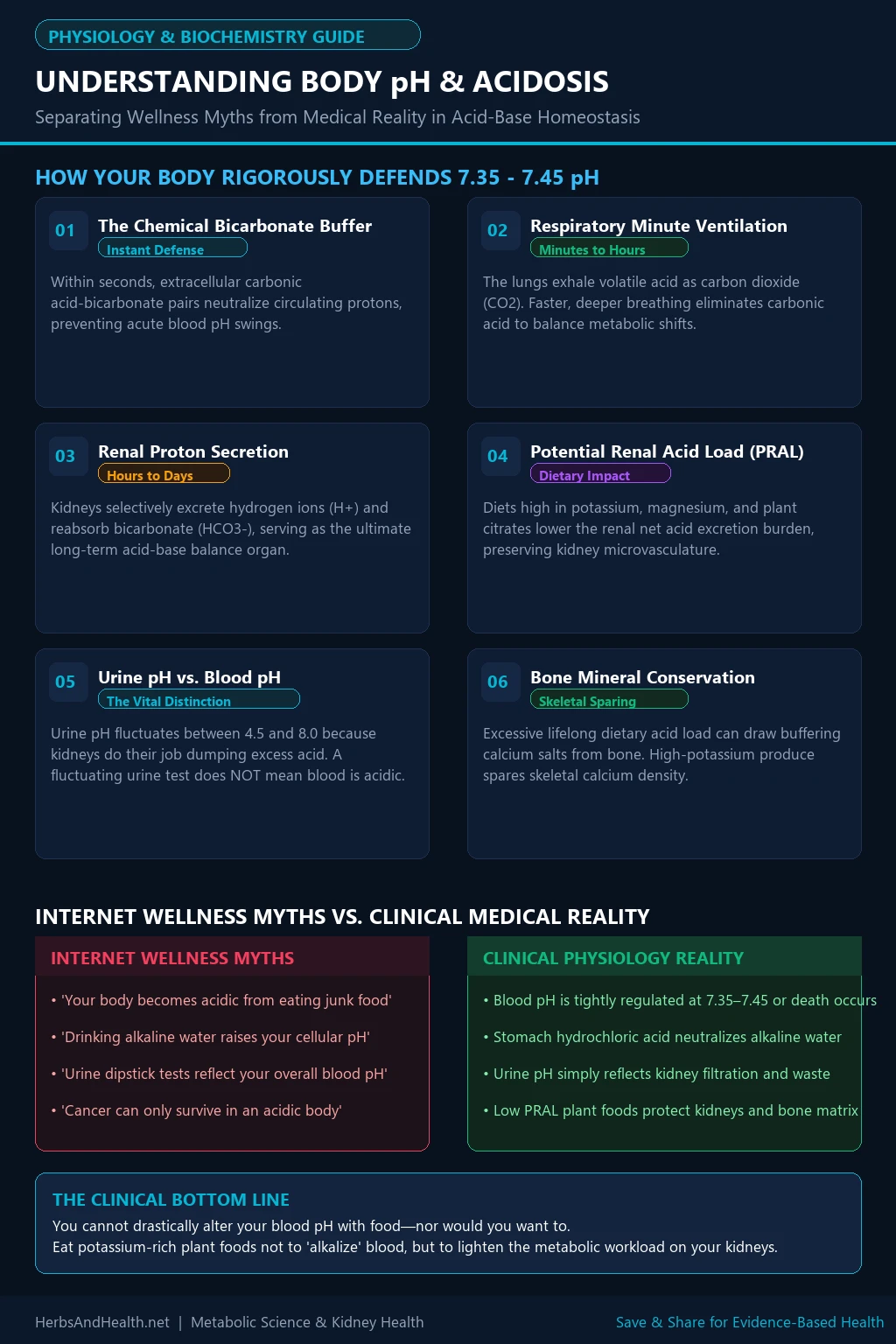
Save this visual physiology roadmap to Pinterest or your phone to navigate acid-base science with clinical clarity.
What Is True Systemic Acidosis in Clinical Medicine?
In clinical medicine, “systemic acidosis” is not a vague feeling of sluggishness or joint stiffness. It is a severe pathological state diagnosed via an arterial blood gas (ABG) test showing blood pH below 7.35 and serum bicarbonate below 22 mEq/L.
Clinical systemic acidosis falls into distinct medical categories:
- Diabetic Ketoacidosis (DKA): Occurs in type 1 diabetes when complete lack of insulin forces cells to burn fatty acids into massive quantities of acetoacetate and beta-hydroxybutyrate, overpowering the bicarbonate buffer.
- Lactic Acidosis: Occurs during severe tissue hypoxia, septic shock, or cardiogenic failure, where anaerobic glycolysis floods the circulation with lactic acid.
- Renal Tubular Acidosis (RTA) & Uremic Acidosis: In advanced chronic kidney disease (CKD), damaged nephrons lose their ability to excrete hydrogen ions and regenerate bicarbonate, leading to chronic metabolic acidosis.
- Respiratory Acidosis: Occurs when severe lung diseases like COPD or pulmonary edema prevent the exhalation of carbon dioxide, trapping carbonic acid in the bloodstream.
Notice what is absent from this list: eating a steak or drinking black coffee never causes clinical systemic acidosis in individuals with healthy lungs and kidneys.
Dietary Acid Load: Understanding the Potential Renal Acid Load (PRAL)
If food cannot alter your blood pH, does diet matter at all for acid-base physiology? Yes, tremendously. While food cannot shift blood pH, it dictates the Potential Renal Acid Load (PRAL), the quantity of non-volatile acid that your kidneys must neutralize and excrete each day.
Developed by nutritional researchers Remer and Manz, the PRAL calculation estimates how dietary components break down during cellular metabolism:
- Acid-Yielding Precursors (Positive PRAL): Foods rich in sulfur-containing amino acids (methionine, cysteine) and phosphorus, such as hard cheeses, processed meats, poultry, and refined cereal grains, metabolize into sulfuric and phosphoric acids.
- Base-Yielding Precursors (Negative PRAL): Vegetables, fruits, tubers, and herbs are packed with organic mineral salts (potassium citrate, magnesium malate, calcium bicarbonate). When your cells metabolize the citrate or malate anion into carbon dioxide and water, it leaves behind an alkaline potassium or magnesium bicarbonate equivalent that neutralizes acidity.
When an individual consumes a standard modern diet overwhelmingly composed of high-PRAL processed meats, sodas, and refined flours with almost zero vegetables, the kidneys are forced to work overtime for decades, constantly pumping high concentrations of hydrogen ions into the urine. Over time, a high dietary acid load accelerates renal microvascular glomerulosclerosis, increases uric acid stone formation, and draws modest amounts of calcium carbonate from the skeletal bone matrix to assist buffering.
Evidence-Based Renal & Electrolyte Support Staples
Vetted nutritional tools supporting mineral balance, urinary citrate, and healthy kidney buffering:
Nutricost Potassium Citrate Powder
Pure potassium citrate powder that metabolizes into natural bicarbonate, supporting optimal renal buffer balance and urinary citrate levels.
Sports Research Organic Tart Cherry
High-potency Montmorency tart cherry concentrate rich in anthocyanins that support normal uric acid clearance and renal microvascular defense.
HealthyWiser pH Test Strips (Dual Pad)
High-accuracy diagnostic grade dipsticks with 0.25 increment precision to track urinary pH excretion patterns and hydration adequacy.
Practical Protocols to Support Kidney Buffering Naturally
Rather than falling for commercial gimmicks like expensive alkaline water ionizers, you can optimize your body’s acid-base workload through evidence-based dietary strategies:
1. Maximize High-Potassium, Negative-PRAL Whole Foods
The single most effective way to lighten renal acid load is to consume ample amounts of potassium-rich plant foods: dark leafy greens (spinach, kale, Swiss chard), sweet potatoes, avocados, bananas, and root vegetables. Potassium is the primary intracellular cation; when consumed as organic citrate or malate salts, it delivers abundant buffering capacity without taxing renal filtration. For delicious morning ideas rich in micronutrients, review our guide to high-protein healthy breakfasts.
2. The Citrus Paradox: Lemons Alkalize the Urine
One of the clearest demonstrations of biochemistry over intuition is the lemon. While lemon juice contains citric acid and has an acidic pH of approximately 2.2 in a glass, once ingested, your liver and kidneys metabolize citric acid through the Krebs citric acid cycle into carbon dioxide and water. The remaining potassium and magnesium mineral cations yield an intensely alkaline urine, raising urinary pH, inhibiting calcium oxalate crystallization, and reducing the formation of painful kidney stones. Squeezing half a fresh lemon into morning water provides genuine renal support.
3. Moderate Animal Purines and Ultra-Processed Phosphates
You do not need to become a strict vegan to preserve kidney health, but balance is paramount. Diets dominated by heavy red meats and commercial fast foods flood the body with inorganic phosphate additives (used as meat emulsifiers and soda preservatives). Unlike naturally occurring organic plant phosphates, inorganic food-additive phosphates are 100 percent absorbed in the gut, forcing the kidneys to excrete heavy phosphoric acid loads that stress renal parenchyma.
4. Maintain Dilute Hydration and Deep Breathing
Your kidneys cannot efficiently excrete hydrogen ions without adequate fluid volume. Aim for pale, straw-colored urine throughout the day. Simultaneously, support your secondary buffering organ, your lungs, by practicing regular diaphragmatic breathing and cardiovascular exercise. Engaging your lungs efficiently clears volatile carbonic acid and optimizes autonomic oxygen delivery throughout your vascular tree.
Frequently Asked Questions About Body pH and Acidosis
Does drinking expensive alkaline water with pH 9.5 provide health benefits?
From a biochemical standpoint, alkaline water has virtually no effect on systemic blood pH. The moment alkaline water enters your stomach, it encounters hydrochloric acid at pH 1.5 to 2.0, which instantly neutralizes it. While some small studies suggest that naturally alkaline mineral water (rich in calcium and magnesium bicarbonates) may temporarily inactivate pepsin in the esophagus for acid reflux relief, claims that alkaline water “detoxifies cells” or changes blood chemistry are scientific myths.
Why does my morning urine pH change every day?
Urine pH fluctuations are proof that your kidneys are functioning normally. If you eat a steak dinner with rice, your kidneys excrete surplus sulfuric and phosphoric acids overnight, producing an acidic morning urine (pH 5.5). If you eat a massive salad and fruit bowl, your kidneys discharge surplus base equivalents, yielding an alkaline urine (pH 7.0–7.5). Your urine pH reflects what your body is discarding, not the internal state of your blood.
Can an acidic diet cause osteoporosis by leaching calcium from bones?
This “acid-ash hypothesis” of osteoporosis was popular for decades. While severe clinical metabolic acidosis does stimulate osteoclast activity and bone resorption, large meta-analyses published in the Journal of Bone and Mineral Research have shown that a typical dietary acid load in healthy individuals does not cause progressive bone mineral loss, provided dietary calcium, vitamin D, and protein intake are adequate. Nonetheless, potassium-rich fruits and vegetables support bone density by providing vital trace minerals.
Can cancer cells be killed by alkalizing the body?
This claim stems from the Warburg effect: cancer cells primarily generate energy through anaerobic glycolysis, producing lactic acid that creates an acidic microenvironment immediately surrounding the tumor. However, the tumor microenvironment is acidic because the tumor creates it, not because the patient’s entire body was “acidic” beforehand. You cannot alter the pH of the extracellular tumor microenvironment with dietary alkaline supplements without causing fatal systemic alkalosis.
What are the actual symptoms of mild, chronic metabolic acidosis?
Subclinical or mild chronic metabolic acidosis, seen in aging kidneys or early-stage chronic kidney disease, presents subtly with mild muscle wasting (due to protein catabolism), bone demineralization over decades, sluggishness, and increased kidney stone risk. It is diagnosed via routine serum chemistry panels showing low serum bicarbonate (CO2 below 22 mEq/L).
Peer-Reviewed Clinical References & Evidence
- Remer, T., & Manz, F. (1995). Potential renal acid load of foods and its influence on urine pH. Journal of the American Dietetic Association, 95(7), 791-797.
- Fenton, T. R., et al. (2011). Causal assessment of dietary acid load and bone disease: a systematic review & meta-analysis. Nutrition Journal, 10, 41.
- Goraya, N., et al. (2013). A comparison of treating metabolic acidosis in CKD stage 4 with fruits and vegetables or sodium bicarbonate. Clinical Journal of the American Society of Nephrology, 8(3), 371-381.
- Kraut, J. A., & Madias, N. E. (2010). Metabolic acidosis of CKD: an update. American Journal of Kidney Diseases, 56(6), 1181-1194.
- Adeva, M. M., & Souto, G. (2011). Diet-induced metabolic acidosis. Clinical Nutrition, 30(4), 416-421.