
Every forty seconds, someone in the United States experiences a stroke, and every three and a half minutes, someone loses their life to one. Often referred to by neurologists as a “brain attack,” a stroke is a sudden, life-threatening disruption of blood flow to the brain. Yet despite its prevalence as a leading cause of long-term adult disability worldwide, public understanding of stroke remains clouded by misconception. Many mistakenly believe strokes are unavoidable consequences of aging or that they always arrive with painful chest clutching like a heart attack. In reality, strokes are frequently painless in their early moments, and clinical research confirms that up to 80 percent of all strokes are entirely preventable.
Your brain represents merely two percent of your body weight, yet it consumes over twenty percent of your circulating oxygen and glucose. Because neurons cannot store energy reserves, even a brief interruption in cerebral blood flow triggers cellular hypoxia within seconds. Understanding the biological mechanisms behind a stroke, recognizing subtle early warning signs, and taking proactive lifestyle measures can mean the difference between complete functional recovery and permanent neurological impairment. Here is your evidence-based guide to stroke pathology, emergency recognition, and prevention.
What Exactly Is a Stroke? Demystifying the “Brain Attack”
To understand a stroke, imagine the arterial network in your head as a delicate, high-pressure municipal irrigation system. Countless microscopic vessels branch off carotid and vertebral arteries, delivering continuous streams of oxygenated blood to millions of neural circuits. When an artery supplying brain tissue becomes occluded or ruptures, downstream neurons are immediately starved of vital oxygen and metabolic substrates.
Within sixty seconds of complete ischemia, neurons lose electrical conductivity. Within several minutes, ATP production collapses, cellular ion pumps fail, and toxic cascades of calcium and glutamate flood extracellular space, triggering rapid apoptosis (cell death). Neurologists cite the phrase “Time is Brain” for a quantifiable reason: during an untreated acute ischemic stroke, an estimated 1.9 million neurons and 14 billion synapses are destroyed every single minute. Rapid medical intervention is paramount because modern therapies can halt this damage and restore perfusion before deficits become irreversible.
The Three Primary Types of Stroke: Mechanisms and Differences
Clinicians classify cerebrovascular events into three primary categories based on whether blood flow is blocked, an artery bursts, or circulation is transiently interrupted:
1. Ischemic Stroke (~87% of Cases)
An ischemic stroke occurs when a mechanical obstruction cuts off arterial blood flow to a localized region of the brain. These blockages develop through two distinct pathways:
- Thrombotic Stroke: A localized blood clot (thrombus) forms directly inside an intracranial or carotid artery narrowed by atherosclerotic plaque. Over years, endothelial inflammation, oxidized LDL cholesterol, and calcium build a fibrous lesion. When this unstable plaque fissures, circulating platelets adhere to the site, forming an occlusive clot.
- Embolic Stroke: A clot or piece of vascular debris forms elsewhere in the cardiovascular system, most commonly inside the heart’s left atrium due to atrial fibrillation, breaks free, travels through the bloodstream, and lodges tightly in a cerebral vessel.
2. Hemorrhagic Stroke (~13% of Cases)
A hemorrhagic stroke occurs when a weakened cerebral blood vessel ruptures, leaking blood directly into surrounding brain parenchyma or the subarachnoid space. Downstream neurons starve from lack of blood, while the accumulating pool of extravasated blood exerts intense intracranial pressure, compressing neural structures against the rigid skull. Hemorrhagic events are primarily driven by chronic uncontrolled hypertension and cerebral aneurysms that burst under hemodynamic stress.
3. Transient Ischemic Attack (TIA): The Critical Warning Shot
Often called a “mini-stroke,” a Transient Ischemic Attack occurs when a temporary blockage briefly halts cerebral blood flow without causing permanent tissue infarction. Symptoms, such as momentary facial numbness or speech hesitation, typically resolve within minutes as natural fibrinolytic mechanisms dissolve the clot. Never ignore a resolved TIA: up to 20 percent of individuals who experience a TIA suffer a major stroke within 90 days.
The B.E. F.A.S.T. Recognition Matrix & Prevention Guide
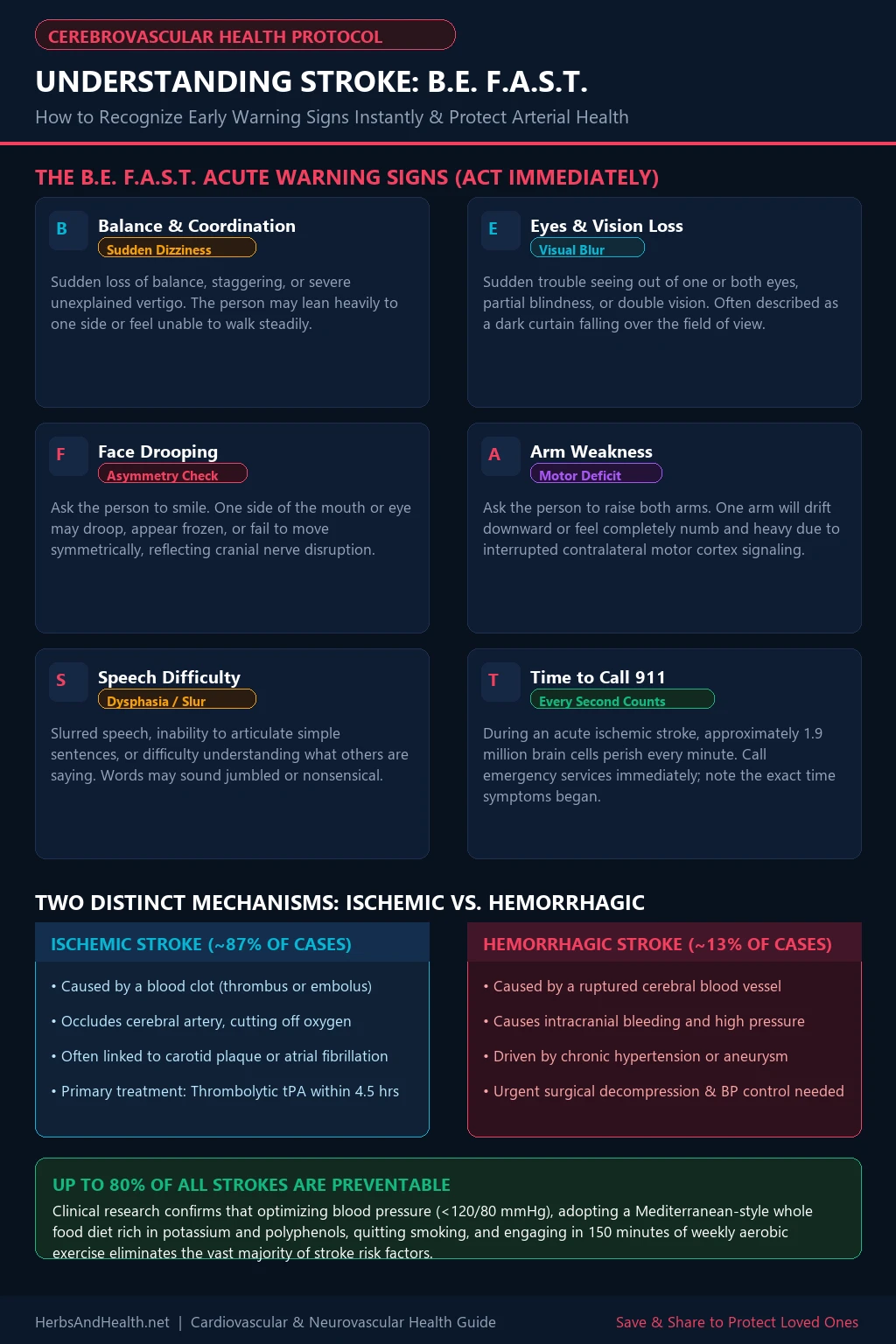
Save this visual emergency protocol to Pinterest or your phone to quickly identify acute neurological signs and protect loved ones.
The B.E. F.A.S.T. Emergency Recognition Protocol
Recognizing stroke symptoms the second they emerge is the single most critical factor determining clinical outcomes. Because acute therapies such as intravenous thrombolytic medications must be administered within a strict 3 to 4.5-hour therapeutic window, every minute counts. Memorize the internationally validated B.E. F.A.S.T. protocol:
- B, Balance: Sudden loss of balance, staggering, unsteadiness, or severe unexplained vertigo. The person may lean heavily to one side.
- E, Eyes: Sudden visual disturbance, including blurred vision, double vision, or blindness in one or both eyes, often described as a dark shade falling over their vision.
- F, Face Drooping: Ask the person to smile. Does one side of their mouth droop downward or appear noticeably frozen?
- A, Arm Weakness: Ask the person to raise both arms. Does one arm drift downward or feel completely numb and heavy?
- S, Speech Difficulty: Ask the person to repeat a simple sentence. Is their speech slurred, garbled, or difficult to comprehend?
- T, Time to Call 911: If you observe any of these symptoms, call emergency services immediately. Note the exact time symptoms began.
Crucial Safety Warning: Never give someone suspected of having a stroke an aspirin before emergency responders evaluate them. If the individual is suffering from a hemorrhagic stroke (bleeding in the skull), blood-thinning aspirin can cause fatal intracranial hemorrhage. Emergency hospital imaging must determine the stroke subtype first.
To learn how cardiovascular emergencies differ in symptom presentation, explore our clinical comparison on recognizing heart attacks versus cardiac arrest.
Major Root Causes and Modifiable Risk Factors
While age and genetics cannot be altered, the overwhelming majority of stroke risk stems from modifiable physiological drivers that respond powerfully to lifestyle interventions:
- High Blood Pressure (Hypertension): Hypertension is the number one risk factor for both ischemic and hemorrhagic strokes. Continuous shear stress against arterial walls damages endothelial cells, accelerates arterial stiffening, and creates weak points vulnerable to rupture or clot formation. Keeping resting blood pressure below 120/80 mmHg cuts stroke risk by half.
- Elevated Atherogenic Lipoproteins: Circulating apolipoprotein B (ApoB) and oxidized LDL particles penetrate arterial walls, instigating chronic inflammatory plaque inside carotid arteries. Review our guide on how to lower LDL cholesterol naturally for evidence-based lipid strategies.
- Atrial Fibrillation (AFib): This irregular heart rhythm causes blood to pool in the heart’s left atrium, forming clots that travel directly to the brain. Managing AFib with clinical anticoagulation prevents catastrophic embolic strokes.
- Insulin Resistance and Diabetes: Chronic hyperglycemia induces systemic microvascular damage and stiffens blood vessel walls. Pair whole-food nutrition with healthy weight management as outlined in our metabolic health and weight loss guide to preserve vascular sensitivity.
- Cigarette Smoking: Inhaling nicotine and combustion toxins spikes blood pressure, damages endothelium, thickens blood, and doubles clot risk. Quitting smoking cuts excess stroke risk by 50 percent within one year.
Cardiovascular & Arterial Support Essentials
Vetted clinical tools to support daily blood pressure tracking, vascular tone, and endothelial protection:
Omron Silver Upper Arm Blood Pressure Monitor
Clinically validated oscillometric blood pressure monitor with dual-display memory and irregular heartbeat detection. Tracking daily resting readings is your first defense against silent hypertension.
Nordic Naturals essential Omega-3 1280mg
Pharmaceutical-grade purified wild fish oil delivering concentrated EPA and DHA in natural triglyceride form. Clinically proven to reduce systemic vascular inflammation and support healthy arterial compliance.
Nature Made High Absorption Magnesium Glycinate
Gentle, highly bioavailable magnesium that naturally relaxes vascular smooth muscle cells, promotes endothelial nitric oxide production, and supports steady resting blood pressure.
Evidence-Based Prevention: 5 Daily Habits to Protect Your Brain
Stroke prevention centers on building daily habits that safeguard your vascular endothelium and maintain clear, pliable arterial pathways. Implementing these five habits dramatically reduces lifetime stroke risk:
1. Check and Record Blood Pressure Daily
Because hypertension develops silently without obvious headaches, millions live with dangerous arterial pressures unaware. Keep an upper-arm monitor at home and take readings seated quietly for five minutes every morning. If readings consistently exceed 130/80 mmHg, collaborate with your physician on dietary adjustments and antihypertensive therapies.
2. Adopt a Mediterranean Whole Food Pattern
The landmark PREDIMED trial published in the New England Journal of Medicine proved that a Mediterranean diet rich in extra virgin olive oil and tree nuts cuts stroke risk by 30 percent. Prioritize potassium-rich foods like dark leafy greens, avocado, wild salmon, berries, legumes, and garlic to balance sodium and relax arterial tension.
3. Accumulate 150 Minutes of Moderate Movement Weekly
Physical inactivity causes vascular endothelial dysfunction. Engaging in thirty minutes of brisk walking, swimming, or cycling five days per week stimulates laminar shear stress along blood vessels. This mechanical stimulus triggers endothelial nitric oxide release, relaxing blood vessels and lowering resting blood pressure naturally.
4. Screen for and Treat Obstructive Sleep Apnea
Loud snoring and nighttime gasping signal sleep apnea, which causes oxygen desaturations that spike adrenaline and blood pressure during sleep. Untreated sleep apnea triples the risk of stroke. Continuous positive airway pressure (CPAP) restores nighttime oxygenation and eliminates nocturnal vascular spikes.
5. Prioritize Restorative Sleep and Stress Reduction
Chronic psychological distress and sleep restriction keep your sympathetic nervous system in continuous fight-or-flight mode, driving vascular inflammation and platelet reactivity. Aim for 7 to 9 hours of quality sleep nightly to keep your vascular system resilient.
Frequently Asked Questions About Stroke
Can young, healthy adults have a stroke?
Yes. Roughly 10 to 15 percent of ischemic strokes occur in adults under 50. Common causes in younger populations include carotid artery dissections from neck trauma, patent foramen ovale (PFO, a congenital heart opening), clotting disorders, and illicit stimulants.
What is the difference between an aneurysm and a stroke?
An aneurysm is a weakened, ballooning pouch in an arterial wall that may exist silently for decades. It is not a stroke. However, if the aneurysm ruptures under pressure, blood floods the brain, causing an acute, life-threatening hemorrhagic stroke.
How quickly do brain cells die during an acute stroke?
During complete ischemia, approximately 1.9 million neurons and 14 billion synapses die every minute. Immediate medical care within 3 to 4.5 hours can salvage the surrounding penumbra and prevent permanent functional disability.
Does a severe sudden headache indicate a stroke?
A sudden, excruciating “thunderclap” headache reaching peak intensity within seconds is the classic hallmark of a subarachnoid hemorrhage from a ruptured aneurysm. It requires immediate emergency room evaluation with a CT scan.
Can lifestyle changes reduce future stroke risk after a TIA?
Yes. Controlling blood pressure below 120/80 mmHg, adopting a Mediterranean whole-food diet, daily aerobic walking, and managing cholesterol can stabilize vulnerable arterial plaques and reduce recurrent stroke risk by over 70 percent.
Peer-Reviewed Clinical References & Evidence
- Saver, J. L. (2006). Time is brain, quantified. Stroke, 37(1), 263-266.
- Estruch, R., et al. (2018). Primary prevention of cardiovascular disease with a Mediterranean diet supplemented with extra-virgin olive oil or nuts. New England Journal of Medicine, 378(25), e34.
- Whelton, P. K., et al. (2018). 2017 ACC/AHA Guideline for the Prevention, Detection, Evaluation, and Management of High Blood Pressure in Adults. Journal of the American College of Cardiology, 71(19), e127-e248.
- Benjamin, E. J., et al. (2019). Heart disease and stroke statistics, 2019 update: a report from the American Heart Association. Circulation, 139(10), e56-e528.
- Yaghi, S., & Elkind, M. S. (2014). Cryptogenic stroke: a diagnostic approach. Neurology: Clinical Practice, 4(4), 284-293.