There comes a morning in almost everyone’s life when the bathroom mirror reflects subtle changes that were never there before: faint crow’s feet radiating from the corners of the eyes, gentle smile lines settling around the mouth, and a gradual loss of that effortless morning bounce and luminosity. In modern society, the multi-billion-dollar cosmetic beauty industry immediately steps forward with aggressive messages: freeze your face with neurotoxin injections, plump your cheeks with synthetic dermal fillers, or endure aggressive chemical peels to wage war against your biological clock.
Yet aging is not a medical pathology to be eradicated with synthetic paralysis. True skin health and timeless radiance are outward reflections of internal cellular vitality, robust extracellular matrix integrity, and microvascular microcirculation. Your skin is your body’s largest living organ, constantly remodeling its architecture in response to nutrition, sleep quality, oxidative stress, and topical nourishment.
Modern cellular dermatology reveals that approximately eighty percent of visible facial aging is not strictly inevitable chronological decay, but photoaging, the cumulative breakdown of dermal collagen and elastin fibers caused by ultraviolet radiation, chronic systemic inflammation, and glycation. By understanding the biochemistry of dermal fibroblasts and supplying your body with clinically validated botanical and nutritional compounds, you can visibly soften fine lines, stimulate collagen synthesis, and restore a luminous, youthful glow naturally. Here is your evidence-based guide to aging gracefully.
The Biology of Skin Aging: Dermis, Collagen, and Elastin
To understand how natural remedies reverse and prevent wrinkles, we must journey beneath the surface epidermis into the dermis, the structural foundation of your skin. The dermis is composed of a dense three-dimensional meshwork of structural proteins and hydrophilic glycosaminoglycans:
- Collagen Fibers (Types I and III): Collagen constitutes seventy to eighty percent of the dry weight of your skin. Packed in dense bundles, it provides tensile strength, firmness, and structural scaffolding.
- Elastin: Comprising roughly four percent of the dermis, elastin fibers provide elastic recoil, allowing skin to stretch and snap back into place when you smile, squint, or laugh.
- Hyaluronic Acid Matrix: Filling the spaces between collagen and elastin fibers is an extracellular gel composed primarily of hyaluronic acid and proteoglycans, capable of binding up to one thousand times its weight in water to create deep dermal hydration and cushion.
- Dermal Fibroblasts: These are the master architectural cells responsible for continuously manufacturing new collagen, elastin, and hyaluronic acid.
The Two Pathways of Skin Aging
Dermatologists categorize skin aging into two distinct biological mechanisms:
1. Intrinsic (Chronological) Aging
Beginning in your mid-twenties, natural dermal fibroblast activity begins to decline at a rate of approximately one percent per year. Cellular turnover in the epidermis slows from a youthful twenty-eight days to forty-five or sixty days, leaving the skin surface looking duller and drier. Estrogen and androgen shifts further reduce natural skin sebum and ceramides, thinning the protective stratum corneum barrier.
2. Extrinsic Photoaging and Glycation
Extrinsic aging accounts for up to eighty percent of visible wrinkles, deep creases, hyperpigmentation (age spots), and skin sagging. When ultraviolet (UV) photons strike skin cells, they generate massive cascades of reactive oxygen species (ROS). These free radicals trigger a transcription factor called AP-1, which up-regulates matrix metalloproteinases (MMPs), specifically collagenase and elastase. These destructive enzymes literally cleave and chew apart healthy collagen bundles, creating structural collapse in the dermis that manifests as visible surface wrinkles.
Simultaneously, high consumption of refined sugars causes glycation, where surplus glucose molecules permanently cross-link with dermal collagen proteins, forming Advanced Glycation End-Products (AGEs). Glycated collagen becomes brittle, rigid, and incapable of self-repair, turning youthful skin leathery.
The Natural Anti-Aging & Collagen Restoration Protocol
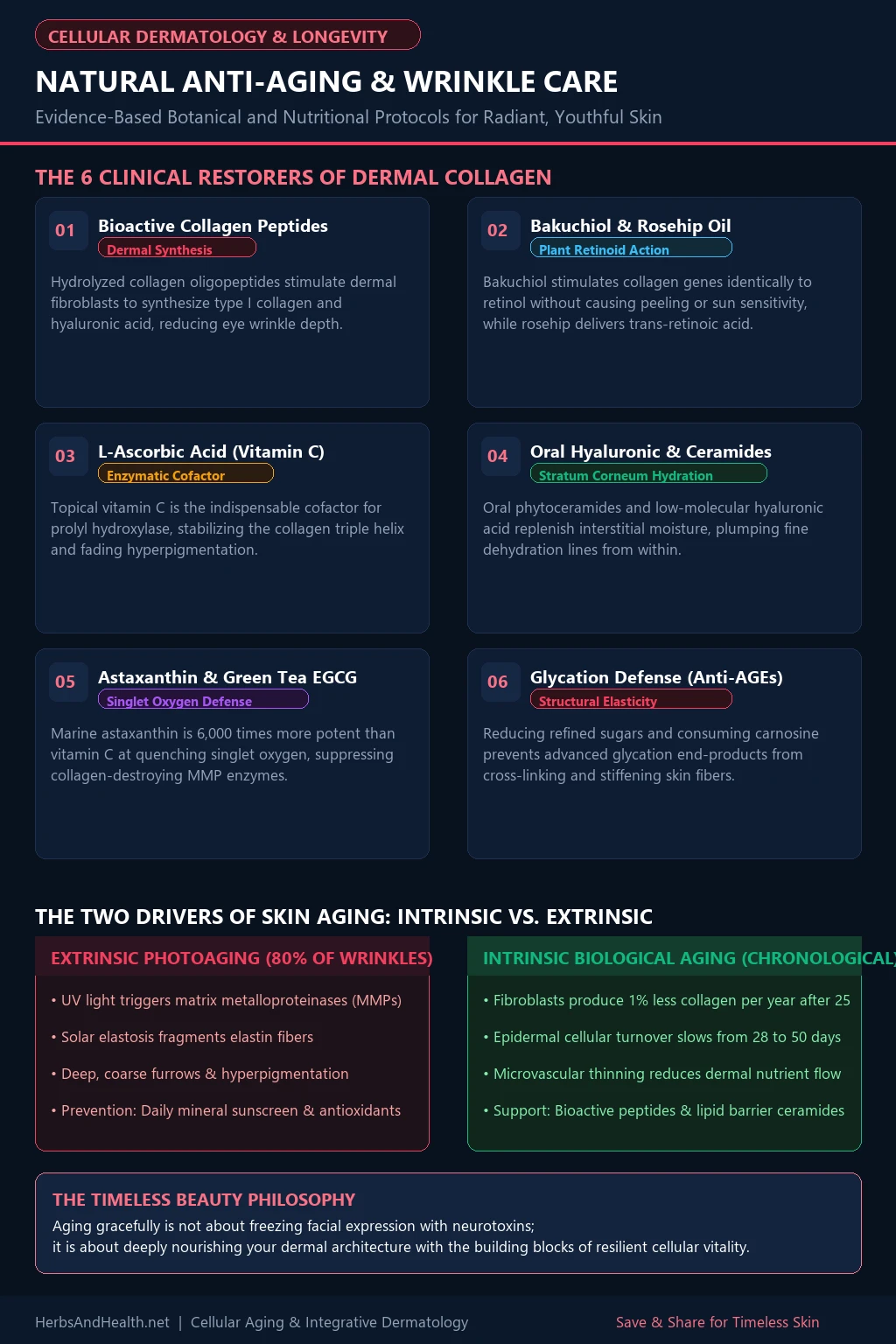
Save this visual dermatology roadmap to Pinterest or your phone to nourish your skin with timeless natural vitality.
Top 6 Evidence-Based Natural Remedies for Wrinkles & Glowing Skin
1. Bioactive Hydrolyzed Collagen Peptides: Stimulating Fibroblasts
For years, skeptics argued that dietary collagen was simply digested into generic amino acids like any other protein, offering no special benefit to skin. However, modern pharmacokinetics has shattered this misconception.
When collagen is enzymatically hydrolyzed into specific bioactive di- and tri-peptides (notably Proline-Hydroxyproline and Hydroxyproline-Glycine), these molecules survive gastric digestion intact and are absorbed into the bloodstream. Upon reaching the dermis, these specific peptide sequences bind to fibroblast surface receptors, tricking the fibroblasts into believing that extensive collagen degradation has occurred. In response, fibroblasts dramatically accelerate their endogenous production of new Type I collagen, elastin, and hyaluronic acid.
In multiple double-blind, placebo-controlled clinical trials published in Skin Pharmacology and Physiology, women consuming 2.5 to 5 grams of bioactive collagen peptides daily for eight weeks demonstrated a statistically significant 20% reduction in eye wrinkle depth alongside substantial increases in skin elasticity and dermal moisture content.
2. Bakuchiol & Rosehip Seed Oil: Nature’s Gentle Retinoid Alternates
While synthetic tretinoin and retinol are dermatology staples for wrinkle reduction, they frequently provoke intense peeling, redness, flaking, and heightened UV photosensitivity (the “retinol burn”).
Enter Bakuchiol, a meroterpene phenol extracted from the seeds of the Psoralea corylifolia plant (Babchi). In a head-to-head randomized double-blind clinical trial published in the British Journal of Dermatology, bakuchiol matched 0.5% retinol in wrinkle reduction and hyperpigmentation clearance, but with zero stinging, peeling, or irritation. Bakuchiol stimulates identical gene expression pathways as retinol, up-regulating Type I and IV collagen synthesis.
Pairing bakuchiol with cold-pressed organic rosehip seed oil (Rosa canina) provides a rich natural cocktail of trans-retinoic acid, linoleic acid, and lycopene, deeply nourishing lipid membranes without pore-clogging heaviness.
3. Vitamin C (L-Ascorbic Acid): The Mandatory Collagen Catalyst
You cannot synthesize a single molecule of collagen in your body without vitamin C. In the dermal fibroblast, vitamin C functions as an indispensable chemical cofactor for two crucial enzymes: prolyl hydroxylase and lysyl hydroxylase. These enzymes hydroxylate proline and lysine residues, a biochemical step required to stabilize the three-dimensional triple-helix structure of the collagen fiber. Without adequate vitamin C, newly formed collagen fibers are structurally unstable and collapse.
Additionally, topical 10–15% L-ascorbic acid neutralizes solar free radicals, suppresses tyrosinase to lighten melanin hyperpigmentation (age spots), and regenerates oxidized vitamin E in the stratum corneum. Pair topical serums with dietary citrus, kiwifruit, and bell peppers (which also support gentle digestion, as highlighted in our guide to natural remedies for constipation relief).
Clinical Anti-Aging & Dermal Collagen Staples
Vetted nutritional and botanical formulations supporting dermal density, moisture retention, and youthful glow:
Vital Proteins Collagen Peptides Powder
Pasture-raised bovine hydrolyzed collagen enriched with vitamin C and hyaluronic acid to stimulate fibroblast activity and reduce periorbital wrinkle depth.
TruSkin Vitamin C Facial Serum
Synergistic blend of sodium ascorbyl phosphate, botanical hyaluronic acid, vitamin E, and witch hazel that neutralizes free radicals and fades dark spots.
Cliganic Organic Cold-Pressed Rosehip Oil
100% pure unrefined organic rosehip seed oil rich in natural provitamin A carotenoids and essential fatty acids that nourish mature, dry skin overnight.
4. Oral Hyaluronic Acid & Phytoceramides: Plumping from Within
Topical hyaluronic acid feels wonderfully soothing on the skin surface, but because of its high molecular weight, most topical formulations cannot penetrate deeply past the stratum corneum into the lower dermis.
In contrast, clinical studies demonstrate that consuming oral low-molecular-weight hyaluronic acid (120 to 240 mg daily) leads to significant improvements in whole-body skin moisture content and visual wrinkle reduction. Once absorbed, hyaluronic acid fragments stimulate synovial and dermal receptors, increasing water retention throughout the extracellular matrix.
Pairing oral hyaluronic acid with phytoceramides (plant-derived lipids extracted from wheat or rice) reinforces the intercellular lipid “mortar” of the epidermis, preventing trans-epidermal water loss (TEWL) and giving skin a supple, cushioned bounce.
5. Astaxanthin: Nature’s King of Carotenoids
Derived from the red microalgae Haematococcus pluvialis, astaxanthin is widely regarded as one of the most powerful natural antioxidants in existence. Its unique molecular structure allows it to span the entire lipid bilayer of cellular membranes, protecting both the interior and exterior of skin cells against oxidative stress.
Astaxanthin is approximately 6,000 times more potent than vitamin C and 550 times more potent than green tea catechins at quenching singlet oxygen. Clinical trials demonstrate that taking 4 to 6 mg of oral astaxanthin daily significantly reduces skin roughness, diminishes age spots, and protects against photo-induced collagen fragmentation caused by ambient solar radiation.
6. The Glymphatic Sleep Window and Facial Lymphatic Drainage
The concept of “beauty sleep” is grounded in rigorous chronobiology. Your body undergoes the vast majority of its cellular repair, DNA proofreading, and collagen remodeling between 10:00 PM and 2:00 AM, driven by nocturnal human growth hormone (HGH) secretion.
Additionally, practicing two minutes of gentle facial lymphatic drainage massage (using light upward and outward strokes with a gua sha stone or fingertips lubricated with rosehip oil) stimulates stagnant lymph fluid, drains periorbital morning puffiness, and oxygenates facial capillary beds.
Lifestyle Blueprint: Daily Habits for Age-Defying Skin
- Daily Broad-Spectrum Mineral SPF: Ultraviolet A (UVA) rays penetrate clouds and glass all year round, degrading collagen even while driving or sitting indoors near a window. Applying a broad-spectrum non-nano zinc oxide sunscreen daily is the primary anti-wrinkle investment.
- Minimizing High-Glycemic Sugars: Protect your collagen from the cross-linking brittleness of Advanced Glycation End-Products (AGEs) by trading sugary sweets for antioxidant-rich berries, dark chocolate, and whole plant foods detailed in our alkaline nutritional longevity guide.
- Deep Systemic Hydration: Dehydrated skin cells shrivel, exaggerating superficial expression lines. Drink 2.5 liters of clean water daily, supplemented with mineral electrolytes to ensure intracellular fluid retention.
Frequently Asked Questions About Natural Wrinkle Solutions
Can facial exercises or “face yoga” actually reduce wrinkles?
Yes, when done properly. A clinical study conducted by Northwestern University dermatologists found that a 20-week facial exercise program significantly enlarged facial muscle volume, producing fuller upper and lower cheeks and an average perceived age reduction of nearly three years. However, avoid repetitive scowling or exaggerated forehead crinkling, which can deepen mechanical expression furrows.
Is it true that sleeping on your stomach or side causes permanent wrinkles?
Yes. Dermatologists refer to these as “sleep compression wrinkles.” When you press your face firmly into a pillow for eight hours every night, the mechanical shear force buckles and distorts dermal collagen, eventually forming vertical lines across the cheeks and forehead that do not originate from facial expressions. Sleeping on your back or utilizing a pure mulberry silk pillowcase minimizes friction and compression.
Can drinking bone broth replace collagen peptide supplements?
Traditional bone broth is deeply nourishing and provides collagen, gelatin, glycine, and glutamine. However, the exact concentration of bioactive di-peptides (proline-hydroxyproline) in homemade broth varies dramatically depending on simmering time and animal bones used. Standardized hydrolyzed collagen peptides ensure a consistent, clinically proven therapeutic dosage to stimulate dermal fibroblasts.
At what age should someone begin an anti-aging skincare routine?
Prevention is vastly easier than structural repair. Because natural collagen synthesis begins declining around age 25, your mid-twenties are the ideal time to incorporate daily mineral sunscreen, topical vitamin C, and gentle antioxidant oils. Bioactive collagen peptides, oral ceramides, and bakuchiol can be introduced in your late twenties and thirties to maintain optimal dermal matrix density.
Can facial oils clog pores and cause acne in mature skin?
Only if you select heavy, highly comedogenic oils. Lightweight, cold-pressed plant oils, such as rosehip seed oil, jojoba wax ester, squalane, and argan oil, possess low comedogenic ratings, absorb rapidly, and mimic natural sebum without suffocating follicular pores.
Peer-Reviewed Clinical References & Evidence
- Proksch, E., et al. (2014). Oral intake of specific bioactive collagen peptides reduces skin wrinkles and increases dermal matrix synthesis. Skin Pharmacology and Physiology, 27(3), 113-119.
- Dhaliwal, S., et al. (2019). Prospective, randomized, double-blind assessment of topical bakuchiol and retinol for facial photoageing. British Journal of Dermatology, 180(2), 289-296.
- Pullar, J. M., et al. (2017). The roles of vitamin C in skin health. Nutrients, 9(8), 866.
- Tominaga, K., et al. (2012). Cosmetic benefits of astaxanthin on human subjects. Acta Biochimica Polonica, 59(1), 43-47.
- Alam, M., et al. (2018). Association of facial exercise with the appearance of aging. JAMA Dermatology, 154(3), 365-367.