Few physical sensations are as immediately debilitating or universally dreaded as the fiery upward surge of acid reflux. You finish what seemed like an innocent dinner, settle onto the sofa to relax, and within thirty minutes, a searing burning sensation crawls up your sternum, accompanied by a sour, acidic wash in the back of your throat. For more than twenty percent of adults in the Western world, this isn’t an occasional nuisance, it is a recurring chronic condition known as gastroesophageal reflux disease (GERD) that erodes sleep quality, limits dietary freedom, and prompts endless reliance on over-the-counter antacids and acid-blocking medications.
Yet modern gastroenterology reveals a profound paradox that surprises most heartburn sufferers: acid reflux is rarely caused by your stomach producing too much hydrochloric acid. In the vast majority of cases, heartburn occurs because the muscular valve separating your esophagus from your stomach, the lower esophageal sphincter (LES), relaxes inappropriately, allowing normal gastric secretions to splash backward into the unprotected esophagus. Here is your evidence-based, compassionate medical guide to understanding the root causes of acid reflux and deploying natural, clinically proven remedies that soothe esophageal tissue and restore healthy digestive balance.
The Anatomy of Heartburn: How the Lower Esophageal Sphincter Fails
To understand why acid reflux occurs, we must examine the upper digestive tract. Your stomach is an acidic chamber lined with specialized mucus designed to withstand gastric juice at a pH of 1.5 to 2.5, vital for breaking down dietary proteins and sterilizing food against harmful microbes.
Your esophagus lacks this protective armor. Preventing acidic contents from escaping upward into delicate esophageal tissue is the duty of the lower esophageal sphincter (LES), a high-pressure muscular valve at the gastroesophageal junction.
Under normal conditions, the LES opens only to pass food. Heartburn occurs when transient relaxations or increased stomach pressure force the sphincter open, letting acid and digestive enzymes splash into the esophagus, producing inflammation and burning pain.
The Low Stomach Acid Paradox (Hypochlorhydria)
The most pervasive misconception in digestive health is the assumption that heartburn equates to excess acid production. In reality, multiple gastroenterology studies demonstrate that as humans age past forty, natural gastric acid secretion actually declines, a condition known as hypochlorhydria.
How does low stomach acid trigger acid reflux? Through a cascade of physiological dominoes:
- Loss of Sphincter Closure Signal: The tone of the lower esophageal sphincter is partly regulated by gastric pH sensors. When the stomach generates robust, concentrated hydrochloric acid (pH 1.5–2.0), the high acidity acts as a hormonal and neurological cue signaling the LES to tighten its clamp. When stomach acid is weak and dilute, the LES remains lax and prone to leakage.
- Delayed Gastric Emptying: Low acidity fails to properly activate pepsin, causing dietary proteins to sit in the stomach for prolonged periods. Delayed emptying distends the stomach walls, increasing upward pressure against the esophageal junction.
- Microbial Fermentation and Gas Pressure: Insufficient gastric acid allows swallowed carbohydrates to linger undigested, where opportunistic bacteria ferment them into carbon dioxide, hydrogen, and methane gases. This gas expansion increases intra-abdominal pressure, forcing the sluggish LES valve open and pushing acid aerosol up into the chest.
Top 6 Evidence-Based Natural Remedies for Acid Reflux
Rather than shutting down your body’s essential digestive chemistry, natural medicine focuses on three therapeutic objectives: protecting esophageal mucosa, forming physical barriers against regurgitation, and supporting healthy gastrointestinal motility.
1. Deglycyrrhizinated Licorice (DGL): The Esophageal Shield
Licorice root (Glycyrrhiza glabra) has been celebrated for millennia across Ayurvedic, Traditional Chinese, and European herbal medicine as an unparalleled mucosal tonic.
Deglycyrrhizinated Licorice (DGL) undergoes a specialized processing extraction that removes glycyrrhizin while concentrating its potent bioflavonoids. When chewed twenty minutes before meals, DGL stimulates your salivary glands and esophageal goblet cells to produce a rich coating of protective mucin. This mucin layer acts as a physical biological buffer, shielding esophageal tissue against acid and pepsin erosion while accelerating cellular repair of micro-ulcerations. Chew one to two 400 mg chewable DGL tablets before lunch and dinner for fast, soothing mucosal protection.
2. Sodium Alginate Raft Formation: Nature’s Mechanical Barrier
One of the most scientifically validated non-pharmaceutical interventions for GERD and laryngopharyngeal reflux (silent reflux) is sodium alginate, a natural polysaccharide extracted from brown kelp and seaweeds.
When sodium alginate comes into contact with gastric hydrochloric acid, it precipitates into a light, buoyant, viscous alginic acid gel. Simultaneously, potassium bicarbonate within the formulation releases small bubbles of carbon dioxide, which get trapped inside the gel matrix. This creates a lightweight, neutral “raft” that floats directly on top of the liquid gastric contents at the opening of the esophagus. Whenever stomach contractions push upward, the neutral alginate raft is pushed against the LES rather than caustic acid, providing instant, mechanical reflux prevention without altering systemic pH.
The Natural Acid Reflux Relief Protocol
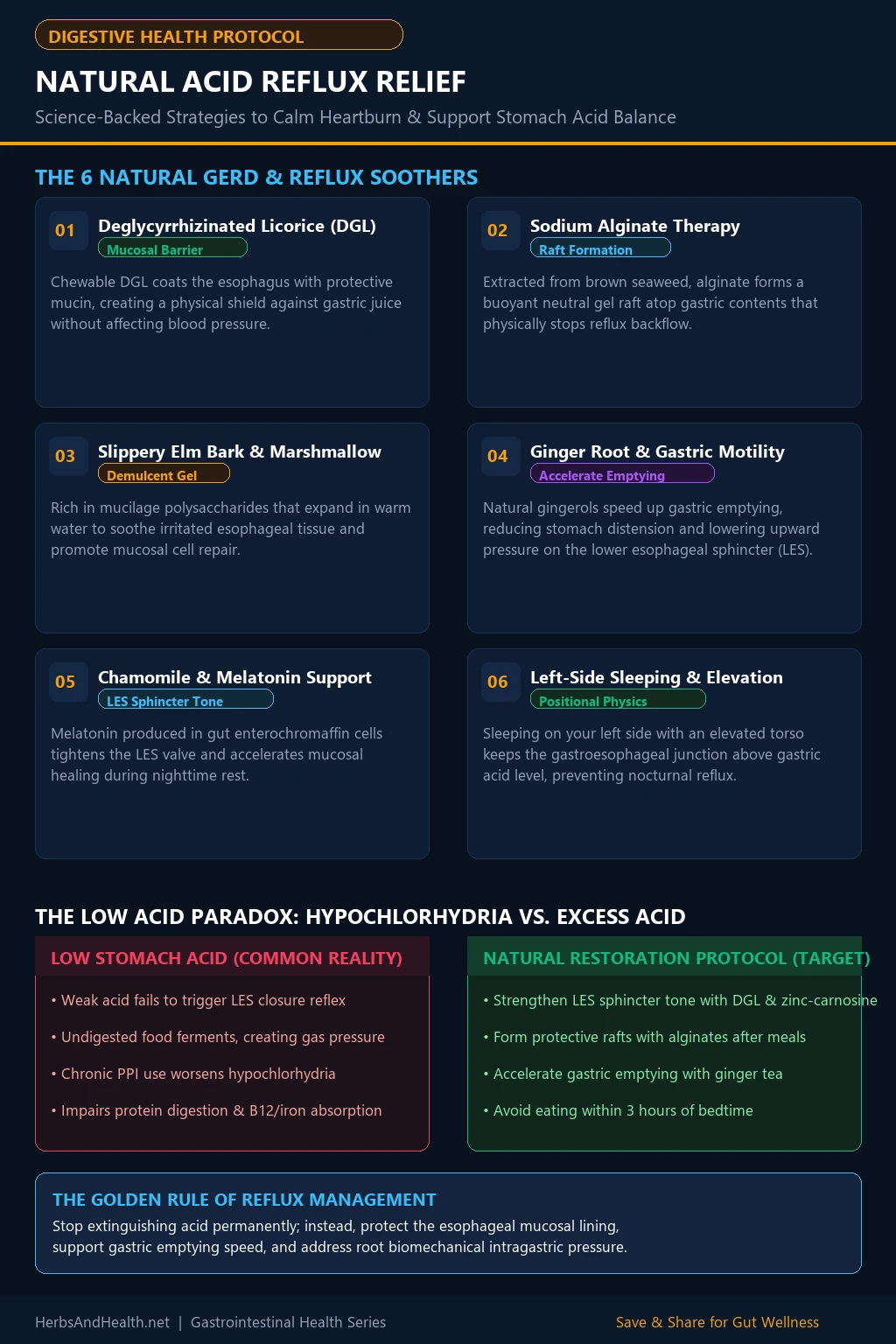
Save this visual GERD roadmap to Pinterest or your phone to calm heartburn naturally and safeguard esophageal health.
3. Slippery Elm Bark & Marshmallow Root Demulcents
The inner bark of the slippery elm tree (Ulmus rubra) and the root of the marshmallow plant (Althaea officinalis) are classified in pharmacognosy as demulcents, botanical substances extraordinarily rich in complex branched polysaccharides that swell into a soothing, gel-like mucilage when mixed with water.
Drinking a warm infusion of slippery elm bark powder or marshmallow root creates an immediate soothing coating over the pharynx, larynx, and esophagus. This demulcent coating calms nerve endings, blunts the burning sensation of heartburn, and provides antioxidant bioflavonoids that down-regulate inflammatory cytokines (including TNF-alpha and interleukin-8) in damaged mucosal tissue. Stir one tablespoon of pure slippery elm powder into warm water or oat milk between meals or before bedtime.
4. Fresh Ginger Root: Accelerating Gastric Motility
Ginger (Zingiber officinale) is universally recognized for its antiemetic properties, but its greatest superpower in reflux management is its ability to act as a natural prokinetic agent. Gingerols and shogaols present in fresh ginger root stimulate gastric cholinergic M3 receptors and 5-HT4 serotonin receptors, significantly accelerating gastric emptying speed.
When food moves swiftly and smoothly out of the stomach into the duodenum, intra-abdominal pressure drops, drastically reducing the physical upward force exerted on the lower esophageal sphincter. Sipping a warm cup of freshly sliced ginger root tea fifteen minutes before or after meals supports clean, efficient digestion. For those managing broader digestive sluggishness, pairing ginger with the gentle motility techniques detailed in our guide to natural remedies for constipation relief ensures unobstructed transit from mouth to colon.
Clinical Esophageal & Digestive Support Staples
Vetted natural therapeutic formulations supporting mucosal barrier defense and strain-free gastric comfort:
Natural Factors Chewable DGL Licorice
Deglycyrrhizinated chewable licorice extract that coats and protects the esophageal lining before meals without altering blood pressure or systemic hormones.
Life Extension EsophaCool Chewable
Premium chewable formulation combining calcium carbonate, magnesium, and alginic acid to create a physical protective barrier against acid backflow.
NOW Foods Pure Slippery Elm Powder
Pure wildcrafted inner bark powder rich in natural plant mucilage that forms a protective, healing coating over inflamed stomach and throat tissues.
5. Melatonin & Gut Enterochromaffin Cell Support
While the general public knows melatonin strictly as a pineal hormone governing circadian sleep rhythms, neurogastroenterologists have discovered that your gastrointestinal tract actually manufactures and stores four hundred times more melatonin than your brain. Produced by intestinal enterochromaffin cells, gastrointestinal melatonin plays a pivotal role in digestive motor function.
Double-blind clinical trials published in BMC Gastroenterology demonstrated that administering 3 mg of melatonin daily for eight weeks led to significant symptom regression and complete resolution of heartburn in patients with GERD. Melatonin achieves this through three specific mechanisms: it binds to MT2 receptors on esophageal smooth muscle tissue to increase lower esophageal sphincter basal tone, it down-regulates stomach acid hypersecretion during nocturnal hours, and it enhances microvascular blood flow to accelerate esophageal mucosal healing.
6. Mechanical & Positional Physics: Left-Side Sleeping and Elevation
Because acid reflux is fundamentally a fluid dynamics challenge, posture and gravity exert a profound influence on symptom severity, especially at night when saliva production and swallowing reflexes decline.
Your stomach’s anatomical curve places its reservoir to the left of the midline, with the esophagus entering from the upper right. When you sleep on your left side, the gastric acid pool settles safely in the greater curvature of the stomach, well below the opening of the lower esophageal sphincter. Conversely, sleeping on your right side submerges the LES valve in corrosive gastric juice, dramatically increasing nocturnal acid exposure.
Additionally, elevating the head of your bed six to eight inches using specialized bed risers or a medical torso wedge pillow enlists gravity to keep stomach contents seated. Avoid propping yourself up with multiple soft pillows, which bends your neck and compresses your abdomen, paradoxically worsening intragastric pressure.
Dietary Strategy: Identifying Real Triggers vs. Healthy Staples
Standard medical advice often hands reflux sufferers an impossibly restrictive list of forbidden foods: no tomatoes, no citrus, no garlic, no onions, no coffee, and no chocolate.
Adopt an evidence-based approach to identifying and managing real triggers:
- High-Fat Fried Meals: High amounts of trans fats and oxidized vegetable oils stimulate the release of cholecystokinin (CCK), a hormone that directly causes prolonged relaxation of the lower esophageal sphincter while dramatically slowing stomach emptying. Transition toward clean, nutrient-dense fats and lean proteins outlined in our overview of healthy breakfast foods.
- Carbonated Beverages: Seltzers, sodas, and sparkling waters introduce pressurized carbon dioxide gas directly into the stomach lumen, causing rapid gastric distension that physically pops the LES open.
- Peppermint and Spearmint: While mint is renowned for soothing intestinal cramping, its active menthol relaxes smooth muscle indiscriminately, including the lower esophageal sphincter. Heartburn sufferers should avoid peppermint teas and mint candies.
- Meal Timing (The Three-Hour Rule): Never lie down within three hours of finishing a meal. Allow your stomach ample upright time to complete mechanical digestion and empty its volume into the small intestine before reclining.
Frequently Asked Questions About Acid Reflux & Heartburn
Can apple cider vinegar really help with acid reflux?
Yes, for individuals whose heartburn is driven by hypochlorhydria (low stomach acid), taking one teaspoon of raw, unfiltered apple cider vinegar diluted in four ounces of warm water ten minutes before meals can provide dramatic relief. The mild acetic acid stimulates stomach parietal cells, lowers gastric pH to trigger proper LES closure, and activates digestive enzymes. However, if you have active esophageal erosions, Barrett’s esophagus, or a stomach ulcer, avoid acidic vinegar until mucosal healing is complete.
What is the difference between GERD and silent reflux (LPR)?
Traditional GERD is characterized by retrosternal burning pain (heartburn) and acid regurgitation. Laryngopharyngeal reflux (LPR), or “silent reflux,” occurs when aerosolized acid and pepsin travel past the upper esophageal sphincter into the throat, voice box, and nasal passages. LPR sufferers rarely experience classic heartburn; instead, they present with chronic throat clearing, persistent dry cough, hoarseness, globus sensation (a feeling of a lump in the throat), and post-nasal drip.
Is baking soda (sodium bicarbonate) a safe daily heartburn remedy?
Dissolving half a teaspoon of baking soda in water offers rapid, temporary emergency neutralization of acute heartburn. However, it should never be used as a daily maintenance therapy. Frequent sodium bicarbonate intake introduces excessive sodium, neutralizes vital digestive acid needed for nutrient assimilation, and triggers “acid rebound,” where the stomach overcompensates by pumping out surging waves of acid once the bicarbonate clears.
Can chronic acid reflux increase the risk of serious complications?
Yes. Chronic, untreated acid exposure leads to persistent inflammation of the esophageal lining (esophagitis), peptic strictures (narrowing of the esophagus causing swallowing difficulty), and Barrett’s esophagus, a precancerous condition where damaged squamous epithelium is replaced by metaplastic columnar cells. If you experience heartburn more than twice a week for months, professional gastroenterological evaluation is essential.
How does stress trigger acid reflux flares?
Psychological stress shifts the autonomic nervous system into “fight-or-flight” sympathetic dominance, shutting down digestive secretions, slowing gastric motility, and increasing esophageal pain sensitivity (esophageal hyperalgesia). Stress increases esophageal nerve sensitivity and impairs vagal tone, making even minor reflux episodes feel excruciating. Diaphragmatic breathing and mindfulness help restore parasympathetic digestive control.
Peer-Reviewed Clinical References & Evidence
- Kahrilas, P. J., et al. (2008). Regurgitation is less responsive to acid suppression than heartburn in patients with gastroesophageal reflux disease. Alimentary Pharmacology & Therapeutics, 28(1), 82-89.
- Mandel, K. G., et al. (2000). Review article: alginate-raft formulations in the treatment of heartburn and acid reflux. Alimentary Pharmacology & Therapeutics, 14(6), 669-690.
- Kandil, T. S., et al. (2010). The potential therapeutic effect of melatonin in gastro-esophageal reflux disease: a randomized controlled trial. BMC Gastroenterology, 10, 7.
- Hu, M. L., et al. (2011). Effect of ginger on gastric motility and symptoms of functional dyspepsia. World Journal of Gastroenterology, 17(1), 105-110.
- van Herwaarden, M. A., et al. (2000). Effect of head of bed elevation on nocturnal gastroesophageal reflux in patients with GERD. Clinical Gastroenterology and Hepatology, 32(8), 609-614.