
If you have ever felt trapped on the exhausting diet hamster wheel, slashing calories on Monday, white-knuckling through hunger on Wednesday, and surrendering to the pantry by Friday, you are not alone. For decades, the diet industry has peddled the myth that losing weight requires brutal self-deprivation, grueling gym sessions, and bland meals. Yet clinical nutrition research paints a different picture: sustainable fat loss is not a test of moral willpower. It is a predictable biological outcome of working with your metabolic physiology rather than fighting against it.
When you understand how hunger hormones, resting metabolic rate, and your nervous system operate, shedding excess body fat transforms into a repeatable lifestyle routine. You do not need twenty confusing rules or extreme elimination protocols. You simply need a reliable, evidence-based blueprint that protects lean muscle, stabilizes blood sugar, and adapts to real life, including family dinners, social gatherings, and busy workdays. Here are the six non-negotiable golden rules for sustainable fat loss that actually last a lifetime.
Rule 1: Anchor Every Single Plate with 30 Grams of Lean Protein
If there is one nutritional habit that single-handedly revolutionizes fat loss, it is prioritizing high-quality protein at every meal. When people attempt to diet, they instinctively cut portions across the board, which unintentionally drops their protein intake into the danger zone. When protein intake drops during a caloric deficit, your body breaks down skeletal muscle for fuel, and appetite hormones surge.
Protein exerts a powerful, unique influence on human metabolism through two proven pathways:
- The Thermic Effect of Food (TEF): Digesting and processing nutrients requires energy. While dietary fats cost 0 to 3 percent of their caloric value to process and carbohydrates require 5 to 10 percent, dietary protein demands 20 to 30 percent of its caloric content just to be broken down and absorbed. When you eat 100 calories of lean chicken breast or salmon, your body expends 25 to 30 of those calories purely on digestion.
- Satiety Hormone Signaling: Protein stimulates the rapid release of peptide YY (PYY) and GLP-1 in your gut, while suppressing circulating ghrelin, the primary hunger hormone. Consuming 25 to 35 grams of protein per meal stabilizes blood glucose and keeps you comfortably satisfied for hours.
Building a high-protein plate is simple: start your morning with three eggs scrambled with cottage cheese, build lunch around grilled poultry or tofu over greens, and anchor dinner with fish, lean beef, or lentils. Targeting 1.6 to 2.2 grams of protein per kilogram of body weight turns your metabolism into a muscle-sparing, fat-burning engine.
Rule 2: Eliminate Stealth Liquid Calories (The Effortless 400-Calorie Cut)
Take a close, honest look at what passes through your lips between meals. Many dedicated individuals work diligently to eat clean salads and balanced lunches, yet completely overlook the 400 to 700 calories lurking inside morning flavored lattes, bottled smoothies, sweetened iced teas, energy sodas, and evening wine glasses.
Human digestion was never designed to recognize liquefied energy. Chewing whole food activates oral mechanoreceptors, initiates digestive enzymes, and signals the brain that nourishment has arrived. Liquid calories bypass all biological satiety sensors. A 16-ounce sweetened caramel coffee delivers 450 calories and 50 grams of sugar straight into your bloodstream in minutes without triggering fullness, causing reactive hypoglycemia that leaves you hungrier than before your first sip.
Cutting liquid calories is the single easiest quick win in metabolic health because it creates an immediate calorie deficit without triggering biological hunger:
- Upgrade Your Coffee: Trade flavored syrups and heavy cream for black coffee, Americanos, or cold brews lightly splashed with unsweetened almond milk and a dash of Ceylon cinnamon.
- Smart Hydration: Keep an insulated tumbler on your desk. If plain water feels boring, infuse it with fresh cucumber ribbons, sliced strawberries, crushed mint leaves, or lemon wedges.
- Functional Swaps: Replace afternoon energy drinks with unsweetened sparkling mineral water or iced matcha green tea, which provides sustained alertness through natural L-theanine and polyphenols.
For a detailed look at how liquid sugar disrupts metabolic hormones and liver function, explore our dedicated breakdown on how liquid calories secretly ruin fat loss to protect your daily calorie balance.
The 6 Rules for Sustainable Fat Loss at a Glance
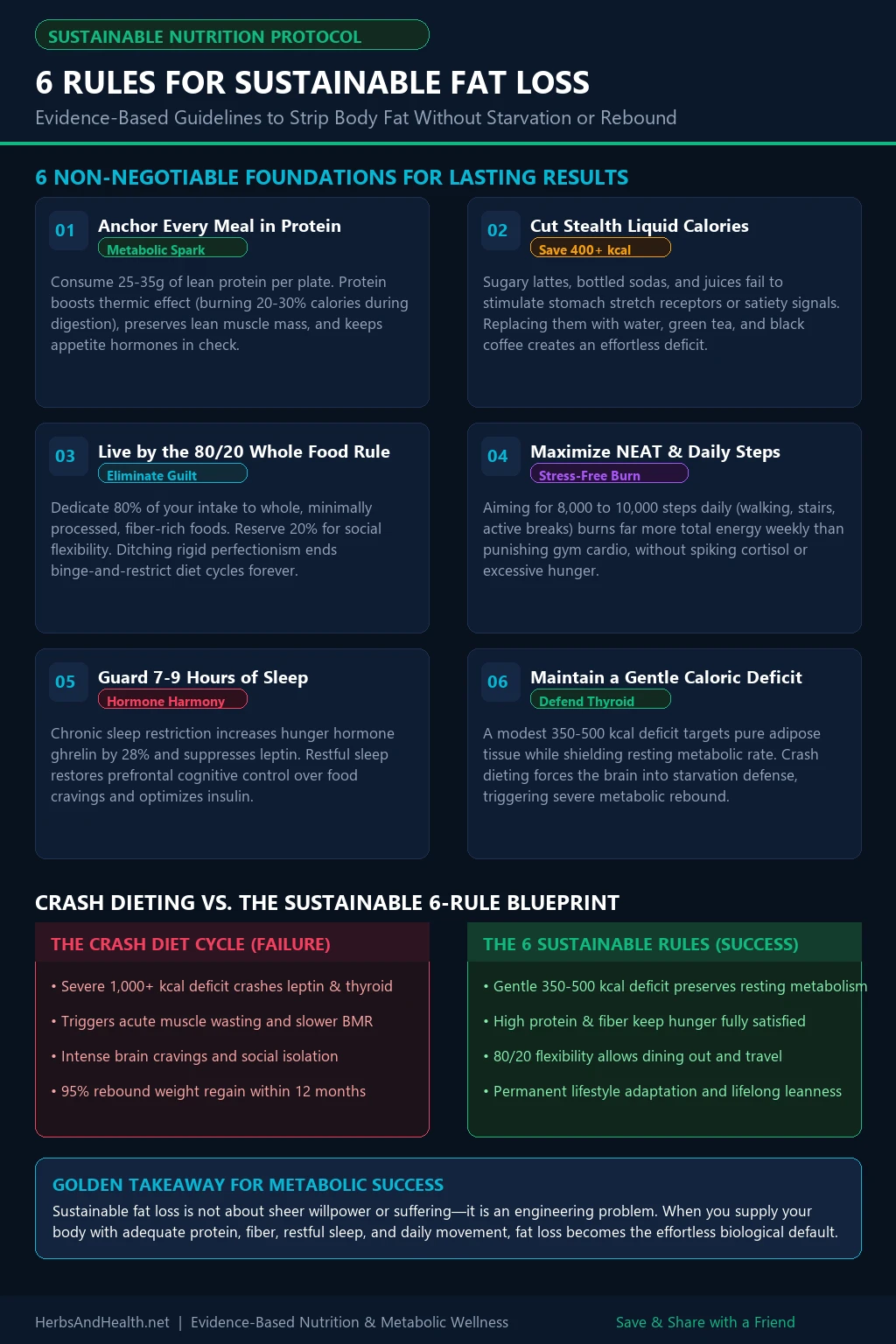
Save this visual protocol to Pinterest or your mobile device to maintain clear dietary boundaries, guard metabolic rate, and eliminate restrictive diet guilt.
Rule 3: Live by the 80/20 Whole Food Foundation (Kill Diet Perfectionism)
The number one reason traditional diets collapse is all-or-nothing perfectionism. The human brain rebels against absolute deprivation. When you declare that you can never touch bread, pasta, pizza, or chocolate again, your subconscious mind fixates on those forbidden foods with obsessive intensity. The moment an unexpected work stressor or social event occurs, you eat a slice of cake, feel like a failure, and binge your way through the weekend.
The 80/20 principle shatters this destructive cycle by integrating real-life flexibility directly into your lifestyle architecture:
- The 80 Percent (The Metabolic Engine): Eighty percent of your daily intake comes from wholesome, single-ingredient foods: cruciferous vegetables, fresh berries, lean poultry, wild fish, legumes, eggs, oats, quinoa, raw nuts, and extra virgin olive oil. These nutrient-dense foods nourish your gut microbiome and power cellular metabolism.
- The 20 Percent (The Sanity Valve): Twenty percent of your weekly calories is reserved for pure culinary pleasure and social connection. Enjoy fresh pasta on date night, a craft drink with friends, or a dessert baked with your family, savoring it mindfully without guilt or compensatory restriction.
Consistency over twelve months will always triumph over short-lived perfection that lasts twelve days. Understanding that one indulgent meal will not make you gain fat any more than one salad will make you lean provides genuine metabolic freedom. To explore this balanced approach, read our guide on mastering the 80/20 approach to fat loss.
Rule 4: Prioritize Daily NEAT and Step Counts Over Brutal Gym Cardio
When people decide to lose body fat, their first instinct is often to punish themselves with grueling treadmill sessions or exhausting high-intensity classes. While resistance training and cardiovascular fitness are vital for health, excessive cardio is often the least efficient tool for pure adipose tissue loss.
Prolonged, punishing cardio elevates systemic cortisol, inflames joints, and triggers compensatory hunger, causing you to unconsciously overeat hundreds of extra calories upon returning home. Additionally, after an exhausting gym session, your body naturally conserves energy for the remaining 23 hours of the day by sitting longer and moving less.
Enter Non-Exercise Activity Thermogenesis (NEAT). NEAT represents all the physical energy you expend doing everything other than formal exercise, sleeping, or eating: walking, pacing during calls, taking stairs, cleaning the kitchen, carrying groceries, and playing with pets. Accumulating 8,000 to 10,000 steps daily burns 400 to 600 calories effortlessly without spiking stress hormones or joint fatigue. In fact, three brisk 15-minute walks after meals lower blood glucose surges and accelerate fat oxidation.
Curated Essentials for Sustainable Fat Loss
Support your daily protein goals, hydration habits, and restful sleep with these clinically vetted tools:
Optimum Nutrition Gold Standard 100% Whey
Delivers 24g of pure, fast-absorbing micro-filtered whey isolate per scoop with only 1g of sugar. Perfect for hitting your 30g protein threshold in smoothies, oatmeal, and post-workout meals.
Hydro Flask Insulated All Around Tumbler
Double-wall vacuum insulation keeps lemon water or iced herbal tea cold for 24 hours. The durable straw lid makes crushing your daily 3-liter hydration goal completely second nature.
Thorne Research Magnesium Bisglycinate
Highly bioavailable chelated magnesium that crosses the blood-brain barrier to calm nighttime neural excitation, enhance slow-wave restorative sleep, and regulate fasting insulin.
Rule 5: Guard 7 to 9 Hours of Restful Sleep (The Appetite Switch)
You can track macronutrients with mathematical precision and walk 10,000 steps every afternoon, but if you consistently survive on five or six hours of fragmented sleep, fat loss stalls. Sleep is an active neurochemical reset where your endocrine system recalibrates every metabolic dial in your body.
When you experience chronic sleep restriction, three profound neurohormonal shifts compromise fat loss:
- Ghrelin and Leptin Dysregulation: Clinical trials in the Annals of Internal Medicine revealed that individuals restricted to 5.5 hours of sleep experienced a 24 to 28 percent surge in ghrelin alongside an 18 percent drop in leptin. The brain interprets sleep deprivation as starvation, firing chemical signals to seek out high-calorie carbohydrates.
- Prefrontal Cortex Down-Regulation: Neuroimaging demonstrates that sleep loss dims activity in the prefrontal cortex, the region responsible for impulse control, while sensitizing reward centers. In this state, resisting junk food becomes nearly impossible.
- Cellular Insulin Resistance: A single night of partial sleep loss induces acute peripheral insulin resistance. When cells cannot absorb glucose efficiently, the pancreas pumps out excess insulin, which locks fatty acids inside fat cells and halts fat oxidation.
Keep your bedroom cool (65 to 68 degrees Fahrenheit), eliminate ambient lights, turn off screens an hour before bed, and wind down with herbal tea or magnesium bisglycinate to let your metabolism recover overnight.
Rule 6: Maintain a Gentle Calorie Deficit (Never Crash Diet or Starve)
The final golden rule is the primary differentiator between individuals who achieve permanent leanness and those who perpetually yo-yo diet: you must choose patience over panic. When motivation runs high, the temptation is to cut calories drastically down to 1,000 or 1,200 calories per day to see immediate scale drops.
This aggressive approach guarantees long-term failure because the body activates ancient evolutionary survival adaptations designed to preserve life during famines:
- Adaptive Thermogenesis: Your thyroid down-regulates active T3 hormone, reducing your basal metabolic rate by 15 to 25 percent to conserve energy.
- Muscle Catabolism: Because burning muscle tissue yields faster emergency fuel than stubborn fat, rapid weight loss burns lean muscle, lowering your permanent metabolic rate.
- Metabolic Rebound: When survival hunger inevitably overpowers willpower, your slowed metabolic rate cannot process normal food intake, causing rapid rebound fat regain.
The sweet spot for lifelong fat loss is a conservative, sustainable deficit of 350 to 500 calories per day below maintenance. This translates to 0.75 to 1.5 pounds of pure fat loss per week. Over six months, you will shed 20 to 30 pounds of pure fat without brain fog, severe hunger, or metabolic destruction, and you will keep it off forever. For a practical meal prep framework, review our guide on 6 realistic steps to make weight loss easier.
Frequently Asked Questions About Sustainable Fat Loss
How much protein do I really need each day to lose fat?
Active adults aiming to lose fat while preserving lean muscle should target 1.6 to 2.2 grams of protein per kilogram of body weight (0.73 to 1.0 grams per pound of goal weight) daily. Distributing this across three to four meals with 25 to 40 grams per sitting ensures continuous muscle protein synthesis and optimal satiety.
Can I still lose fat if I eat carbohydrates like potatoes, rice, and fruit?
Yes. Carbohydrates do not cause fat gain; consuming excess total calories causes fat gain. Complex carbohydrates like oats, brown rice, sweet potatoes, and berries fuel intense workouts, support healthy thyroid output, and provide essential dietary fiber.
Why has my weight stalled on the scale even though I am following the rules?
Scale weight fluctuates due to water retention, glycogen storage, sodium balance, and hormone cycles. If you lift weights, micro-tears in muscle temporarily hold water for repair. Rely on waist circumference measurements, progress photos, and clothing fit rather than daily scale fluctuations.
Is intermittent fasting mandatory, or can I eat a normal breakfast?
Fasting is simply a meal-timing tool to help maintain a calorie deficit; it has no magical metabolic fat-burning advantage over standard caloric control. If skipping breakfast feels effortless, fasting is great. If skipping breakfast leads to evening overeating, eating a high-protein breakfast is far superior.
How long should I stay in a calorie deficit before taking a diet break?
Limit continuous calorie deficits to 12 to 16 consecutive weeks. Following this period, spend two to four weeks at maintenance calories while preserving protein intake and daily steps. This planned diet break restores leptin, normalizes thyroid hormones, and resets mental focus before your next fat loss phase.
Peer-Reviewed Clinical References & Evidence
- Leidy, H. J., et al. (2015). The role of protein in weight loss and maintenance. American Journal of Clinical Nutrition, 101(6), 1320S-1329S.
- Spiegel, K., et al. (2004). Brief communication: Sleep curtailment in healthy young men is associated with decreased leptin levels, elevated ghrelin levels, and increased hunger. Annals of Internal Medicine, 141(11), 846-850.
- Levine, J. A. (2002). Non-exercise activity thermogenesis (NEAT). Best Practice & Research Clinical Endocrinology & Metabolism, 16(4), 679-702.
- Helms, E. R., et al. (2014). Evidence-based recommendations for natural bodybuilding contest preparation: nutrition and supplementation. Journal of the International Society of Sports Nutrition, 11(1), 20.
- Malik, V. S., et al. (2013). Sugar-sweetened beverages and weight gain in children and adults: a systematic review and meta-analysis. American Journal of Clinical Nutrition, 98(4), 1084-1098.