
Constipation is one of the most widespread, physically distressing, and socially uncomfortable gastrointestinal complaints in modern medicine. An estimated sixteen out of every one hundred adults struggle with chronic constipation, experiencing persistent abdominal bloating, painful straining, sluggish malaise, and the frustrating sensation of incomplete bowel evacuation. Yet when individuals reach for conventional solutions, they frequently find themselves trapped between harsh over-the-counter stimulant laxatives that cause violent abdominal cramping and chemical dependence, or generic advice to “just drink more water and eat more bran” that rarely solves the underlying physiological blockage.
Your gastrointestinal tract is an intricate, highly coordinated neuro-muscular highway governed by the enteric nervous system, often called your body’s “second brain.” When chronic stress, electrolyte imbalances, micro-biome dysbiosis, pelvic floor muscle tension, or sedentary habits disrupt this delicate rhythm, stool lingers in the large intestine. As transit slows, the colon’s mucosa continues drawing water out of the fecal matter, transforming soft stool into hard, dry, compacted pellets that become increasingly difficult and painful to pass. Here is your evidence-based medical guide to natural constipation remedies that work rapidly, gently, and sustainably without triggering laxative dependency.
The Physics of Bowel Transit: Why Stool Gets Stuck
To understand how natural remedies resolve constipation, it helps to understand what happens inside the five feet of your large intestine. The colon’s primary physiological job is to reabsorb water and electrolytes from liquid digestive chyme, sculpting it into a formed stool. This fecal bolus is propelled forward by peristalsis, rhythmic, wave-like muscular contractions coordinated by the enteric nervous system and smooth muscle tissue.
Normal transit time from mouth to rectum ranges between 24 and 48 hours. When transit time extends beyond 72 hours, three metabolic issues occur:
- Excessive Colonic Desiccation: The longer fecal matter sits in the sigmoid colon and rectum, the more moisture is extracted. Stool water content drops below 70 percent, transforming the bolus into dense, hard scybala (compacted pebbles) that resist peristaltic propulsion.
- Enteric Neuromuscular Down-Regulation: Chronic stress, dehydration, and low intracellular magnesium impair smooth muscle acetylcholine signaling, leading to colonic inertia where peristaltic waves become weak and disorganized.
- Dysbiosis and Methane Gas Production: In slow-transit constipation, specific archaea in the gut microbiome (such as Methanobrevibacter smithii) ferment carbohydrates into methane gas. Methane acts as a neuromuscular paralytic in the gut, slowing intestinal transit by an additional 60 percent.
1. Magnesium Citrate: The Osmotic Hydration Miracle
If there is one natural intervention that provides fast, dependable relief within 30 to 120 minutes without prescription medications, it is magnesium citrate. Magnesium citrate is an organic salt combining elemental magnesium with citric acid, creating a powerful, gentle osmotic gradient in the intestines.
Unlike stimulant laxatives that artificially irritate the intestinal lining to force contractions, magnesium citrate operates on simple physics: it is poorly absorbed in the small intestine, meaning it travels into the colon intact. Once inside the large intestine, it draws high concentrations of water from surrounding tissues directly into the bowel lumen through osmosis. This influx of fluid rehydrates hard, desiccated stool, expands colonic volume, and stimulates mechanoreceptors that trigger natural, cramp-free peristalsis.
Dissolve 300 to 500 mg of powdered magnesium citrate in eight ounces of warm water before bed or first thing in the morning. For acute, stubborn stalls, this provides gentle, effortless evacuation without the harsh spasms of synthetic pharmaceuticals.
2. Two Kiwifruits Daily: The Clinically Proven Fruit Solution
While prunes have long been the traditional grandmother’s remedy for constipation, modern gastroenterology clinical trials published in The American Journal of Gastroenterology have crowned green kiwifruit as the superior natural remedy. Head-to-head randomized trials comparing two green kiwis per day against psyllium husk demonstrated that kiwifruit matched or exceeded the laxative efficacy of psyllium while producing significantly less gas, bloating, and abdominal discomfort.
Kiwifruit achieves this through three synergistic biological mechanisms:
- High-Viscosity Soluble Fiber: Kiwi contains a unique soluble fiber network that holds twice as much water as apple or citrus pectin, swelling within the bowel to create soft, voluminous stool.
- Actinidin: Kiwi is rich in actinidin, a natural proteolytic enzyme that breaks down dietary proteins in the stomach and upper intestine, speeding gastric emptying.
- Mucilaginous Pectins: The specific polysaccharide structure of kiwi fruit stimulates the growth of beneficial Faecalibacterium prausnitzii, a key butyrate-producing microbe that reduces intestinal inflammation and enhances mucosal lubrication.
Eat two ripe green kiwifruits daily, either sliced or eaten with the nutrient-dense fuzzy skin washed and intact, to establish effortless daily regularity.
The Natural Constipation Relief Protocol at a Glance
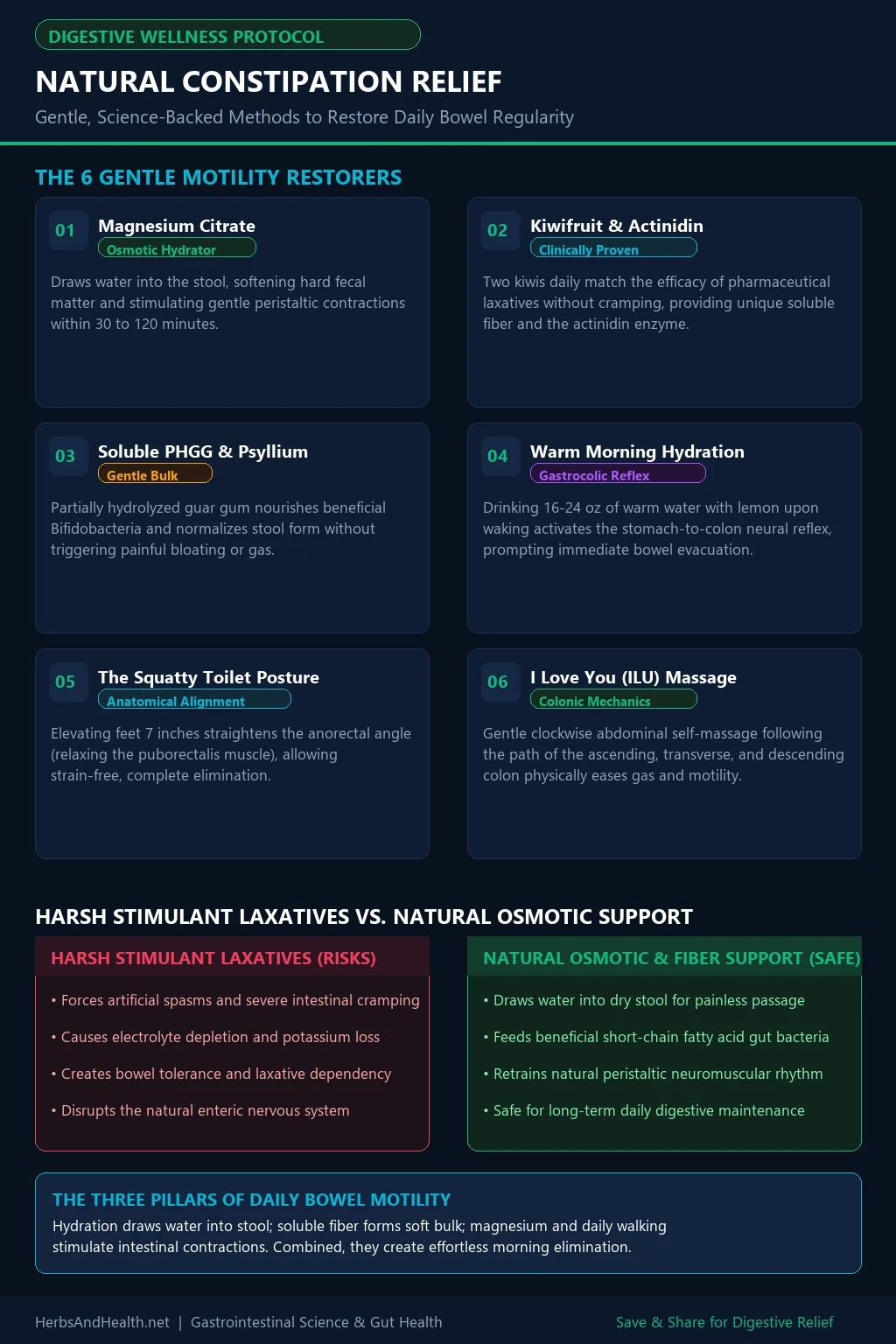
Save this visual motility roadmap to Pinterest or your phone to restore gentle, natural daily bowel regularity.
3. Soluble Partially Hydrolyzed Guar Gum (PHGG) & Prebiotic Fibers
Many people respond to constipation by consuming massive quantities of coarse wheat bran or insoluble raw vegetable fiber. Unfortunately, dumping insoluble fiber into a slow, dehydrated colon is like throwing dry sticks into a clogged pipe: it exacerbates compaction, gas, and painful distension.
The gold standard for gentle bulking is Partially Hydrolyzed Guar Gum (PHGG). PHGG is a completely water-soluble, non-thickening dietary prebiotic fiber derived from the cluster bean. Unlike harsh psyllium or bran, PHGG dissolves completely clear in water without grit or thickening, and it is fermented slowly by gut bacteria. Clinical trials confirm that PHGG significantly shortens colonic transit time, normalizes stool moisture, and increases bowel frequency in patients with chronic slow-transit constipation and irritable bowel syndrome (IBS-C).
Start with one scoop (5 grams) of PHGG dissolved in your morning tea or water, gradually increasing to 10 grams daily alongside consistent fluid intake.
4. The Gastrocolic Reflex: Warm Morning Hydration
Your gastrointestinal tract operates on natural circadian rhythms. The strongest propulsive contractions of the large intestine, termed “high-amplitude propagating contractions” (HAPCs), occur naturally during the first thirty to sixty minutes after waking in the morning.
You can dramatically amplify this natural awakening by triggering the gastrocolic reflex:
- Upon stepping out of bed, drink 16 to 24 ounces of warm, room-temperature water. Adding fresh lemon juice or a teaspoon of raw apple cider vinegar stimulates stomach stretch mechanoreceptors.
- The sudden volume of warm liquid in an empty stomach sends an immediate neurological signal through the vagus nerve to the colon, triggering powerful peristaltic contractions that prompt bowel evacuation.
- Follow this warm hydration with a balanced, high-protein morning meal as described in our guide on the 10 best breakfast foods for metabolic health. The arrival of dietary fats and protein further amplifies the gastrocolic signal.
Clinical Digestive & Motility Support Staples
Vetted natural tools supporting osmotic hydration, prebiotic gut health, and gentle bowel regularity:
Sunfiber Partially Hydrolyzed Guar Gum
100% soluble, non-bloating prebiotic fiber that dissolves completely clear without thickening. Clinically proven to normalize transit time and nourish beneficial bifidobacteria.
Natural Vitality Calm Magnesium Citrate
Effervescent magnesium citrate powder that draws water into the colon to gently soften hard stool. Delivers dependable, strain-free morning elimination without cramping.
Traditional Medicinals Smooth Move Tea
Organic senna leaf paired with fennel, orange peel, and coriander to soothe digestion. Provides gentle overnight relief for acute, stubborn constipation when taken at bedtime.
5. Anatomical Toilet Ergonomics: The Squatting Posture
Modern sitting toilets, while architecturally convenient, create a major anatomical obstruction to natural defecation. When you sit on a standard toilet at a 90-degree angle, the puborectalis muscle, a sling-like muscle wrapping around the rectum, remains partially contracted, creating a sharp kink at the anorectal junction. This kink acts as a natural valve to maintain continence, but during elimination, it forces you to push and strain against a partially closed door.
Human beings evolved to eliminate in a deep squatting posture. When you elevate your feet 7 to 9 inches off the ground using a toilet footstool (such as a Squatty Potty), your hips flex to roughly a 35-degree angle. This position completely relaxes the puborectalis muscle, straightening the anorectal canal into an unobstructed, vertical chute. Stool passes with zero strain, significantly reducing the risk of hemorrhoids, anal fissures, and pelvic floor dysfunction.
6. The “I Love You” (ILU) Abdominal Motility Massage
For individuals suffering from physical stool impaction or severe abdominal gas, physical mechanical therapy provides immediate soothing comfort. Developed by pediatric gastroenterologists and physical therapists, the “ILU” abdominal massage follows the anatomical path of the large intestine to physically encourage fecal transit:
- The “I”: Lie flat on your back with knees gently bent. Using moderate, gentle pressure with your fingertips, stroke downward along the left side of your abdomen (from beneath the left ribs down toward the hip bone) in the path of the descending colon. Repeat 10 times.
- The “L”: Stroke across your abdomen from right to left beneath your rib cage (transverse colon), then down the left side (descending colon), forming an inverted “L”. Repeat 10 times.
- The “U”: Begin at the lower right abdomen (near the cecum), stroke upward toward the right ribs (ascending colon), across the abdomen to the left, and down the left side, forming an inverted “U”. Repeat 10 times.
This gentle mechanical massage stimulates local mechanoreceptors, releases trapped gas bubbles, and encourages the forward movement of stool toward the rectum.
Frequently Asked Questions About Natural Constipation Relief
How often should a healthy adult have a bowel movement?
Medical guidelines define normal bowel frequency anywhere between three bowel movements per day to three per week, provided stool is soft, formed (Bristol Stool Form Scale type 3 or 4), and passes easily without straining. True constipation is characterized by hard, dry stools, straining, and fewer than three evacuations weekly.
Can drinking too much coffee worsen constipation?
While a morning cup of warm black coffee stimulates the gastrocolic reflex and promotes bowel movements, excessive caffeine consumption (more than 400 mg daily) can exert a mild diuretic effect if water intake is inadequate, potentially dehydrating stool in the lower colon. Balance coffee with ample pure water.
Is taking senna tea safe for daily, long-term use?
No. Senna contains sennosides, which are natural stimulant anthraquinones that trigger colonic contractions. While wonderful for short-term, acute relief over two to three days, daily prolonged use can cause electrolyte imbalances, potassium depletion, and potential laxative tolerance. Reserve senna for occasional travel or acute stalls, relying on magnesium and fiber for daily maintenance.
Why does traveling or going on vacation always cause constipation?
Travel constipation is driven by circadian disruption, dehydration from airplane cabin air, altered meal timings, and psychological reluctance to use public restrooms. Counteract this by packing magnesium citrate, drinking 3 liters of water on travel days, and keeping a consistent morning wake-up routine.
When should constipation be evaluated by a gastroenterologist?
Seek medical evaluation if constipation is accompanied by “red flag” symptoms: unexplained weight loss, blood in the stool, severe persistent abdominal pain, vomiting, or if chronic constipation suddenly begins after age 50 without an obvious lifestyle cause. A colonoscopy may be warranted to rule out mechanical obstruction.
Peer-Reviewed Clinical References & Evidence
- Chey, S. W., et al. (2021). Exploratory study on the clinical effects of green kiwifruit, prunes, and psyllium in patients with chronic constipation. American Journal of Gastroenterology, 116(6), 1304-1312.
- Mori, S., et al. (2019). A randomized, double-blind, placebo-controlled trial of magnesium oxide in patients with chronic constipation. Journal of Neurogastroenterology and Motility, 25(4), 563-575.
- Rao, S. S., et al. (2015). Systematic review: dietary fibre in the management of chronic constipation. Alimentary Pharmacology & Therapeutics, 41(12), 1256-1270.
- Sikirov, D. (2003). Comparison of straining during defecation in three positions: results and implications for human health. Digestive Diseases and Sciences, 48(7), 1201-1205.
- McRorie, J. W. (2015). Evidence-based approach to fiber supplements and clinically meaningful health benefits, Part 2. Nutrition Today, 50(2), 90-97.