There are few minor physical ailments quite as universally embarrassing, persistently frustrating, or socially self-conscious as dandruff. You slip on your favorite dark sweater or blazer, glance in the mirror an hour later, and discover a dusting of telltale white or yellowish flakes across your shoulders. The immediate reaction is almost instinctive: you reach for harsh, chemically pungent blue shampoos or frantically coat your scalp in heavy kitchen oils, only to find the itching, flaking, and irritation returning with a vengeance just forty-eight hours later.
According to epidemiological dermatology studies, dandruff (clinically termed pityriasis capitis) and its more inflammatory cousin, seborrheic dermatitis, affect more than fifty percent of the global adult population at some point in their lives. Yet despite its prevalence, widespread misconceptions abound. Dandruff is not simply “dry skin,” nor is it a consequence of poor hygiene. In reality, dandruff is a complex, fascinating immunological reaction driven by the delicate interplay between your scalp’s sebaceous glands, your skin barrier integrity, and a microscopic lipid-loving yeast called Malassezia.
When individuals attempt to treat dandruff by slathering heavy oils onto their scalp, they frequently pour fuel onto the microbial fire, creating an ideal breeding ground for fungal proliferation. Conversely, stripping the scalp daily with abrasive sulfate cleansers damages the stratum corneum, creating rebound flaking. Here is your evidence-based medical guide to understanding the root biology of dandruff and deploying seven powerful, natural solutions that calm inflammation, balance your scalp microbiome, and eliminate flakes sustainably.
The Scalp Microbiome: The Biology of Malassezia Yeast
To permanently resolve dandruff, we must examine the microscopic ecosystem thriving on your scalp. Your scalp contains the highest density of hair follicles and sebaceous glands on your entire body. These glands continuously produce sebum, a rich mixture of triglycerides, wax esters, squalene, and free fatty acids designed to waterproof hair shafts and lubricate the skin.
Sharing this environment is a commensal, lipid-dependent fungus belonging to the genus Malassezia (primarily Malassezia globosa and Malassezia restricta). Unlike most organisms, Malassezia lacks the biochemical machinery to synthesize its own fatty acids; it relies entirely on your scalp’s sebum to survive.
The dandruff cascade unfolds in three biological stages:
- Enzymatic Sebum Digestion: Malassezia secretes potent lipase enzymes that break down your sebum’s triglycerides, consuming the saturated fatty acids it needs for fuel.
- Oleic Acid Byproduct Release: The byproduct of this enzymatic breakdown is oleic acid, an unsaturated free fatty acid that Malassezia leaves behind on your scalp.
- Epidermal Permeability Breach: In individuals with a genetic sensitivity or compromised skin barrier, oleic acid penetrates the stratum corneum. It triggers a localized inflammatory cascade, disrupting normal epidermal cell maturation. Instead of taking twenty-eight days to mature and shed invisibly, scalp keratinocytes hyper-proliferate and shed in disorganized, sticky clumps of hundreds of cells, the visible scales we call dandruff.
Critical Diagnosis: Fungal Dandruff vs. Simple Dry Scalp
Before choosing a natural treatment, you must accurately determine what is occurring on your scalp. Treating oily fungal dandruff as dry skin (or vice versa) will dramatically worsen symptoms:
- Seborrheic Dandruff (Fungal): Characterized by larger, oily, yellowish or greyish flakes that cling to the scalp and hair shafts. Often accompanied by localized erythema (redness), intense itching, and an oily scalp. Driven by Malassezia overgrowth and sebum excess.
- Simple Dry Scalp (Barrier Dehydration): Characterized by tiny, dry, powdery white flakes that easily shake loose like snow. The scalp feels tight, dehydrated, and dry elsewhere (such as on hands or elbows). Driven by cold winter weather, harsh sulfate shampoos, or insufficient internal hydration, mechanisms similar to the barrier vulnerabilities we explore in our guide on nutritional skin barrier support.
The Natural Dandruff Elimination Protocol
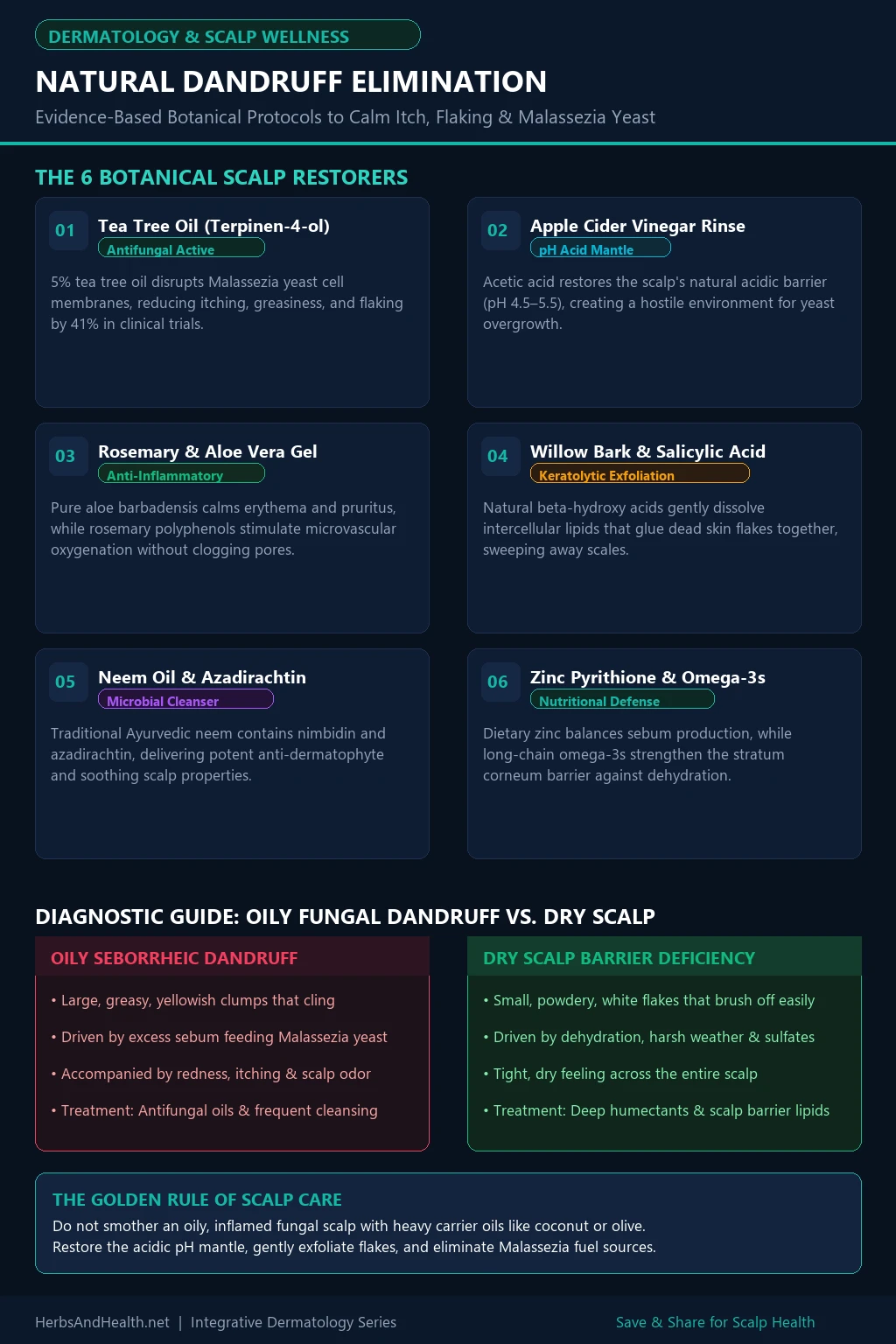
Save this visual scalp wellness roadmap to Pinterest or your phone to restore a calm, flake-free scalp naturally.
Top 7 Evidence-Based Natural Remedies for Dandruff
1. Tea Tree Essential Oil (Melaleuca alternifolia): The Antifungal Powerhouse
If there is one botanical intervention with undeniable, gold-standard randomized clinical trial validation for dandruff, it is pure tea tree oil. Steam-distilled from the leaves of the Australian Melaleuca alternifolia tree, tea tree oil is extraordinarily rich in terpinen-4-ol, a monoterpene that exerts broad-spectrum antifungal activity against Malassezia species.
In a landmark double-blind clinical study published in the Journal of the American Academy of Dermatology, 126 patients with mild-to-moderate dandruff used either a 5% tea tree oil shampoo or a placebo daily for four weeks. The tea tree oil group demonstrated a remarkable 41% reduction in total dandruff severity, with dramatic decreases in flaking, itching, and scalp greasiness compared to just 11% in the placebo cohort.
How to use: Add 5 to 8 drops of pure organic tea tree oil to a palmful of gentle, sulfate-free shampoo. Massage thoroughly into the scalp, let it sit for three to five minutes to allow the terpinen-4-ol to penetrate fungal cell walls, and rinse cleanly.
2. Raw Apple Cider Vinegar (ACV) Scalp Rinse: Restoring the Acid Mantle
Your scalp skin is naturally acidic, maintaining an optimal “acid mantle” pH between 4.5 and 5.5. This mild acidity inhibits fungal spore germination, prevents cuticular swelling, and keeps pathogenic bacteria at bay. Many commercial hair products and municipal tap waters have an alkaline pH of 7.0 to 8.0, which neutralizes this protective acid barrier and encourages Malassezia yeast overgrowth.
Raw, unfiltered apple cider vinegar contains mild acetic acid, alpha-hydroxy acids (AHAs), and living fermentation enzymes that restore the scalp’s natural acidic equilibrium. Additionally, the mild acidity helps gently dissolve mineral deposits, styling product residue, and dead skin cells.
How to use: Mix one part raw, unfiltered ACV with three parts warm filtered water in a spray bottle. After shampooing, spritz the solution directly onto the scalp, massage gently with fingertips, leave for three to four minutes, and rinse thoroughly. Use once or twice weekly.
3. Rosemary Essential Oil & Pure Aloe Vera Gel: Soothing Micro-Inflammation
Dandruff is inherently an inflammatory dermatological condition. The itching sensation triggers frantic scratching, which inflicts mechanical micro-tears in the scalp stratum corneum, inviting secondary bacterial infection and worsening flaking.
Pure aloe vera gel (Aloe barbadensis) contains natural glycoproteins, bradykinase, and salicylic acid derivatives that provide immediate, cooling relief to pruritic (itchy) scalp tissue. Pairing aloe vera with rosemary essential oil (Rosmarinus officinalis) creates a synergistic therapeutic powerhouse. Rosemary contains carnosic acid and rosmarinic acid, potent polyphenols that scavenge free radicals, down-regulate inflammatory interleukins, and optimize microcapillary circulation to hair follicles.
Clinical Scalp & Botanical Defense Staples
Vetted botanical formulations supporting scalp microbiome balance, clarifying exfoliation, and itch relief:
Maple Holistics Pure Tea Tree Shampoo
Therapeutic grade tea tree shampoo enriched with rosemary and jojoba oils to clear Malassezia yeast, soothe scalp irritation, and eliminate flaking without harsh sulfates.
Cliganic Organic Jojoba Oil (100% Pure)
Pure cold-pressed wax ester that mirrors human sebum chemistry, nourishing dry scalp barriers without feeding yeast or clogging delicate hair follicles.
Seven Minerals Pure Aloe Vera Gel
Cold-pressed Texas-grown organic aloe vera gel with natural agar thickener. Calms severe scalp redness, stops itching on contact, and hydrates irritated skin.
4. Willow Bark Extract & Natural Salicylic Acid: Gentle Keratolytic Exfoliation
When scalp skin cells shed in premature, sticky clumps, physical scratching with fingernails or coarse hair brushes only inflames the scalp and triggers bleeding. The dermatological gold standard for clearing adherent scales is keratolytic therapy.
Natural willow bark extract (Salix alba) is rich in salicin, which converts into salicylic acid, an oil-soluble beta-hydroxy acid (BHA). Because salicylic acid is lipophilic, it penetrates directly into the sebum-filled follicular infundibulum and dissolves the intercellular desmosomes, the microscopic protein bridges that bind dead keratinocytes together. By gently loosening adherent flakes, it allows them to rinse away effortlessly during washing without abrasive mechanical friction.
5. Cold-Pressed Neem Oil (Azadirachta indica): Ayurvedic Microbial Cleanser
In the ancient medical tradition of Ayurveda, the neem tree is revered as Sarva Roga Nivarini (“the curer of all ailments”). Modern dermatological analyses demonstrate that cold-pressed neem seed oil contains high concentrations of azadirachtin, nimbin, and quercetin, exhibiting powerful antimicrobial, anti-inflammatory, and insecticidal properties.
Neem oil acts as an effective natural anti-dermatophyte, halting Malassezia spore replication while soothing erythematous scalp flares. Because pure neem oil has a strong, pungent garlicky aroma, mix four to five drops of neem oil into two tablespoons of light jojoba oil or shampoo for a potent pre-wash scalp treatment.
6. The Coconut Oil Paradox: When to Use It and When to Avoid It
Virgin coconut oil is ubiquitous across internet DIY beauty blogs as a cure-all for dandruff. However, dermatology biochemistry reveals a critical caveat: coconut oil is composed primarily of medium-chain triglycerides, including lauric acid. While lauric acid exhibits antimicrobial properties against certain bacteria, Malassezia yeast is a lipid-loving organism that readily metabolizes specific fatty acids.
If your flaking is driven by simple dry scalp (dehydration and dry weather), virgin coconut oil acts as a fantastic occlusive emollient, repairing lipid fissures and locking in moisture. But if you have true oily seborrheic dandruff, slathering coconut oil onto your scalp provides an abundant food supply for Malassezia, frequently aggravating itchiness and scale thickness. For oily fungal dandruff, rely on non-comedogenic carrier oils like pure jojoba oil (which is technically a liquid wax ester that yeast cannot metabolize) or water-based aloe vera.
7. Dietary Synergy: Zinc, Omega-3s, and Sugar Elimination
Scalp health is inextricably linked to systemic internal nutrition. Chronic high-glycemic diets, rich in refined sugars, sodas, and ultra-processed snacks, stimulate spikes in insulin and insulin-like growth factor 1 (IGF-1). Elevated IGF-1 acts directly on sebaceous gland receptors, hyper-activating sebum secretion and providing surplus food for yeast.
Conversely, optimizing two key dietary nutrients exerts a dramatic clinical benefit:
- Dietary Zinc: Zinc is a master regulator of sebaceous gland activity and immune response. Clinical deficiencies in zinc are directly linked to seborrheic dermatitis and impaired skin wound healing. Incorporate pumpkin seeds, oysters, lentils, and pasture-raised meats.
- Omega-3 Polyunsaturated Fats: High-EPA fish oil and flaxseeds reduce systemic production of inflammatory leukotriene B4 and prostaglandin E2, helping calm chronic scalp erythema from the inside out (as detailed in our analysis of omega-3 fatty acid protocols).
Frequently Asked Questions About Natural Dandruff Relief
How often should you wash your hair if you have dandruff?
A common myth is that washing hair frequently causes dandruff by drying out the scalp. While washing with harsh sulfated detergents can dry the skin, failing to wash an oily, dandruff-prone scalp allows sebum and Malassezia yeast to accumulate, drastically worsening seborrheic dermatitis. If you have oily fungal dandruff, wash your hair every one to two days with a gentle, sulfate-free botanical shampoo to remove excess lipid fuel and loose scales.
Can stress and lack of sleep trigger dandruff flare-ups?
Yes, strongly. Psychological stress activates the hypothalamic-pituitary-adrenal (HPA) axis, stimulating the adrenal release of cortisol and neurogenic inflammation. Elevated stress suppresses cutaneous immune defenses while simultaneously altering sebaceous gland lipid composition, creating a permissive environment for Malassezia yeast overgrowth. Many individuals experience intense scalp itch and flaking during stressful exam or work periods.
Does hot water worsen dandruff and scalp itching?
Yes. Washing your hair with scalding hot water strips the scalp’s protective moisture barrier, triggers histamine release that intensifies itching, and causes rebound hyper-secretion of sebum as sebaceous glands attempt to compensate for surface dehydration. Always wash and rinse your hair with lukewarm or cool water.
Is dandruff contagious from sharing hats, pillows, or hairbrushes?
No. Dandruff is not a contagious infection. Malassezia yeast is a natural, harmless commensal microbe residing on the skin of virtually every healthy human adult. Dandruff only develops when an individual’s personal immune system reacts abnormally to the yeast’s metabolic byproducts. You cannot “catch” dandruff from someone else, though sharing hairbrushes is discouraged for general hygiene.
When should you consult a dermatologist for scalp flaking?
Seek medical evaluation if your dandruff fails to improve after four to six weeks of consistent natural treatment, or if symptoms escalate to include severe crusting, weeping or bleeding lesions, widespread facial erythema, intense burning pain, or localized hair loss. These signs may indicate psoriasis, fungal tinea capitis, or severe seborrheic dermatitis requiring prescription topical therapies.
Peer-Reviewed Clinical References & Evidence
- Satchell, A. C., et al. (2002). Treatment of dandruff with 5% tea tree oil shampoo. Journal of the American Academy of Dermatology, 47(6), 852-855.
- Borda, L. J., & Wikramanayake, T. C. (2015). Seborrheic dermatitis and dandruff: a comprehensive review. Journal of Clinical and Investigative Dermatology, 3(2), 10.
- DeAngelis, Y. M., et al. (2005). Three etiologic facets of dandruff and seborrheic dermatitis: Malassezia fungi, sebaceous lipids, and individual sensitivity. Journal of Investigative Dermatology Symposium Proceedings, 10(3), 295-297.
- Panahi, Y., et al. (2015). Rosemary oil vs minoxidil 2% for the treatment of androgenetic alopecia: a randomized comparative trial. Skinmed, 13(1), 15-21.
- Ro, B. I., & Dawson, T. L. (2005). The role of sebaceous metabolism in the pathogenesis of dandruff and seborrheic dermatitis. Journal of Investigative Dermatology Symposium Proceedings, 10(3), 194-197.