
Living with Attention-Deficit/Hyperactivity Disorder (ADHD) is often described not as a lack of attention, but as an uncontrollable storm of attention distributed everywhere all at once. You sit down to complete an important project, and within five minutes your brain has opened fourteen browser tabs, wandered into a forgotten chore, and left you paralyzed by executive dysfunction. For millions of adults and children navigating ADHD, the daily struggle with mental fog, restless impulsivity, working memory lapses, and erratic motivation can feel like an exhausting, uphill battle against their own neurobiology.
While pharmaceutical stimulant medications (such as methylphenidate and amphetamine salts) remain a powerful frontline clinical intervention, they do not work for everyone. Many individuals experience uncomfortable side effects, including cardiovascular spikes, severe appetite suppression, evening “rebound” irritability, and insomnia, or simply wish to explore complementary, non-pharmacological approaches to support their executive functioning.
Modern cognitive neuroscience demonstrates that ADHD is fundamentally an interest-based, dopamine-seeking nervous system governed by distinct signaling dynamics in the prefrontal cortex. By directly nourishing the biochemical pathways responsible for neurotransmitter synthesis, quelling neuroinflammation, entraining circadian sleep architecture, and utilizing targeted botanical nootropics, individuals can dramatically improve focus, emotional regulation, and daily cognitive clarity. Here is your evidence-based, compassionate guide to managing ADHD naturally.
The Neurochemistry of Attention: What Happens Inside the ADHD Brain
To understand how natural lifestyle and dietary interventions work, we must first dispel the outdated myth that ADHD is a moral failure or a lack of personal willpower. ADHD is a recognized neurodevelopmental variation characterized by specific functional differences in the brain’s prefrontal cortex (PFC), the master control center responsible for executive functions: working memory, sustained attention, planning, emotional inhibition, and impulse control.
In the neurotypical brain, adequate levels of the monoamine neurotransmitters dopamine and norepinephrine bathe prefrontal synaptic junctions. Dopamine acts as the brain’s internal reward and motivation currency, signaling “this task is important and worth sustaining effort on,” while norepinephrine functions like a signal-to-noise filter, dampening extraneous environmental distractions.
In individuals with ADHD, imaging and genetic studies reveal two primary biochemical anomalies:
- Dopamine Transporter Hyperactivity: The presynaptic dopamine transporter (DAT) operates with excessive avidity, prematurely clearing dopamine out of the synaptic cleft before it can fully stimulate post-synaptic D1 receptors.
- Attenuated Tonic Dopamine Tone: Because baseline dopamine levels are lower, the ADHD brain constantly feels an acute, restless “neurological hunger” for high-stimulation inputs, prompting chronic phone checking, novelty seeking, hyperfocus on intense video games, or impulsive snacking on high-sugar comfort foods.
The 6 Pillars of Natural ADHD Management
1. High-Protein Morning Nutrition & Amino Acid Precursors
The single most impactful dietary change an individual with ADHD can make is transforming their morning meal. A conventional breakfast dominated by refined carbohydrates, sugary cereals, pastries, or sweet coffee drinks, triggers a rapid spike in blood glucose, followed by an aggressive insulin surge that plunges blood sugar into hypoglycemia ninety minutes later. In an ADHD brain, blood glucose instability triggers severe irritability, brain fog, and intense physical restlessness.
In contrast, starting your day with 30 grams of clean protein provides a sustained, level release of amino acids into the bloodstream. Specifically, protein provides L-tyrosine, the non-essential amino acid that serves as the direct biochemical precursor to L-DOPA, dopamine, and norepinephrine.
Pairing whole eggs, Greek yogurt, or a clean whey/plant protein smoothie with complex fiber provides the metabolic steadiness your prefrontal cortex needs to sustain effort across morning hours. For inspiration on nutrient-dense morning options, explore our guide on the 10 best high-protein breakfast foods.
2. High-EPA Omega-3 Fatty Acids: Nourishing Neural Membranes
The dry weight of the human brain is approximately sixty percent fat, with long-chain omega-3 polyunsaturated fatty acids playing an indispensable structural role in neuronal cell membranes. Phospholipids enriched with eicosapentaenoic acid (EPA) and docosahexaenoic acid (DHA) ensure optimal membrane fluidity, which is essential for the smooth conformational binding of dopamine receptors and neurotransmitter vesicles.
Extensive meta-analyses of randomized clinical trials published in Neuropsychopharmacology indicate that omega-3 supplementation produces modest, clinically meaningful improvements in ADHD symptoms. Crucially, researchers found that formulations with a high ratio of EPA to DHA (at least 2:1 or 3:1 EPA:DHA) exhibited superior efficacy. EPA possesses potent anti-inflammatory properties that suppress neuroinflammatory microglial activation, whereas DHA is predominantly structural. Aim for a daily therapeutic dose of 1,000 to 1,500 mg of pure EPA.
The Natural ADHD Focus & Dopamine Protocol
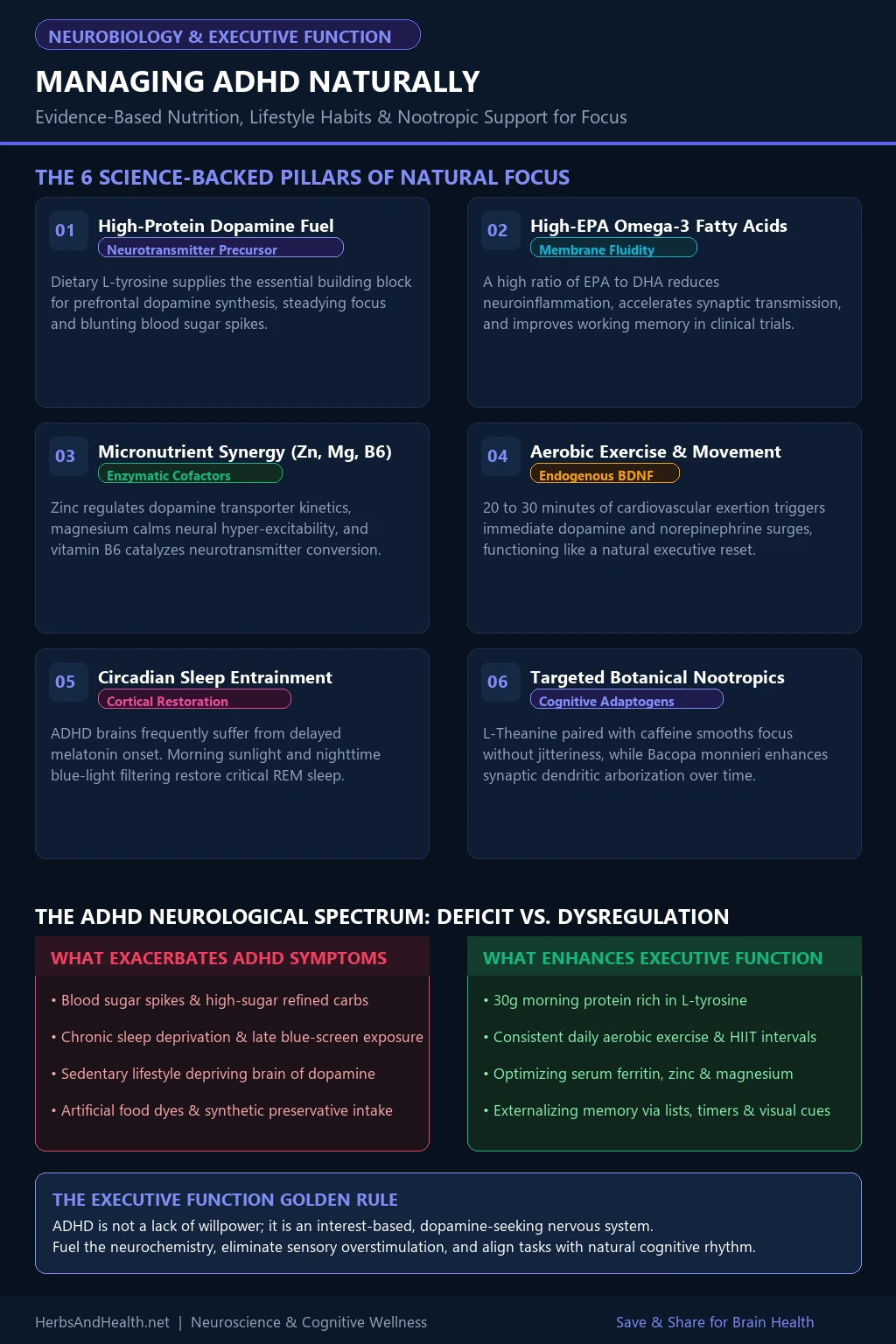
Save this visual neurobiology roadmap to Pinterest or your phone to support daily executive focus naturally.
3. Micronutrient Enzymatic Cofactors: Zinc, Magnesium, and Ferritin
Synthesizing neurotransmitters is an intricate assembly line that requires specific mineral cofactors at every biochemical junction:
- Zinc: Zinc is a critical cofactor in dopamine metabolism. It modulates dopamine transporter affinity and interacts directly with NMDA glutamate receptors to prevent excitotoxicity. Clinical studies have correlated low serum zinc with increased inattention and hyperactivity.
- Magnesium: As explored throughout our metabolic health guides, magnesium regulates over three hundred cellular enzymes. In the brain, magnesium acts as a physiological gatekeeper for NMDA receptors, preventing excess calcium influx that triggers mental agitation and restlessness. Magnesium glycinate or L-threonate supports evening relaxation and cognitive composure.
- Iron & Serum Ferritin: Iron is the essential cofactor for tyrosine hydroxylase, the rate-limiting enzyme that converts tyrosine into L-DOPA. Multiple pediatric and adult studies demonstrate that individuals with ADHD frequently have low serum ferritin (tissue iron stores) even when hemoglobin levels appear normal. Checking and optimizing ferritin above 50 ng/mL can dramatically enhance cognitive stamina.
- Vitamin B6 (Pyridoxal-5-Phosphate): Active B6 is the cofactor for aromatic L-amino acid decarboxylase, which converts L-DOPA into active dopamine.
4. Cardiovascular Exercise: Nature’s Executive Reset
If the neurological benefits of physical exercise could be distilled into a pill, it would be the most prescribed psychiatric treatment on Earth. Aerobic exercise exerts an immediate, profound impact on ADHD neurobiology.
Engaging in twenty to thirty minutes of moderate-to-vigorous aerobic exercise (such as brisk jogging, cycling, rowing, or swimming) triggers an immediate surge in circulating dopamine and norepinephrine, mimicking the physiological effect of low-dose stimulant therapy. Simultaneously, muscular contraction prompts the release of Brain-Derived Neurotrophic Factor (BDNF) in the hippocampus and prefrontal cortex, stimulating neuroplasticity and dendritic arborization. Exercising in the morning primes executive function for the entire workday ahead.
Clinical Cognitive & Focus Support Staples
Vetted natural nutritional formulations supporting prefrontal neurochemistry, membrane fluidity, and calm focus:
Nordic Naturals essential Omega
High-concentration triglyceride form omega-3 delivering optimal EPA levels to support neural membrane fluidity, working memory, and emotional regulation.
Pure Encapsulations L-Tyrosine
Hypoallergenic pure L-tyrosine free from artificial fillers, providing the direct amino acid building block for prefrontal dopamine and norepinephrine synthesis.
Thorne Magnesium Bisglycinate Powder
Highly absorbable chelated magnesium that crosses the blood-brain barrier to modulate NMDA receptors, promoting restful sleep and reducing evening agitation.
5. Circadian Sleep Architecture and Blue Light Hygiene
Up to seventy-five percent of adults with ADHD suffer from circadian rhythm abnormalities, most commonly Delayed Sleep Phase Syndrome (DSPS). Because nighttime melatonin production is naturally delayed by 60 to 90 minutes in ADHD neurobiology, individuals experience an intense “second wind” of alertness at 11:00 PM, staying awake late into the night and waking in a state of severe sleep deprivation.
Sleep debt cripples prefrontal cortical function, rendering ADHD symptoms dramatically worse the next day. Realign your circadian clock through strict photic cues:
- Expose your eyes to ten to fifteen minutes of natural outdoor sunlight within thirty minutes of waking. This signals the suprachiasmatic nucleus to suppress melatonin and begin the countdown for evening sleep pressure.
- Eliminate blue light emission from smartphones and computer screens at least ninety minutes before bed using blue-blocking eyewear or device filters.
- Keep the bedroom cool (65–68 degrees Fahrenheit) and dark, supporting deep slow-wave restorative sleep.
6. Evidence-Based Botanical Adaptogens & Nootropics
Certain botanical compounds offer targeted, non-habit-forming support for attention and cognitive resilience:
- L-Theanine + Caffeine Synergy: L-Theanine is a unique amino acid found in green tea (Camellia sinensis) that stimulates alpha brainwave activity, inducing a state of calm, relaxed alertness. When paired with moderate caffeine in a 2:1 ratio (200 mg L-theanine with 100 mg caffeine), it delivers sharp executive focus while eliminating the jitteriness and blood pressure spikes associated with pure stimulants.
- Bacopa Monnieri: A cornerstone herb of Ayurvedic medicine, Bacopa monnieri contains active bacosides that enhance synaptic nerve impulse transmission and promote dendritic arborization. Clinical trials in children and adults with inattention demonstrate measurable improvements in working memory and cognitive processing speed after eight to twelve weeks of daily supplementation.
- Ginkgo Biloba & French Maritime Pine Bark (Pycnogenol): Pycnogenol is rich in oligomeric proanthocyanidins that improve cerebral microvascular blood flow and scavenge reactive nitrogen species, with clinical trials showing reduced hyperactivity in randomized controlled pediatric trials.
Frequently Asked Questions About Natural ADHD Support
Can eliminating artificial food dyes and additives help with ADHD?
Yes, for a substantial subset of individuals. A landmark randomized, double-blind trial published in The Lancet (the Southampton study) demonstrated that synthetic food colorings (such as Red #40, Yellow #5, and Yellow #6) and the preservative sodium benzoate caused a significant increase in hyperactivity in children. The European Union now requires a warning label on foods containing these artificial dyes. Removing synthetic additives and embracing whole, unadulterated foods is a zero-risk, high-reward strategy.
Is it safe to take natural supplements alongside prescription ADHD medication?
While basic foundational nutrients like omega-3 fatty acids, dietary protein, zinc, and magnesium are generally safe and complementary to stimulant medications, you should always exercise caution with targeted amino acids and herbal extracts. For instance, combining high doses of L-tyrosine or herbal monoamine modulators with prescription stimulants or MAO inhibitors could theoretically provoke elevated blood pressure or excessive adrenergic stimulation. Always review your supplement regimen with your prescribing psychiatrist or physician.
Why do people with ADHD crave sugar and carbohydrates so intensely?
Sugar cravings in ADHD are a physiological attempt at self-medication. Simple carbohydrates trigger a rapid release of serotonin and a brief spike in prefrontal dopamine. The dopamine-starved ADHD brain instinctively seeks out sweets to achieve temporary focus and emotional satisfaction. Replacing refined sweets with high-protein snacks, nuts, berries, and dark chocolate satisfies sweet cravings without triggering metabolic crashes.
Does meditation or mindfulness actually work for an ADHD brain?
Traditional “sit quietly and empty your mind” meditation can be intensely frustrating and counterproductive for an ADHD nervous system. However, active mindfulness practices, such as walking meditations, breathwork pacing, or body-scan techniques, measurably strengthen prefrontal cortical thickness and improve executive impulse control. Even five minutes of intentional diaphragmatic breathing resets an overstimulated nervous system.
How does environmental organization impact ADHD executive function?
Because working memory capacity is limited in ADHD, externalizing memory is essential. The ADHD brain operates on an “out of sight, out of mind” visual continuum. Utilizing visual timers (like the Time Timer), clear organizational bins, written whiteboard checklists, and designated landing spots for keys and daily essentials frees up precious prefrontal cognitive bandwidth, reducing daily overwhelm.
Peer-Reviewed Clinical References & Evidence
- Bloch, M. H., & Qawasmi, A. (2011). Omega-3 fatty acid supplementation for the treatment of children with ADHD: a systematic review and meta-analysis. Journal of the American Academy of Child & Adolescent Psychiatry, 50(10), 991-1000.
- Arnsten, A. F. (2009). Toward a new understanding of ADHD: pathophysiology and directed pharmacotherapies. CNS Drugs, 23(Suppl 1), 33-41.
- McCann, D., et al. (2007). Food additives and hyperactive behaviour in 3-year-old and 8/9-year-old children in the community: a randomised, double-blinded, placebo-controlled trial. The Lancet, 370(9598), 1560-1567.
- Giza, P. E., et al. (2014). The effect of physical activity on cognitive function in children with ADHD: a systematic review. Pediatric Exercise Science, 26(3), 324-338.
- Dave, U. P., et al. (2014). An open-label study to elucidate the effects of standardized Bacopa monnieri extract in ADHD children. Advances in Mind-Body Medicine, 28(2), 10-15.