Evidence-Based Clinical Summary
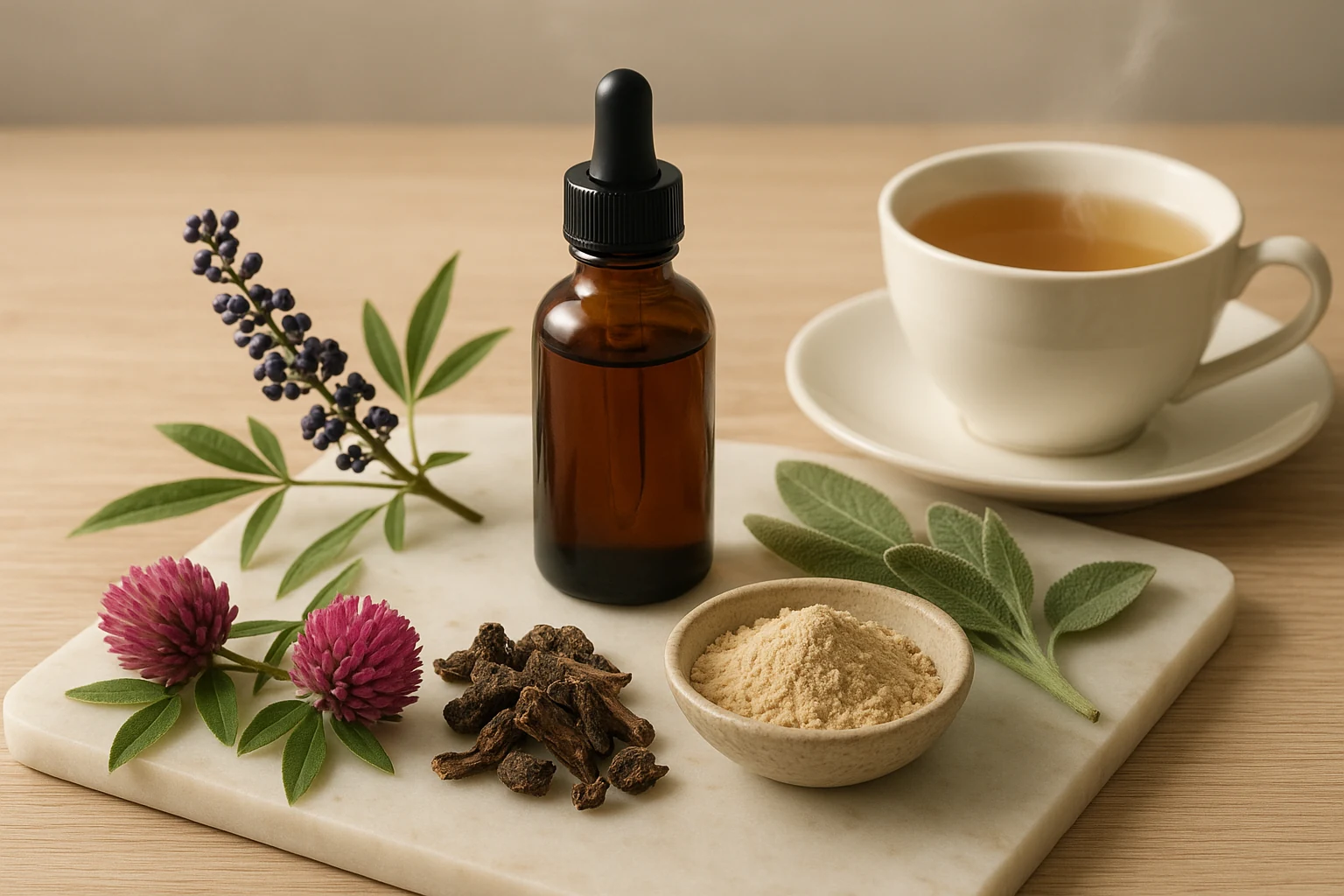
The menopausal transition involves neuroendocrine recalibration of the hypothalamic-pituitary-ovarian (HPO) axis as 17-beta-estradiol (E2) and progesterone decline. Diminished estrogen destabilizes hypothalamic thermoregulation, lowers the vasomotor sweating threshold, and alters central serotonin (5-HT) and GABA neurotransmission. Targeted botanical therapies provide non-hormonal symptomatic relief: triterpene glycosides in Black Cohosh modulate central serotonin receptors; isoflavones in Red Clover exert tissue-selective estrogen receptor-beta (ER-β) agonism; and diterpenes in Chasteberry stimulate dopamine D2 receptors to normalize pituitary gonadotropin secretion.
The menopausal transition represents one of the most intricate biological and neuroendocrine metamorphoses in human physiology. Far from being a simple, abrupt cessation of menstruation, menopause is a prolonged multi-year recalibration of the hypothalamic-pituitary-ovarian (HPO) axis. As ovarian primordial follicular reserves deplete, the rhythmic production of 17-beta-estradiol (E2) and progesterone declines precipitously, while pituitary follicle-stimulating hormone (FSH) and luteinizing hormone (LH) spike in an uncoordinated compensatory effort to stimulate non-responsive ovarian granulosa cells.
Because estrogen receptors (both ER-alpha and ER-beta) are distributed ubiquitously throughout the human body—governing vascular tone, hypothalamic thermoregulation, osteoclast activity, central neurotransmitter synthesis, and dermal collagen fibroblasts—the systemic withdrawal of estrogen reverberates across nearly every physiological system. Women frequently find themselves navigating a turbulent spectrum of vasomotor disruptions, cognitive lapses, emotional volatility, metabolic deceleration, and sleep fragmentation.
While pharmaceutical hormone replacement therapy (HRT) provides profound relief for many, a substantial subset of women face medical contraindications—such as a personal history of estrogen-receptor-positive (ER+) breast cancer, active thromboembolic disorders, or advanced cardiovascular disease—or simply seek evidence-based, botanical alternatives. Fortunately, translational phytotherapy and ethnobotany have identified targeted botanical compounds capable of acting as selective estrogen receptor modulators (SERMs), central neurochemical stabilizers, and hypothalamic adaptogens. Below is the definitive clinical guide detailing the 13 biological signs of menopause and the 13 scientifically validated herbs designed to restore hormonal equilibrium, vitality, and metabolic resilience.
Part 1: The 13 Biological Signs and Symptoms of Menopause
Because estrogen receptors (ER-α and ER-β) are expressed throughout the vascular endothelium, central nervous system, bone matrix, and pelvic tissues, ovarian hormonal depletion triggers multi-system physiological changes:
1. Vasomotor Symptoms (Hot Flashes)
Sudden surges of intense heat across the face, neck, and chest caused by estrogen-withdrawal instability in hypothalamic KNDy neurons. This narrows the core thermoneutral zone, triggering inappropriate peripheral vasodilation.
2. Nocturnal Diaphoresis (Night Sweats)
Severe nighttime vasomotor episodes accompanied by drenching perspiration and rapid temperature chills that disrupt restorative slow-wave delta sleep architecture.
3. Sleep Architecture Fragmentation & Insomnia
Difficulty initiating and maintaining sleep driven by nocturnal temperature spikes and depleted progesterone, whose active neurosteroid metabolite (allopregnanolone) normally enhances calming GABA-A receptor activity.
4. Neurochemical Mood Lability & Anxiety
Emotional swings, heightened irritability, and unprovoked panic sensations resulting from fluctuating estrogen levels, which impair central serotonin transporter synthesis and monoamine oxidase regulation.
5. Cognitive Fatigue & Executive “Brain Fog”
Transient word-finding difficulty, impaired working memory, and reduced concentration. Estrogen serves as a master regulator of cerebral glucose metabolism and hippocampal synaptic dendritic spine density.
6. Genitourinary Syndrome of Menopause (GSM)
Vaginal epithelial thinning, diminished mucosal lubrication, dyspareunia, and recurrent urinary urgency triggered by loss of estrogen-dependent glycogen that maintains protective acidophilic lactobacilli flora.
7. Accelerated Osteopenia & Bone Remodeling Loss
Rapid bone mineral density loss during early menopause. Estrogen normally downregulates osteoclast activity; its withdrawal causes osteoclasts to resorb bone matrix faster than osteoblasts can rebuild it.
8. Joint Arthralgia & Connective Tissue Stiffness
Bilateral joint aches and morning stiffness in the hands, knees, and hips resulting from elevated systemic inflammatory cytokines (IL-1β, IL-6, TNF-α) and diminished synovial fluid hydration.
9. Dermal Thinning, Elasticity Loss & Formication
Accelerated loss of dermal collagen (up to 30% lost in the first 5 years post-menopause), reduced hyaluronic acid hydration, skin barrier fragility, and occasional tactile sensations of “ants crawling on skin” (formication).
10. Metabolic Deceleration & Visceral Adipose Redistribution
Shift from lower-body subcutaneous fat storage to metabolically active visceral abdominal adiposity, driving increased insulin resistance, elevated triglycerides, and higher cardiovascular risk profiles.
11. Benign Cardiovascular Palpitations
Sudden pounding, racing, or skipped heartbeats frequently coinciding with hot flashes, triggered by transient sympathetic surges as estrogen loses its stabilizing autonomic tone.
12. Hair Thinning & Facial Hirsutism
Diffuse scalp alopecia paired with coarse facial hair growth on the chin and upper lip, caused by an increased ratio of circulating free androgens to declining estrogen acting on sensitive hair follicles.
13. Chronic Systemic Fatigue & Adrenal Strain
Deep, unrefreshing daytime physical exhaustion resulting from disrupted sleep architecture and compensatory adrenal overdrive as the adrenal cortex attempts to produce precursor estrogens (DHEA and estrone).
Part 2: The 13 Evidence-Based Botanical Remedies
Standardized botanical therapies target distinct neurochemical receptors and endocrine pathways to restore physiological equilibrium:
1. Black Cohosh (Actaea racemosa)
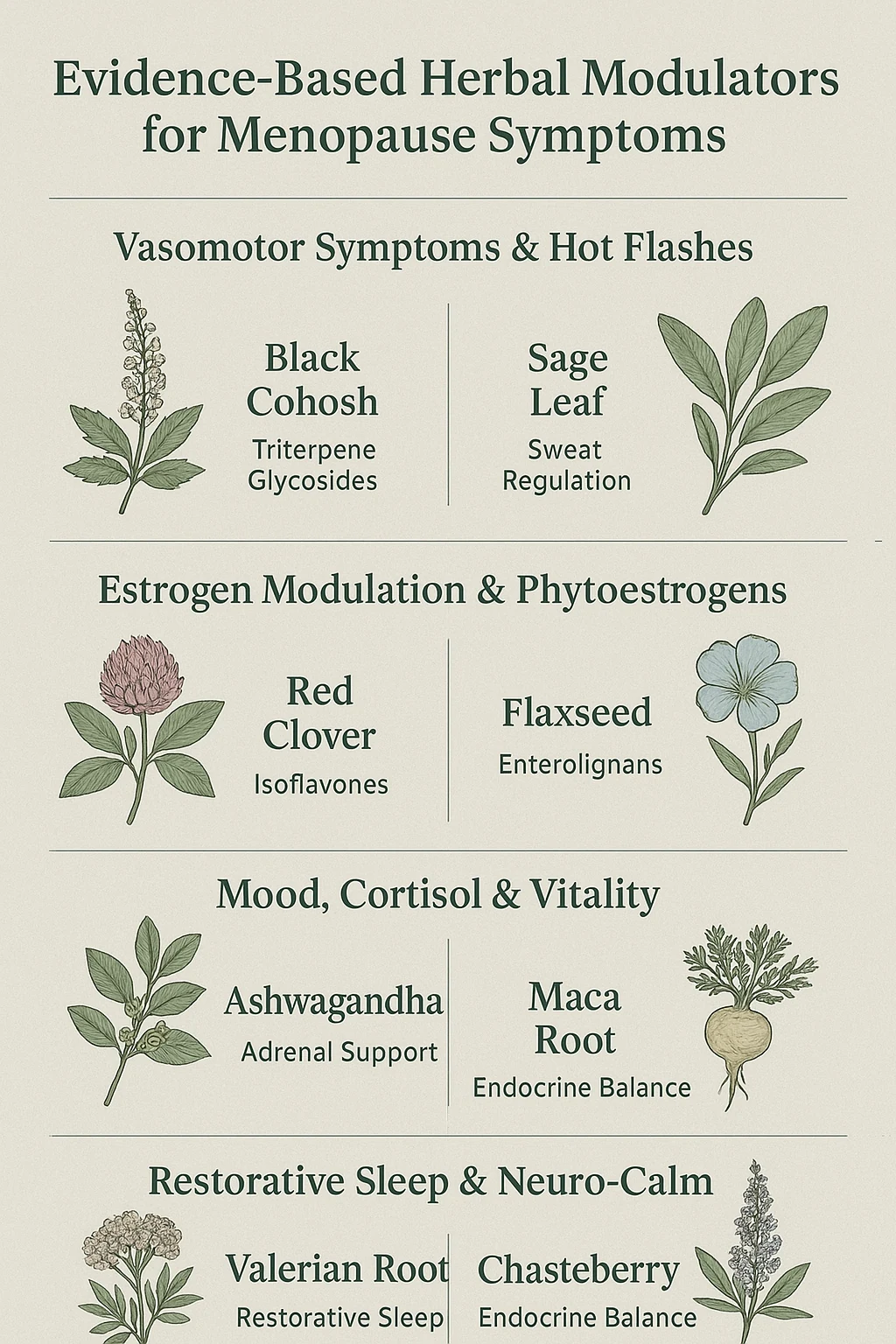
Rich in triterpene glycosides (27-deoxyactein), Black Cohosh acts as a central neuroendocrine modulator rather than a direct phytoestrogen. It binds selectively to hypothalamic 5-HT1A serotonin receptors and opioid mu-receptors to re-establish normal thermoregulation. In a comprehensive review published in Clinical Obstetrics and Gynecology (PubMed PMID: 16012351), standardized Black Cohosh extract demonstrated significant clinical efficacy in reducing hot flash frequency and intensity without stimulating uterine or breast tissue proliferation. Clinical Dosage: 40 mg to 80 mg daily of standardized isopropanolic extract.
2. Red Clover (Trifolium pratense)
Abundant in four selective isoflavones (genistein, daidzein, formononetin, and biochanin A), Red Clover binds preferentially to estrogen receptor-beta (ER-β) found in vascular walls and bone tissue, sparing ER-alpha in the endometrium. Cochrane systematic reviews (PubMed PMID: 23076938) and clinical trials demonstrate that 80 mg of standardized isoflavones daily significantly diminishes daily flushing episodes while supporting arterial elasticity. Clinical Dosage: 40 mg to 80 mg standardized isoflavones daily.
3. Chasteberry / Vitex (Vitex agnus-castus)
Diterpene compounds in Vitex bind to pituitary dopamine D2 receptors, suppressing excess prolactin secretion and supporting corpus luteum progesterone production during perimenopause. Excellent for breast tenderness, cyclical mood swings, and irregular cycle lengths. Clinical Dosage: 20 mg to 40 mg standardized extract daily.
4. Sage Leaf (Salvia officinalis)
Contains rosmarinic acid, carnosic acid, and volatile monoterpenes that modulate central cholinergic and GABAergic pathways. Clinical trials demonstrate up to a 64% reduction in severe daily hot flashes within 8 weeks. Clinical Dosage: 300 mg to 500 mg standardized fresh leaf extract daily.
5. Peruvian Maca Root (Lepidium meyenii)
A non-hormonal Andean adaptogen rich in macamides and macaenes. It optimizes hypothalamic-pituitary function, enhancing energy, emotional resilience, and postmenopausal sexual desire without altering serum estrogen levels. Clinical Dosage: 1,500 mg to 3,000 mg gelatinized powder daily.
6. Evening Primrose Oil (Oenothera biennis)
A premier source of gamma-linolenic acid (GLA, 9–10%), an omega-6 fatty acid converted into anti-inflammatory prostaglandin E1 (PGE1). Relieves breast tenderness, improves skin moisture, and reduces night sweat severity. Clinical Dosage: 1,000 mg to 2,000 mg cold-pressed oil daily.
7. Ashwagandha (Withania somnifera)
Full-spectrum withanolides downregulate excessive hypothalamic-pituitary-adrenal (HPA) axis cortisol secretion, reducing stress-induced temperature spikes and supporting restful sleep. Clinical Dosage: 300 mg to 600 mg standardized root extract (KSM-66) daily.
8. Rhodiola Rosea (Golden Root)
Standardized for 3% rosavins and 1% salidroside, Rhodiola enhances cerebral monoamine neurotransmission (serotonin, dopamine, norepinephrine) to combat menopausal mental fatigue, depression, and executive brain fog. Clinical Dosage: 200 mg to 400 mg daily before breakfast.
9. Dong Quai (Angelica sinensis)
Traditional “female ginseng” containing ligustilide and ferulic acid. Improves microvascular pelvic circulation, relieves muscular spasms, and reduces vasomotor episodes when paired with Black Cohosh. Avoid if taking blood thinners. Clinical Dosage: 500 mg to 1,000 mg dried root extract daily.
10. Valerian Root (Valeriana officinalis)
Valerenic acid inhibits the enzymatic breakdown of GABA in the brain, while lignans bind 5-HT5a receptors. Accelerates sleep onset and reduces nocturnal awakenings caused by nighttime sweating. Clinical Dosage: 300 mg to 600 mg standardized extract 45 minutes before bedtime.
11. St. John’s Wort (Hypericum perforatum)
Rich in hypericin and hyperforin, St. John’s Wort acts as a broad-spectrum monoamine reuptake inhibitor. Clinically proven to enhance mood and synergize with Black Cohosh for refractory vasomotor flushing. Clinical Dosage: 300 mg three times daily (standardized to 0.3% hypericin). (Caution: Potent CYP3A4 inducer; consult physician regarding prescription interactions).
12. Whole Ground Flaxseed (Linum usitatissimum)
The richest dietary source of secoisolariciresinol diglucoside (SDG) lignans. Intestinal microflora convert SDG into enterodiol and enterolactone, mild phytoestrogens that buffer declining estradiol and support bone density. Clinical Dosage: 20 to 30 grams (2 tablespoons) fresh-ground flaxseed daily with food.
13. Wild Yam (Dioscorea villosa)
Contains steroidal saponins (diosgenin). While diosgenin does not convert into progesterone in the human body, it exerts mild antispasmodic and anti-inflammatory properties, relieving pelvic cramping and musculoskeletal soreness. Clinical Dosage: 400 mg to 800 mg standardized extract or topical cream.
Part 3: Systematic Botanical Comparison & Diagnostic Matrix
| Botanical Agent | Key Phytochemical | Primary Indication | Clinical Dosage | Clinical Notes |
|---|---|---|---|---|
| Black Cohosh | Triterpene glycosides | Hot flashes, irritability | 40–80 mg extract daily | Central 5-HT modulator; non-estrogenic |
| Red Clover | Biochanin A, Formononetin | Night sweats, arterial tone | 40–80 mg isoflavones | Selective ER-β agonist; bone support |
| Sage Leaf | Rosmarinic acid | Severe acute diaphoresis | 300–500 mg extract | Rapid cholinergic action; reduces sweat volume |
| Chasteberry | Clerodadienols | Perimenopausal irregularity | 20–40 mg extract | Dopamine D2 agonist; normalizes progesterone |
| Maca Root | Macamides | Low libido, fatigue | 1,500–3,000 mg powder | Non-hormonal HPA axis endocrine adaptogen |
| Ashwagandha | Withanolides | Stress, unrefreshing sleep | 300–600 mg (KSM-66) | Lowers cortisol; enhances GABAergic tone |
| Evening Primrose | Gamma-linolenic acid | Mastalgia, skin dryness | 1,000–2,000 mg cold-pressed | PGE1 precursor; reduces skin moisture loss |
| Valerian Root | Valerenic acid | Menopausal insomnia | 300–600 mg at bedtime | GABA reuptake inhibitor; restores delta sleep |
Part 4: Clinician-Selected Menopause Support Essentials
When selecting herbal remedies for menopause, independent third-party laboratory verification (USP, NSF) and standardized extract percentages are critical. Below are three premier clinician-vetted formulations:
Top Clinical-Grade Menopause Herbal Formulations
Nature’s Way Remifemin Black Cohosh (120 Tablets)
The world’s most clinically researched Black Cohosh formulation. Standardized isopropanolic extract backed by over 90 scientific studies, proven to significantly reduce hot flashes, night sweats, and mood swings without estrogenic rebound.
Gaia Herbs Vitex Chasteberry Liquid Phyto-Caps (60 Count)
Certified organic, full-spectrum Vitex agnus-castus extract delivering concentrated agnuside to optimize pituitary dopamine receptors, balance estrogen-progesterone ratios, and smooth perimenopausal transitions.
Promensil Menopause Double Strength Red Clover (30 Tablets)
Standardized to 80 mg of pure dietary isoflavones (genistein, daidzein, formononetin, biochanin A). Clinically proven to reduce night sweats by up to 73% and promote cardiovascular arterial compliance.
Part 5: Clinical Safety Guidelines & Drug Interactions
- Hormone-Sensitive Cancers: While Black Cohosh and Maca do not activate estrogen receptor-alpha, women with a history of estrogen-receptor-positive (ER+) breast, ovarian, or uterine cancers should consult an oncologist before initiating high-dose phytoestrogen regimens (Red Clover or Flaxseed).
- Anticoagulant Synergy: Dong Quai contains natural coumarins and should be discontinued two weeks before surgery or used cautiously alongside warfarin or direct oral anticoagulants.
- Hepatic Monitoring: Although severe hepatotoxicity with certified Black Cohosh is exceptionally rare, individuals with active hepatic disease should undergo baseline liver enzyme testing.
Related Clinical Endocrine & Botanical Guides
- Ashwagandha Safety Guide: Thyroid Function, Hormone Interactions & Risk Profiles
- Vitamin B12 Guide: Cellular Methylation, Nerve Sheath Protection & Cognitive Resilience
- Boosting Iron Naturally: Plant-Based Remedies for Anemia, Hemoglobin & Energy
- Essential Oils Guide: Aromatherapy Science for Stress, Vasomotor Tone & Sleep
- Health Benefits of Seeds: Flaxseed Enterolignans & Estrogen Receptor Balancing
Frequently Asked Questions (Clinical FAQ)
How long does it take for herbs like Black Cohosh and Sage to work?
Most clinical trials demonstrate observable reductions in hot flash frequency and sweating severity within 2 to 4 weeks of continuous daily use, with maximum therapeutic benefits establishing between 8 and 12 weeks as neurochemical receptors adapt.
Are botanical phytoestrogens safe for long-term use?
Phytoestrogens like red clover isoflavones and flaxseed lignans bind preferentially to ER-beta receptors, exerting tissue-protective effects in bone and vascular tissue without stimulating endometrial hyperplasia. Long-term studies up to two years show high safety in healthy postmenopausal women.
Can I combine Black Cohosh, Sage, and Maca together?
Yes. Combining herbs that utilize distinct physiological mechanisms—such as Black Cohosh for central hypothalamic serotonin modulation, Sage for acute sweat gland cholinergic control, and Maca for adrenal endocrine support—is a standard integrative practice offering synergistic relief.
Does wild yam cream convert into human progesterone?
No. While wild yam contains diosgenin, the human body lacks the biochemical enzymes required to convert diosgenin into active progesterone. That conversion requires industrial chemical synthesis. However, wild yam cream provides soothing topical hydration and mild antispasmodic comfort.
What lifestyle habits best complement these herbal remedies?
Maintaining a cool sleeping environment (65°F / 18°C), wearing breathable natural fibers, engaging in regular resistance exercise to stimulate osteoblasts, and eliminating evening caffeine and alcohol significantly lower the core temperature threshold for vasomotor triggering.
Final Medical Takeaway
Menopause is not a pathology to be cured, but a profound endocrine transition that deserves comprehensive, compassionate, and scientifically grounded support. By understanding the 13 clinical signs of estrogen withdrawal and strategically employing evidence-based botanicals—utilizing Black Cohosh and Sage for vasomotor stability, Red Clover and Flaxseed for selective ER-beta tone, Maca and Ashwagandha for adrenal stamina, and Valerian for restorative sleep—women can navigate this pivotal phase with physiological comfort, vitality, and empowered confidence.
Thank you for the good writeup. It in fact was
a amusement account it. Look advanced to more added agreeable from you!
However, how could we communicate?