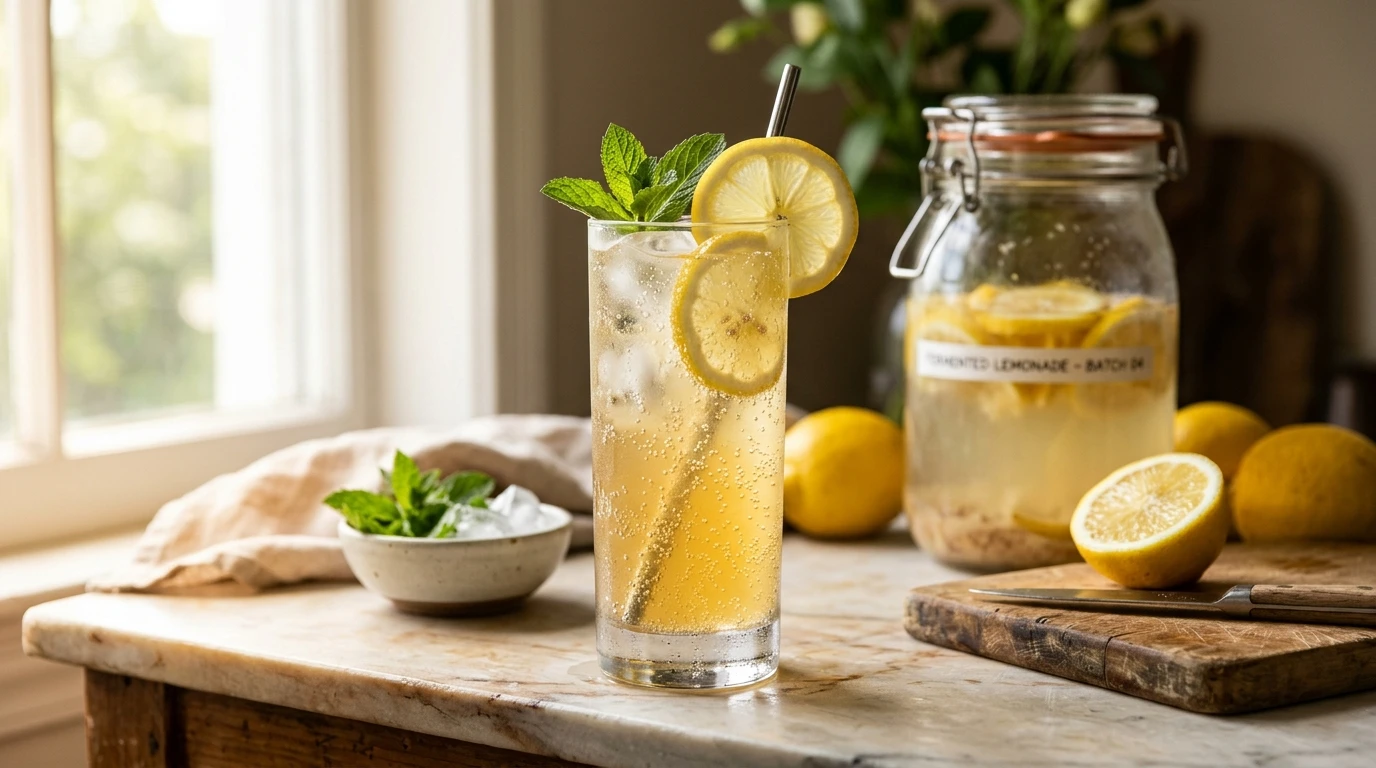
Quick Medical Summary: Traditional commercial lemonades deliver over 30 grams of refined sugar per serving with zero active biology. Probiotic lemonade utilizes wild or cultured lacto-fermentation (via water kefir tibicos, active whey, or ginger bug starters) to metabolize simple sucrose into therapeutic organic acids (lactic, acetic, and citric) and living beneficial microbes. Clinical studies demonstrate that daily dietary intake of fermented functional beverages expands mucosal microbiome diversity, enhances short-chain fatty acid (SCFA) production, downregulates systemic inflammatory cytokines, and supports gastric acidification. Always brew in food-grade, pressure-rated fermentation glass to prevent carbon dioxide overpressurization.
Traditional lemonade is undeniably refreshing, yet standard commercial recipes are essentially liquid dessert—delivering up to 30 grams of refined sugar per glass alongside zero active biology. For anyone working to rebuild their gastrointestinal microbiome, manage systemic inflammation, or maintain stable metabolic health, traditional sugary sodas and pasteurized lemonades are counterproductive.
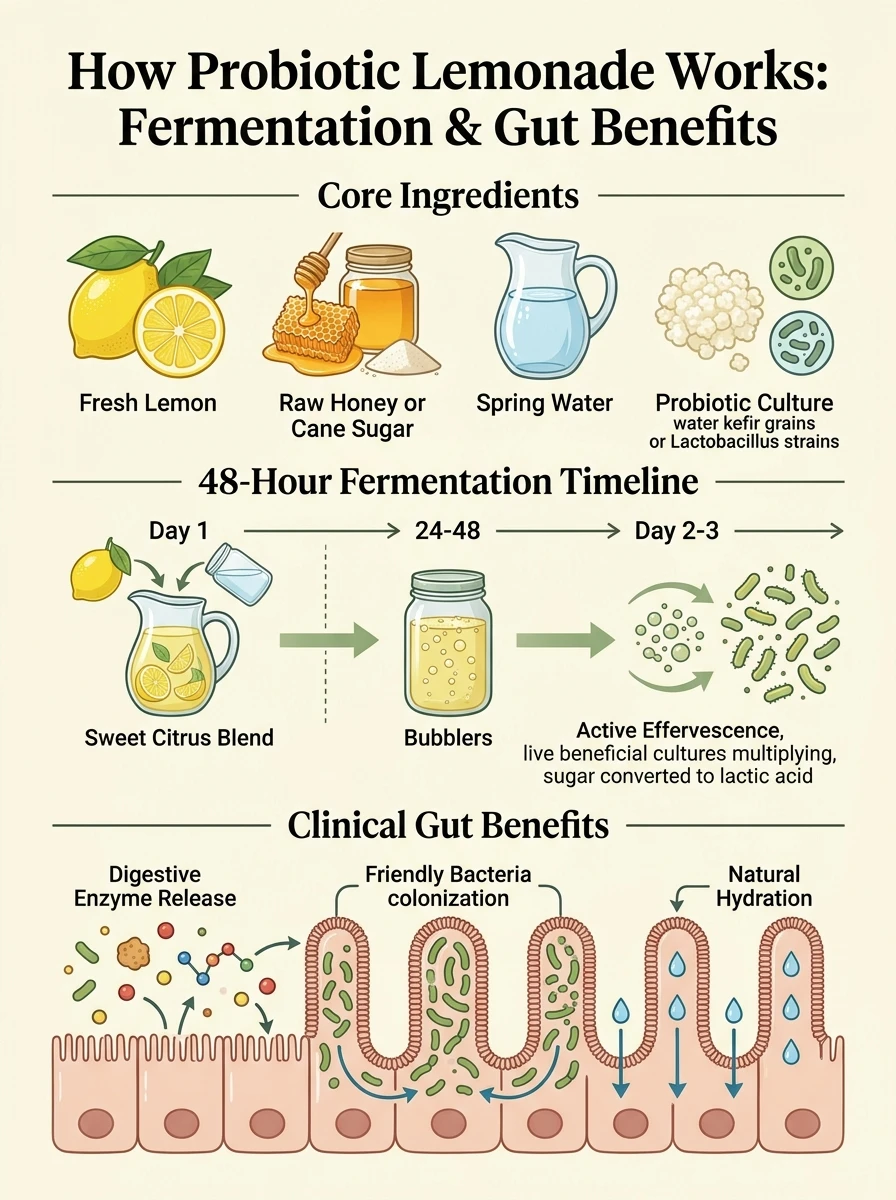
Probiotic lemonade fundamentally transforms this dynamic. By introducing beneficial microbial cultures to fresh citrus juice and a controlled carbohydrate source, home fermentation converts ordinary lemonade into a living, effervescent, digestive tonic. Over a 24 to 72-hour metabolic cycle, friendly bacteria and yeasts consume the vast majority of simple sugars, producing natural carbonation, cellular B-vitamins, bioavailable organic acids (lactic, acetic, and gluconic acid), and billions of colony-forming units (CFUs) of gut-protective microbes.
Unlike commercial “probiotic drinks” that undergo high-heat flash pasteurization before having isolated, heat-resistant bacterial spores re-added, authentic home-fermented lemonade yields a complex, wild, synergistic ecosystem. Here is an evidence-based, clinical culinary guide to making sparkling probiotic lemonade safely at home, including starter culture comparisons, step-by-step fermentation protocols, and microbial safety guidelines.
1. The Microbial Science: How Fermentation Transforms Lemon Juice
At first glance, fresh lemon juice seems inhospitable to bacterial life. With a resting pH between 2.0 and 2.6, raw citrus contains high concentrations of citric acid and antimicrobial terpenes. Yet, as affirmed by the ISAPP consensus panel on fermented foods and human health (PMID: 33398112), specialized acidophilic lactic acid bacteria (LAB) and wild yeasts thrive in acidic mediums, systematically transforming simple carbohydrates into protective postbiotic metabolites.
During fermentation, these microbes metabolize sucrose and fructose through glycolytic pathways:
- Carbohydrate Depletion: The microbes feed on the added raw sugar or honey. By day three of active fermentation, residual sugar levels drop by 60% to 80%, leaving behind a dry, tart, complex beverage with minimal glycemic impact.
- Organic Acid Production: Bacteria produce l-lactic acid and gluconic acid, which lower the pH to a shelf-stable range (~3.2 to 3.5), naturally preventing colonization by pathogenic bacteria like E. coli or Salmonella.
- Natural Carbonation: In closed anaerobic environments, beneficial yeasts (such as Saccharomyces boulardii) release microscopic carbon dioxide bubbles, creating a champagne-like fizz without synthetic carbonation.
- Enhanced Vitamin Bioavailability: Microbial enzymatic action breaks down bound citrus bioflavonoids (hesperidin, naringin, and diosmin), increasing their absorption across the small intestinal brush border.
2. Choosing Your Starter Culture: 4 Proven Methods
Every fermentation requires an initial inoculum of living cultures. You can brew probiotic lemonade using any of the four reliable starters below, depending on what you have in your kitchen:
Option A: Water Kefir Grains (The Gold Standard)
Also known as Tibicos, water kefir grains are not grains at all, but rather a polysaccharide matrix housing a symbiotic colony of bacteria and yeast (SCOBY). Water kefir produces the most diverse microbial profile—frequently containing over 30 distinct probiotic strains. It generates aggressive carbonation and a delightfully crisp, clean flavor profile within 24 to 48 hours.
Option B: Fresh Liquid Whey (Dairy-Derived Culture)
If you strain plain, unpasteurized, active-culture whole milk yogurt or kefir through a fine cheesecloth, the cloudy liquid that drips out is fresh whey. Rich in Lactobacillus bulgaricus and Streptococcus thermophilus, 1/4 cup of fresh liquid whey acts as a reliable, gentle starter. It imparts a subtle, creamy tang to the lemonade while utilizing a simple kitchen byproduct.
Option C: High-Potency Probiotic Capsules (Beginner Friendly)
If you don’t maintain live cultures at home, you can empty 2 to 3 shelf-stable, multi-strain probiotic capsules (providing at least 30 to 50 billion CFUs containing Lactobacillus and Bifidobacterium species) directly into the sweet lemon mixture. While this culture doesn’t produce as much effervescence as kefir grains, it reliably inoculates the batch with targeted, clinically documented therapeutic strains.
Option D: Active Ginger Bug Starter
A wild fermented ginger bug (created by feeding grated organic ginger root and raw sugar over 5 days) introduces wild airborne yeasts and wild lactobacilli. When added to lemon juice, it creates a spicy, effervescent “lemon-ginger probiotic brew” reminiscent of traditional artisan ginger beer.
3. Master Step-by-Step Probiotic Lemonade Recipe
This formulation yields approximately half a gallon (2 liters) of sparkling, artisanal probiotic lemonade.
Equipment Required
- 1 Half-gallon (64 oz) wide-mouth glass fermentation jar.
- Breathable organic cotton cloth or tight-weave cheesecloth with a rubber band.
- 2 to 3 pressure-rated swing-top glass bottles (flip-top Grolsch style).
- Wooden or silicone stirring spoon (avoid raw metals, which can react with citrus acids).
- Fine-mesh stainless steel or nylon strainer.
Ingredients
- Fresh Lemon Juice: 1 cup (freshly squeezed from approximately 5–6 organic lemons). Avoid bottled lemon juice containing potassium metabisulfite preservatives.
- Filtered Water: 6 cups of clean, non-chlorinated spring or reverse-osmosis water (chlorinated tap water will inhibit beneficial bacteria).
- Fermentable Sugar: 1/2 cup of organic raw cane sugar, turbinado, or raw honey. (Remember: this sugar feeds the bacteria, not you).
- Starter Culture: 1/4 cup of first-ferment water kefir, OR 1/4 cup of fresh liquid whey, OR 2–3 probiotic capsules.
- Optional Flavor Enhancers: 2 sprigs of fresh bruised organic mint, 1 thin slice of fresh ginger root, or 1 tablespoon of organic lavender blossoms.
Preparation Protocol
- Dissolve the Base: In your clean glass jar, add 1 cup of warm water and 1/2 cup of raw cane sugar. Stir thoroughly until the crystals are completely dissolved. Add the remaining 5 cups of cool filtered water to bring the mixture to room temperature (68°F–75°F / 20°C–24°C). Never add starter cultures to hot liquid, as heat above 105°F kills live bacteria.
- Incorporate Citrus & Starter: Pour in 1 cup of freshly squeezed lemon juice. Add your chosen starter culture (water kefir liquid, whey, or opened probiotic powder). Stir gently with a wooden spoon to evenly disperse the culture.
- Primary Fermentation (Aerobic & Breathable): Cover the jar opening with your breathable cotton cloth and secure it tightly with a rubber band. This keeps fruit flies and airborne contaminants out while allowing oxygen exchange and releasing initial fermentation gases. Place the jar in a warm, dark pantry or countertop away from direct sunlight for 24 to 48 hours.
- Taste Test: Around the 36-hour mark, take a sip using a clean straw. The liquid should transition from sweet and sharp to tangy, mildly tart, and slightly effervescent. If it still tastes like ordinary sweet lemonade, let it ferment an additional 12 to 24 hours.
- Secondary Fermentation (Carbonation Bottling): Strain out any lemon seeds or pulp through your fine-mesh strainer. Funnel the liquid into airtight swing-top glass bottles, leaving at least 1.5 inches of headspace at the top. Seal the flip-top caps tightly and let them rest at room temperature for 18 to 24 hours. This anaerobic phase traps carbon dioxide, creating natural, fine effervescence.
- Cold Crash & Storage: Transfer the pressurized bottles to the refrigerator. Chilling halts active yeast fermentation, stabilizes pressure, and forces carbon dioxide into solution, creating crisp, fine bubbles. Serve over ice with a slice of fresh lemon and a sprig of fresh mint.
4. Crucial Fermentation Safety & Explosion Prevention
Because live fermentation generates continuous carbon dioxide gas, practicing simple kitchen safety protocols ensures a delightful brew without broken glass or kitchen messes:
- Pressure-Rated Glass Only: Never bottle secondary fermentations in decorative or square craft bottles, which lack uniform structural walls. Always use certified round brewing swing-top bottles.
- Mandatory Daily Burping: During warm summer months, active ambient fermentation produces rapid carbon dioxide. Gently open the swing-top latch daily to vent excess pressure.
- Temperature Control: Avoid ambient temperatures above 82°F (28°C), which cause hyperactive yeast proliferation, off-flavors, and rapid overpressurization.
- Refrigeration Halts Fermentation: Transfer carbonated bottles to the refrigerator to put microbes into metabolic dormancy, preserving fizz and flavor.
5. Curated Home Fermentation Essentials Buyer’s Guide
To establish safe, effortless, and continuous batches of effervescent probiotic tonics at home, investing in food-grade, pressure-rated brewing equipment guarantees optimal results and prevents bottle failures:
Artisan Fermentation Essentials Showcase
Brewer Tested & ApprovedHeavy-Duty Pressure-Rated Swing Top Glass Bottles (16 oz, 6-Pack)
Thick, food-grade glass bottles with stainless steel wire bails and silicone airtight gaskets. Engineered specifically to withstand high-pressure secondary carbonation without risk of shattering.
Check Bottles on Amazon →Organic Active Water Kefir Grains (Tibicos Live Culture)
Heirloom live water kefir grains that multiply with every batch. Provides an endlessly renewable source of 30+ strains of beneficial bacteria and probiotic yeasts for lemonades and sparkling tonics.
View Live Cultures on Amazon →Grade 90 Organic Unbleached Cotton Cheesecloth (Ultra Fine Weave)
100% lint-free, unbleached organic virgin cotton. Allows optimal aerobic respiration for primary ferments while completely barring fruit flies, dust, and wild mold contaminants.
Check Cheesecloth on Amazon →6. Clinical Gut Health & Systemic Benefits
Integrating 4 to 8 ounces of freshly brewed probiotic lemonade into your daily dietary routine offers compounding gastrointestinal and metabolic advantages:
- Gastric Digestive Priming: Consuming organic citric and lactic acids stimulates parietal cell gastric acid secretion, relieving functional bloating and easing symptoms of hypochlorhydria.
- Microbial Diversity Expansion: In a landmark Stanford clinical trial on fermented foods and microbiome diversity (PMID: 34256014), researchers demonstrated that dietary intake of fermented beverages significantly increased gut flora alpha-diversity and decreased 19 distinct inflammatory biomarkers (including IL-6 and IL-18).
- Bowel Motility & Regularity: Organic acids accelerate colonic peristalsis and soften stools, serving as a gentle adjunct to our clinical natural remedies for constipation.
- Hepatic Antioxidant Defense: Bioavailable citrus bioflavonoids (hesperidin, naringin) and organic acids ease portal endotoxemia, directly supporting liver detoxification pathways and cellular longevity.
While fermented probiotics cultivate gut mucosal resilience, severe acute abdominal distress requires immediate emergency evaluation; learn more in our clinical review of appendicitis symptoms and abdominal pain signs.
Related Clinical & Digestive Guides
- Microbiome & Barrier Health: The Complexity of the Gut: Microbiome, Mucosal Immunity & Digestion
- Hepatic Detox & Bile Flow: Liver Health Essentials: Phase I & II Detox Science, Silymarin & Protocols
- Intestinal Motility & Regularity: Natural Remedies for Constipation: 7 Clinically Proven Ways to Restore Regularity
- Fermentation Science & Digestion: Apple Cider Vinegar: 7 Science-Backed Uses for Health & Digestion
- Functional Gut Management: What Is IBS? Myths, Facts, Low-FODMAP Diet & Natural Therapies
Frequently Asked Questions (FAQ)
How long does homemade probiotic lemonade last in the refrigerator?
Properly sealed in pressure-rated swing-top glass bottles and kept chilled at 38°F (3°C), probiotic lemonade remains fresh, bubbly, and enzymatically active for up to 3 weeks. Over time, the flavor profile will slowly shift toward a drier, more cider-like tartness as the cold-tolerant bacteria continue slowly metabolizing trace carbohydrates.
Can individuals with diabetes drink probiotic lemonade?
Yes, provided the batch is allowed to complete a full 48 to 72-hour primary fermentation. During this window, the microbial cultures consume the vast majority of the sucrose and fructose, leaving behind minimal residual sugar. For extra precision, you can use a home brewing hydrometer or Brix refractometer to verify that sugar levels have depleted before consuming.
Why did my probiotic lemonade fail to fizz?
Lack of effervescence usually stems from one of three variables: (1) Chlorinated water: Municipal tap water contains chlorine and chloramines specifically designed to destroy bacteria; always use filtered spring or RO water. (2) Cold ambient room temperature: Fermentation slows significantly below 68°F (20°C); move the jar to a warmer location like atop a refrigerator. (3) Bottle seal failure: If using cheap swing-top bottles with dried or misaligned rubber gaskets, carbon dioxide escapes instead of dissolving into the liquid.
Can I make probiotic lemonade with artificial sweeteners or stevia?
No. Living probiotic bacteria and yeasts are biological organisms that require real fermentable carbohydrates (sucrose, glucose, or fructose) for cellular metabolism and respiration. Non-nutritive sweeteners like stevia, erythritol, monk fruit, or sucralose cannot be metabolized by lactic acid bacteria; without real sugar, the starter culture will starve, fail to reproduce, and spoil.
Final Medical Verdict: Restoring Living Nutrition to Your Glass
Reclaiming optimal gut health does not require costly daily probiotic supplements or overly processed commercial kombuchas packed with artificial flavorings. By utilizing simple, ancestral fermentation mechanics, fresh lemons, and active starter cultures, you can create a sparkling, deeply nourishing probiotic lemonade that delivers tangible digestive support, bioavailable cellular hydration, and microbial vitality to your daily routine.