Quick Medical Summary: The human gastrointestinal tract houses over 38 trillion microorganisms and roughly 70% to 80% of the entire immune system across its mucosal barrier. Rather than functioning merely as an alimentary tube, the gut acts as a central neuroendocrine-immunological hub governed by a four-layer mucosal barrier and the bidirectional gut-brain axis. Increased intestinal permeability (“leaky gut”) triggered by dysbiosis, chronic stress, and zonulin release drives systemic endotoxemia, neuroinflammation, and metabolic disruption. Evidence-based mucosal repair relies on the functional 5-R protocol (Remove, Replace, Reinoculate, Repair, and Rebalance) leveraging targeted enterocyte fuels including micronized L-glutamine, zinc-L-carnosine, and spore-forming probiotics. Seek urgent gastroenterology evaluation for persistent rectal bleeding, unexplained iron-deficiency anemia, nocturnal diarrhea, or involuntary weight loss.
For decades, conventional medicine viewed the digestive tract primarily as a mechanical conduit for processing calories and expelling waste. Modern molecular gastroenterology has overturned this reductionist model, establishing the gut as the body’s master metabolic, immunological, and neuroendocrine command center. Harboring trillions of microbes and producing over 90% of systemic serotonin, the gastrointestinal barrier orchestrates systemic inflammatory tolerance, metabolic homeostasis, and cognitive vitality.
Interfacing with this microbial universe is the gut mucosal barrier: a microscopic cellular shield merely one enterocyte cell layer thick. This fragile monolayer regulates the boundary between the internal human milieu and an external luminal environment filled with dietary macromolecules, opportunistic microbes, and environmental toxins.
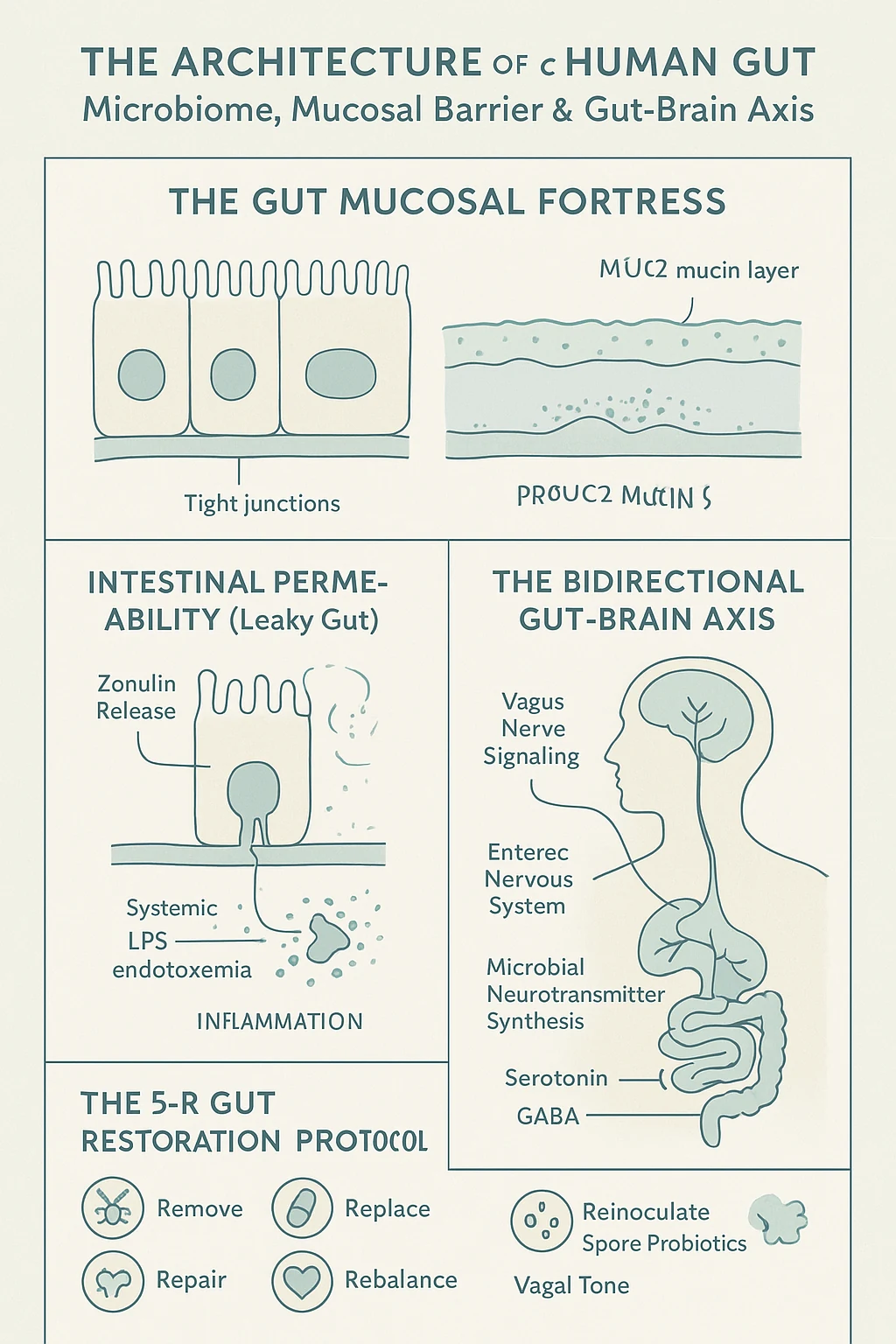
1. The Gut Mucosal Fortress: The 4 Lines of Defense
Clinicians evaluate four interdependent defenses that form the gut mucosal fortress:
1. The Dual-Layer Mucus Shield
- Outer Loose Mucus Layer: Roughly 100–200 µm thick, this layer serves as the ecological home for commensal bacteria. Consuming traditionally fermented botanicals like probiotic lemonade introduces beneficial organic acids and enzymes that sustain this microbial buffer.
- Inner Adherent Mucus Layer: Approximately 30–50 µm thick, this sterile gel adheres tightly to enterocytes, densely packed with defensins, lysozyme, and Secretory IgA to physically block bacterial adherence.
2. The Single-Cell Epithelial Monolayer
- Enterocytes: Polarized columnar cells lined with apical microvilli that execute nutrient absorption. They undergo rapid mitotic self-renewal every 3 to 5 days, demanding continuous cellular fuel.
- Goblet & Paneth Cells: Specialized epithelial cells synthesizing MUC2 mucin polymers and antimicrobial cryptdins that shield crypt stem cells from pathogenic colonization.
3. The Tight Junction Protein Complex (The Paracellular Seal)
While nutrients pass through enterocytes (transcellular transport), the microscopic spaces between adjacent cells (paracellular space) must be hermetically sealed against toxic macromolecules. This seal is governed by the Apical Junctional Complex, consisting of:
- Claudins & Occludin: Transmembrane proteins that form size- and charge-selective paracellular pores, strictly controlling passive aqueous and ionic transport.
- Zonula Occludens-1 (ZO-1): Intracellular anchor protein connecting transmembrane seals to the enterocyte actin cytoskeleton, maintaining apical structural tension.
4. Gut-Associated Lymphoid Tissue (GALT) & Secretory IgA
Beneath the basement membrane in the lamina propria lies the Gut-Associated Lymphoid Tissue (GALT), containing over 70% of human immune cells. Dendritic cells continuously sample luminal antigens and stimulate plasma cells to secrete Secretory IgA (sIgA). Crucially, sIgA neutralizes pathogens without triggering damaging complement activation, preserving mucosal peace.
2. Pathophysiology of “Leaky Gut”: The Zonulin Trigger & Endotoxemia
In modern gastroenterology, “leaky gut” is clinically recognized as increased intestinal permeability. Under normal physiology, tight junctions open briefly to allow fluid and micronutrients to pass. However, as demonstrated in a landmark clinical review on zonulin-mediated gut permeability and autoimmune pathogenesis (PMID: 32998782), abnormal upregulation of zonulin disassembles ZO-1 scaffolds, widening paracellular pores and allowing toxic luminal macromolecules to flood the lamina propria.
The Triggers for Zonulin Secretion
- Dietary Gliadin: Indigestible gluten fragments bind CXCR3 receptors on enterocytes, triggering rapid MyD88-dependent zonulin secretion even in non-celiac individuals.
- Dysbiosis & Endotoxins: Luminal blooms of gram-negative bacteria shedding lipopolysaccharide (LPS) activate enterocyte TLR-4, amplifying zonulin release and mucosal inflammation.
Secreted zonulin binds to epidermal growth factor receptor (EGFR) and proteinase-activated receptor 2 (PAR2) on enterocytes, polymerizing actin filaments and pulling ZO-1 and occludin away from the tight junction complex. The “drawbridges” snap open.
Metabolic Endotoxemia & Systemic Chronic Inflammation
With tight junction barriers dismantled, intact microbial antigens, dietary proteins, and LPS translocate freely into the lamina propria, activating toll-like receptors and unleashing inflammatory cytokines (TNF-α, IL-6, IL-1β) directly into the bloodstream.
As bacterial LPS translocates into mesenteric venules, it drains directly via the portal vein into the liver. There, it overstimulates hepatic Kupffer macrophages, causing chronic oxidative stress and overwhelming detox pathways. Our clinical guide to liver health and Phase I & II detoxification details how metabolic endotoxemia accelerates fatty liver progression and fatigue.
3. The Bidirectional Gut-Brain Axis: How the Gut Controls the Mind
The gut and the central nervous system are in continuous, bidirectional dialogue via three distinct biological superhighways:
1. The Vagus Nerve Superhighway
The vagus nerve (Cranial Nerve X) provides bidirectional neural hardwiring between the enteric nervous system and the brainstem nucleus tractus solitarius. In an authoritative review on the microbiota-gut-brain axis in health and neurobehavior (PMID: 31460510), clinical investigators demonstrated that microbial metabolites and afferent vagal firing directly calibrate microglial activation, neuroinflammation, stress tolerance, and emotional behavior.
2. Microbial Neurotransmitter Biosynthesis
The gut microbiome is a prolific biochemical chemical factory producing essential human neurotransmitters:
- Serotonin (5-HT): Over 90% of systemic serotonin is synthesized in the gut by enterochromaffin cells. Indigenous spore-forming bacteria promote transcription of tryptophan hydroxylase-1 (TPH1), the rate-limiting enzyme in serotonin production. While gut-derived serotonin does not cross the blood-brain barrier directly, it governs gut peristalsis, secretomotor reflexes, platelet aggregation, and afferent vagal firing.
- GABA (Gamma-Aminobutyric Acid): Specific commensal strains—notably Lactobacillus rhamnosus, Lactobacillus brevis, and Bifidobacterium dentium—express active glutamate decarboxylase (GAD) enzymes, converting excitatory dietary glutamate into inhibitory GABA, calming autonomic hyperarousal.
- Dopamine & Acetylcholine: Bacterial genera including Bacillus and Lactobacillus synthesize active dopamine and acetylcholine, supporting intestinal motility and mucosal immune homeostasis.
3. The Hypothalamic-Pituitary-Adrenal (HPA) Stress Axis
Psychological stress and gut permeability exist in a tight neurochemical loop. Chronic sympathetic activation triggers corticotropin-releasing hormone (CRH), causing intestinal mast cells to degranulate. Released histamine and proteases rapidly degrade tight junction complexes, elevating systemic permeability within hours.
4. Short-Chain Fatty Acids (SCFAs): The Molecular Currency of Gut Health
When beneficial anaerobes ferment prebiotic dietary fibers and resistant starches in the colon, they produce short-chain fatty acids (SCFAs)—the primary metabolic currency of gastrointestinal and systemic vitality.
1. Butyrate (The Master Enterocyte Fuel)
Synthesized primarily by Faecalibacterium prausnitzii, Eubacterium rectale, and Roseburia species, butyrate is the single most vital molecule for colon health:
- Colonocyte Energy: Colonocytes derive over 70% of their metabolic energy from butyrate beta-oxidation, maintaining the physiological hypoxia needed to protect anaerobic flora.
- Epigenetic Modulation: Butyrate functions as a potent histone deacetylase (HDAC) inhibitor, upregulating FOXP3+ regulatory T cells and promoting smooth colon motility explored in our guide on natural remedies for constipation.
2. Acetate & Propionate
While butyrate fuels local colonocytes, propionate and acetate enter the portal circulation to regulate gluconeogenesis and appetite signaling. Balanced SCFA production stabilizes visceral sensitivity, directly protecting against symptom flares in irritable bowel syndrome (IBS).
5. The Clinical 5-R Gut Restoration Protocol
Integrative gastroenterology utilizes the clinical 5-R protocol to systematically restore mucosal integrity:
Phase 1: Remove
Eliminate environmental, dietary, and microbial irritants that trigger zonulin release and mucosal friction:
- Dietary Antigens & Toxins: Eliminate gluten, excess industrial seed oils, refined fructose, and ultra-processed food emulsifiers (polysorbate-80, carboxymethylcellulose) that degrade the protective mucus barrier.
- Pathogen Eradication: Treat confirmed fungal overgrowths, parasites, or SIBO using targeted botanicals such as emulsified oregano oil, berberine, or allicin under practitioner guidance.
Phase 2: Replace
Restore optimal chemical digestive factors required to thoroughly cleave dietary macromolecules before they reach the small intestine:
- Gastric Acid Optimization: Supplemental Betaine HCl with pepsin restores gastric acidity (pH 1.5–2.2) to cleave proteins and sterilize food. Mild hypochlorhydria can also be gently supported with diluted apple cider vinegar prior to meals.
- Pancreatic Enzymes & Bile Salts: Broad-spectrum proteases, lipases, and ox bile extracts prevent undigested macromolecules from reaching the colon and feeding dysbiotic overgrowths.
Phase 3: Reinoculate
Re-establish healthy microbial diversity utilizing targeted probiotic strains and selective prebiotic substrates:
- Spore-Forming Organisms: Endospore strains such as Bacillus coagulans and Bacillus subtilis survive harsh gastric acid to germinate directly in the intestines and secrete bacteriocins against pathogens.
- Prebiotic Substrates: Soluble prebiotic fibers (acacia gum, partially hydrolyzed guar gum) feed indigenous Faecalibacterium prausnitzii to stimulate natural butyrate production.
Phase 4: Repair (Targeted Mucosal Nutrients & Botanicals)
Provide the essential biochemical substrates enterocytes require to seal tight junctions and regenerate the mucus layer:
- Micronized L-Glutamine (5–10g daily): The primary metabolic fuel for enterocytes, stimulating protein synthesis, claudin-1 assembly, and rapid mucosal closure.
- Zinc-L-Carnosine (75mg twice daily): Patented chelate that adheres directly to damaged epithelial sites, stimulating local antioxidant defenses and accelerating tissue repair.
- Deglycyrrhizinated Licorice (DGL): Rich in flavonoids that stimulate goblet cells to produce protective protective mucin without elevating blood pressure.
Phase 5: Rebalance
Re-align lifestyle and neuro-autonomic factors to ensure long-term gut resilience:
- Vagal Nerve Activation: Diaphragmatic breathing and humming stimulate parasympathetic tone, restoring splanchnic blood flow and normal digestive secretions.
- Circadian Alignment: Maintaining an 8-hour overnight fast allows the Migrating Motor Complex (MMC) to sweep residual bacteria and debris through the small intestine.
6. Clinical Gut Restoration Protocols Comparison Table
The table below summarizes clinical gut-repair therapeutics by biological target and dosing:
| Therapeutic Agent | Primary Target Layer | Molecular Mechanism | Standardized Clinical Dose | Key Clinical Synergy / Timing |
|---|---|---|---|---|
| L-Glutamine | Enterocyte Monolayer | Primary fuel for enterocytes; upregulates claudin-1 & occludin | 5–10 g/day in powder form | Take on empty stomach upon waking or before bed. |
| Zinc-L-Carnosine (PepZin GI) | Tight Junctions & Ulcers | Adheres to mucosal lesions; stimulates IGF-1 & stabilizes ZO-1 | 75 mg BID (delivering 16 mg elemental Zn) | Highly synergistic with L-Glutamine. Take with meals. |
| Spore Probiotics (Bacillus) | Microbiome & GALT | Survives gastric acid; synthesizes antimicrobial bacteriocins | 2–4 billion CFU daily | Take with food. Heat-stable and antibiotic-resistant. |
| Saccharomyces boulardii | Lumen & Mucus Shield | Neutralizes microbial toxins; stimulates Secretory IgA (sIgA) | 250–500 mg (5–10 billion CFU) BID | Ideal during/after antibiotic therapy. Non-colonizing. |
| DGL Licorice Extract | Goblet Cells & MUC2 | Promotes mucosal microcirculation & endogenous mucin release | 400–800 mg chewable before meals | Must be deglycyrrhizinated to prevent hypertension. |
| Slippery Elm Bark | Pharyngeal & Intestinal Mucus | Forms soothing colloidal film shielding irritated epithelium | 4 g powder slurry before meals | Drink plenty of water. Space 2 hours from oral medications. |
7. Clinician-Selected Gut Barrier Essentials
Below are clinician-verified, third-party certified gut barrier formulations available on Amazon:
Top Clinical-Grade Gut Barrier & Microbiome Formulations
Thorne L-Glutamine Powder (8 oz / 227g)
Pure, micronized, high-absorption free-form L-glutamine powder. Free from fillers, artificial binders, and allergens. Supplies the primary metabolic energy substrate for tight junction repair and epithelial cell regeneration.
Doctor’s Best PepZin GI Zinc-L-Carnosine Complex (120 Veggie Caps)
Clinically researched chelated PepZin GI complex proven to adhere to inflamed gastric and intestinal mucosa, stimulate local antioxidant defense, and accelerate the natural healing of the intestinal lining.
Just Thrive Probiotic & Antioxidant Spore Strains (30 Capsules)
Clinical-grade spore-forming probiotic containing Bacillus indicus HU36, Bacillus coagulans, Bacillus clausii, and Bacillus subtilis. 100% survives harsh gastric acid to recolonize the intestines and produce antioxidants.
Related Clinical & Digestive Guides
- Hepatic Detox & Bile Flow: Liver Health Essentials: Phase I & II Detox Science, Silymarin & Protocols
- Intestinal Motility & Elimination: Natural Remedies for Constipation: 7 Clinically Proven Ways to Restore Regularity
- Functional Gut Disorders: What Is IBS? Myths, Facts, Low-FODMAP Diet & Natural Therapies
- Fermented Foods & Microbiome: How to Make Probiotic Lemonade: Wild Fermentation Science & Gut Flora
- Gut-Brain Mental Health: Calm Your Mind: Natural Remedies for Anxiety, Stress & Nervous System Balance
Frequently Asked Questions (Clinical FAQ)
How long does it take to repair a leaky gut barrier?
While epithelial enterocytes regenerate every 3 to 5 days, fully restoring tight junction protein complexes, the protective mucus gel layer, and commensal diversity requires 8 to 16 weeks of structured 5-R protocol compliance.
What is the difference between regular probiotics and spore-forming probiotics?
Standard vegetative Lactobacillus and Bifidobacterium strains often suffer high mortality in gastric acid. Spore-forming Bacillus endospores survive 100% of gastric transit, germinating directly in the small and large intestines to exert clinical benefits.
Can a leaky gut cause depression and anxiety?
Yes. When the gut barrier is compromised, bacterial Lipopolysaccharide (LPS) translocates into systemic circulation, triggering elevated pro-inflammatory cytokines (IL-1β, IL-6, TNF-α). These cytokines breach the blood-brain barrier and activate microglial cells in the central nervous system. Neuroinflammation upregulates the enzyme indoleamine 2,3-dioxygenase (IDO), shunting dietary tryptophan away from serotonin synthesis and toward neurotoxic quinolinic acid, driving anhedonia, fatigue, brain fog, and severe anxiety.
Why is L-Glutamine so critical for intestinal healing?
Enterocytes rely on free-form L-glutamine as their primary energy fuel. Therapeutic supplementation upregulates claudin-1 expression, preserves villous height, and physically prevents tight junction breakdown.
Should I take prebiotic fiber if I have severe bloating and gas?
Severe bloating from prebiotics strongly suggests Small Intestinal Bacterial Overgrowth (SIBO). In these cases, complete Phase 1 (antimicrobial eradication) before introducing fermentable prebiotic fibers.
Final Medical Takeaway
The gut is the body’s master immunological, metabolic, and neurochemical command center. By systematically addressing zonulin triggers, fueling enterocyte turnover with L-glutamine and zinc carnosine, and supporting diverse commensal organisms, clinicians can successfully reverse chronic hyperpermeability and restore systemic resilience.