
Few botanical spices in human history boast the medicinal pedigree of cloves (Syzygium aromaticum). For thousands of years, ancient Ayurvedic healers, traditional Chinese medicine practitioners, and Mediterranean herbalists treasured dried clove flower buds as a natural remedy for everything from tooth decay and digestive colic to chronic joint inflammation and immune defense.
Today, clove water—a simple herbal infusion made by steeping whole dried cloves in hot or room-temperature pure water—has experienced a massive global resurgence. Health enthusiasts and wellness seekers routinely drink this golden, aromatic tea daily, claiming it transforms digestion, clears the skin, balances blood sugar, and sharpens energy. But what does rigorous modern nutritional science actually say? What happens to your body when you drink clove water every day?
Below is an in-depth, evidence-based exploration of the pharmacological benefits of drinking clove water, the biological timeline of what occurs over 30 days of consistent consumption, the exact golden preparation recipe, and the critical safety parameters you must follow to reap maximum rewards without stressing your liver.
Evidence-Based Clinical Summary
Clove water is an aqueous botanical infusion rich in eugenol, gallic acid, and therapeutic flavonoids. Clinical research demonstrates that daily intake of 3 to 5 steeped cloves enhances digestive enzyme secretion, blunts postprandial glycemic spikes, and supports oral microbiome equilibrium. To avoid hepatic overload from eugenol accumulation, adhere strictly to recommended dilution ratios and cycle usage (30 days on, 7 days off).
1. The Pharmacology Behind Clove Water: Eugenol & Antioxidants
To understand why clove water produces tangible physiological effects, you must understand the chemistry of the dried clove flower bud. Cloves are botanical powerhouses, boasting one of the highest concentrations of volatile essential oils of any spice on earth—between 14% and 20% by dry weight. The primary active constituent is eugenol (representing up to 85% of its volatile fraction), accompanied by beta-caryophyllene, vanillin, gallic acid, and a dense matrix of water-soluble flavonoids (including kaempferol and quercetin).
When you steep whole cloves in water, you achieve a gentle, water-soluble extraction of therapeutic polyphenols and micro-doses of eugenol. As documented in a comprehensive phytochemical review published in the Asian Pacific Journal of Tropical Biomedicine (PubMed PMID: 25183844), Syzygium aromaticum volatile compounds exert potent free-radical scavenging and cellular protective activities. Unlike concentrated clove essential oil—which is caustic and toxic if ingested—clove water provides a bioavailable, patient-safe therapeutic vehicle that delivers anti-inflammatory, antimicrobial, and gastroprotective actions throughout the digestive tract.
2. The 5 Science-Backed Benefits of Drinking Clove Water
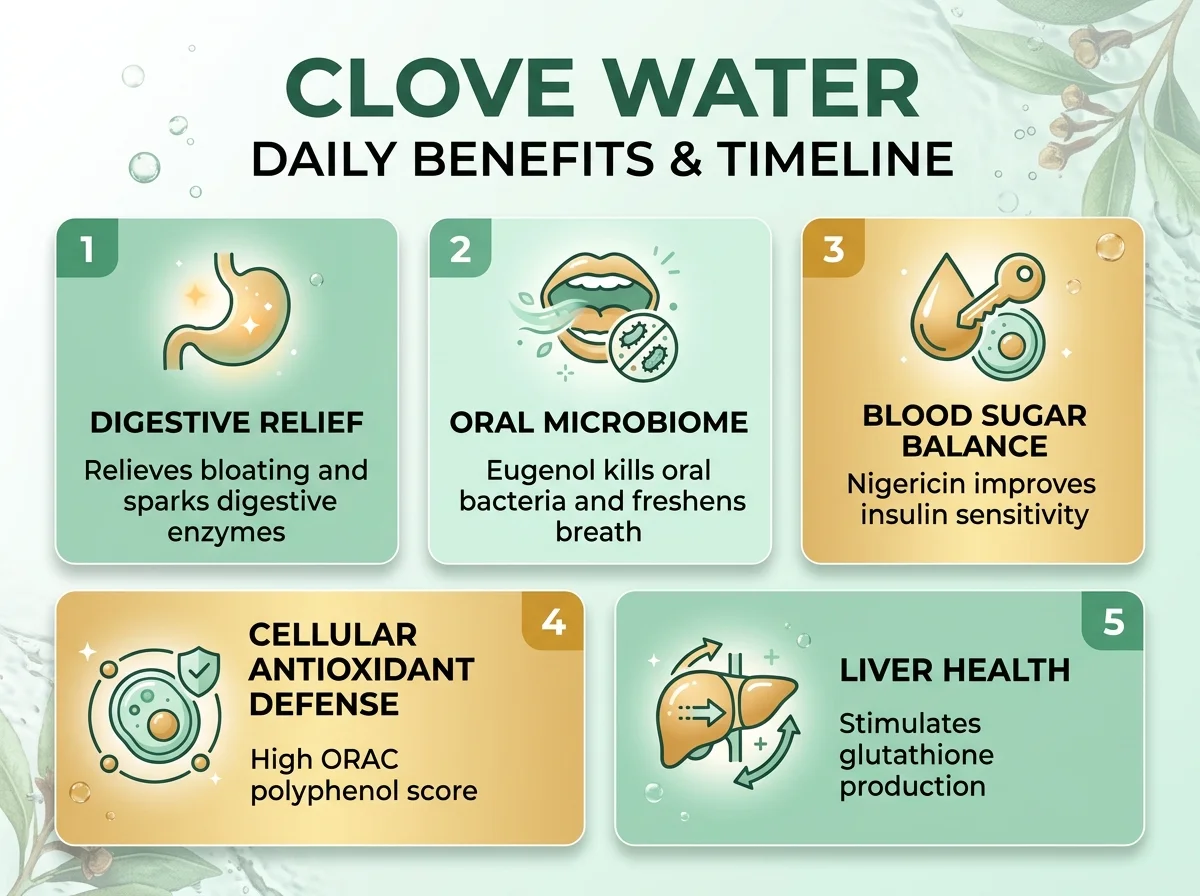
A. Sparks Digestive Enzymes & Eradicates Bloating
If you struggle with post-meal bloating, uncomfortable gas, or sluggish digestion, clove water is arguably one of nature’s most effective carminatives. The aromatic compounds in clove infusion stimulate salivary and gastric secretions, prompting the pancreas and stomach lining to release key digestive enzymes, including amylase, lipase, and trypsin.
Furthermore, eugenol possesses proven spasmolytic (muscle-relaxing) properties. It calms the smooth muscle fibers of the gastrointestinal wall, preventing painful cramps and accelerating gastric emptying. Studies have also revealed that clove extract stimulates gastric mucus production, reinforcing the protective barrier of the stomach lining against acidic erosion and peptic ulcers.
B. Rebalances the Oral Microbiome & Eliminates Halitosis
Dentists have relied on eugenol-based preparations for centuries as an analgesic and antiseptic dressing for toothaches and dry sockets. When you sip or swish warm clove water, you distribute natural antimicrobials across your gums, tongue, and dental crevices.
Microbiological trials demonstrate that eugenol directly disrupts the cellular membranes of common oral pathogens, including Streptococcus mutans (the primary bacteria responsible for dental plaque and cavities) and anaerobic bacteria that cause persistent halitosis (chronic bad breath). Drinking clove water in the morning acts as an internal mouthwash, reducing morning breath while promoting healthy gingival tissue.
C. Supports Healthy Blood Sugar & Insulin Sensitivity
Emerging research indicates that cloves play a meaningful role in metabolic health. A systematic pharmacological review published in Biomolecules (PubMed PMID: 32023805) confirmed that clove polyphenols mimic insulin signaling cascades, improving glucose clearance and blunting postprandial blood sugar spikes. Research published in the journal Food Chemistry identified a bioactive compound in cloves called nigericin. In cellular and animal models, nigericin was found to enhance the uptake of glucose into muscle cells, boost insulin secretion from pancreatic beta cells, and improve the function of cells that produce insulin.
Drinking a small cup of clove water alongside or immediately following a carbohydrate-rich meal helps blunt postprandial glucose spikes, supporting stable, sustained energy without mid-afternoon crashes.
D. Delivers an Extraordinary Antioxidant Shield (ORAC Powerhouse)
Antioxidants neutralize reactive oxygen species (free radicals) that damage cellular DNA, accelerate biological aging, and fuel systemic inflammation. On the Oxygen Radical Absorbance Capacity (ORAC) scale—the standardized scientific metric for measuring antioxidant capacity—clove ranks at an astounding 290,283 units per 100 grams.
To put that in perspective, cloves contain substantially higher antioxidant concentrations than celebrated superfoods like blueberries, acai, or dark chocolate. The polyphenolic compounds in clove water systematically scavenge free radicals, shielding vascular endothelial tissue, combating oxidative stress, and supporting skin elasticity.
E. Enhances Hepatic Health & Stimulates Glutathione
The liver is your body’s master detoxification hub, filtering metabolic waste, environmental toxins, and pharmaceutical byproducts. Preclinical studies suggest that eugenol and gallic acid in clove extract help reduce lipid peroxidation and reduce inflammation in hepatic tissue.
Crucially, moderate intake of eugenol has been observed to stimulate the synthesis of glutathione, the body’s master endogenous antioxidant. By supporting hepatic Phase II detoxification pathways, daily clove water assists your liver in neutralizing daily toxic burdens.
3. The 30-Day Timeline: What Happens If You Drink It Daily?
If you commit to drinking one cup of properly prepared clove water each morning, your body undergoes progressive biological recalibrations:
- Days 1 to 3 (Acute Digestive & Oral Relief): You will immediately notice reduced gastric heaviness after meals. Gas production decreases, and morning breath is noticeably fresher due to rapid oral bacterial suppression.
- Days 4 to 10 (Systemic Anti-Inflammatory Action): Eugenol’s inhibition of the COX-2 enzyme begins blunting low-grade systemic inflammation. Many individuals notice mild reductions in morning joint stiffness and improved digestive regularity.
- Days 11 to 21 (Metabolic & Skin Benefits): Enhanced cellular antioxidant defenses and stabilized glycemic response often translate to clearer skin, fewer inflammatory breakouts, and steady mid-day focus without sugar cravings.
- Days 22 to 30 (The Mandatory Washout Break): By day 30, your body has harvested peak benefits. Because eugenol is metabolized through hepatic glucuronidation, continuous daily exposure for months on end can stress liver enzymes. Take a mandatory 7-to-10 day break before resuming another 30-day cycle.
4. Critical Safety Notice: When Does Clove Water Become Dangerous?
Because clove water is biologically active, more is not better. Excessively strong brews or consuming large amounts daily can irritate the stomach lining, cause heartburn, and thin the blood. Eugenol is a natural inhibitor of platelet aggregation; if you take blood thinners (like Warfarin, Plavix, or daily Aspirin) or are scheduled for surgery, clove water can increase your bleeding risk.
🔍 Comprehensive Safety & Contraindications Guide
Are you pregnant, managing diabetes, taking prescription medications, or wondering about high-dose eugenol toxicity? Read our companion medical audit: Clove Water Side Effects: What You Need to Know Before Drinking →

5. How to Make Clove Water Correctly (The Golden Ratio Recipe)
Making clove water safely requires striking the perfect balance between active polyphenol extraction and gastric comfort. Follow this standardized kitchen preparation:
The Hot Steep Method (Fast & Aromatic)
- The Golden Ratio: Take 4 to 5 whole dried cloves (inspect to ensure the round head/crown is intact, as this contains the highest oil concentration).
- Crush Gently: Place the cloves between two spoons or lightly crush them with a mortar to crack the outer shell, releasing the aromatic oils without pulverizing them into powder.
- Boil Water: Bring 1 cup (250 ml) of filtered water to a rolling boil.
- Infuse: Pour the boiling water over the crushed cloves in a heat-resistant ceramic mug or glass teapot. Cover with a saucer to trap volatile aromatic vapors from escaping.
- Steep: Allow the tea to steep for 8 to 10 minutes until the water turns a warm amber-golden hue.
- Strain & Serve: Strain out the cloves. For enhanced flavor and synergistic health benefits, add a squeeze of fresh organic lemon and 1 teaspoon of raw unpasteurized honey.
The Cold Overnight Infusion (Gentle on Sensitive Stomachs)
If you have a history of mild acid reflux or gastritis, the cold infusion method is ideal. Drop 4 whole cloves into a glass tumbler of room-temperature filtered water, cover, and let it steep on your kitchen counter overnight (8 hours). In the morning, strain and drink the water at room temperature. Cold steeping extracts water-soluble tannins and flavonoids while releasing a much lower concentration of spicy eugenol.
6. Curated Teaware & Whole Organic Cloves Buyer’s Guide
To avoid pesticide residues, irradiation, and stale, depleted spices, always purchase certified organic, whole dried cloves from high-altitude estates. Pre-ground clove powder should be avoided for daily infusions, as it oxidizes rapidly and loses its therapeutic volatile oils.
Pure Herbal Teaware & Organic Spice Essentials
Certified Organic StandardsUSDA Certified Organic Whole Cloves (Syzygium Aromaticum)
Hand-picked whole dried cloves with intact crowns. High eugenol content, non-irradiated, and packaged in airtight resealable pouches for maximum freshness.
Check Price on Amazon →Borosilicate Glass Teapot with Ultra-Fine Stainless Infuser
Heat-resistant borosilicate glass with a laser-cut micro-mesh infuser that keeps whole cloves and spices contained while capturing essential oil vapors.
View Teapots on Amazon →100% Raw Unfiltered Wildflower Honey
Unheated, raw honey rich in natural pollens and enzymes. Smooths out the spicy bite of eugenol while providing soothing throat and digestive support.
Check Raw Honey on Amazon →Related Clinical Botanical & Metabolic Guides
- Clove Water Side Effects: Eugenol Toxicity, Hepatic Strain & Safe Dosage Guidelines
- Ashwagandha Warnings: Who Should NOT Take It? Critical Contraindications
- Moringa Leaves Guide: Nutrient Density, Side Effects & Safe Usage
- 8 Health Benefits of Tea: Polyphenols, Longevity & Cellular Protection
- Optimize Blood Pressure Naturally: 10 Evidence-Based Circulatory Methods
Frequently Asked Questions (FAQ)
Is it better to drink clove water in the morning or at night?
Both timings offer distinct clinical benefits. Drinking clove water in the morning on an empty stomach stimulates digestive enzyme production, sparks metabolism, and clears overnight oral bacteria. Drinking it 45 minutes after dinner relieves post-meal bloating and promotes gastrointestinal relaxation before sleep.
Does clove water promote weight loss?
Clove water is not a magic fat-burning cure, but it serves as a valuable metabolic ally. By improving insulin sensitivity, blunting blood sugar spikes, and relieving chronic fluid retention and digestive bloating, it supports healthy body composition when paired with a balanced, whole-food diet.
Can I chew and eat the steeped cloves?
Yes. After steeping in hot water, dried cloves soften substantially. Chewing one or two steeped cloves acts as an intensive oral antiseptic, freshening breath and easing mild gum inflammation. However, limit yourself to 1 or 2 steeped cloves to avoid burning sensitive oral mucosa.
Can pregnant women drink clove water?
Pregnant women should exercise caution and avoid therapeutic daily clove water infusions. While small culinary quantities of clove in food are recognized as safe, concentrated eugenol in daily herbal teas can stimulate mild uterine muscle contractions. Always consult your obstetrician before introducing herbal teas during pregnancy.
Conclusion: The Sustainable Path to Clove Water Wellness
Incorporating clove water into your daily routine is one of the simplest, most cost-effective habits you can adopt for digestive comfort, oral vitality, and cellular antioxidant defense. By adhering to the golden ratio of 3 to 5 whole cloves daily, utilizing proper steeping techniques, and respecting the 30-day cycling principle, you can unlock the full therapeutic power of this ancient spice safely.
Discover more evidence-backed herbal health guides: explore our deep dive on Ashwagandha: Who Should NOT Take It & Critical Warnings and our clinical review of Evidence-Based Mood & Neurotransmitter Support.
- Cortés-Rojas DF, de Souza CR, Oliveira WP. “Clove (Syzygium aromaticum): a precious spice.” Asian Pac J Trop Biomed. 2014;4(2):90-96.
- Batiha GE, et al. “Syzygium aromaticum L. (Myrtaceae): Traditional Uses, Bioactive Chemical Constituents, Pharmacological and Toxicological Activities.” Biomolecules. 2020;10(2):202.
- U.S. Department of Agriculture (USDA). “Oxygen Radical Absorbance Capacity (ORAC) of Selected Foods, Release 2.” Agricultural Research Service.
- Prasad S, et al. “Protective effects of eugenol against liver injury and oxidative stress.” Food Chem Toxicol. 2011.