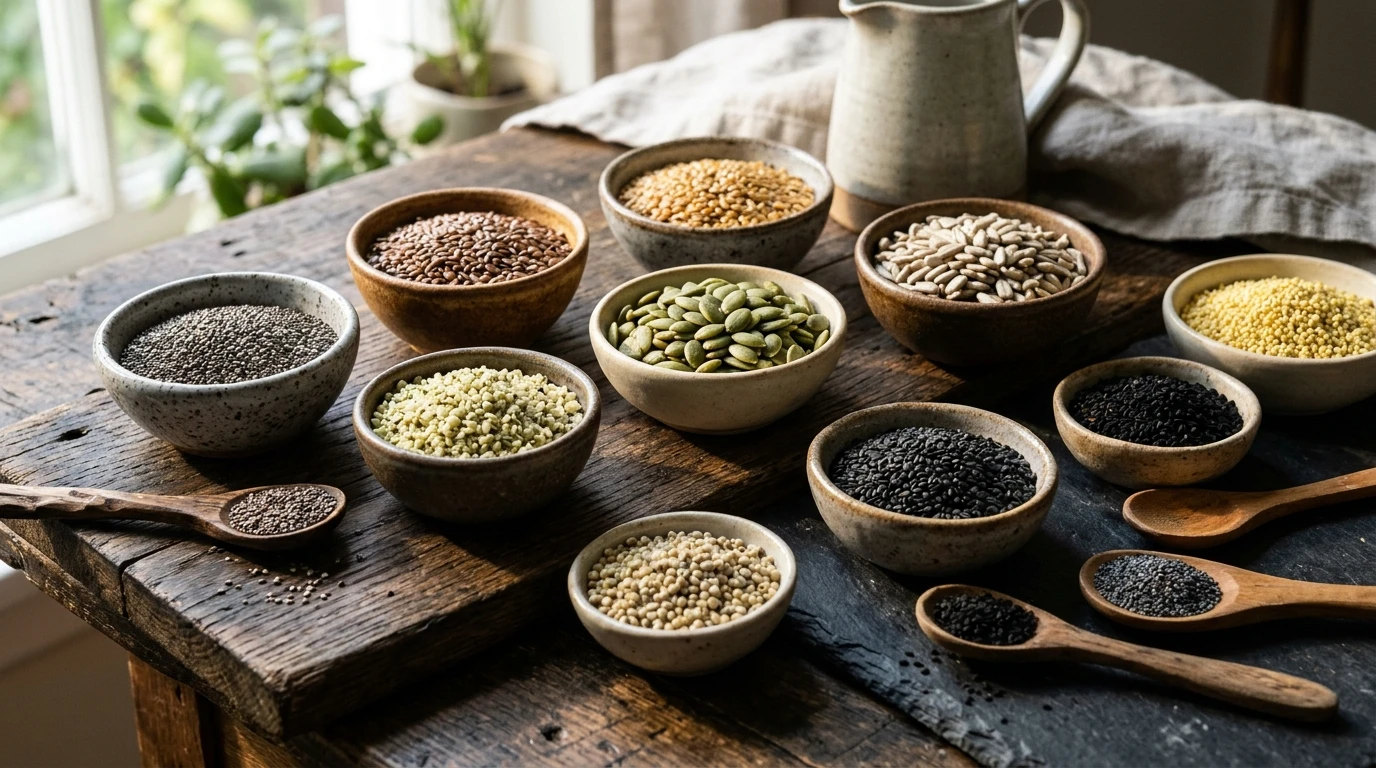
In evolutionary biology and plant botany, a seed is an embryonic miracle: an entire plant’s genetic blueprint, packed with concentrated reserves of lipids, complete amino acids, protective antioxidants, and bioactive minerals engineered to sustain new life. From a nutritional medicine standpoint, this evolutionary density makes culinary seeds some of the most potent, anti-inflammatory functional foods on Earth.
While modern diets are heavily saturated with refined industrial seed oils stripped of fiber and micronutrients, consuming whole, raw, unrefined culinary seeds delivers profound cardiovascular, metabolic, and gastrointestinal benefits. A growing body of randomized controlled trials confirms that regular consumption of diverse seeds significantly lowers low-density lipoprotein (LDL) cholesterol, stabilizes postprandial blood glucose, fuels microbial production of short-chain fatty acids (SCFAs), and modulates systemic hormone metabolism.
However, maximum therapeutic benefit requires understanding the biological differences between seed species—including their fatty acid ratios, antinutrient profiles, and bioavailability requirements. Below is the definitive, evidence-based guide to the top 10 super seeds, their clinical mechanisms, and how to prepare them for optimal cellular absorption.
1. The 10 Super Seeds: Clinical Profiles & Health Mechanisms
1. Chia Seeds (Salvia hispanica) — The Soluble Hydrocolloid Champion
Originating in Mesoamerica, chia seeds are celebrated for their remarkable hydrophilic mucilage. The outer seed coat contains water-soluble polysaccharides that absorb up to 12 times their weight in water, expanding into a thick, soothing hydrocolloid gel within the gastrointestinal tract.
This gel mechanism provides three distinct clinical advantages:
- Prolonged Gastric Emptying: Slows carbohydrate breakdown, blunting postprandial glucose spikes and extending satiety.
- Superior Alpha-Linolenic Acid (ALA): Just two tablespoons provide roughly 5 grams of plant-based omega-3 fatty acids, which suppress systemic inflammatory cytokines (TNF-alpha and IL-6).
- Prebiotic Motility Support: Acts as a gentle bulk-forming agent that softens stools without irritating sensitive colonic walls. For complementary bowel transit protocols, explore our guide on 7 proven natural remedies for constipation.
2. Flaxseeds (Linum usitatissimum) — Lignan & Hormone Modulation
Flaxseeds are the richest dietary source of Secoisolariciresinol diglucoside (SDG), a polyphenolic phytoestrogen known as a lignan—containing roughly 800 times more lignans than any other common plant food. When ingested, healthy gut microflora metabolize SDG into mammalian enterolignans (enterodiol and enterolactone).
These enterolignans bind weakly to cellular estrogen receptors, exerting an adaptive, balancing effect: they dampen excess estrogenic stimulation in hyper-estrogenic environments while supporting bone density in postmenopausal women. Furthermore, large-scale clinical trials demonstrate that 30 grams of milled flaxseed daily reliably lowers systolic and diastolic blood pressure in hypertensive patients.
(Clinical Rule: Whole flaxseeds frequently pass through the digestive tract completely undigested due to their tough cellulose hull. Always consume flaxseeds freshly cold-milled to liberate their ALA fatty acids and lignans).
3. Hemp Hearts (Cannabis sativa) — Complete Bioavailable Plant Protein
Shelled hemp seeds, commonly called hemp hearts, are one of the exceedingly rare plant sources that contain a complete amino acid profile, including all nine essential amino acids required for human protein synthesis. Approximately 65% of hemp protein consists of edestin, a globular protein highly homologous to human blood plasma proteins, making it exceptionally easy to digest without gastrointestinal distress.
Hemp hearts also boast the clinically ideal 3:1 ratio of Omega-6 (Linoleic Acid) to Omega-3 (ALA), alongside therapeutic quantities of Gamma-Linolenic Acid (GLA). GLA acts as a precursor to prostaglandin E1 (PGE1), a potent anti-inflammatory eicosanoid that reduces joint stiffness, supports dermatological eczema recovery, and alleviates premenstrual mastalgia.
4. Pumpkin Seeds / Pepitas (Cucurbita pepo) — Zinc, Magnesium & Sleep Neurochemistry
Raw green pumpkin seeds (pepitas) are nutritional powerhouses for metabolic and neurological health. A single quarter-cup serving delivers nearly 50% of the Recommended Daily Allowance (RDA) for magnesium and substantial bioavailable zinc.
Magnesium serves as an essential enzymatic cofactor in over 300 biochemical reactions—including ATP energy synthesis, vascular tone regulation, and neuromuscular relaxation. Additionally, pumpkin seeds are extraordinarily rich in the amino acid l-tryptophan. When consumed in the evening alongside a complex carbohydrate, tryptophan readily crosses the blood-brain barrier to synthesize serotonin and melatonin, promoting restorative deep sleep cycles.
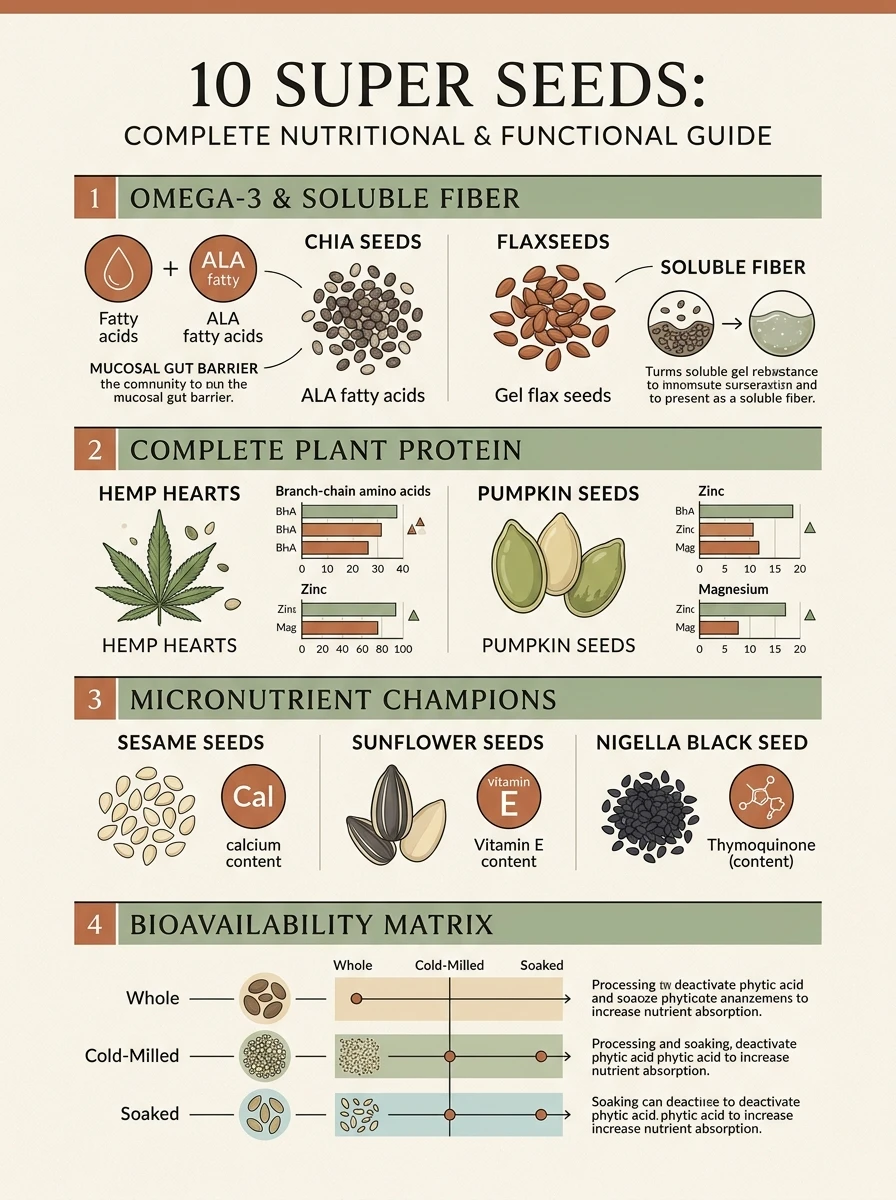
5. Sesame Seeds (Sesamum indicum) — Plant Calcium & Vascular Endothelium
Cultivated for over 5,000 years, sesame seeds are nature’s most concentrated non-dairy calcium reserve: unhulled sesame seeds provide almost 1,000 mg of calcium per 100 grams, rivaling dairy milk on a per-gram basis. They also contain specialized lignans unique to the species: sesamin and sesamolin.
Sesamin has been shown in clinical pharmacology studies to inhibit the breakdown of Vitamin E in liver tissue, substantially raising serum alpha- and gamma-tocopherol levels. When ground into stone-milled tahini paste, sesame provides easily assimilated copper and manganese, essential trace minerals required for superoxide dismutase (SOD) synthesis and collagen cross-linking.
6. Sunflower Seeds (Helianthus annuus) — Vitamin E & Cellular Membrane Protection
Sunflower seeds are the premier botanical source of alpha-tocopherol, the most biologically active form of Vitamin E in the human body. As a fat-soluble antioxidant, alpha-tocopherol intercalates into cellular lipid bilayers, shielding delicate mitochondrial and cell membranes against lipid peroxidation and free-radical cascades.
A quarter cup of raw sunflower seeds delivers over 75% of your daily Vitamin E requirements, alongside substantial levels of selenium, a vital cofactor for glutathione peroxidase enzymes. This dual antioxidant axis protects endothelial vascular linings from oxidized LDL damage.
7. Black Seed / Black Cumin (Nigella sativa) — The Thymoquinone Panacea
Unlike standard culinary seeds consumed by the cupful, Nigella sativa (commonly known as black seed or black cumin) is consumed in therapeutic teaspoon dosages due to its intensely medicinal phytochemical profile. The primary bioactive constituent is thymoquinone (TQ), an extraordinary quinone compound with documented anti-inflammatory, immunomodulatory, and bronchodilatory properties.
Randomized trials have demonstrated that consuming 1 to 2 grams of crushed black seed daily produces significant reductions in fasting blood glucose, HbA1c, and high-sensitivity C-reactive protein (hs-CRP) in individuals with metabolic syndrome and insulin resistance.
8. Pomegranate Seeds (Arils) — Punicic Acid & Nitric Oxide Synthesis
Inside the vibrant arils of pomegranate lies a woody, edible seed packed with punicic acid, an uncommon conjugated linolenic acid (Omega-5). Punicic acid has demonstrated remarkable capacity to reduce visceral adiposity, inhibit cellular inflammatory signaling, and protect vascular compliance.
Furthermore, the polyphenols and ellagitannins (punicalagins) in pomegranate seeds stimulate endothelial nitric oxide synthase (eNOS), increasing vascular vasodilation and tissue perfusion throughout the cardiovascular tree.
9. Basil Seeds / Sabja (Ocimum basilicum) — Cooling Prebiotic Hydration
Long revered in Ayurvedic and Persian botanical traditions, basil seeds (often called Sabja or Tukmaria) exhibit an even higher soluble fiber swelling capacity than chia seeds. When immersed in liquid, basil seeds develop a translucent gelatinous halo within 5 minutes, swelling up to 40 times their original dry volume.
In the upper GI tract, this dense mucilage buffers stomach acid, providing gentle soothing relief for heartburn. For complementary gastric support strategies, read our evidence-based guide on natural approaches for acid reflux and GERD. Basil seeds also pair harmoniously with refreshing fermented tonics; learn more in our step-by-step tutorial on how to make probiotic lemonade.
10. Poppy Seeds (Papaver somniferum) — Bone Mineralization & Oleic Monounsaturates
Tiny blue and white poppy seeds provide an exceptionally dense mineral matrix. Just two tablespoons supply over 250 mg of bioavailable calcium, 180 mg of phosphorus, and significant zinc—the exact mineral trio essential for osteoblast bone matrix deposition.
Over 50% of the fatty acid content in poppy seeds consists of oleic acid, the same heart-healthy monounsaturated fatty acid celebrated in extra virgin olive oil. Oleic acid enhances cellular insulin sensitivity and supports favorable HDL-to-LDL cholesterol balances.
2. The Bioavailability Matrix: Soaking, Sprouting & Cold-Milling
Consuming raw seeds without proper preparation can occasionally lead to suboptimal mineral absorption. Like all plant seeds, they contain phytic acid (inositol hexaphosphate) and enzyme inhibitors designed to preserve the seed until favorable growing conditions arise. Phytic acid acts as a chelator, binding tightly to dietary zinc, iron, and calcium in the gut lumen to form insoluble salts that resist absorption.
To maximize nutrient bioavailability, employ these three clinical preparation rules:
- The Soaking Protocol (Deactivating Phytase): Submerging raw pumpkin, sunflower, or sesame seeds in warm filtered water with a pinch of sea salt for 6 to 8 hours activates endogenous phytase enzymes, deactivating phytic acid and unlocking up to 300% more bioavailable zinc and magnesium.
- The Milling Mandate: Flaxseeds and unhulled sesame seeds must be milled or ground before consumption. Their outer protective cellulose layers are completely impermeable to human stomach acid, causing whole seeds to pass through entirely unabsorbed. Store ground seeds in an airtight jar in the freezer to protect fragile polyunsaturated bonds from oxidation.
- Hydration Rule for Chia & Basil: Always pre-soak chia and basil seeds in water, nut milk, or tea for at least 15 minutes prior to ingestion. Swallowing dry chia seeds followed by water can cause rapid esophageal swelling and potential swallowing difficulties.
3. Curated Super Seeds & Storage Essentials Buyer’s Guide
Because delicate polyunsaturated omega-3 and omega-6 fatty acids are susceptible to heat and light oxidation, sourcing certified organic, cold-milled, and properly packaged seeds guarantees maximum enzymatic potency:
Clinical Super Seeds & Storage Showcase
Lab Tested & OrganicOrganic Cold-Milled Golden Flaxseed & Chia Seed Blend
Cold-ground under nitrogen flush to preserve delicate ALA fatty acids. Delivers optimal mucilaginous fiber and potent enterolignan precursors for hormonal and cardiovascular balance.
Check Price on Amazon →100% Raw Organic Shelled Hemp Hearts (Non-GMO)
Creamy, nutty shelled hemp seeds providing 10g of complete plant protein and 12g of omegas per 3-tablespoon serving. Perfectly balanced 3:1 omega-6 to omega-3 ratio with zero gritty texture.
View Hemp Hearts on Amazon →Raw Sprouted Organic Pumpkin Seeds (Pepitas)
Pre-soaked and gently dehydrated to deactivate phytic acid, providing maximum bioavailable zinc, magnesium, and tryptophan. Crisp, delicious, and easy on digestion.
Check Sprouted Seeds on Amazon →4. What is “Seed Cycling” for Hormonal Health?
In integrative reproductive medicine, seed cycling is a targeted nutritional practice designed to synchronize specific seed fatty acids and lignans with the two distinct phases of the female menstrual cycle:
- Phase 1: Follicular Phase (Day 1 to 14 — Menses to Ovulation): 1 tablespoon of freshly ground flaxseeds plus 1 tablespoon of raw pumpkin seeds daily. The SDG lignans in flax gently balance estrogen production, while the high zinc in pumpkin seeds supports healthy follicular maturation.
- Phase 2: Luteal Phase (Day 15 to 28 — Ovulation to Next Menses): 1 tablespoon of ground sesame seeds plus 1 tablespoon of raw sunflower seeds daily. Sesame lignans block excess estrogen buildup, while the rich Vitamin E and selenium in sunflower seeds support corpus luteum progesterone synthesis.
While large-scale double-blind trials are ongoing, thousands of women report substantial improvements in premenstrual syndrome (PMS) symptoms, cycle regularity, and hormonal acne through consistent seed cycling.
Frequently Asked Questions (FAQ)
Which single seed is the absolute healthiest to eat daily?
No single seed provides every nutrient in isolation. For high anti-inflammatory omega-3s and gut motility, chia and ground flaxseeds are unmatched. For complete bioavailable plant protein and clean muscle synthesis, hemp hearts lead the category. For neurological relaxation and mineral density, pumpkin seeds reign supreme. Combining a diverse rotation delivers synergistic benefits.
Do seeds promote weight loss or weight gain?
Despite being calorie-dense due to their healthy fat content, randomized trials consistently demonstrate that daily seed consumption aids weight management. The potent combination of soluble fiber, protein, and unsaturated fatty acids triggers the release of satiety hormones (cholecystokinin and peptide YY), significantly reducing total daily caloric intake.
Where should I store raw seeds to prevent rancidity?
Because polyunsaturated fatty acids (PUFAs) oxidize when exposed to light, heat, and air, store whole raw seeds in airtight glass jars in a cool, dark pantry for up to 6 months. Once seeds are ground or milled (like flaxseed), they should immediately be transferred to an airtight container and kept in the refrigerator or freezer, where they remain fresh for up to 3 to 4 months.
Final Medical Verdict: Small Seeds, Monumental Longevity
Incorporating a diverse rotation of whole culinary seeds into your daily diet is one of the simplest, most biologically impactful habits for lifelong health. By rotating chia, cold-milled flax, hemp hearts, and mineral-rich pumpkin seeds into your morning bowls, salads, and smoothies, you provide your cardiovascular system, hormonal receptors, and gut microbiome with the unrefined, living building blocks they were designed to thrive upon.