
Quick Action Summary: The Liquid Calorie Trap
- The Brain Blindspot: Drinks bypass chewing and gastric stretch receptors, failing to trigger key fullness hormones like leptin and GLP-1.
- The Stealth Saboteur: A morning flavored latte and an afternoon bottled green juice can add 650 uncounted calories and 80g of sugar, erasing your calorie deficit.
- The Easy Fix: Swapping sugary beverages for fruit infusions, sparkling waters, and cinnamon cold brew cuts 12,000 to 18,000 calories monthly without hunger.
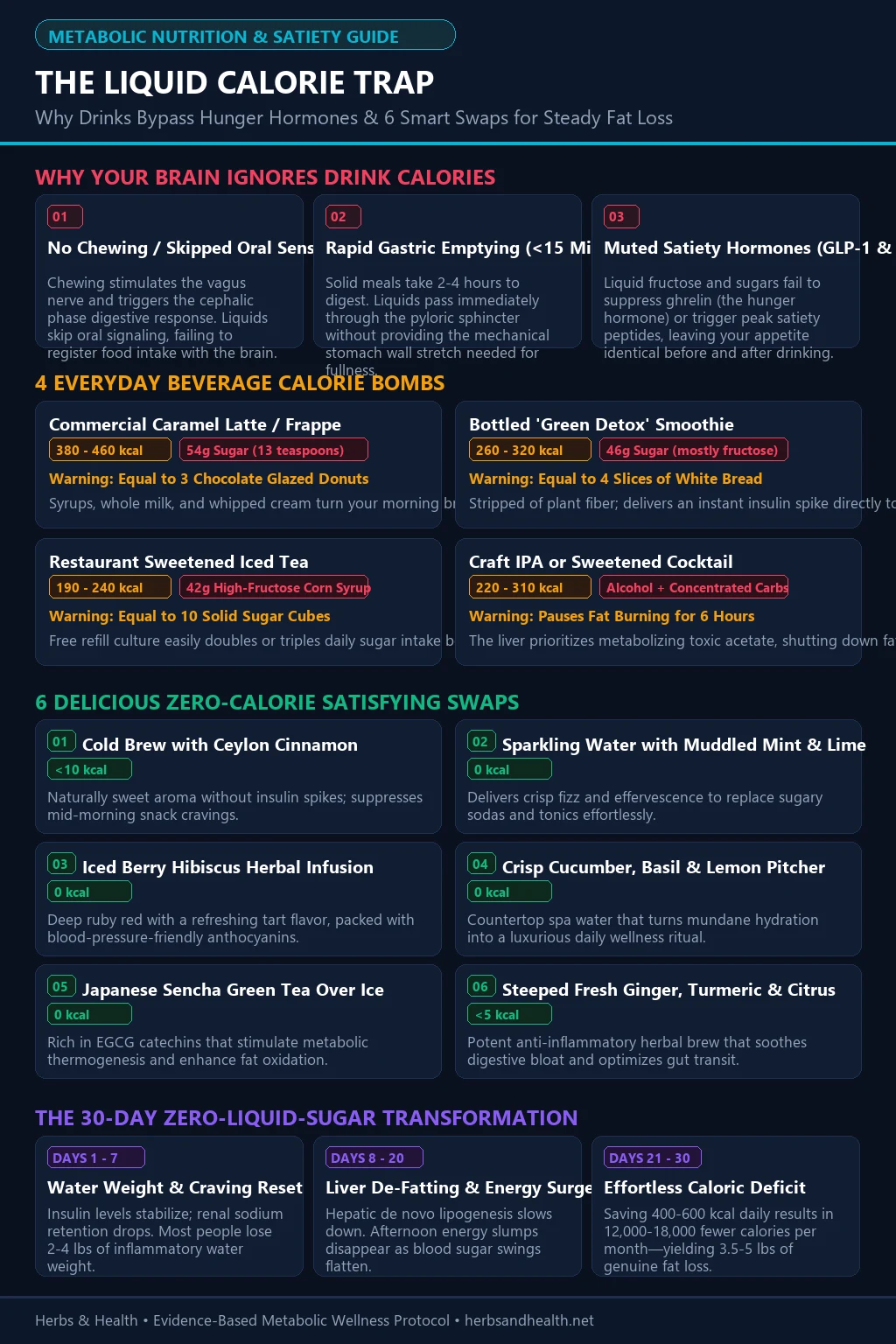
Infographic: How liquid sugars bypass hunger hormones, 4 common drink calorie traps, and 6 delicious zero-calorie swaps for fat loss.
Have you ever spent an entire week carefully tracking your meals, hitting your step goals, and passing on dessert, only to step on the scale and see that the numbers haven’t budged? It is one of the most frustrating experiences in wellness. You feel like you are doing everything right, yet your body holds onto every ounce of stubborn fat.
When readers ask why their fat loss has completely stalled, the issue is rarely an extra spoonful of rice or a handful of berries. In most cases, the culprit is hiding in plain sight inside their drink cup. We naturally judge our diet by what is on our plate, often ignoring what flows through our straw. Yet liquid calories carry a unique biological flaw: they deliver hundreds of concentrated calories without satisfying your appetite. To understand how our bodies manage energy balances, review our guide on understanding fat gain to see how daily energy surpluses become stored body fat.
The Satiety Short-Circuit: Why Your Brain Ignores Drink Calories
To understand why drinks fool your appetite, consider human evolution. For millennia, our ancestors drank only pure water. Every single calorie consumed required physical effort, it had to be gathered, peeled, or hunted, and chewed thoroughly. As a result, our digestive tract and appetite centers evolved to measure fullness through mechanical chewing and gastrointestinal resistance.
When you eat a solid meal like grilled salmon, quinoa, and vegetables, three vital satiety mechanisms activate:
- Oral Chewing Signals: Chewing activates the vagus nerve, sending early sensory alerts to your hypothalamus that calories are arriving.
- Stomach Wall Stretching: Fiber and dense proteins physically stretch stomach walls, firing mechanoreceptors that curb hunger.
- Satiety Hormone Release: As solid food enters the small intestine, endocrine cells release CCK, PYY, and GLP-1, which shut down ghrelin.
When you sip a 400-calorie caramel frappe or a bottled smoothie, this entire feedback loop breaks down. Liquids require zero chewing, emptying through the stomach within fifteen minutes. The stomach walls never stretch, and satiety hormones barely rise. Clinical studies confirm that people drinking liquid calories rarely eat less later, the brain treats liquid calories almost like water.
The Hormonal Rollercoaster: What Liquid Sugar Does to Your Liver
The lack of fullness is only the first challenge. The metabolic impact of liquid sugar creates an ideal environment for fat storage. When you drink fruit juices, sweet teas, or sodas, you consume refined sugars stripped of the plant fibers that naturally buffer absorption.
Consider an ordinary glass of commercial orange juice. Making a twelve-ounce glass requires squeezing four medium oranges, discarding the fibrous pulp. If you tried eating four whole oranges, you would feel completely full because pectin fiber slows gastric transit. In liquid form, thirty-five grams of sugar flood your bloodstream within minutes.
This rapid glucose surge prompts your pancreas to release an emergency spike of insulin. High insulin locks your fat stores, halting fat oxidation while driving excess blood sugar into storage. To discover how balanced meals keep insulin steady and energy high, read our practical lunch and dinner meal guide for fat loss.
Unlike glucose, fructose is processed almost entirely by the liver. When a heavy load of liquid fructose arrives without fiber, glycogen stores overflow, prompting the liver to convert that sugar directly into visceral fat via de novo lipogenesis.
5 Common Beverage Traps That Quietly Stall Your Weight Loss
Most people struggling with liquid calories aren’t drinking two-liter sodas all day. Today’s biggest beverage traps wear wellness labels and are sold in gourmet cafes, juice bars, and grocery aisles. Here are five everyday drinks that secretly sabotage fat loss:
1. The Coffeehouse “Morning Dessert”
Black coffee is rich in antioxidants and gently supports metabolic rate. However, modern cafe drinks have turned coffee into liquid cake. A sixteen-ounce caramel latte or mocha with whole milk and whipped cream packs 380 to 500 calories and over 50 grams of sugar. Drinking one on your morning commute adds 2,000 to 2,500 uncounted calories weekly, erasing your fat loss deficit before breakfast begins.
2. The “Health Halo” Bottled Green Smoothie
Bottled green smoothies often feature words like “Cleanse” and “Superfood,” yet their base is predominantly concentrated apple, mango, and white grape puree. A standard bottle packs 260 to 320 calories and 45 grams of sugar with minimal fiber, delivering the exact same rapid insulin spike to your liver as a standard can of soda.
3. Commercial Sweetened Iced Teas and Tonic Waters
Tea is naturally healthy, but restaurant sweet teas and bottled flavored teas are heavily sweetened with high-fructose corn syrup. A large sweet tea often contains 180 to 220 calories and 40 grams of sugar, equivalent to ten sugar cubes. Even commercial “wellness waters” frequently contain 120 calories from added cane sugar.
4. Sports Drinks on Non-Intense Days
Sports drinks were designed for athletes performing ninety minutes of intense endurance training in heavy heat. Drinking a sports drink while working at a desk introduces 200 unnecessary calories and 50 grams of sugar that your muscles cannot use, encouraging immediate fat storage.
5. The Evening Alcohol Wind-Down
Alcohol provides seven calories per gram, and your liver halts fat burning while clearing acetate. Two craft beers or sweet cocktails add 500 calories while freezing fat loss. To keep your daily routine tight, review the primary fat loss checklist.
Popular Drinks vs. Smart Swaps: The Calorie & Sugar Face-Off
Small adjustments to your drink choices create massive calorie savings over time. Compare these popular drinks with delicious, zero-calorie alternatives:
6 Refreshing Zero-Calorie Swaps You’ll Actually Crave
Sustainable fat loss succeeds by upgrading your daily routine with options you look forward to. Using whole botanicals, citrus peels, and cooling herbs creates artisan drinks that satisfy cravings without raising blood sugar:
- Artisan Cinnamon Cold Brew: Steep coarse dark roast coffee with a stick of Ceylon cinnamon for twelve hours. Cinnamon adds natural sweetness that rounds out acidity. Add a splash of unsweetened almond milk for a rich morning beverage under fifteen calories.
- The Sparkling “Virgin Mojito” Cooler: Muddle fresh mint leaves with lime wedges in crushed ice, then top with sparkling mineral water. The invigorating menthol and tart citrus deliver an effervescent bite that completely satisfies soda cravings.
- Cold-Steeped Hibiscus Berry Tea: Dried hibiscus flowers create a vibrant ruby-red brew with a bold cranberry flavor. Steep overnight in cold water and serve over ice with an orange slice to enjoy heart-healthy anthocyanins at zero calories.
- Spa-Style Cucumber, Basil & Lemon Pitcher: Thinly slice half a cucumber, tear fresh basil leaves, and layer with fresh lemon slices in a countertop pitcher. Refill throughout your workday; the crisp vegetal flavor makes drinking three liters effortless.
- Iced Sencha Green Tea with Citrus Peel: Japanese green tea contains EGCG catechins that support fatty acid oxidation. Brew loose-leaf sencha in lukewarm water, pour over ice, and garnish with grapefruit peel to tame mid-afternoon sugar cravings.
- Warming Ginger & Turmeric Brew: Simmer freshly grated ginger root and turmeric in water for ten minutes. Strain and finish with fresh lemon juice. Natural gingerols soothe digestion and ease evening bloating without calories before bed.
Pairing zero-calorie hydration with a daily fasting schedule creates synergistic results. To see how zero-calorie drinks keep cellular cleanup active, read our detailed guide on intermittent fasting for fat loss.
3 Smart Hydration Upgrades for Everyday Fat Loss Success
Having the right tools ready makes skipping sugary drinks effortless. Here are three practical upgrades to keep your hydration routine enjoyable and consistent:
1. Glass Fruit Infusion Water Pitcher (90 oz)
Made from borosilicate glass with a core stainless steel filter, this pitcher makes infusing berries, cucumber, and mint seed-free, turning daily hydration into an inviting countertop wellness ritual.
Disclosure: As an Amazon Associate, Herbs & Health earns from qualifying purchases at no extra cost to you.
2. Heavy-Duty Cold Brew Coffee Maker (1 Quart)
Featuring an ultra-fine mesh stainless steel filter, this brewer yields smooth cold brew that tastes naturally sweet without bitter acidity, eliminating your desire for sugary syrups.
Disclosure: As an Amazon Associate, Herbs & Health earns from qualifying purchases at no extra cost to you.
3. Triple-Insulated Stainless Steel Tumbler with Straw (32 oz)
Keeping drinks ice-cold helps you drink more fluids effortlessly. This vacuum-insulated tumbler keeps infused water, iced tea, and cold brew cold for 24 hours without sweating.
Disclosure: As an Amazon Associate, Herbs & Health earns from qualifying purchases at no extra cost to you.
The 30-Day “Cut Liquid Sugar” Roadmap: Step-by-Step
Radical overhauls often trigger intense cravings. Instead, implement this four-week progressive roadmap to systematically remove liquid sugars without willpower fatigue:
- Week 1: The Morning Coffee Cleanse: Focus solely on your morning cup. Replace flavored syrups and sweet creamers with cold brew, a splash of unsweetened almond milk, and Ceylon cinnamon, saving 300 to 400 calories every morning.
- Week 2: The Afternoon Energy Swap: Combat the 2:00 PM slump by swapping sodas or sweet teas for sparkling flavored water or iced green tea, clearing brain fog without an insulin crash.
- Week 3: The Dinner Beverage Reset: Replace fruit juices at dinner with cucumber-mint spa water. For social weekends, choose sparkling water with fresh citrus or a clear spirit with club soda.
- Week 4: The Mindful Baseline: By week four, your taste buds recalibrate. Previously enjoyable sweet drinks will taste excessively sugary, making zero-calorie hydration your effortless default.
Frequently Asked Questions About Liquid Calories & Fat Loss
Do zero-calorie diet sodas prevent fat loss?
Diet sodas contain zero calories and do not directly cause fat gain. While helpful for transitioning away from sugar, artificial sweeteners can sustain sweet cravings. If you drink several daily, try switching to naturally flavored sparkling mineral water with lime.
Are homemade green smoothies as bad as store-bought juices?
No, blending whole foods retains intact fiber, slowing digestion and signaling real satiety. Keep smoothies fat-loss-friendly by using unsweetened almond milk, leafy greens, a scoop of protein powder, and limiting fruit to a half-cup of berries.
Can I still add milk or cream to my black coffee?
Yes. A single tablespoon of whole milk or half-and-half contains only twenty to thirty calories with minimal sugar, which won’t derail fat loss. The real concern is commercial flavored syrups, sweet creamers, and large cups of whole milk that turn morning coffee into high-calorie milkshakes.
What is the smartest alcoholic drink to choose when losing fat?
Select clear spirits like vodka or tequila with club soda and fresh lime. This provides roughly 95 calories with zero sugar. Avoid sweet cocktails, margaritas, and craft beers that add hundreds of uncounted calories.
Scientific References & Peer-Reviewed Sources
- Mattes, R. D. (2006). Dietary compensation by humans for supplemental energy provided as ethanol or carbohydrate in fluids. International Journal of Obesity, 30(4), 675-685.
- Malik, V. S., et al. (2013). Sugar-sweetened beverages and weight gain in children and adults: a systematic review and meta-analysis. The American Journal of Clinical Nutrition, 98(4), 1084-1098.
- Stanhope, K. L., et al. (2009). Consuming fructose-sweetened beverages increases visceral adiposity and lipids in overweight humans. The Journal of Clinical Investigation, 119(5), 1322-1334.
- DiMeglio, D. P., & Mattes, R. D. (2000). Liquid versus solid carbohydrate: effects on food intake and body weight. International Journal of Obesity, 24(6), 794-800.