
Clinical Dietetics & Meal Architecture Summary
Clinical Status: Sustainable fat loss is rarely achieved through arbitrary calorie deprivation; rather, it is dictated by consistent plate architecture and circadian nutrient timing. Aligning lunch and dinner with the human body’s diurnal endocrine rhythms prevents postprandial hyperinsulinemia and suppresses compensatory hunger cascades.
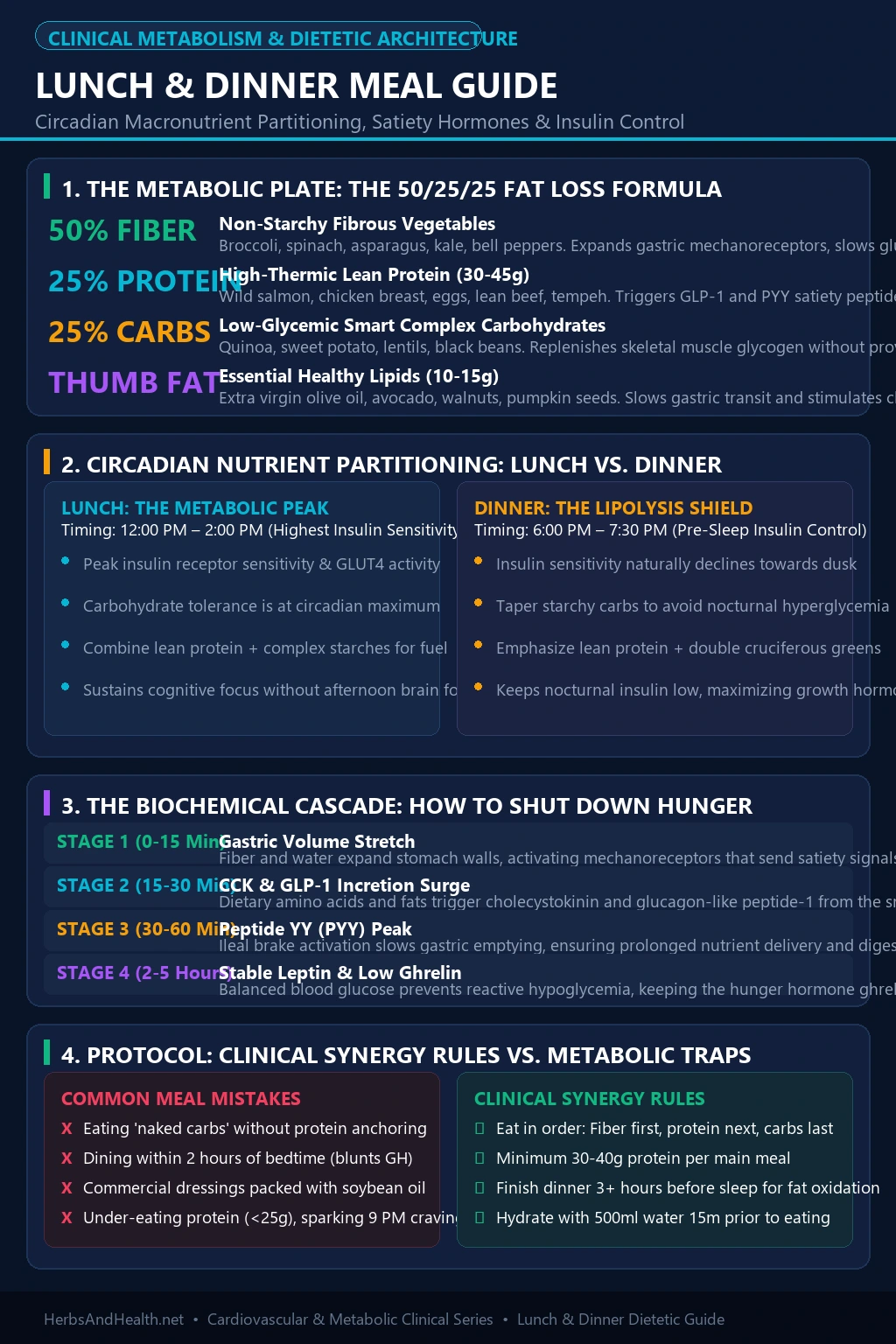
The Metabolic Plate Formula: Structuring midday and evening meals around the 50/25/25 rule, 50% non-starchy fibrous vegetables, 25% high-thermic lean protein (30–45g), and 25% low-glycemic complex carbohydrates anchored by essential healthy fats, stimulates gut satiety peptides (GLP-1, PYY, CCK) while safeguarding lean skeletal muscle tissue.
The Bioenergetics of Fat Loss: Beyond “Random Clean Eating”
The vast majority of individuals striving to lose body fat begin with enthusiastic intentions: they purchase wholesome groceries, eliminate processed confections, and resolve to “eat clean.” Yet, within three to six weeks, a significant percentage hit an immovable weight loss plateau or succumb to intense evening hunger pangs.
The root cause is rarely a lack of willpower; it is an absence of biochemical structure. The human digestive tract and endocrine system do not process food in an isolated metabolic vacuum. When a meal lacks adequate protein density, contains poorly timed high-glycemic starches, or skimps on viscous dietary fiber, it triggers rapid gastric emptying and reactive hypoglycemia. Within two hours of eating, circulating ghrelin (the primary hunger hormone) rebounds aggressively, driving compulsive cravings for energy-dense carbohydrates.
Additionally, failing to understand how the body partitions nutrients between muscle glycogen storage and adipose tissue storage inevitably stalls fat loss. To explore the cellular biology of how excess circulating glucose and fatty acids are stored inside fat cells, review our detailed guide on understanding fat gain and cellular adipogenesis.
By transforming lunch and dinner into strategically formulated metabolic events, you can stabilize blood glucose curves, optimize hormone-sensitive lipase (the enzyme that mobilizes stored fat), and maintain high metabolic rates throughout caloric restriction.
The 50/25/25 Formula: Anatomical Architecture of a Fat-Burning Meal
Rather than meticulously weighing every single leaf of lettuce or obsessing over complex point systems, clinical dietitians utilize the 50/25/25 Metabolic Plate Formula. This visual and biochemical template guarantees ideal nutrient density, digestive volume, and endocrine satiety:
1. 50% Non-Starchy Fibrous Vegetables (Gastric Mechanoreceptors & Microbiome)
Half of your plate must consist of non-starchy vegetables: broccoli, cauliflower, asparagus, zucchini, spinach, kale, bell peppers, and Brussels sprouts. These foods possess exceptionally low energy density but high biophysical volume. They physically stretch the gastric walls, activating tension-sensitive mechanoreceptors that send immediate satiety signals along the vagus nerve to the solitary tract in the brainstem. Additionally, non-digestible cellulose and viscous soluble fibers slow the enzymatic breakdown of co-ingested starches, blunting postprandial glucose spikes while feeding beneficial prebiotic gut bacteria.
2. 25% High-Thermic Lean Protein (30–45g Leucine Threshold)
One quarter of the plate is reserved for high-quality lean protein: skinless poultry breast, wild-caught salmon, cod, pasture-raised eggs, lean grass-fed beef, or fermented tempeh. A minimum of 30 to 45 grams of intact protein per meal is required to cross the clinical leucine trigger, the threshold of essential amino acids required to stimulate muscle protein synthesis via the mTORC1 pathway. Crucially, protein carries a thermic effect of food (TEF) of 20% to 30%, meaning your body burns nearly a third of protein calories simply through enzymatic digestion and urea synthesis.
3. 25% Low-Glycemic Smart Complex Carbohydrates
The remaining quarter features slow-digesting complex carbohydrates: roasted sweet potatoes, quinoa, brown jasmine rice, lentils, chickpeas, or steel-cut oats. These low-to-moderate glycemic carbohydrates provide sustained glucose release to replenish liver and skeletal muscle glycogen without inducing hyperinsulinemia. Structured meal frameworks based on these principles are explored in our evidence-based thriving weight loss plans.
4. The Healthy Fat Anchor (10–15g Lipids)
Finish the plate with a targeted portion (approximately the size of your thumb) of heart-healthy lipids: extra virgin olive oil, a quarter of an avocado, or chopped walnuts. Lipids trigger the secretion of cholecystokinin (CCK) in the duodenum, delaying gastric emptying and ensuring 4 to 5 hours of unbroken satiety.
Circadian Biology: Why Lunch and Dinner Require Distinct Nutritional Strategies
Chronobiology, the study of biological rhythms, has revealed that human metabolic efficiency varies dramatically across the 24-hour solar cycle. Your pancreas, liver, and peripheral tissues do not respond to nutrients at 7:00 PM the same way they do at 1:00 PM.
Lunch: The High-Metabolic Insulin Sink (12:00 PM – 2:00 PM)
During midday hours, peripheral insulin sensitivity is at its circadian zenith. Cortisol levels have naturally declined from their morning peak, and sympathetic nervous system tone remains moderately elevated. This physiological state makes midday the optimal window for consuming the majority of your daily carbohydrate allocation.
Skeletal muscle GLUT-4 glucose transporters are highly responsive, meaning carbohydrates consumed at lunch are rapidly directed into muscle glycogen rather than esterified into liver triglycerides. A robust lunch comprising 35 to 45g of protein paired with complex carbohydrates sustains afternoon mental focus and prevents the classic 3:00 PM workplace energy crash.
Dinner: The Nocturnal Lipolysis Shield (6:00 PM – 7:30 PM)
As dusk approaches, core body temperature begins its natural circadian decline, and the pineal gland prepares for nocturnal melatonin secretion. Crucially, melatonin binds to MT1 receptors on pancreatic beta-cells, dampening glucose-stimulated insulin secretion and temporarily reducing peripheral carbohydrate tolerance.
Consuming heavy, high-glycemic carbohydrates late in the evening forces sustained nocturnal hyperinsulinemia. Because insulin completely inhibits hormone-sensitive lipase (HSL), elevated nighttime insulin effectively shuts down the nocturnal beta-oxidation of fatty acids. Additionally, severe starvation diets that completely eliminate dinner backfire by spiking evening cortisol and disrupting sleep architecture; understand the physiological hazards in our analysis of the metabolic dangers of rapid crash starvation diets.
The ideal fat-loss dinner emphasizes lean protein, double portions of fibrous cruciferous vegetables, and healthy fats, with minimal starchy carbohydrates. This enables nocturnal insulin to drop smoothly, allowing human growth hormone (HGH) to peak during deep slow-wave sleep and drive nocturnal fat burning.
Clinical Meal Matrices: 5 Ready-to-Prepare Fat Loss Frameworks
To translate metabolic theory into daily culinary practice, utilize these five evidence-based meal templates that satisfy the 50/25/25 formula:
Framework 1: Wild Alaskan Salmon & Tri-Color Quinoa Bowl
- Protein & Lipids (25% + Fat): 6 oz grilled wild salmon fillet providing 36g protein, rich marine omega-3 fatty acids (EPA/DHA), and essential selenium.
- Smart Carbohydrate (25%): 1/2 cup cooked tri-color quinoa seasoned with lemon juice and cracked black pepper.
- Fibrous Vegetables (50%): 2 cups steamed asparagus spears and baby spinach sautéed in 1 teaspoon extra virgin olive oil and garlic.
Framework 2: Mediterranean Lemon-Herb Grilled Chicken Plate
- Protein (25%): 6 oz pasture-raised skinless chicken breast marinated in fresh oregano, rosemary, and lemon zest (38g protein).
- Smart Carbohydrate (25%): 1/2 cup roasted sweet potato cubes spiced with paprika and sea salt.
- Fibrous Vegetables & Fat (50% + Fat): 2 cups mixed Mediterranean salad (cucumbers, cherry tomatoes, kalamata olives, red onion) drizzled with 1 tablespoon cold-pressed olive oil.
Framework 3: Grass-Fed Sirloin & Roasted Cauliflower Mash
- Protein & Lipids (25% + Fat): 5 oz seared grass-fed top sirloin steak providing 35g protein, heme iron, and conjugated linoleic acid (CLA).
- Smart Carbohydrate (25%): 1/2 cup simmered green french lentils with fresh thyme.
- Fibrous Vegetables (50%): 2 cups whipped roasted cauliflower mash blended with a touch of garlic and chopped fresh chives.
Framework 4: Plant-Powered Crispy Tempeh & Edamame Stir-Fry
- Protein & Lipids (25% + Fat): 1 cup cubed organic tempeh and 1/2 cup shelled edamame (34g complete plant protein).
- Smart Carbohydrate (25%): 1/2 cup steamed brown basmati rice.
- Fibrous Vegetables (50%): 2 cups stir-fried bok choy, sugar snap peas, and shiitake mushrooms cooked in tamari and ginger.
Framework 5: Seared Ahi Tuna & Avocado Rainbow Salad
- Protein (25%): 6 oz sesame-crusted ahi tuna steak lightly seared rare (40g ultra-lean protein).
- Smart Carbohydrate (25%): 1/2 cup warm black forbidden rice or steamed chickpeas.
- Fibrous Vegetables & Fat (50% + Fat): 2 cups shredded purple cabbage, shaved carrots, and mixed leafy greens topped with 1/4 sliced Hass avocado.
Comparison Matrix: Lunch vs. Dinner Metabolic Parameters
Review the key physiological and nutritional distinctions between midday and evening meals:
| Parameter | Metabolic Lunch (12–2 PM) | Metabolic Dinner (6–7:30 PM) |
|---|---|---|
| Primary Endocrine Goal | Replenish muscle glycogen, sustain afternoon focus | Suppress nocturnal insulin, protect growth hormone |
| Insulin Sensitivity | Circadian Peak (High GLUT4 activity) | Circadian Trough (Blunted by melatonin) |
| Carbohydrate Strategy | Moderate complex starches (quinoa, sweet potato) | Tapered/minimal starches; heavy cruciferous fiber |
| Protein Threshold | 35–45g lean protein (sustain satiety) | 35–40g slow-digesting protein (muscle repair) |
| Fat Allocation | 10–12g (EVOO, nuts, seeds) | 12–15g (avocado, olive oil for sleep satiety) |
| Ideal Post-Meal Action | 10–15 minute brisk outdoor walking | Light relaxation; zero snacking before sleep |
Kitchen & Meal Prep Essentials for Fat Loss Precision
Consistency in meal preparation is the single greatest predictor of dietary adherence. These three clinical-grade kitchen tools eliminate guesswork and streamline portion control:
Prep Naturals Glass Meal Prep Containers (3-Compartment)
Heavy-duty borosilicate glass containers with smart dividers. Perfectly segments the 50/25/25 plate formula for convenient work lunches without microplastic contamination.
Greater Goods Digital Food Kitchen Scale
High-precision sensor measures to the exact single gram. Ensures you hit the critical 35g protein threshold while avoiding unintentional caloric spillover from dense oils and grains.
California Olive Ranch Extra Virgin Olive Oil
Cold-pressed, high-polyphenol California extra virgin olive oil. Provides the ideal monounsaturated oleic acid thumb to stimulate intestinal CCK release and support arterial health.
Advanced Nutritional Tactics: Food Sequencing, Hydration & Fruit Pairing
To extract maximum metabolic efficiency from your lunch and dinner, integrate these evidence-based eating mechanics:
- Follow the “Fiber-First” Nutrient Sequencing Rule: Clinical trials published in Diabetes Care demonstrate that consuming fibrous vegetables first, protein second, and starchy carbohydrates last reduces postprandial glucose peaks by up to 73% and insulin excursions by 48%. The fiber creates a physical barrier along the intestinal brush border, slowing amylase digestion of following starches.
- Pre-Meal Hydration Protocol: Ingest 500 ml of pure water 15 minutes before lunch and dinner. This expands the stomach antrum, inducing pre-meal satiety and enhancing metabolic thermogenesis without diluting digestive hydrochloric acid.
- Incorporate Low-Glycemic Whole Fruits as Satiety Closers: If you desire a sweet note following lunch, skip commercial pastries and choose low-glycemic fruits like wild blueberries, raspberries, or green apples; learn how specific bioactive polyphenols accelerate fat oxidation in our guide to 6 great fruits for fat loss and metabolic satiety.
- Complete Dinner 3 Hours Before Sleep: Ceasing caloric consumption at least 180 minutes prior to bedtime allows insulin and blood glucose to reach baseline levels before melatonin release, maximizing slow-wave sleep depth and nocturnal fat burning.
Frequently Asked Questions About Lunch & Dinner Meal Planning
Should I skip dinner if my lunch was unusually large?
Generally no. Skipping dinner entirely triggers nocturnal hypoglycemia and spikes bedtime cortisol, leading to fragmented sleep and severe rebound hunger the following morning. Instead, consume a lightweight, protein-and-fiber dinner, such as a cup of bone broth paired with a large leafy green salad and 4 oz of grilled chicken or white fish.
How many grams of carbohydrates should I consume at dinner for fat loss?
For most sedentary to moderately active individuals, keeping dinner carbohydrates to 15 to 25 grams (derived almost exclusively from fibrous vegetables like broccoli, asparagus, and salad greens) yields optimal nocturnal fat burning and stable blood sugar.
Is eating two balanced meals better than grazing on five small meals?
Yes. Frequent grazing causes continuous micro-spikes in circulating insulin, keeping hormone-sensitive lipase suppressed all day. Consuming two to three distinct, protein-dense meals allows insulin to drop fully between meals, creating multi-hour windows of active lipolysis.
Can vegetarians achieve the 35g protein target at lunch and dinner?
Absolutely. Combining organic tempeh, edamame, hemp hearts, lentils, and high-protein nutritional yeast easily delivers 35 to 45 grams of complete amino acids per meal without excessive carbohydrate spillover.
What is the most effective post-meal habit to accelerate fat loss?
A 10-to-15-minute low-intensity walk immediately following lunch. Skeletal muscle contractions stimulate non-insulin-dependent GLUT-4 translocation, clearing postprandial glucose directly into muscle beds and blunting insulin spikes by over 30%.
Peer-Reviewed Clinical References & Chronobiology Studies
- Jakubowicz, D., et al. (2013). High caloric intake at breakfast vs. dinner differentially influences weight loss of overweight and obese women. Obesity, 21(12), 2504-2512.
- Shukla, A. P., et al. (2015). Food order has a significant impact on postprandial glucose and insulin levels in prediabetes. Diabetes Care, 38(7), e98-e99.
- Paddon-Jones, D., & Rasmussen, B. B. (2009). Dietary protein recommendations and the prevention of sarcopenia. Current Opinion in Clinical Nutrition & Metabolic Care, 12(1), 86-90.
- Garaulet, M., et al. (2013). Timing of food intake predicts weight loss effectiveness. International Journal of Obesity, 37(4), 604-611.
- Leidy, H. J., et al. (2015). The role of protein in weight loss and maintenance. American Journal of Clinical Nutrition, 101(6), 1320S-1329S.