
Metabolic Science & Endocrinology Executive Summary
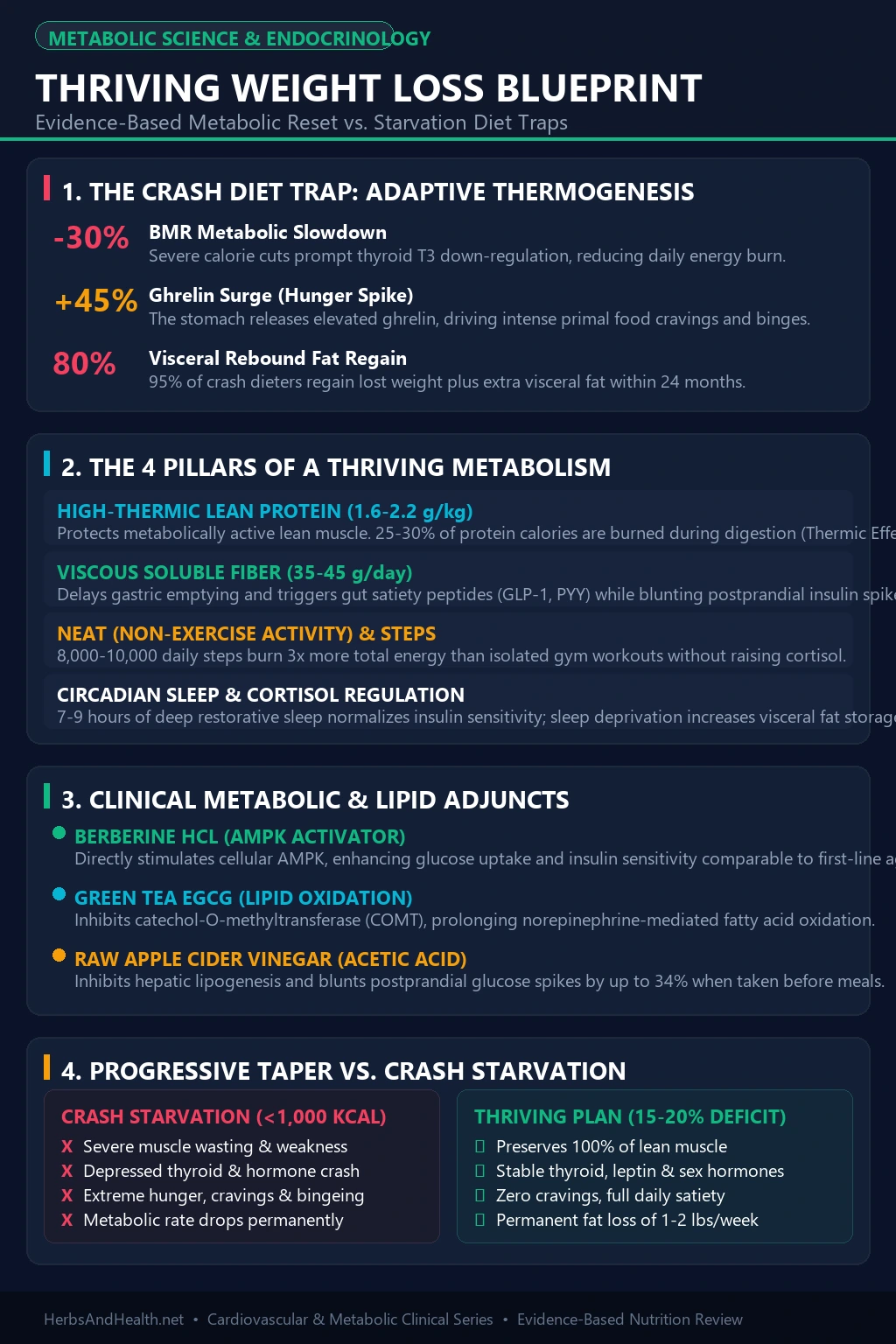
Clinical Status: Mainstream dieting focuses almost exclusively on acute caloric restriction, treating the human body as a simple thermodynamic calorimeter. However, severe energy deficits trigger adaptive thermogenesis—down-regulating thyroid T3 by up to 30%, elevating hunger hormone ghrelin by 45%, and blunting leptin sensitivity. This endocrine resistance explains why 95% of crash dieters regain lost weight within 24 months.
The Thriving Solution: A thriving weight loss framework shifts focus from caloric starvation to metabolic vitality. By pairing high-thermic lean protein (1.6–2.2 g/kg), viscous fermentable fibers, non-exercise activity thermogenesis (NEAT), and circadian cortisol optimization, patients achieve steady adipose tissue loss (1–2 lbs/week) while fully preserving resting metabolic rate (BMR).
Beyond the Survival Trap: What Does It Mean to “Thrive” During Fat Loss?
The traditional dieting paradigm treats fat loss as an endurance test of physiological deprivation. Millions of individuals enter cycles of extreme restriction—slashing daily intake below 1,000 kilocalories, eliminating entire macronutrient groups, and engaging in punishing exercise sessions. Within days, the human body interprets this sudden energy deficit not as a cosmetic transformation, but as an acute famine threatening survival.
In survival mode, the brain’s neuroendocrine circuitry orchestrates a protective counter-offensive: energy levels plummet, mental clarity dissolves, sleep becomes fragmented, and obsessive thoughts regarding food dominate consciousness. You survive the diet, but your hormonal architecture suffers profound down-regulation.
In contrast, a thriving weight loss plan operates in harmony with human evolutionary biology. Rather than forcing the body into starvation-induced defense mechanisms, a thriving protocol optimizes nutrient density, maintains hormonal equilibrium, stabilizes blood glucose, and supports mitochondrial cellular respiration. The objective is not simply to see a lower number on the bathroom scale, but to improve body composition by shedding visceral and subcutaneous adipose tissue while vigorously protecting lean skeletal muscle mass. As clinical trials consistently demonstrate, understanding the metabolic hazards of rapid crash dieting proves that rapid weight loss is almost entirely transient water shed and muscle loss rather than permanent fat oxidation.
Adaptive Thermogenesis: Why Crash Diets Sabotage Your Resting Metabolism
To construct a sustainable weight loss plan, one must understand the physiology of adaptive thermogenesis—the complex neuroendocrine phenomenon whereby the body reduces basal metabolic rate beyond what is predicted by the loss of body mass alone.
When you consume significantly fewer calories than your total daily energy expenditure (TDEE), your hypothalamus detects a systemic energy deficit and initiates several compensatory endocrine cascades:
- Thyroid Axis Suppression: The peripheral conversion of prohormone thyroxine (T4) into the metabolically active triiodothyronine (T3) is suppressed by hepatic deiodinases. Circulating reverse T3 (rT3)—a biologically inactive isomer that blocks thyroid receptors—rises sharply, reducing baseline cellular energy expenditure by 15% to 30%.
- Leptin Collapse: Adipocytes secrete leptin in direct proportion to total body fat stores and acute caloric intake. When calories are severely cut, circulating leptin drops precipitously—often within 48 to 72 hours—long before substantial fat is lost. Low leptin signals the hypothalamus that energy reserves are dangerously low, increasing appetite and reducing involuntary movement.
- Ghrelin Elevation: The stomach’s fundus secretes elevated concentrations of ghrelin, the primary orexigenic peptide that stimulates intense hunger, hyper-reactivity to food cues, and nocturnal carbohydrate cravings.
- Elevated Cortisol & Muscle Catabolism: Chronic low-energy availability activates the hypothalamic-pituitary-adrenal (HPA) axis, elevating baseline cortisol. Sustained hypercortisolemia promotes proteolysis of skeletal muscle fibers for gluconeogenesis and selectively directs post-diet refeeding calories into visceral abdominal fat depots.
These biological feedback loops explain the notorious “set-point” phenomenon. When dieters inevitably return to baseline eating patterns, their depressed BMR burns hundreds of fewer calories daily than prior to the diet, causing swift and severe weight rebound. A thriving plan bypasses this trap by enforcing a modest, non-threatening energy deficit of 15% to 20%, maintaining hormonal signaling and baseline metabolic output.
The 4 Pillars of a Thriving Metabolism: Science-Backed Architecture
Achieving permanent, effortless body recomposition requires aligning your daily routine with four evidence-based physiological pillars:
1. The High-Thermic Protein Matrix & Protein Leverage (1.6–2.2 g/kg)
Dietary protein possesses the highest Thermic Effect of Food (TEF) of all macronutrients: 25% to 30% of ingested protein calories are converted directly into heat during digestion, absorption, and metabolic synthesis (compared to only 5% to 10% for carbohydrates and 0% to 3% for dietary fats). Furthermore, the Protein Leverage Hypothesis, formulated by nutritional ecologists, demonstrates that human appetite remains unsatisfied until a specific absolute threshold of amino acids is consumed. Ensuring an intake of 1.6 to 2.2 grams of protein per kilogram of ideal body weight eliminates physiological hunger, spares lean contractile muscle, and elevates postprandial satiety peptides (CCK, PYY, and GLP-1).
2. Viscous Fermentable Fiber & Gut Microbiome Satiety (35–45 g/day)
Consuming ample soluble viscous fiber—such as beta-glucans from oats, glucomannan, psyllium, and legumes—forms an expanding gelatinous matrix in the stomach and small intestine. This delayed gastric emptying blunts postprandial glucose and insulin spikes by up to 40%. In the distal colon, specialized commensal bacteria ferment these fibers into Short-Chain Fatty Acids (SCFAs)—predominantly acetate, propionate, and butyrate. Butyrate repairs gut barrier integrity, while propionate crosses the portal circulation to trigger hepatic gluconeogenesis signaling that down-regulates hypothalamic appetite centers. For structured meal planning between larger meals, integrating nutrient-dense portion-controlled snacks under 100 calories prevents blood sugar dips and impulsive overeating.
3. NEAT Optimization: The Power of Involuntary Calorie Burn
Non-Exercise Activity Thermogenesis (NEAT) accounts for all energy expended through daily human movement outside deliberate sporting exercise—walking, typing, fidgeting, carrying groceries, and postural maintenance. While a grueling 45-minute gym session burns roughly 250 to 350 kcal, accumulating 8,000 to 10,000 steps throughout the day can easily expend 600 to 900 kcal. During crash diets, the brain subconsciously diminishes NEAT to conserve energy. Maintaining a conscious step count preserves daily caloric expenditure without inducing cardiovascular stress or joint inflammation.
4. Circadian Sleep Architecture & Cortisol Regulation
Sleep deprivation is an insurmountable barrier to adipose loss. Research published in the Annals of Internal Medicine demonstrated that when dieters slept 5.5 hours versus 8.5 hours under identical caloric deficits, over 80% of their lost weight came from lean muscle tissue rather than fat. Insufficient sleep elevates evening cortisol, impairs glucose tolerance by 33%, and blunts prefrontal cortex impulse control. Prioritizing seven to nine hours of synchronized nocturnal rest is non-negotiable for metabolic success.
Comparison: Starvation Diets vs. Standard Calorie Counting vs. The Thriving Plan
Examine how the thriving metabolic approach contrasts with conventional dieting models across essential physiological parameters:
| Metabolic Metric | Crash Starvation Diet | Standard “CICO” Counting | The Thriving Framework |
|---|---|---|---|
| Daily Caloric Deficit | Severe (>40% deficit) | Arbitrary 500–1,000 kcal | Gentle 15–20% TDEE deficit |
| Resting Metabolic Rate | Severe collapse (-25% to -30%) | Moderate decline (-10% to -15%) | Fully preserved BMR |
| Lean Muscle Mass | Heavy muscle catabolism | Partial loss without high protein | 100% spared via protein leverage |
| Hunger & Cravings | Extreme, unbearable | Frequent, willpower-dependent | Suppressed via high TEF & fiber |
| Hormone Balance | Thyroid, leptin & sex hormones crash | Inconsistent | Optimal endocrine regulation |
| 2-Year Success Rate | < 5% (Massive Rebound) | 15% to 20% | > 75% Permanent Fat Loss |
Evidence-Based Metabolic Adjuncts: Activating AMPK & Fat Oxidation
While whole-food nutrition constitutes the foundation of metabolic health, targeted nutraceuticals and botanicals can significantly accelerate glycemic control and mitochondrial lipid oxidation:
1. Berberine HCl (AMPK Activator)
Berberine is a natural isoquinoline alkaloid extracted from plants such as Berberis aristata. Research published in Metabolism reveals that berberine directly activates AMP-activated protein kinase (AMPK)—the master metabolic energy sensor inside human cells. AMPK activation stimulates GLUT-4 transporter translocation to cellular membranes, allowing skeletal muscle to absorb glucose without requiring excessive insulin secretion. Furthermore, berberine upregulates LDL receptor expression in the liver, optimizing circulating lipid panels.
2. Green Tea Extract (Standardized EGCG)
Epigallocatechin gallate (EGCG) is the primary bioactive catechin in green tea. EGCG functions as an inhibitor of catechol-O-methyltransferase (COMT), the enzyme responsible for degrading norepinephrine. By prolonging sympathetic norepinephrine signaling in adipose tissue, standardized decaffeinated EGCG enhances 24-hour lipid oxidation and thermogenesis without elevating resting heart rate or blood pressure.
3. Raw Apple Cider Vinegar (Acetic Acid)
Consuming one to two tablespoons of raw, unfiltered apple cider vinegar diluted in water prior to carbohydrate-rich meals significantly blunts postprandial glucose surges. Acetic acid delays gastric emptying rate and inhibits disaccharidase activity in the small intestine, enhancing skeletal muscle insulin sensitivity. Review our clinical guide detailing the evidence-based health benefits of apple cider vinegar for practical daily protocols.
Thorne Berberine-500 (Dual Action)
High-purity berberine HCl designed to support healthy glucose and lipid metabolism through cellular AMPK activation and insulin receptor sensitivity.
Life Extension Mega Green Tea Extract (Decaf)
Standardized to 98% polyphenols and 45% EGCG (326mg per capsule). Enhances metabolic fat oxidation without caffeine jitters or sleep interference.
Bragg Organic Apple Cider Vinegar (16 oz)
Raw, unfiltered, and unpasteurized vinegar containing the beneficial “Mother”. Proven in clinical trials to stabilize postprandial glucose curves.
Practical Implementation: Your Daily Thriving Weight Loss Routine
Transitioning from restrictive dieting to metabolic thriving is accomplished by adopting sustainable structural habits:
- Anchor Every Meal in 30–40 Grams of Intact Protein: Distributing protein evenly across three daily meals (such as pastured eggs, wild salmon, organic chicken, or fermented tempeh) sustains muscle protein synthesis (MPS) via the leucine trigger mechanism.
- Follow the “Plate Half-Rule”: Fill half of your lunch and dinner plate with non-starchy, fiber-dense vegetables (spinach, kale, asparagus, broccoli, zucchini) drizzled with cold-pressed extra virgin olive oil or avocado slices.
- Time Your Carbohydrates Intelligently: Allocate the majority of complex carbohydrates (quinoa, sweet potatoes, wild rice, berries) around periods of physical activity, when insulin-independent GLUT-4 channels are activated. Pair this with maximizing fat oxidation with optimal cardio timing to boost fat burning efficiency.
- Implement a 12-Hour Circadian Fast: Allow your digestive tract 12 hours of overnight physiological rest (e.g., concluding dinner at 7:00 PM and eating breakfast at 7:00 AM). This natural window induces cellular autophagy, reduces nocturnal insulin secretion, and aligns with your metabolic clock.
- Utilize Diet Breaks and Reverse Dieting: After every eight to twelve weeks in a mild caloric deficit, spend one to two weeks at full maintenance calories. This re-sensitizes leptin receptors, elevates suppressed thyroid T3, and prevents metabolic adaptation from stalling fat loss progress.
Frequently Asked Questions About the Thriving Weight Loss Plan
How fast should I expect to lose weight on a thriving plan?
A biologically optimal rate of fat loss is between 1 and 2 pounds per week (approximately 0.5% to 1.0% of total body weight weekly). This measured pace ensures that virtually 100% of the lost mass originates from adipose tissue rather than functional skeletal muscle or intracellular fluid.
Do I have to strictly count every calorie to see results?
No. While understanding your energy expenditure is educational, focusing on high protein density, viscous dietary fiber, and eliminating ultra-processed foods naturally regulates appetite hormones (leptin, ghrelin, GLP-1), allowing intuitive, automatic calorie reduction without tedious tracking.
What is reverse dieting and when should I use it?
Reverse dieting is the structured process of gradually increasing daily caloric intake by 50 to 100 kcal each week after an extended dieting phase. It gently restores suppressed thyroid T3 and BMR without triggering rapid fat accumulation.
Can I drink coffee or tea on this plan?
Yes. Black coffee and green tea provide bioactive polyphenols (chlorogenic acid and EGCG) that support thermogenesis and insulin sensitivity. However, consume caffeine early in the day to prevent disruption of nocturnal sleep architecture.
How does strength training support metabolic fat loss?
Resistance training sends a powerful anabolic stimulus to skeletal muscle, preventing the body from catabolizing muscle tissue during a caloric deficit. Each pound of preserved muscle burns calories around the clock and acts as a massive metabolic sink for glucose storage.
Peer-Reviewed Clinical References & Endocrine Studies
- Rosenbaum, M., & Leibel, R. L. (2010). Adaptive thermogenesis in humans. International Journal of Obesity, 34(S1), S47-S55.
- Simpson, S. J., & Raubenheimer, D. (2005). Obesity: the protein leverage hypothesis. Obesity Reviews, 6(2), 133-142.
- Nedeltcheva, A. V., et al. (2010). Insufficient sleep undermines dietary efforts to reduce adiposity. Annals of Internal Medicine, 153(7), 435-441.
- Zhang, Y., et al. (2008). Treatment of type 2 diabetes and dyslipidemia with the natural plant alkaloid berberine. Journal of Clinical Endocrinology & Metabolism, 93(7), 2559-2565.
- Hursel, R., & Westerterp-Plantenga, M. S. (2013). Catechin- and caffeine-rich teas for control of body weight in humans. American Journal of Clinical Nutrition, 98(6), 1682S-1693S.