
If you recently opened your lab portal to see a bright red flag next to your LDL cholesterol, take a slow, deep breath. Receiving a diagnosis of “high cholesterol” can feel genuinely terrifying, conjuring up scary mental images of blocked arteries and emergency rooms. But before you ban every ounce of fat from your kitchen or resign yourself to a lifetime of dry grilled chicken and plain brown rice, there is wonderful news you need to hear.
Your blood lipids are not carved in stone. In fact, your cardiovascular system is remarkably dynamic, responding rapidly to the foods you eat, the way you move, and how you manage daily stress. By making a few targeted, delicious shifts in your everyday lifestyle, you can significantly reduce dangerous oxidized LDL particles, raise protective HDL, and keep your arterial walls flexible and clear.
You do not need to starve yourself, drink bizarre detox juices, or live in fear of food. In this practical, evidence-based guide, we will explore seven enjoyable lifestyle habits that naturally lower LDL cholesterol, protect your heart, and make you feel more energized than you have in years.
💡 Natural LDL Reduction at a Glance
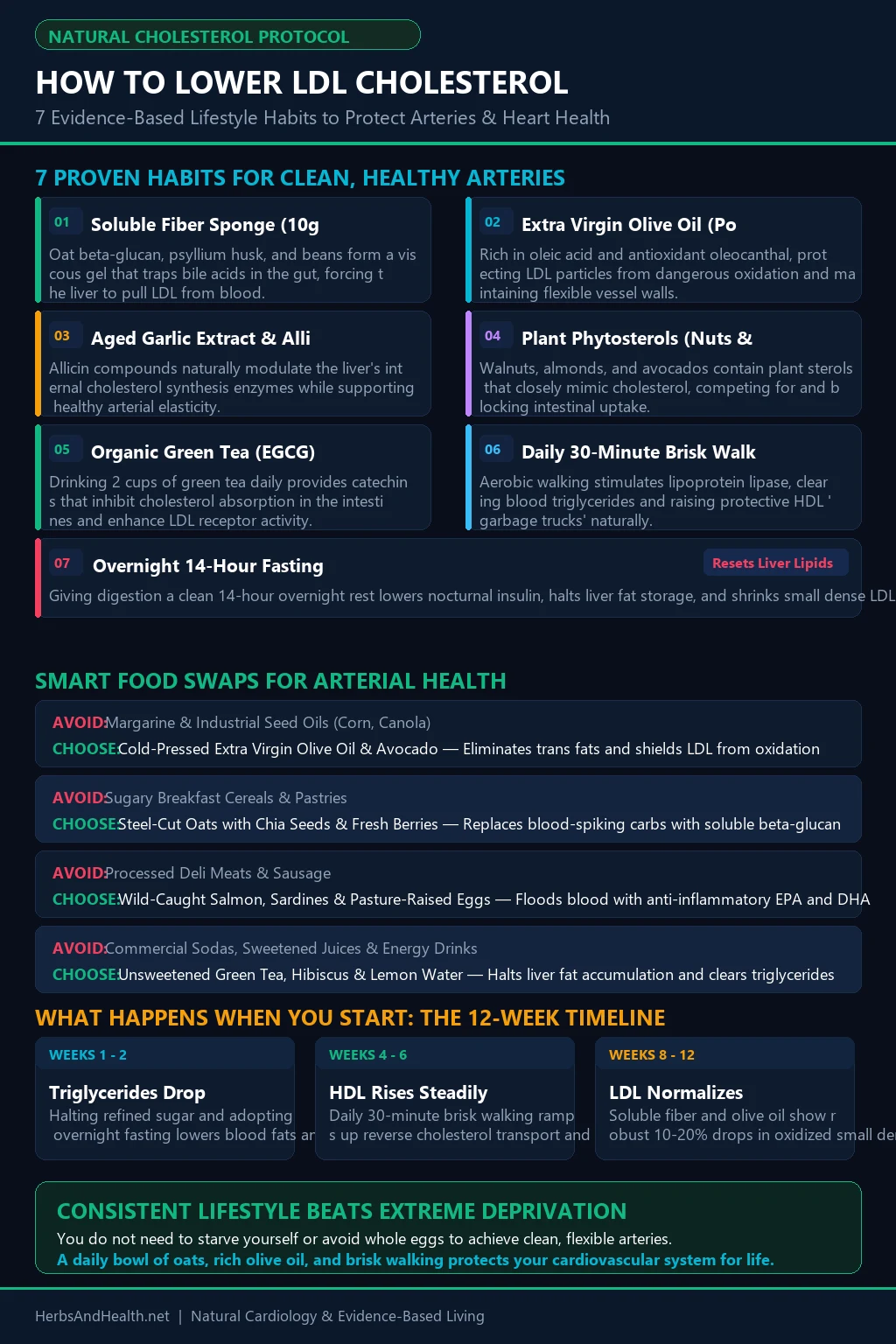
- The Soluble Fiber Sponge: Eating 10 grams of soluble fiber daily (oats, psyllium, beans) binds intestinal bile acids, lowering LDL by 8% to 15%.
- Anti-Inflammatory Fats: Replacing industrial seed oils with cold-pressed extra virgin olive oil shields LDL particles from dangerous oxidation.
- Plant Phytosterols: A daily handful of almonds, walnuts, and seeds naturally competes with and blocks dietary cholesterol absorption.
- Daily Brisk Walking: Just 30 minutes of daily aerobic movement activates lipoprotein lipase, boosting protective HDL and clearing blood fats.
- Fast Results: Consistent lifestyle habits produce measurable improvements in blood triglycerides in 2 weeks and significant LDL drops in 8 to 12 weeks.
Why Lowering LDL Naturally Works Better Than Extreme Deprivation
Before diving into the seven habits, it helps to understand why traditional low-fat diets so often fail. In our foundational guide on what cholesterol actually is and how it functions, we explained that your liver manufactures roughly 80% of your body’s cholesterol. It is not an enemy to be eliminated; it is a life-sustaining molecule.
The true danger to your cardiovascular system is not simply having LDL in your blood, it is having small, dense LDL particles that have become oxidized by systemic inflammation and high blood sugar. Large, buoyant LDL particles bounce harmlessly off your arterial walls. But when you eat highly refined carbohydrates, trans fats, and excess sugar, LDL particles shrink, oxidize, and stick to damaged endothelium.
When you focus on natural lifestyle medicine, you accomplish two critical goals at once: you help your liver clear excess circulating LDL, and you flood your bloodstream with antioxidants that prevent LDL from oxidizing in the first place. When paired with our comprehensive natural remedies for cholesterol, this approach delivers lasting protection without medication side effects.
Habit 1: Use the Soluble Fiber Sponge Effect (10 Grams Daily)
If there is a single dietary superstar for naturally reducing LDL cholesterol, it is soluble viscous fiber. Unlike insoluble fiber (the roughage that keeps your bowel movements regular), soluble fiber dissolves in water to form a thick, soothing gel inside your digestive tract.
Here is the brilliant metabolic mechanism: your liver uses circulating cholesterol to create bile acids, which are squirted into your small intestine to digest meals. Normally, your body reabsorbs about 95% of these bile acids to reuse them. But when you eat a hearty bowl of steel-cut oatmeal or take a spoonful of psyllium husk, the viscous fiber gel traps those bile acids like a sponge and escorts them out through waste.
Deprived of its recycled bile, your liver must pull LDL cholesterol directly out of your bloodstream to manufacture fresh bile acids. Clinical meta-analyses in the American Journal of Clinical Nutrition demonstrate that consuming 10 grams of soluble fiber daily reliably lowers LDL cholesterol by 8% to 15% within four to eight weeks. Fantastic sources include:
- Steel-Cut or Rolled Oats: Rich in beta-glucan (3 to 4 grams per cooked bowl).
- Whole Psyllium Husk: A gentle, concentrated plant husk (5 grams per tablespoon).
- Black Beans, Lentils & Chickpeas: Packed with resistant starch and soluble fiber (6 to 8 grams per cup).
- Brussels Sprouts, Carrots & Apples: Rich in natural pectin that binds intestinal lipids.
Habit 2: Swap Industrial Seed Oils for Extra Virgin Olive Oil
One of the fastest ways to protect your cardiovascular system is eliminating inflammatory cooking oils. Highly refined vegetable seed oils, such as soybean, corn, cottonseed, and canola oil, are rich in unstable polyunsaturated omega-6 fatty acids. Under high cooking heat, these oils rapidly oxidize, and once consumed, they incorporate into your LDL particles, making them significantly more vulnerable to arterial plaque formation.
Replace these industrial oils with cold-pressed extra virgin olive oil (EVOO). Extra virgin olive oil is loaded with heart-healthy monounsaturated oleic acid and potent antioxidant polyphenols, including oleocanthal and hydroxytyrosol. These compounds act like molecular shields, neutralizing free radicals and protecting your LDL particles from oxidative damage.
The landmark PREDIMED clinical trial found that individuals who consumed four tablespoons of extra virgin olive oil daily reduced their incidence of major cardiovascular events by an astonishing 30%. Drizzle it generously over roasted vegetables, salads, and lean proteins, following the delicious Mediterranean principles in our heart-healthy cardiac nutrition guide.
Habit 3: Eat a Daily Handful of Nuts & Seeds (Plant Phytosterols)
Nature has equipped plants with their own version of cholesterol, known as phytosterols or plant sterols. Structurally, phytosterols look nearly identical to human cholesterol. When you eat foods rich in phytosterols, they travel to your small intestine and compete with cholesterol for the exact same absorption receptors.
Because phytosterols bind tightly to these receptors, dietary and biliary cholesterol cannot get absorbed and are safely flushed away. Consuming roughly 2 grams of plant sterols daily has been shown to reduce LDL absorption by up to 10%.
The easiest, most delicious way to get natural phytosterols is enjoying a daily handful (about 1.5 ounces) of raw tree nuts: walnuts, almonds, pistachios, and pumpkin seeds. Walnuts offer an extra bonus: they are loaded with alpha-linolenic acid (ALA), a plant-based omega-3 that cools arterial inflammation.
Habit 4: benefit from the Power of Aged Garlic & Allicin
Garlic has been celebrated as a cardiovascular tonic for thousands of years, and modern pharmacology has confirmed its extraordinary benefits. When fresh garlic cloves are crushed, an enzyme called alliinase converts alliin into allicin, a bioactive sulfur compound that delivers profound metabolic effects.
Allicin works by gently modulating HMG-CoA reductase, the exact same liver enzyme targeted by pharmaceutical statins, but without the harsh muscle aches or liver stress. Multiple clinical trials have demonstrated that aged garlic extract can lower total cholesterol and LDL by 7% to 10% while improving arterial flexibility and lowering resting blood pressure.
To maximize allicin from dietary garlic, crush or mince fresh garlic cloves and let them rest on your cutting board for 10 minutes before cooking; this resting period allows alliinase to fully synthesize allicin before heat deactivates it. For consistent therapeutic potency, many cardiologists recommend an organic aged garlic extract supplement.
Habit 5: Sip 2 Cups of Organic Green Tea Daily (EGCG Power)
Green tea is arguably the most heart-protective beverage on earth. Unlike black tea, green tea leaves are gently steamed rather than oxidized, preserving high concentrations of powerful polyphenol antioxidants known as catechins, most notably epigallocatechin gallate (EGCG).
EGCG works through multiple pathways: it blocks the intestinal absorption of cholesterol, inhibits the oxidation of circulating LDL particles, and upregulates LDL receptors in the liver, enabling your body to clear LDL from the bloodstream more efficiently. A comprehensive meta-analysis of 14 randomized controlled trials found that daily green tea consumption significantly reduced both total cholesterol and LDL levels without lowering protective HDL.
Aim for two to three cups of unsweetened green tea or a bowl of traditional ceremonial Japanese matcha daily. Sip it in the morning or early afternoon to enjoy clean, calm alertness thanks to green tea’s natural L-theanine.
Habit 6: Take a Daily 30-Minute Brisk Walk (Boost Your Clean-Up Crew)
While nutrition is the foundation of lowering LDL, aerobic movement is the undisputed champion of raising protective HDL cholesterol. As explained in our guide to the metabolic delivery fleet, HDL particles act like arterial garbage trucks that scoop up excess cholesterol and transport it safely back to your liver.
When you engage in steady, moderate aerobic movement, such as a 30-minute brisk walk where you can still carry on a conversation, your contracting skeletal muscles activate an enzyme called lipoprotein lipase (LPL). This enzyme rapidly breaks down blood triglycerides, shrinks visceral abdominal fat, and stimulates your liver to produce larger, more robust HDL particles.
You do not need to run marathons or exhaust yourself with punishing cardio. A brisk 30-minute daily walk outdoors, ideally split into two 15-minute walks after lunch and dinner, delivers profound cardiovascular benefits while naturally lowering resting blood pressure and cortisol.
Habit 7: Adopt a 14-Hour Overnight Fasting Window
Late-night snacking is disastrous for blood lipids. When you eat cookies, chips, or ice cream at 10:00 PM and go to bed, your liver spends the entire night under the influence of elevated insulin, converting excess calories into circulating triglycerides and manufacturing small dense LDL particles.
By giving your digestive system a clean 14-hour overnight rest, such as finishing dinner by 7:00 PM and enjoying your first meal at 9:00 AM, your nocturnal insulin levels slide back to baseline. As detailed in our guide to intermittent fasting for fat loss, this overnight break allows your liver to clear stored hepatic triglycerides, enhances insulin sensitivity, and improves the overall quality of your cholesterol particles.
Helpful Tools & Heart-Healthy Essentials
Implementing these seven habits is much simpler when you have pure, clinically validated staples in your home:
Kyolic Aged Garlic Extract (Cardiovascular)
Standardized organic aged garlic extract formula. Clinically shown to naturally support healthy cholesterol metabolism, arterial elasticity, and circulation.
Organic Whole Psyllium Husk Powder
Pure unflavored soluble fiber that gently binds intestinal bile acids, supporting digestive comfort and encouraging natural LDL cholesterol clearance.
Organic Ceremonial Japanese Matcha
Shade-grown Japanese green tea powder delivering concentrated EGCG catechins and L-theanine to shield LDL particles from oxidation and promote vascular health.
Frequently Asked Questions About Lowering LDL Naturally
How quickly can I expect my LDL cholesterol to drop through lifestyle changes?
Blood lipids are remarkably responsive to dietary shifts. Reductions in blood triglycerides and improvements in digestion often occur within two to three weeks. Measurable reductions in circulating LDL cholesterol, typically between 10% and 20%, show clearly on clinical lab work after 8 to 12 weeks of consistent fiber, olive oil, and daily movement.
Can I lower my cholesterol without taking statin medication?
For many individuals with moderate hypercholesterolemia driven by diet and lifestyle, adopting these seven habits produces significant lipid improvements that satisfy clinical targets. However, if you have diagnosed coronary artery disease or Familial Hypercholesterolemia, lifestyle medicine should always be paired with personalized guidance from your cardiologist.
Do I need to avoid red meat completely to keep my arteries clean?
No. While heavily processed meats (bacon, hot dogs, sausages) are packed with inflammatory preservatives that harm blood vessels, moderate amounts of lean, unprocessed, grass-fed beef or bison fit comfortably into a heart-healthy diet. Balance your red meat meals with generous portions of dark leafy greens and olive oil.
Are whole eggs really safe if my LDL is already elevated?
Yes. Clinical trials demonstrate that eating one to two whole eggs daily does not increase small dense atherogenic LDL. In fact, eggs help shift small LDL particles into larger, buoyant, harmless particles while raising protective HDL. Prepare them poached, soft-boiled, or scrambled in extra virgin olive oil rather than butter or margarine.
Scientific References & Peer-Reviewed Sources
- Estruch, R., et al. (2018). Primary Prevention of Cardiovascular Disease with a Mediterranean Diet Supplemented with Extra-Virgin Olive Oil or Nuts. New England Journal of Medicine, 378(25), e34.
- Brown, L., et al. (1999). Cholesterol-lowering effects of dietary fiber: a meta-analysis. American Journal of Clinical Nutrition, 69(1), 30-42.
- Ried, K., et al. (2013). Effect of garlic on serum lipids: an updated meta-analysis. Nutrition Reviews, 71(5), 282-299.
- Zheng, X. X., et al. (2011). Green tea intake lowers fasting serum total and LDL cholesterol in humans: a meta-analysis. American Journal of Clinical Nutrition, 94(2), 601-610.
Medical Disclaimer: The information in this article is for educational and informational purposes only and is not medical advice. Always consult a licensed physician or cardiologist before making major changes to your diet, supplements, or prescription medications.