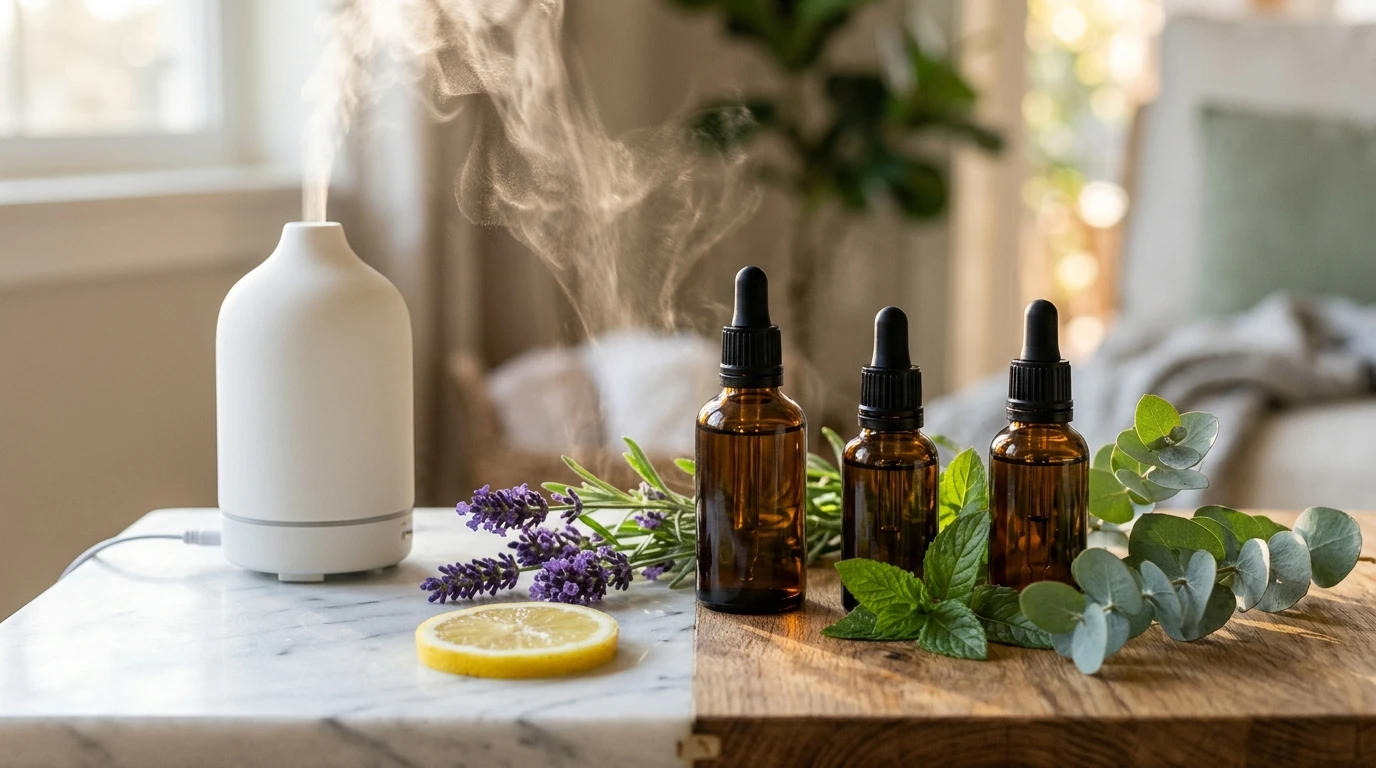
In mainstream consumer culture, essential oils are frequently dismissed as decorative home fragrances or relegated to superficial wellness trends. However, in analytical biochemistry, neurobiology, and clinical phytomedicine, authentic essential oils are recognized as something far more profound: volatile, highly concentrated secondary plant metabolites engineered to exert complex biological effects across human physiological systems.
When you inhale the sharp, clean aroma of crushed peppermint or the soft, floral notes of genuine lavender, you are not merely experiencing an aesthetic sensory pleasantry. You are inhaling millions of microscopic, lipophilic monoterpenes, sesquiterpenes, and phenylpropanoids. These volatile molecules are small enough to cross both the nasal mucosal barrier and the blood-brain barrier, directly interacting with olfactory neuroreceptors, neurotransmitter pathways, and autonomic nervous system tone within seconds.
Yet, because essential oils represent plant chemistry concentrated by factors of 50 to 100 times—requiring up to three pounds of lavender blossoms to yield a single 15 ml bottle—therapeutic success depends entirely upon scientific precision. Below is an exhaustive, clinical guide to how aromatherapy interacts with human neurochemistry, the five most pharmacologically validated essential oils, precise carrier oil dilution ratios, and non-negotiable safety protocols.
Evidence-Based Clinical Summary
Essential oils are volatile secondary plant metabolites composed of monoterpenes, sesquiterpenes, and phenylpropanoids that cross the blood-brain barrier and olfactory epithelium to directly engage the amygdala and hippocampus. Clinical research supports lavender (linalool) for GABAergic anxiolysis, peppermint (menthol) for TRPM8 analgesic vasoconstriction, and tea tree (terpinen-4-ol) for antimicrobial membrane lysis. Never ingest pure essential oils, and always adhere to dermatological dilution ratios (1% to 2% in carrier oils) to prevent chemical burns and sensitization.
1. The Olfactory-Limbic Highway: How Scents Modulate Brain Chemistry
To understand how essential oils influence mood, stress, and autonomic vitality, one must understand human olfactory anatomy. Of all five human senses, olfaction is the only sense directly wired into the limbic system without first being filtered and processed by the thalamus (the brain’s sensory relay switchboard).
The neurological cascade unfolds rapidly:
- Inhalation & Receptor Binding: Volatile organic terpenes evaporate into the ambient air and are inhaled through the nasal cavity, dissolving into the specialized olfactory epithelium. Here, they bind to specialized G-protein-coupled olfactory sensory neurons.
- Cribriform Transmission: Electrical impulses travel immediately through the cribriform plate into the olfactory bulb at the base of the forebrain.
- Limbic System Activation: The olfactory tract projects directly into the amygdala (the emotional processing and fear center of the brain) and the hippocampus (responsible for memory consolidation and autonomic nervous system regulation).
- Neurochemical Modulation: Specific volatile compounds trigger immediate cascades of neurotransmitters—such as gamma-aminobutyric acid (GABA), dopamine, and serotonin—while simultaneously downregulating hypothalamic-pituitary-adrenal (HPA) axis cortisol secretion.
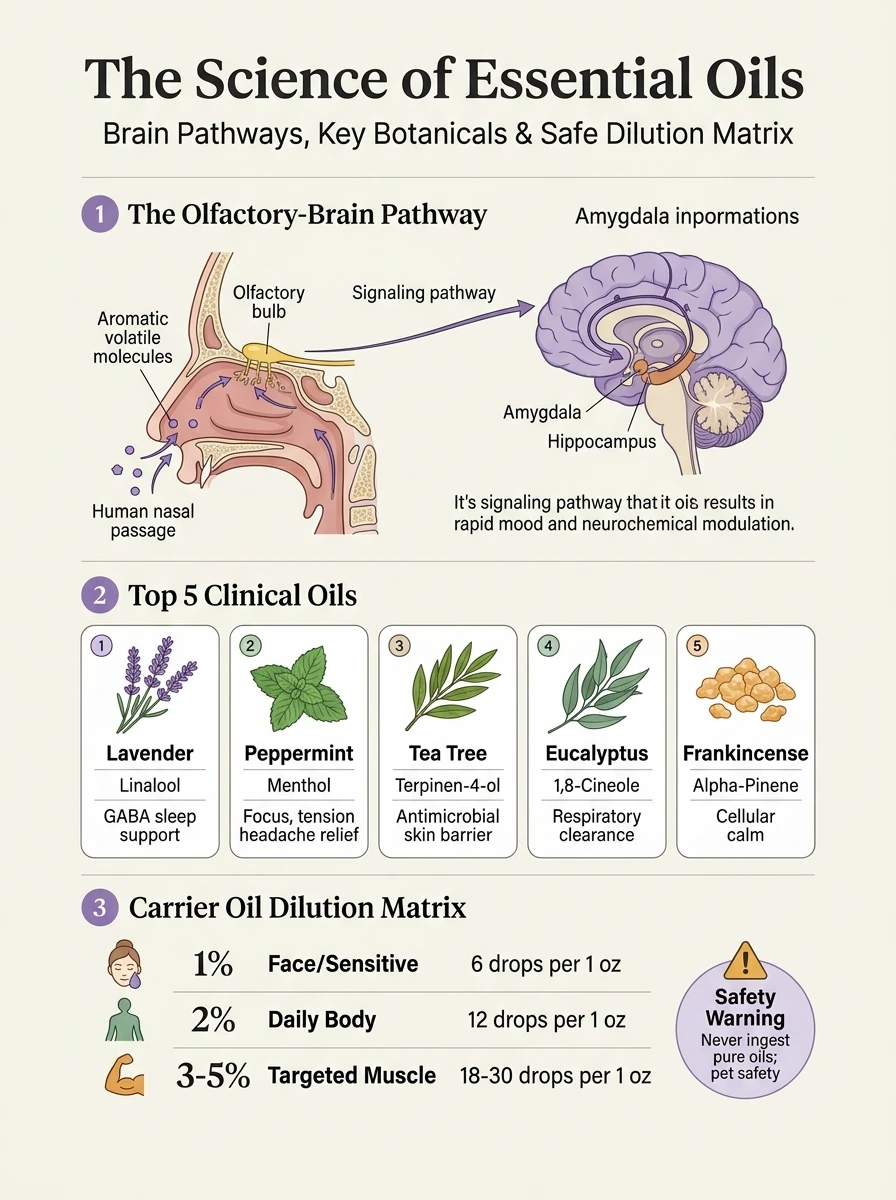
2. The Top 5 Clinically Proven Essential Oils & Their Mechanisms
A. English Lavender (Lavandula angustifolia) — GABAergic Sedation & Sleep Architecture
English lavender is the most extensively researched botanical oil in neuropsychiatric literature. Its therapeutic action is driven primarily by two volatile monoterpenoids: linalool and linalyl acetate. In randomized double-blind clinical trials published in International Clinical Psychopharmacology (PubMed PMID: 20512042), standardized lavender oil significantly reduced clinical anxiety scores and improved sleep architecture comparable to low-dose benzodiazepines, acting through voltage-dependent calcium channel inhibition and parasympathetic autonomic restoration.
Pharmacological imaging and electroencephalogram (EEG) studies reveal that linalool inhibits voltage-gated calcium channels (VGCCs) in hippocampal neurons, effectively dampening neuronal hyperexcitability in a manner biochemically analogous to low-dose benzodiazepines—yet without the risk of physical tolerance or morning cognitive grogginess. Inhaling lavender vapor for 20 minutes before bedtime significantly increases slow-wave (delta) sleep duration, lowers resting nocturnal heart rate, and attenuates subjective anxiety scores.
B. Peppermint (Mentha piperita) — TRPM8 Cooling & Tension Headache Abatement
Rich in l-menthol (40–55%) and menthone, peppermint essential oil is an exceptional botanical stimulant and analgesic agent. When applied topically or diffused, menthol binds selectively to cutaneous TRPM8 ion channels (transient receptor potential melastatin 8), producing an intense physiological cooling sensation that blocks nociceptive pain signals. In a randomized, double-blind, placebo-controlled clinical trial published in Der Nervenarzt (PubMed PMID: 8805113), a 10% topical peppermint oil solution was proven clinically effective in rapidly abating tension-type headache intensity by increasing regional cutaneous microcirculation and reducing pericranial muscle tenderness.
A landmark clinical trial conducted at the University of Kiel in Germany demonstrated that a 10% topical peppermint oil solution in ethanol applied across the forehead and temples was just as clinically effective at aborting acute tension-type headaches as 1,000 mg of acetaminophen, working within 15 minutes of application without gastrointestinal toxicity. Furthermore, inhaling peppermint vapors during cognitive testing measurably enhances sustained attention, working memory speed, and subjective alertness.
C. Australian Tea Tree (Melaleuca alternifolia) — Terpinen-4-ol & Microbial Lysis
Unlike lavender and peppermint, which are celebrated for neuro-emotional effects, tea tree essential oil is an unmatched topical antimicrobial weapon. The key bioactive is terpinen-4-ol (comprising at least 35–45% of genuine therapeutic-grade oil).
Terpinen-4-ol compromises the structural and functional integrity of bacterial and fungal cell membranes, causing leakage of intracellular potassium ions and inevitable microbial lysis. Double-blind clinical trials confirm that a 5% tea tree oil gel is remarkably effective in reducing inflamed and non-inflamed acne lesions caused by Cutibacterium acnes, performing comparably to 5% benzoyl peroxide while generating significantly less skin scaling, peeling, and erythema. For deeper natural skin clearing strategies, explore our guide on neem leaves and botanical dermatological defense.
D. Blue Gum Eucalyptus (Eucalyptus globulus) — 1,8-Cineole & Bronchial Clearance
The crisp, medicinal scent of eucalyptus is dominated by 1,8-cineole (eucalyptol), which accounts for over 70% of its chemical composition. Cineole is a validated mucolytic, secretolytic, and anti-inflammatory terpene with extraordinary affinity for respiratory mucosal tissue.
In clinical pulmonology studies, inhaled cineole thins viscous bronchial mucus secretions, stimulates the beat frequency of respiratory ciliated epithelial cells (accelerating mucociliary clearance), and suppresses hypersecretion of inflammatory leukotrienes. Diffusing eucalyptus in a bedroom provides rapid, natural relief from nasal congestion, seasonal allergies, and bronchial tightness.
E. Frankincense (Boswellia carterii) — Alpha-Pinene & Deep Nervous System Balance
Harvested from the aromatic resin of desert Boswellia trees, frankincense has been utilized in meditative and spiritual rituals for millennia. Its dominant monoterpenes—alpha-pinene, limonene, and incensole acetate—exert potent neuroprotective and grounding effects.
Pharmacological research indicates that incensole acetate activates TRPV3 ion channels in the brain, an action associated with profound anxiolytic and antidepressant-like responses. Diffusing frankincense during meditation, breathwork, or restorative yoga slows erratic breathing patterns, downregulates racing mental chatter, and promotes deep emotional equilibrium.
3. The Golden Dilution Matrix: Safe Carrier Oil Protocols
Pure essential oils are extraordinarily concentrated and must never be applied directly (“neat”) to human skin. Unrefined application can trigger rapid contact dermatitis, chemical burns, or permanent dermal sensitization (an irreversible immune allergy). Always blend essential oils into a nourishing, fatty carrier oil:
- 1% Dilution (Delicate & Facial Care): 5 to 6 drops of essential oil per 1 fluid ounce (30 ml) of carrier oil. Essential for facial serums, sensitive skin, and elderly individuals.
- 2% Dilution (Standard Daily Adult Use): 10 to 12 drops per 1 fluid ounce (30 ml) of carrier oil. The clinical benchmark for full-body massage oils, post-shower body moisturizers, and bath blends.
- 3% to 5% Dilution (Acute Localized Application): 15 to 30 drops per 1 fluid ounce (30 ml) of carrier oil. Reserved for short-term application to small surface areas (such as sore neck muscles, arthritic knee joints, or temples during a tension headache).
- The Best Carrier Oils: Fractionated Coconut Oil (MCT) is completely clear, odorless, and never goes rancid. Golden Jojoba Oil is biologically a liquid wax ester that closely mimics human sebum, making it ideal for blemish-prone skin. Sweet Almond Oil provides rich glide and Vitamin E for therapeutic body massage.
4. Curated Aromatherapy & Ultrasonic Essentials Buyer’s Guide
Because synthetic fragrance oils diluted with cheap chemical phthalates flood the commercial market, selecting certified 100% pure organic oils and medical-grade ultrasonic diffusers ensures therapeutic efficacy without indoor air toxicity:
Aromatherapy & Wellness Essentials Showcase
100% Pure Therapeutic GradeASAKUKI 500ml Premium Ultrasonic Essential Oil Diffuser
Whisper-quiet ultrasonic transducer that preserves delicate terpenes without destructive heat. Features 500ml capacity, 16-hour run time, 7 ambient mood lights, and automatic safety shut-off.
Check Diffuser on Amazon →Cliganic USDA Organic Essential Oils Complete Set (Top 6)
100% pure, unadulterated therapeutic oils: Lavender, Peppermint, Tea Tree, Eucalyptus, Lemongrass, and Orange. GC-MS lab verified for purity with zero synthetic chemicals.
View Organic Set on Amazon →Majestic Pure 100% Pure Fractionated Coconut Oil (16 oz with Pump)
Completely odorless, liquid MCT carrier oil that absorbs instantly into pores without staining clothes or blocking follicles. The gold standard base for topical dilutions and roll-ons.
Check Carrier Oil on Amazon →5. Critical Toxicology & Safety Rules You Must Never Break
To safely enjoy the restorative benefits of essential oils without medical complications, adhere strictly to these clinical toxicology rules:
- Never Ingest Essential Oils Internally: Popular multi-level marketing claims advocating drops of essential oil in drinking water are clinically dangerous. Essential oils do not dissolve in water; they float on the surface in concentrated globules, burning esophageal mucous membranes, disrupting gut microbiome diversity, and placing severe acute burdens on hepatic Cytochrome P450 enzymes. For safe, water-soluble botanical wellness, drink steeped herbal teas instead; read our guide on the 8 verified health benefits of tea.
- Crucial Pet Toxicity Warnings (Cats & Dogs): Domestic felines lack the hepatic enzyme glucuronyl transferase, making them fundamentally unable to metabolize aromatic terpenes and phenols. Diffusing tea tree, eucalyptus, wintergreen, or peppermint in confined rooms with cats can lead to rapid respiratory distress, ataxia, hypothermia, and acute liver failure. Always diffuse in well-ventilated rooms with an open door so pets can exit freely.
- Phototoxicity of Cold-Pressed Citrus Oils: Cold-pressed oils from lemon, lime, bergamot, and grapefruit contain furanocoumarins (such as bergapten). When applied to the skin and exposed to ultraviolet (UV) sunlight, furanocoumarins induce severe phytophotodermatitis—resulting in painful blistering and dark hyperpigmentation that can last for months. Avoid direct sun exposure for at least 12 to 18 hours after topical citrus application.
- Practice Intermittent Diffusion: Never run an ultrasonic diffuser continuously for 8 hours in an enclosed bedroom. The human olfactory epithelium experiences sensory fatigue within 30 to 45 minutes, after which benefits diminish while mucous membrane irritation rises. Employ a 30-minutes-on, 60-minutes-off timer cycle for optimal physiological response.
Botanical volatile oils like clary sage provide targeted endocrine support; explore our detailed breakdown on 13 signs of menopause and natural herbal therapies for vasomotor relief. For more creative applications combining household ingredients with evidence-based natural wellness, consult our guide to 10 surprising home remedies that actually work.
Related Clinical Botanical & Mental Health Guides
- Calm Your Mind: Natural Remedies for Anxiety, Stress & HPA Axis Dysregulation
- Anxiety Relief Guide: Symptoms, Root Causes & Safe Anxiolytics
- Ashwagandha Warnings: Who Should NOT Take It? Critical Contraindications
- Clove Water Side Effects: Eugenol Toxicity, Hepatic Strain & Safe Dosage Guidelines
- 8 Health Benefits of Tea: Polyphenols, Longevity & Cellular Protection
Frequently Asked Questions (FAQ)
What is the difference between an essential oil and a fragrance oil?
Essential oils are 100% natural extracts derived directly from botanical flowers, leaves, barks, or resins via steam distillation or cold-pressing; they contain the plant’s authentic pharmacological terpenes. Fragrance oils are synthetic, petroleum-derived laboratory formulations designed solely to mimic scents; they possess zero therapeutic benefits and frequently contain hormone-disrupting phthalates.
Can essential oils help with anxiety and panic attacks?
Yes. Rapid inhalation of authentic lavender, bergamot, or frankincense triggers immediate parasympathetic nervous system activation via the olfactory-limbic pathway, slowing resting heart rate and dampening acute autonomic arousal within 3 to 5 minutes. For comprehensive botanical mental health support, review our clinical guide on natural treatments that support mood stability.
Why does my skin burn when I apply essential oils directly?
Applying pure essential oil “neat” causes rapid cellular irritation and damages the cutaneous lipid barrier because the volatile lipophilic compounds are too concentrated for epidermal tissue. If accidental undiluted exposure occurs, do not rinse with water (which drives oil deeper into tissue). Immediately flush the area with a fatty carrier oil, olive oil, or whole milk to dissolve and dilute the terpenes.
Final Medical Verdict: Elevating Daily Health Through Plant Chemistry
When used with scientific discipline, essential oils provide a bridge between neurochemistry and ancestral botanical medicine. By respecting safe dilution benchmarks, diffusing intermittent cool ultrasonic vapors, and prioritizing unadulterated organic botanicals, you can actively harness the therapeutic power of plant terpenes to calm nervous system hyperarousal, support respiratory vitality, and nurture lifelong physiological resilience.