Almost everyone experiences periods of worry or nervous apprehension before a major life event, job interview, or difficult conversation. In short bursts, this natural stress response is an adaptive survival mechanism designed to sharpen your focus and prepare your body to react to danger.
However, when anxious feelings become persistent, unprovoked, and disproportionate to your daily circumstances, lingering for months and interfering with your sleep, relationships, and work, they cross the threshold into an anxiety disorder. Today, anxiety conditions affect more than 300 million people globally, making them the most common mental health challenge of modern times.
Living with anxiety can feel exhausting, but you do not have to navigate it alone or rely solely on heavy medications with difficult side effects. Below is a comprehensive, compassionate guide to understanding your body’s alarm system: the physical and emotional symptoms of anxiety, the biological root causes behind nervous hyperarousal, and practical, science-backed natural strategies to restore lasting inner calm.
The 3 Faces of Anxiety: Physical, Emotional & Cognitive Symptoms
Anxiety is not “all in your head.” Because your autonomic nervous system connects your brain to every major organ, anxiety manifests across three distinct physiological domains:
1. Physical Warning Signs
When your amygdala senses perceived threat, it triggers an immediate flood of epinephrine (adrenaline) and norepinephrine, preparing your body to fight or flee:
- Cardiovascular Acceleration: Pounding heart, racing pulse, or sudden chest tightness that can mistakenly feel like a cardiac event.
- Respiratory Changes: Rapid, shallow chest breathing or feeling as though you cannot take a full, satisfying breath (air hunger).
- Gastrointestinal Distress: “Butterflies” in the stomach, sudden nausea, cramping, or bouts of diarrhea (driven by the close communication of the gut-brain axis).
- Neuromuscular Tension: Clenched jaw (bruxism), chronic neck and shoulder knots, trembling hands, and tension headaches.
- Sensory Sensitivity: Cold, clammy hands and feet, dizziness, hot flashes, or feeling suddenly lightheaded.
2. Emotional Symptoms
Emotionally, anxiety feels like being trapped on high alert. Common manifestations include a pervasive sense of impending doom or dread, feeling constantly “on edge” or jittery, heightened irritability, and an intense urge to escape benign social or work environments.
3. Cognitive Symptoms
In the brain, anxiety hijacks your attention networks. You may experience racing intrusive thoughts, chronic mental rumination (replaying worst-case scenarios on a loop), difficulty concentrating or “brain fog,” and severe nocturnal insomnia caused by a brain that simply refuses to switch off at bedtime.
What Causes Anxiety? Biological & Lifestyle Triggers
Anxiety rarely springs from a single flaw in character or willpower. Instead, functional medicine recognizes anxiety as the culmination of biological, environmental, and neurological imbalances:
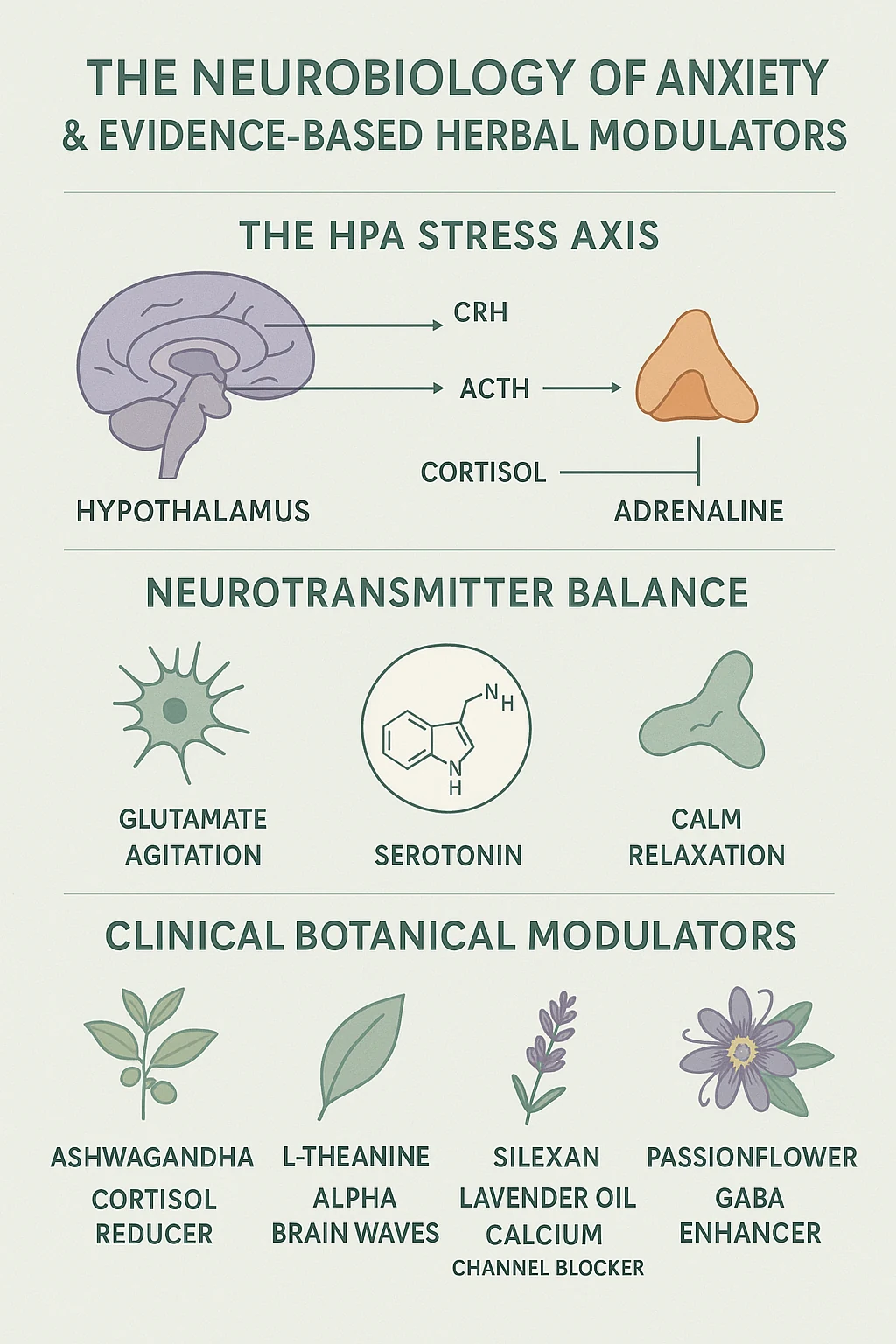
- HPA Axis Dysregulation: Chronic psychological stress keeps the hypothalamic-pituitary-adrenal (HPA) axis firing continuously, leading to persistently elevated cortisol and depleted adrenal reserves.
- Neurotransmitter Imbalances: Anxiety often reflects an unfavorable ratio between Glutamate (your primary excitatory neurotransmitter) and GABA (gamma-aminobutyric acid, your brain’s primary calming brake pedal).
- Gut Microbiome Dysbiosis: Over 90% of your body’s serotonin and roughly 50% of its dopamine are synthesized in the digestive tract. An inflamed, leaky gut microbiome directly triggers neuroinflammation through the vagus nerve.
- Nutritional Deficiencies: Inadequate dietary intake of magnesium, vitamin D3, zinc, and active methylated B vitamins (B6, B12, folate) starves the brain of essential enzymatic cofactors needed to synthesize calming neurochemicals.
- Lifestyle Provocateurs: Excessive caffeine intake, alcohol consumption (which causes severe rebound anxiety during withdrawal), erratic blood sugar swings from refined carbs, and chronic sleep deprivation all mimic and magnify panic symptoms.
The 5 Best Evidence-Backed Natural Anxiolytics
While severe anxiety conditions benefit greatly from professional cognitive behavioral therapy (CBT), several clinically studied botanicals and nutrients offer profound, non-sedating relief for mild to moderate anxiety:
1. Silexan Oral Lavender Oil (Lavandula angustifolia)
Silexan is a patented, standardized pharmaceutical-grade lavender oil capsule designed for oral ingestion. In landmark double-blind clinical trials published in the International Clinical Psychopharmacology (PubMed PMID: 19962288), taking 80 mg of Silexan daily demonstrated anxiolytic efficacy equivalent to low-dose prescription lorazepam and paroxetine. Crucially, Silexan works by moderating voltage-gated calcium channels in presynaptic neurons, providing powerful relief with zero sedation, zero dependency, and zero withdrawal effects.
2. L-Theanine (from Green Tea)
L-theanine is a unique non-protein amino acid found naturally in green tea leaves. It readily crosses the blood-brain barrier to block glutamate receptors while boosting calming GABA levels. Within 30 to 45 minutes of ingestion, L-theanine stimulates Alpha Brain Waves (8–12 Hz), the distinct electrical pattern associated with deep meditation and “alert relaxation”, without causing daytime drowsiness. For an in-depth clinical analysis of loose-leaf green tea brewing protocols that optimize L-theanine and EGCG yields, see our guide on daily tea consumption and cognitive longevity.
3. Ashwagandha (Withania somnifera — KSM-66)
As the premier adaptogenic root of Ayurvedic tradition, ashwagandha recalibrates an overtaxed HPA axis. In a landmark double-blind clinical trial published in the Indian Journal of Psychological Medicine (PubMed PMID: 23439798), taking 300 mg twice daily of standardized root extract (KSM-66) reduced circulating serum cortisol by 27.9% and alleviated clinical anxiety scores by 75.6%, noticeably dampening physiological reactivity to daily stressors.
4. Passionflower (Passiflora incarnata)
Cherished by Native American and European herbalists, passionflower contains natural flavonoids (like chrysin) that gently bind to benzodiazepine receptors on GABA-A complexes. It is especially beneficial when taken in the late evening to quiet racing, cyclical thoughts before bed.
5. Magnesium Glycinate / L-Threonate
Magnesium is nature’s foundational relaxation mineral, acting as the physical “cork” that blocks excitatory calcium from flooding NMDA brain receptors. Magnesium glycinate relaxes tense, aching muscles, while magnesium L-threonate (Magtein) is specifically engineered to cross the blood-brain barrier and enhance synaptic plasticity.
Rapid Somatic Resets: Calm Panic in Under 2 Minutes
When you are in the grip of acute anxiety or an impending panic attack, you cannot simply “think” your way out of it because your prefrontal cortex is offline. You must communicate calm to your nervous system through physical, physiological feedback loops:
1. The Physiological Sigh
Discovered by neuroscientists at Stanford University, the physiological sigh is the fastest biological way to decelerate your heart rate on demand:
- Take two consecutive inhales through your nose: one deep inhale to fill your lungs, followed immediately by a quick second “sniff” to fully pop open collapsed alveoli.
- Exhale slowly and completely through your mouth with a soft sigh, making your exhale twice as long as the inhale.
- Repeat 2 to 3 times. The extended exhale increases intrathoracic pressure, signaling your vagus nerve to slow your heartbeat almost instantly.
2. The 5-4-3-2-1 Sensory Grounding Technique
This classic cognitive grounding exercise interrupts catastrophic thought spirals by re-anchoring your attention in physical reality. Look around your immediate surroundings and deliberately name:
- 5 things you can see (the grain of a wooden desk, a leaf outside the window).
- 4 things you can physically feel (your feet flat on the floor, the texture of your shirt).
- 3 things you can hear (traffic in the distance, a humming refrigerator).
- 2 things you can smell (fresh coffee, soap on your hands).
- 1 thing you can taste (a sip of cold water or mint gum).
3. The Mammalian Dive Reflex (Cold Splash)
If your heart is pounding uncontrollably, fill a sink with ice-cold water and submerge your face for 10 to 15 seconds, or press an ice pack wrapped in a paper towel against your eyes and upper cheeks. Cold stimulation of the trigeminal nerve activates the primitive mammalian dive reflex, instantly stimulating the vagus nerve to slow cardiac rhythm.
Lifestyle Foundation: How to Guard Your Nervous System
Supplements and breathing exercises are most effective when supported by healthy lifestyle foundations:
| Area | Calming Strategy | Why It Works |
|---|---|---|
| Morning Light | Get 10–15 minutes of outdoor sunlight within an hour of waking. | Anchors circadian cortisol rhythms and optimizes nocturnal melatonin release. |
| Caffeine Taper | Switch from high-octane dark roast to ceremonial matcha or decaf. | L-theanine in matcha cushions caffeine spikes and prevents adrenal overstimulation. |
| Blood Sugar Balance | Pair protein and healthy fats with every carbohydrate meal. | Prevents reactive hypoglycemia, which triggers emergency adrenaline surges. |
| Movement | Engage in 20–30 minutes of moderate aerobic exercise (brisk walking, cycling). | Metabolizes excess circulating stress hormones and stimulates neuroprotective BDNF. |
| Digital Boundaries | Enforce a strict “no doomscrolling” rule 60 minutes before bedtime. | Protects your dopamine receptors and prevents nocturnal sympathetic hyperarousal. |
Recommended Natural Anxiety Relief Essentials
These three clinically validated, third-party tested calming supplements offer reliable daily support for an overactive nervous system:
1. Nature’s Way CalmAid (Clinically Studied Silexan)
Non-drowsy oral lavender oil softgels proven in published clinical trials to reduce feelings of tension, stress, and anxious thoughts. Non-habit forming with zero sedation or daytime fatigue.
2. Doctor’s Best Suntheanine L-Theanine (150 mg)
Patented, pure L-isomer of theanine produced through a natural fermentation process. Promotes calm focus, alpha brain wave generation, and smooth emotional balance without grogginess.
3. Life Extension Neuro-Mag (Magnesium L-Threonate)
Specifically engineered to cross the blood-brain barrier and elevate synaptic magnesium levels. Supports healthy neurotransmitter signaling, mental calm, and deep, restorative sleep architecture.
Navigating sudden, life-altering medical events requires deep psychological resilience; read our case investigation on neurological injury, transverse myelitis, and family recovery.
Related Clinical Guides & Neurochemical Protocols
Explore complementary research-backed guides from our neurology and stress management library:
- Somatic Calm Protocols: Calm Your Mind: Natural Remedies for Anxiety & Chronic Stress
- Cognitive Clarity & Tea: Daily Tea & L-Theanine: Protecting Neural Architecture & Alpha Waves
- Memory & Stress Pathways: Amnesia Explained: 6 Types, Root Causes & Synaptic Recovery
- Neurodevelopment & Focus: Natural Remedies for ADHD: Nutrition, Nootropics & Focus Strategies
- Sensory Regulation: Autism Spectrum Disorder: Diagnostic Pathways & Sensory Accommodations
- Mood Disorders & Bipolar: Natural Treatments for Bipolar Disorder: Evidence-Based Adjunctive Therapies
Frequently Asked Questions (FAQ)
How long do natural anxiety remedies take to work?
Fast-acting compounds like L-Theanine and physical breathing techniques (the physiological sigh) provide noticeable calming effects within 30 to 45 minutes. Botanical adaptogens like Ashwagandha and Silexan lavender oil work cumulatively, with optimal clinical benefits appearing after 2 to 4 weeks of consistent daily use.
Can I take herbal calming supplements alongside prescription antidepressants (SSRIs)?
Always consult your psychiatrist or prescribing physician. While nutrients like magnesium and mild chamomile tea are generally safe, potent botanicals like St. John’s Wort should never be combined with SSRIs due to the life-threatening risk of Serotonin Syndrome. High-dose passionflower or valerian should also be monitored if taking prescription sedatives.
What is the difference between an anxiety attack and a panic attack?
Anxiety attacks develop gradually in response to a perceived stressor, characterized by persistent worry, muscle tightness, and restlessness over hours or days. Panic attacks strike suddenly without warning, reaching peak physical intensity within 10 minutes with severe symptoms like shortness of breath, terror, numbness, and feeling as though you are having a heart attack.
Can cutting back on caffeine really cure anxiety?
For many people, yes. Caffeine blocks adenosine receptors and stimulates adrenaline production, chemically creating the exact physiological symptoms of panic. If you are prone to morning jitters or palpitations, tapering off espresso or switching to decaf for two weeks often dramatically lowers baseline anxiety.
Medical & Mental Health Disclaimer: This article is intended strictly for educational purposes and does not constitute psychiatric or medical diagnosis, advice, or treatment. If your anxiety is overwhelming, interferes with your ability to function, or is accompanied by thoughts of self-harm, please reach out immediately to a licensed mental health professional or call the Suicide & Crisis Lifeline by dialing 988.