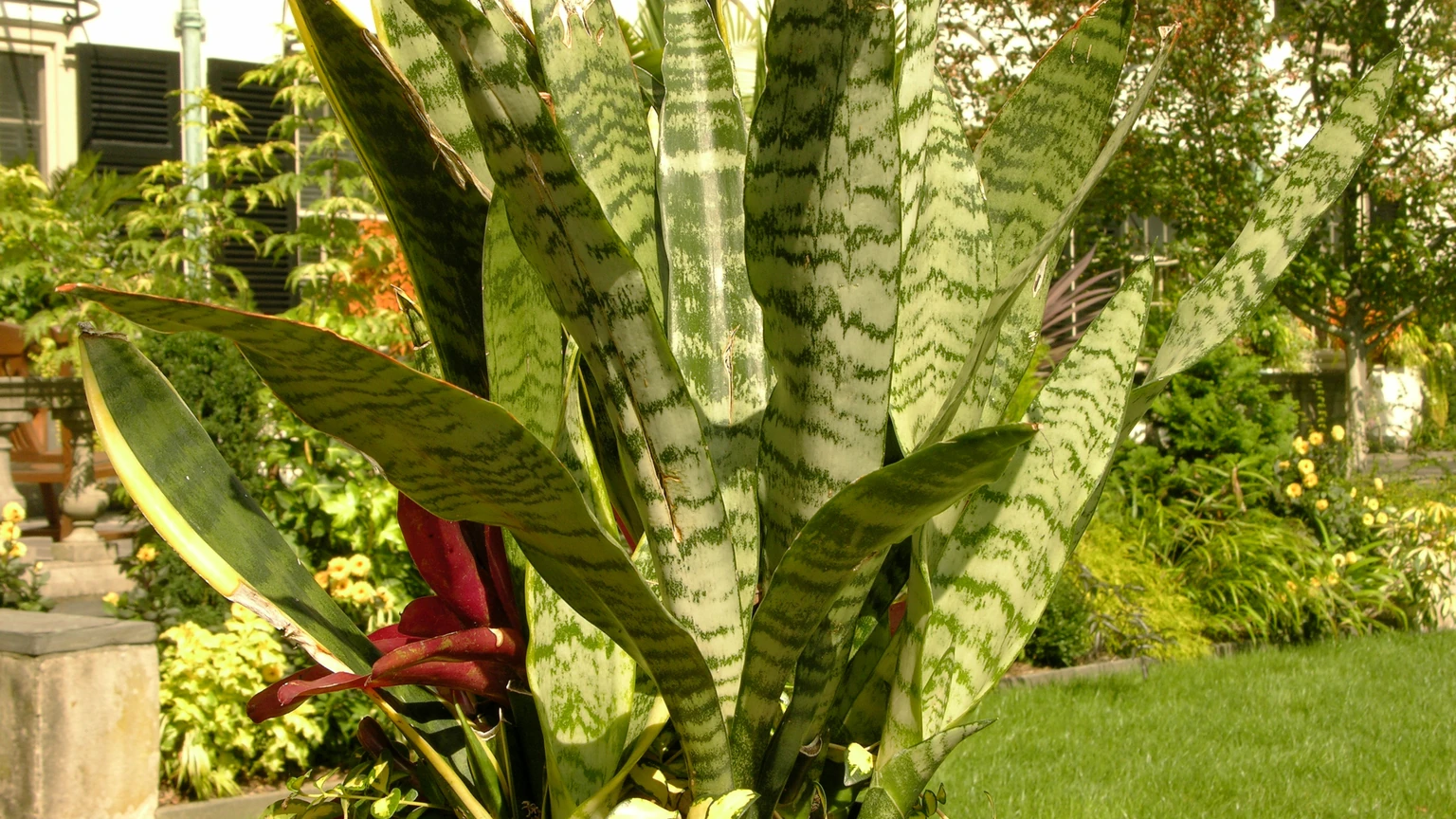
With its striking vertical foliage and unyielding resilience, the snake plant (Sansevieria trifasciata / Dracaena trifasciata) is celebrated as Mother-in-Law’s Tongue and Saint George’s Sword.
While novice indoor gardeners adore the plant because it can withstand weeks of neglect and low light, botanical researchers and environmental scientists revere it for far more sophisticated physiological reasons. The snake plant is an evolutionary marvel equipped with an extraordinary photosynthetic pathway that purifies indoor air, filters harmful chemical vapors, and produces fresh oxygen while you sleep.
Whether you already nurture a collection of potted houseplants or are contemplating adding your very first green companion, understanding the biological mechanics of Sansevieria transforms it from a simple decorative accent into an active wellness asset. Below is an authoritative, science-backed exploration of how snake plants filter toxins, the bio-physics of nighttime oxygen generation, vital pet toxicity facts, and essential care guidelines to help your plant thrive for decades.
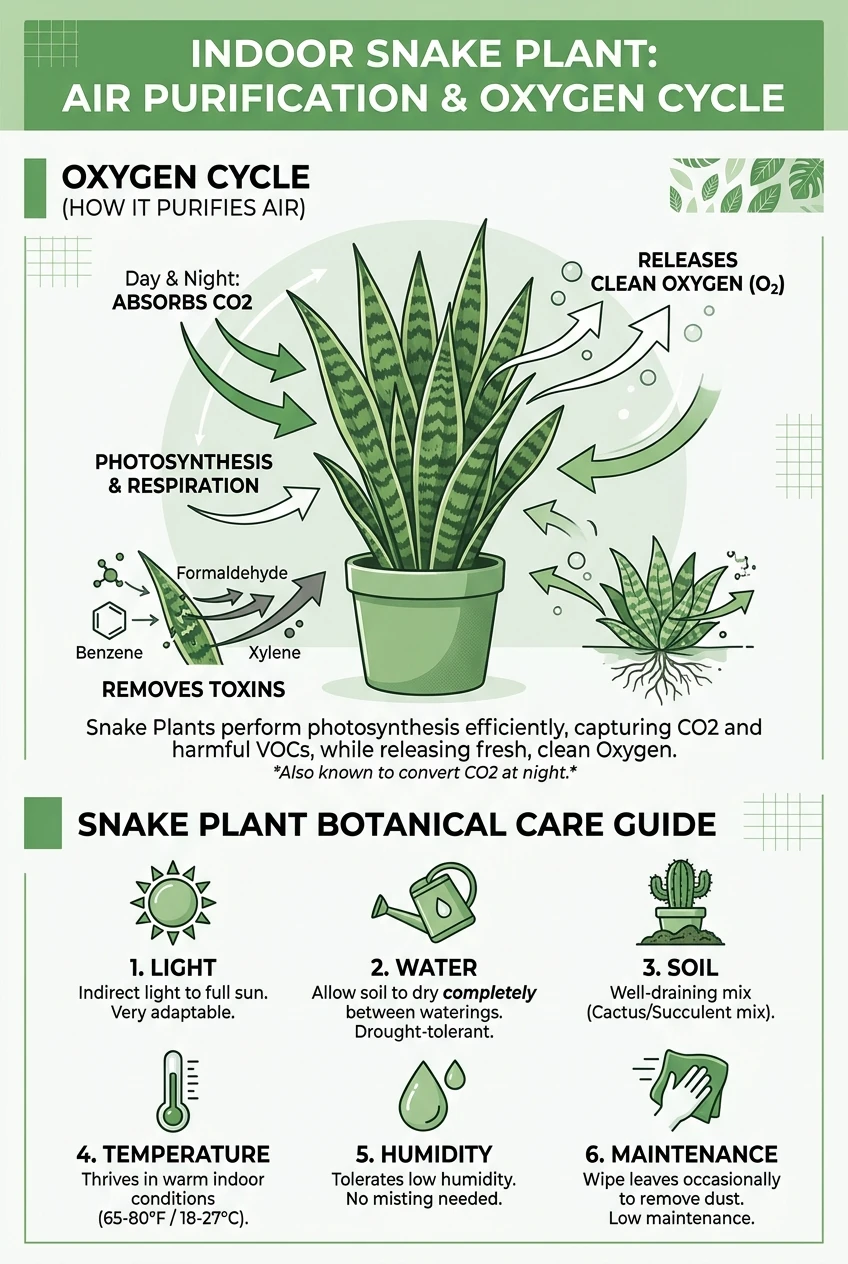
📋 Environmental Health & Botanical Purification Key Takeaways
- VOC Phytoremediation: Sansevieria leaves and root-zone microorganisms actively absorb, metabolize, and neutralize toxic indoor airborne chemicals, including formaldehyde, benzene, xylene, and trichloroethylene.
- Nocturnal Oxygen Synthesis: Utilizing Crassulacean Acid Metabolism (CAM), snake plants open stomata exclusively at night, capturing carbon dioxide and releasing fresh oxygen during human sleep cycles.
- Indoor Microclimate Regulation: Transpirational water release provides natural passive humidity regulation, binding airborne particulate allergens and soothing dry mucous membranes.
- Veterinary Safety Protocol: Leaves contain steroidal saponins and insoluble calcium oxalate crystals; position plants out of reach of puppies and chew-prone pets to prevent oral irritation.
The NASA Clean Air Study & Indoor VOC Filtration
Scientific validation of the snake plant originated in 1989 with the landmark NASA Clean Air Study led by environmental scientist Dr. B.C. Wolverton. Environmental phytoremediation research published in peer-reviewed environmental engineering journals (PubMed PMID: 11014144) confirms that potted plant-microbe soil ecosystems continuously absorb volatile organic compounds (VOCs) through foliar stomata and rhizosphere bacteria, breaking down complex toxic solvents into inert biological compounds.
The results confirmed that Sansevieria trifasciata is among the most effective botanical filters in the plant kingdom, demonstrating an exceptional capacity to absorb and metabolize several pervasive indoor pollutants:
- Formaldehyde: Off-gassed continuously by synthetic carpets, plywood, particleboard furniture, wall insulation, and chemical adhesives. Chronic exposure is linked to nasal irritation, allergic sensitization, and headaches.
- Benzene: A known carcinogen found in indoor air originating from tobacco smoke, synthetic fabric dyes, varnishes, furniture waxes, and vehicle exhaust seeping into attached garages.
- Trichloroethylene (TCE): Released by dry-cleaned garments, commercial printing inks, aerosol paint strippers, and spot removers.
- Xylene and Toluene: Solvents commonly off-gassed by computer electronics, nail polish, wall paints, and household adhesives, associated with dizziness and cognitive fatigue.
How Phytoremediation Works in Sansevieria
Plants do not merely trap pollutants on their waxy cuticle; they engage in a biological process termed phytoremediation. Gaseous contaminants enter the plant’s leaf tissue through microscopic pores called stomata. Once inside, internal enzymatic systems break down the chemical bonds of VOCs, converting toxic molecules into harmless organic acids and amino acids.
Equally important is the plant’s rhizosphere—the root zone and its surrounding potting soil. Air pulled downward into the soil is processed by specialized symbiotic soil microbes that feed on chemical pollutants, biodegrading them into benign plant nutrients. While an open living room with active ventilation requires several mature plants to replicate laboratory air scrubbing, placing two to three healthy snake plants in a closed bedroom noticeably improves perceived air freshness.
Nighttime Oxygen Release: The Science of CAM Photosynthesis
Why are snake plants uniquely suited for bedrooms? The answer lies in their desert metabolic adaptation known as Crassulacean Acid Metabolism (CAM). Botanical research published in the Journal of Experimental Botany (PubMed PMID: 27581172) establishes that CAM succulents open their stomata during the cool of the night to capture carbon dioxide without excessive transpirational water loss. During nocturnal hours, snake plants actively release oxygen into bedroom air while absorbing ambient carbon dioxide. For individuals seeking to optimize restorative sleep architecture and circadian recovery, also review our clinical checklist on which vitamins you may be missing for optimal sleep and neurotransmitter balance.
In standard C3 and C4 plants (which encompass over 90% of all terrestrial plant species), stomata open during bright daylight to absorb carbon dioxide ($CO_2$) for photosynthesis while releasing oxygen as a byproduct. At night, in the absence of light energy, these plants close their stomata and undergo cellular respiration, taking in tiny amounts of oxygen and releasing small amounts of carbon dioxide.
Snake plants operate in exact reverse to preserve precious water in drought-prone African savannahs:
- Nocturnal Stomatal Opening: During the cool nighttime hours, when evaporation risk is minimal, the snake plant opens its leaf stomata. It captures ambient carbon dioxide and chemically binds it into four-carbon organic acids (primarily malate or malic acid), storing it inside fluid-filled cellular vacuoles.
- Nocturnal Oxygen Generation: In the biochemical processing of nighttime gas exchange, Sansevieria continues releasing clean, purified oxygen into the surrounding room long after the sun has set.
- Daytime Photochemical Closure: When morning arrives, the plant tightly seals its stomata to eliminate transpiration water loss. It retrieves the stored malic acid, breaks it down to release carbon dioxide internally, and drives the light-dependent Calvin cycle under full sun without opening to dry external air.
This nocturnal oxygen production makes snake plants the premier botanical choice for bedside placement. By slightly elevating localized nighttime oxygen concentrations and lowering carbon dioxide levels in an enclosed bedroom, snake plants foster an optimal microclimate for deep, uninterrupted sleep.
Passive Humidity Regulation & Allergen Reduction
Beyond gas filtration and nighttime oxygen, snake plants act as passive indoor climate stabilizers. During winter months, artificial home heating drives indoor relative humidity down to arid levels below 30%, drying out human mucous membranes, irritating vocal cords, and increasing vulnerability to airborne respiratory viruses. In climate-controlled winter offices, dry indoor air compromises the skin lipid barrier; explore our clinical advice on relieving dry, itchy skin and repairing dermal barriers. Furthermore, pairing air-purifying greenery with healthy desk ergonomics relieves musculoskeletal tension; review our protocols for relieving lower back tension and unlocking QL muscles.
Through slow, controlled moisture evaporation from their extensive root and soil network, snake plants gently raise localized indoor relative humidity toward the ideal human respiratory range of 40% to 50%. Furthermore, the broad upright foliage develops a subtle electrostatic charge that attracts and captures suspended airborne dust particles, dander, and household debris, which can then be wiped clean with a damp microfiber cloth.
Pet Toxicity: Steroidal Saponins & Veterinary Safety
There is substantial misinformation online regarding houseplant safety, with some sources claiming snake plants are completely non-toxic and others declaring them lethal. Responsible pet owners need the precise biochemical facts established by the American Society for the Prevention of Cruelty to Animals (ASPCA) Animal Poison Control Center. Pet owners should ensure household flora cannot be chewed by curious pets, and support canine digestive vitality with whole-food nutrition; see our comprehensive veterinarian-backed guide to the 31 healthiest foods for dogs.
The thick leaves of Sansevieria contain naturally occurring chemical defense compounds called steroidal saponins. These bitter glycosides protect the plant in nature from being consumed by herbivores and insect pests.
- Symptoms of Ingestion: If a curious dog or cat chews or swallows snake plant leaves, saponins irritate the oral cavity and gastric mucosa. Expected clinical signs include excessive drooling (ptyalism), lip smacking, nausea, vomiting, lethargy, and loose stools or diarrhea.
- Severity Level: Snake plant toxicity is classified by veterinary toxicologists as mild to moderate. Unlike true lilies (Lilium and Hemerocallis species), which trigger catastrophic, irreversible acute renal failure in cats from a single bite or speck of pollen, snake plants do not cause organ failure.
- Practical Pet Proofing: Because the fibrous leaves are tough and bitter, pets rarely consume large quantities. Nonetheless, keep your snake plants elevated on plant stands, sturdy side tables, or hanging planters out of reach of puppies and curious felines.
5 Golden Rules for Snake Plant Care: How to Avoid Root Rot
The snake plant has a well-deserved reputation as one of the most indestructible houseplants in existence. However, it does possess a single fatal vulnerability: overwatering. As a desert succulent, its rhizomes are engineered to store reserves of water, making excessive soil moisture far more dangerous than drought.
1. The “Soak and Completely Dry” Watering Rule
Never water on a calendar schedule. In active spring and summer growth, water thoroughly until drainage flows, then allow the root zone to dry 100% (every 2–3 weeks). In winter dormancy, reduce watering to once every 4–6 weeks.
2. Fast-Draining Cactus and Succulent Soil
Standard peat soils retain excessive moisture. Use a porous cactus/succulent mix amended with perlite or pumice. Terracotta pots with drainage holes allow moisture evaporation through pot walls, safeguarding rhizomes.
3. Lighting: From Dim Corners to Sunny Windows
While snake plants endure low-light offices, they thrive in bright, indirect sunlight, which preserves crisp variegation, thick foliage, and robust CAM photosynthetic activity.
4. Temperature and Draft Protection
Maintain temperatures between 65°F and 85°F (18°C–29°C). Avoid cold drafts or temperatures below 50°F (10°C), which cause cell wall collapse and translucent leaf rot.
5. Specialized Cultivation & Troubleshooting Guide
For plant owners seeking a comprehensive step-by-step walkthrough on potting mixes, winter watering intervals, and troubleshooting yellowing leaves, explore this detailed guide on how to care for snake plants (Sansevieria trifasciata) on Flaming Katy Plant.
Propagation: Division vs. Leaf Cuttings
Multiplying your snake plants is remarkably straightforward, but there is an intriguing botanical quirk regarding leaf cuttings that every plant parent should know:
- Rhizome Division (Preserves Variegation): Slice fleshy rhizomes connecting leaf clusters with a sterile blade, ensuring each division retains roots. This preserves yellow borders on variegated cultivars like ‘Laurentii’.
- Leaf Cuttings in Water or Soil: Slice mature leaves into 3-inch segments, callous for two days, and root in water or perlite. Note that due to periclinal chimera genetics, cuttings revert to solid green foliage.
Recommended Snake Plant Care Essentials
Whether establishing your first bedroom snake plant or maintaining a flourishing indoor garden, these three highly rated, plant-tested essentials guarantee healthy roots and vigorous foliage:
1. Costa Farms Live Snake Plant (Laurentii in Planter)
A premium, healthy 12-to-14-inch live Sansevieria Laurentii shipped directly from the greenhouse in a modern decorative pot. Features classic upright green leaves accented with bold yellow edges for instant air purification.
2. XLUX Deep Soil Moisture Meter (Long Probe)
Eliminates watering guesswork instantly without batteries. Simply insert the probe to root level to confirm whether the soil is completely dry before watering, preventing the #1 cause of plant loss: root rot.
3. Espoma Organic Cactus & Succulent Potting Mix
Specially formulated fast-draining blend of peat moss, perlite, sand, and organic Myco-tone mycorrhizae. Provides optimal aeration and root drainage, ensuring your snake plant never sits in stagnant water.
Related Clinical Household & Wellness Guides
- Canine Nutrition & Whole Foods: Vet-Approved Superfoods & Safety Protocols
- Skin Barrier & Dry Skin Relief: Dermal Hydration & Environmental Care
- QL Muscle Release: Relieving Lower Back Strain & Workspace Ergonomics
- Which Vitamins Are You Missing? Neuroprotective Micronutrients & Restorative Sleep
- 10 Science-Backed Home Remedies: Evidence-Based Natural Solutions
Frequently Asked Questions (FAQ)
Can a snake plant survive in a windowless bathroom or basement?
Yes, snake plants are exceptionally tolerant of dim environments and can survive for months in rooms with zero natural light, provided artificial lights are occasionally turned on. However, in windowless spaces, growth will essentially halt, and the plant must be watered with extreme restraint—often only once every 6 to 8 weeks—because soil evaporation is minimal.
Why are the leaves on my snake plant wrinkling or puckering?
Wrinkled, puckered, or slightly bent leaves typically indicate that the plant is genuinely thirsty and has depleted its internal water reserves stored within its succulent foliage. Give the pot a thorough soak until water exits the bottom drainage hole, and the leaves should re-plump within 48 to 72 hours.
Why are my snake plant leaves turning mushy, yellow, and falling over?
Soft, translucent, or mushy leaves that collapse at the base are the classic diagnostic symptoms of root rot caused by overwatering. Immediately remove the plant from its container, trim away blackened mushy roots with sterilized shears, allow the remaining healthy rhizomes to dry on paper towels for 24 hours, and repot into fresh dry cactus soil.
Do snake plants ever bloom flowers indoors?
While uncommon, mature snake plants occasionally produce tall, slender flower stalks covered in small, greenish-white tubular blossoms that resemble miniature lilies. These flowers open in the evening and release an intensely sweet, floral fragrance reminiscent of honeysuckle or vanilla. Blooming is often triggered when the plant becomes mildly root-bound in bright sunlight.
Botanical & Environmental Disclaimer: This guide is intended for informational and horticultural educational purposes. While indoor plants contribute to cleaner air and psychological well-being, they do not replace proper home ventilation or certified HEPA medical air purifiers for severe respiratory conditions. Keep snake plants out of reach of pets prone to chewing indoor greenery.