Quick Medical Summary: Allergies are not a sign of immune weakness; they represent an immunological misfire classified as a Type I Immediate Hypersensitivity reaction. Upon allergen exposure, dendritic cells trigger a Th2-skewed response, producing allergen-specific Immunoglobulin E (IgE) antibodies that prime tissue mast cells. Subsequent cross-linking triggers explosive degranulation, dumping histamine, leukotrienes, and tryptase into mucosal tissue. While modern environmental pollution and gut dysbiosis exacerbate allergic rates, targeted botanical mast cell stabilizers—including quercetin with bromelain, freeze-dried stinging nettle, and high-dose buffered vitamin C—inhibit upstream inflammatory cascades safely. Seek emergency epinephrine immediately for anaphylaxis signs like airway swelling, dizziness, or vocal hoarseness.
Every season, millions worldwide brace for exhausting allergic reactions: itchy bloodshot eyes, streaming rhinorrhea, throat tickles, and severe sinus congestion. For others, the threat is even more severe: a single trace of peanut dust, an accidental sip of cow’s milk, or a sting from a honeybee can trigger sudden airway constriction and life-threatening shock.
Yet under a microscope, allergens like tree pollen, dust mite proteins, and animal dander are harmless organic particles. They possess no viral toxins and cannot replicate. Why then does the human immune system turn its biochemical artillery against benign environmental compounds?
Unlike acute viral upper respiratory infections detailed in our guide to natural treatments for colds and flu which present with fevers and systemic chills, allergic cascades are driven by non-infectious antigens. An allergy is not a sign of a “weak” immune system; it is the manifestation of an immunological misfire—a hyper-reactive, dysregulated overreaction. Below is a comprehensive, clinically grounded exploration of the cellular causes of allergies, the three-phase biochemical cascade of histamine release, the environmental forces driving modern allergic epidemics, and evidence-based natural strategies to stabilize overactive mast cells.
The Cellular Cascade: How an Allergic Reaction Unfolds
In medical immunology, classic allergic reactions—ranging from bronchial hyperreactivity analyzed in our asthma management guide to seasonal flare-ups explored in our seasonal allergies and hay fever relief protocol— are classified as Type I Immediate Hypersensitivity Reactions. This physiological cascade occurs across three distinct, meticulously orchestrated biological stages:
Phase 1: Sensitization (The Silent Setup)
The first time your body encounters an allergen, you experience zero outward symptoms. Instead, an intricate immunological priming process occurs beneath the surface:
- Antigen Capture: Microscopic proteins (such as birch pollen or dust mite enzymes) breach the mucosal lining of the nasal passages, lungs, or gut. Specialized sentinels known as dendritic cells capture these foreign proteins, process them, and migrate to local lymph nodes.
- The Th2 Misfire: In a non-allergic individual, naïve T helper cells respond with a balanced Th1 or T-regulatory (Treg) response that recognizes the protein as harmless. In an allergic individual, dendritic cells erroneously activate T-helper 2 (Th2) cells, which release inflammatory cytokines, specifically Interleukin-4 (IL-4) and Interleukin-13 (IL-13).
- IgE Antibody Production: These cytokines command B lymphocytes to undergo genetic class-switching and manufacture vast armies of Immunoglobulin E (IgE) antibodies specifically tailored to dock onto that specific allergen.
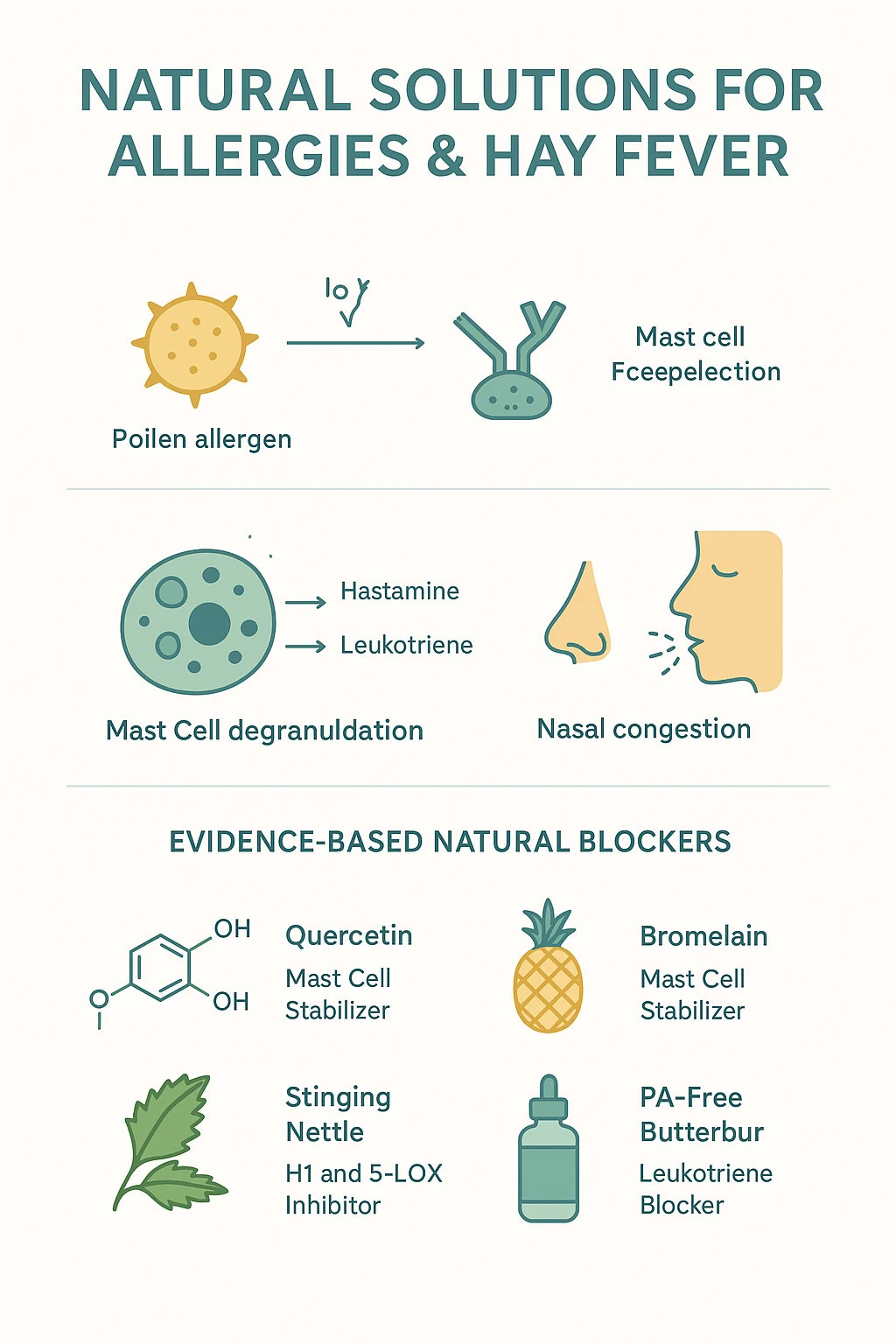
- Priming the Mast Cells: These newly minted IgE antibodies enter the bloodstream and attach their tail (Fc) regions to high-affinity FcεRI receptors located on the surface membranes of tissue mast cells and basophils. Your mast cells are now “loaded weapons,” armed with thousands of surface antibodies waiting for the next encounter.
Phase 2: The Immediate Effector Phase (Degranulation & Histamine Surge)
When you re-encounter the allergen weeks or months later, it bypasses the slow sensitization process entirely. The allergen binds simultaneously to two adjacent IgE molecules anchored to the mast cell membrane—a process called antigen cross-linking.
Cross-linking triggers an immediate influx of extracellular calcium into the mast cell interior, causing microscopic storage granules to fuse explosively with the cell membrane and dump their pre-formed chemical contents into surrounding tissues within seconds:
- Histamine: Binds to H1 receptors throughout vascular and nervous tissue. It forces capillary endothelial cells to separate, causing immediate fluid leakage (edema, swelling, watery rhinorrhea), stimulates sensory nerve endings to trigger uncontrollable sneezing and pruritus (itching), and constricts smooth muscles in the airways.
- Tryptase and Chymase: Destructive proteolytic enzymes that break down mucosal tissue barriers, allowing deeper penetration of foreign particles.
- Heparin: An anticoagulant that prevents localized clotting, facilitating rapid dispersal of inflammatory mediators through capillary beds.
Phase 3: The Late-Phase Reaction (Sustained Inflammation)
Many allergy sufferers notice that hours after their initial sneezing fit has subsided, a secondary wave of severe nasal congestion, fatigue, and bronchial tightness sets in. This is the late-phase reaction, developing 4 to 24 hours after allergen exposure.
Rather than relying on pre-formed granules, activated mast cells begin synthesizing potent lipid mediators from membrane arachidonic acid: leukotrienes (LTC4, LTD4, LTE4) and prostaglandin D2 (PGD2). Leukotrienes are up to 1,000 times more potent than histamine at producing sustained bronchoconstriction and excessive thick mucus production. Chemokines recruit waves of eosinophils and neutrophils that lodge in mucosal tissue, sustaining chronic, low-grade tissue remodeling.
The Root Causes: Why Are Allergies Skyrocketing Globally?
Epidemiological research reveals an undeniable global trend: allergic diseases have more than doubled across industrialized nations over the past half-century. Because human genetics cannot evolve so drastically in two generations, environmental, lifestyle, and ecological factors represent the primary drivers of this modern epidemic:
1. The Hygiene Hypothesis & The “Old Friends” Theory
First proposed by David Strachan, the Hygiene Hypothesis explains that sterile modern sanitation and early antibiotics deprive infants of crucial microbial training.
Without early microbial exposure to stimulate regulatory T (Treg) cells, the immune system defaults to an overactive Th2 bias, misinterpreting harmless pollens as invasive threats.
2. The Gut-Immune Axis & Leaky Gut Syndrome
Approximately 70% to 80% of all human immune cells reside within the gut-associated lymphoid tissue (GALT), reflecting how our gut and immune systems respond to food lining the gastrointestinal tract. A healthy, diverse microbiome continuously produces short-chain fatty acids (SCFAs), notably butyrate, which bind to dendritic cells and induce anti-inflammatory regulatory T cells (Tregs) that suppress allergic reactions.
When poor dietary choices, chronic psychological stress, emulsifiers, and glyphosate residues erode the intestinal mucosal barrier, tight junctions (controlled by zonulin) loosen. Undigested food macromolecules, bacterial endotoxins (lipopolysaccharides or LPS), and environmental antigens leak directly into the vascular circulation, triggering chronic systemic immune activation and hyper-sensitizing mast cells throughout the respiratory tract and skin.
3. Environmental Pollutants as Chemical Adjuvants
Airborne pollutants damage airway defenses and physically fragment pollen grains. Diesel exhaust particles (DEPs), ground-level ozone, and microplastics bind to airborne pollens, shattering them into respirable sub-micronic fragments that penetrate deep into pulmonary alveoli while multiplying IgE antibody production up to fifty-fold.
The Major Categories of Common Allergens
While the human immune system can theoretically develop hypersensitivity toward thousands of environmental proteins, clinical allergists categorize the vast majority of cases into four major groups:
- Aeroallergens (Inhalants): Tree pollens (oak, birch, cedar in spring), grass pollens (timothy, rye, bluegrass in summer), weed pollens (ragweed, sagebrush in autumn), dust mite fecal pellets that frequently cause nocturnal postnasal drip and dry cough without fever, animal dander (specifically Fel d 1 protein secreted in cat saliva and sebaceous glands), and indoor molds (Aspergillus, Cladosporium).
- Food Allergens (“The Big 9”): Peanuts, tree nuts (almonds, walnuts, cashews), cow’s milk, chicken eggs, soy, wheat, fish, crustacean shellfish, and sesame seeds. These account for over 90% of all documented severe food-induced allergic reactions.
- Contact Allergens: Nickel in jewelry, synthetic cosmetics preservatives, and urushiol oil in poison ivy.
- Injected Allergens: Hymenoptera venom from bees, wasps, and ants, as well as antibiotics like penicillin.
Anaphylaxis: The Life-Threatening Allergic Emergency
While seasonal hay fever causes miserable localized discomfort, anaphylaxis represents a catastrophic, systemic mast cell degranulation event affecting multiple organ systems simultaneously. As outlined in the official World Allergy Organization (WAO) Anaphylaxis Guidance (PMID: 33282137), widespread capillary leakage causes blood pressure to plummet precipitously (hypotensive shock), while mucosal edema constricts the laryngeal airway.
Emergency Triaging Protocol: If an individual exhibits hives accompanied by lip or tongue swelling, shortness of breath, a raspy hoarse voice, repetitive coughing, vomiting, or dizziness, administer an intramuscular epinephrine auto-injector (EpiPen, Auvi-Q) into the outer mid-thigh immediately and dial 911. Oral antihistamines (like Benadryl) take up to 45 minutes to work and cannot reverse airway swelling or cardiovascular collapse.
5 Evidence-Based Natural Mast Cell Stabilizers
While conventional antihistamines (such as cetirizine, loratadine, and fexofenadine) work by competitively blocking H1 receptors on end-organs, they do nothing to prevent the upstream release of inflammatory leukotrienes and tryptase. Functional and integrative medicine focuses on mast cell stabilization—preventing the initial degranulation event:
1. Quercetin with Bromelain
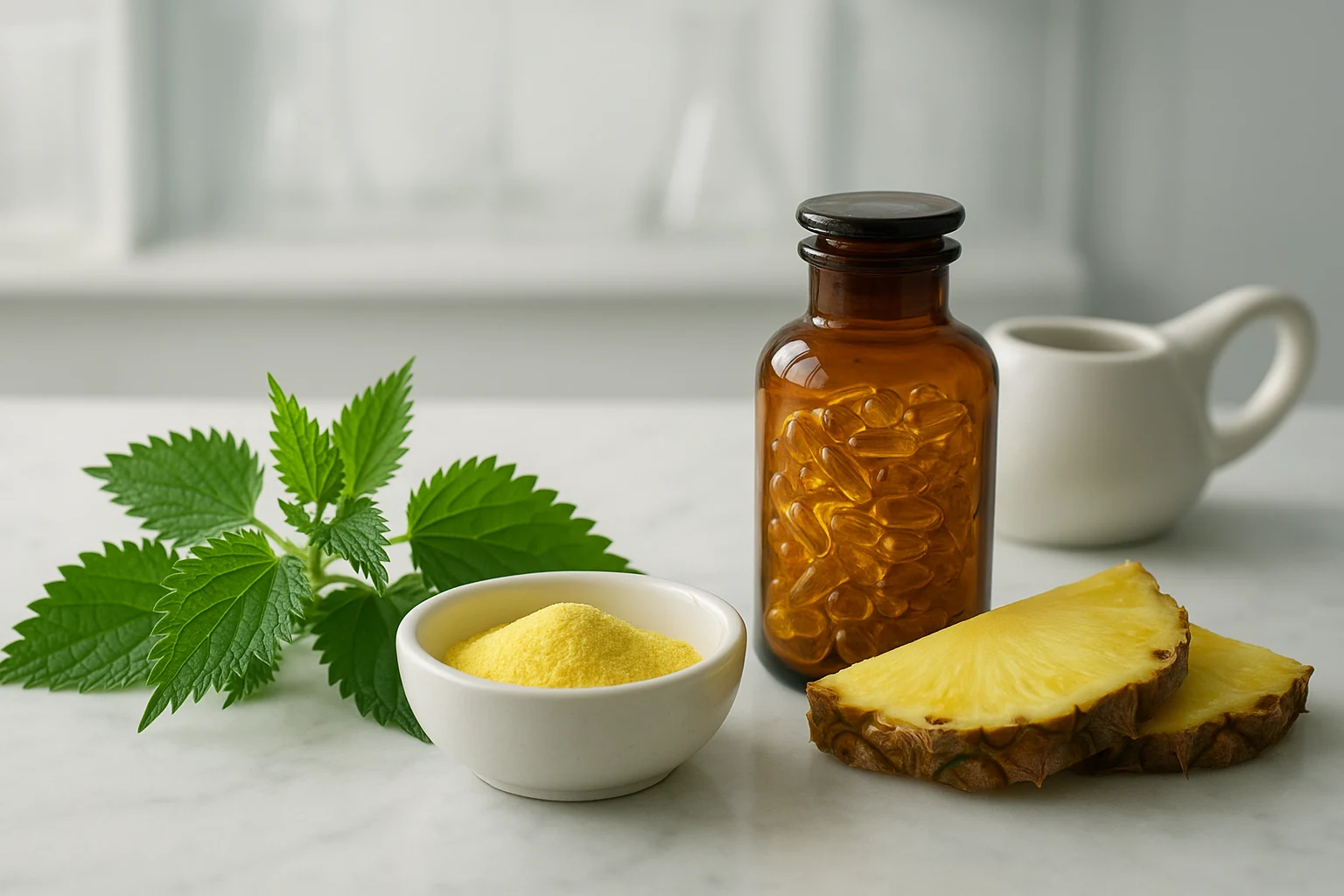
Quercetin is a potent plant bioflavonoid naturally concentrated in red onions, capers, and apples. In molecular pharmacological assays, quercetin inhibits the intracellular calcium influx that triggers mast cell degranulation, dramatically reducing the release of both histamine and leukotrienes. Combining quercetin with bromelain—a proteolytic enzyme derived from pineapple stems—enhances quercetin’s intestinal absorption while thinning thick nasal secretions.
2. Freeze-Dried Stinging Nettle (Urtica dioica)
Stinging nettle has a rich botanical pedigree in respiratory wellness. Randomized, double-blind clinical trials demonstrate that fresh freeze-dried stinging nettle acts as a multi-target botanical modulator: it competitively antagonizes H1 histamine receptors, inhibits tryptase release, and downregulates the COX-1 and COX-2 enzymatic pathways responsible for inflammatory prostaglandin synthesis.
3. High-Dose Buffered Vitamin C (Ascorbic Acid)
Vitamin C is far more than an immune antioxidant; it is a physiological histamine-lowering agent. Human clinical studies show that administering 1,000 to 2,000 mg of buffered vitamin C stimulates diamine oxidase (DAO)—the primary enzyme responsible for catabolizing and degrading circulating blood histamine—lowering serum histamine levels significantly without sedative side effects.
4. PA-Free Butterbur (Petasites hybridus)
Butterbur extract contains active sesquiterpene compounds named petasins, which act as natural leukotriene receptor antagonists. In a landmark randomized controlled trial published in the British Medical Journal (PMID: 11823354), standardized butterbur extract demonstrated equivalent efficacy to prescription antihistamines in relieving nasal congestion and eye itching, without daytime drowsiness. (Ensure any butterbur product is certified 100% free of pyrrolizidine alkaloids or PAs, which are toxic to the liver).
5. Isotonic Saline Nasal Irrigation
Mechanical removal of allergens is one of the most effective non-pharmacological interventions in modern rhinology. Performing daily nasal irrigation with a sterile isotonic saline solution (via a neti pot or pressurized squeeze bottle) flushes microscopic pollen, dust mite feces, and inflammatory mucus out of the nasal passages before they can cross-link with mast cell IgE antibodies.
Recommended Natural Allergy Support Essentials
These three clinically validated, third-party tested natural supplements and tools provide comprehensive mast cell stabilization, botanical histamine inhibition, and daily nasal hygiene:
1. NOW Supplements Quercetin with Bromelain
High-potency bioflavonoid complex providing 800 mg of pure quercetin paired with pineapple-derived bromelain for optimal absorption. Clinically shown to support cellular mast cell membrane stability and balanced respiratory immune response.
2. Eclectic Herb Freeze-Dried Stinging Nettle
100% fresh freeze-dried organic Urtica dioica leaf, harvested at peak potency to preserve active polyphenols and bioactives. Provides drug-free histamine receptor modulation and seasonal sinus comfort without sedation.
3. NeilMed Sinus Rinse Starter Kit
The gold-standard positive-pressure nasal irrigation system. Formulated with USP-grade sodium chloride and sodium bicarbonate to mechanically flush trapped pollen, dust, and thick inflammatory mucus gently and effectively.
Related Clinical & Respiratory Guides
- Seasonal Hay Fever Solutions: Breathe Easy: Natural Remedies for Seasonal Allergies & Hay Fever
- Chronic Airway Health: Asthma Management Guide: Symptoms, Triggers & Respiratory Support
- Post-Nasal Drip & Coughs: Dry Cough Without Fever: 5 Causes, Clinical Diagnostics & Natural Treatments
- Microbiome & Immune Barrier: The Complex World of Our Gut: How Our Bodies Respond to Food
- Viral Respiratory Defense: What Are the Best Natural Treatments for Colds and Flu? Antiviral Science
Frequently Asked Questions (FAQ)
Can you suddenly develop allergies as an adult?
Yes. Adult-onset allergies are increasingly common. Hormonal shifts (such as pregnancy or menopause), severe viral infections, relocations to geographic regions with novel botanical pollens, or prolonged psychological stress that alters gut barrier integrity can trigger adult-onset sensitization to pollen, pet dander, or foods like shellfish.
What is the difference between a food allergy and a food intolerance?
A true food allergy is an IgE-mediated immune response capable of triggering hives, airway swelling, and anaphylaxis from microscopic amounts. A food intolerance (such as lactose intolerance) is an enzymatic or metabolic digestive deficiency where the body lacks the specific enzyme (like lactase) to break down sugars, producing gas, bloating, and diarrhea without immune involvement.
Can taking daily probiotics really reduce seasonal allergy symptoms?
Multiple clinical trials demonstrate that specific probiotic strains (especially Lactobacillus paracasei, Lactobacillus acidophilus, and Bifidobacterium lactis) help modulate the Th1/Th2 balance in the gut. By increasing regulatory T cell activity, regular probiotic supplementation has been shown to reduce seasonal allergic rhinitis scores and decrease reliance on medications.
What is the difference between a skin prick test and an IgE blood test?
A skin prick test introduces tiny amounts of allergens beneath the epidermal layer, observing for localized histamine-induced wheal-and-flare reactions within 15 minutes. A serum-specific IgE blood test (ImmunoCAP) measures circulating levels of antibodies against specific allergens. Skin tests provide immediate clinical results, while blood tests are preferred for individuals with severe eczema or those who cannot pause antihistamines.
Medical Disclaimer: This article is intended strictly for educational and informational purposes and does not substitute for professional medical advice, clinical diagnosis, or treatment. Always consult a board-certified allergist or healthcare provider regarding allergy testing and personalized management. If you experience severe facial swelling, difficulty breathing, or dizziness, seek emergency medical care immediately.