
Quick Medical Summary: Asthma is a chronic inflammatory disorder of the bronchial tree driven by mucosal edema, bronchial smooth muscle spasms (bronchospasm), and excessive mucus secretion. While acute asthma exacerbations require immediate medical management with fast-acting prescription beta-2 agonist bronchodilators (such as albuterol), long-term control combines allergen avoidance, indoor air filtration, and evidence-based anti-inflammatory support. Thoroughly researched botanicals—including 5-LOX inhibiting Boswellia serrata, mast cell stabilizing quercetin with bromelain, and soothing demulcent mullein leaf—help modulate hyperreactive airway inflammation. Seek immediate emergency medical care for cyanosis (blue lips/nails), inability to speak full sentences, or a “silent chest.”
Breathing is the most fundamental, automatic rhythm of human existence. When healthy, your lungs take in roughly 20,000 effortless breaths every single day. But for the more than 260 million people worldwide living with asthma, each breath can suddenly become an uphill battle against constricted, inflamed airways.
Asthma is a chronic inflammatory disorder of the bronchial tree. When exposed to specific environmental triggers, the smooth muscular bands wrapping around the airways spasm and tighten (bronchospasm), the inner mucosal lining swells with inflammatory fluids, and goblet cells churn out copious amounts of thick, sticky mucus. The result is like trying to draw air through a narrow, blocked straw.
While an active asthma attack requires immediate medical management with prescription rescue bronchodilators, maintaining long-term respiratory wellness requires a multi-faceted approach. Below is an authoritative, evidence-based master guide: how to recognize asthma symptoms, the red flags of a life-threatening attack, how to trigger-proof your indoor environment, and the top science-backed botanicals that support clear, open airways.
Red-Flag Warning: Recognizing an Emergency Asthma Attack
Asthma flare-ups can escalate rapidly from mild wheezing into acute, life-threatening respiratory distress. Seek emergency medical attention (dial 911 or proceed immediately to the nearest ER) if you or someone in your care displays any of the following critical red flags:
- Severe Chest Retractions: The skin between the ribs, above the collarbone, or beneath the sternum visibly sucks inward with every desperate breath as accessory muscles strain to draw air.
- The “Speech Test” Failure: The person is unable to speak more than two or three words without pausing to gasp for air.
- Cyanosis (Bluish Tinge): Gray or bluish discoloration appearing around the lips, tongue, nail beds, or gums, signaling dangerous arterial oxygen desaturation.
- The “Silent Chest” Phenomenon: Beware: If high-pitched wheezing suddenly disappears while the patient is still gasping and struggling for air, this does NOT mean they are improving. A silent chest indicates that airflow is so critically blocked that air cannot even generate a whistle sound. This is an immediate, catastrophic medical emergency.
- Unresponsive to Rescue Inhaler: Using a prescribed albuterol rescue inhaler provides no noticeable relief, or symptoms return with full severity in less than 2 hours.
The 4 Hallmark Symptoms of Bronchial Asthma
Outside of acute emergency attacks, chronic asthma presents with a characteristic cluster of respiratory signs that fluctuate over time and season:
1. Expiratory Wheezing
Wheezing is a musical, high-pitched whistling or squeaking sound produced when turbulent air is forced through narrowed, constricted lower bronchioles. It is most audible when exhaling, though in severe obstruction it can be heard during both inhalation and exhalation.
2. Shortness of Breath (Dyspnea)
Patients often describe asthma dyspnea not simply as feeling “tired,” but as an intense sensation of air hunger—feeling as though their lungs cannot fully empty or expand to take in fresh oxygen during normal daily tasks or light exercise.
3. Persistent Chest Tightness
Airway hyperresponsiveness causes a heavy, constricting sensation across the chest, frequently described as an iron band tightening around the rib cage or a heavy weight pressing directly down on the sternum.
4. Nocturnal & Early Morning Coughing (Cough-Variant Patterns)
Why does asthma cough peak between 3:00 AM and 5:00 AM? Human circadian biology is responsible: nighttime triggers a natural dip in endogenous cortisol and epinephrine (which keep airways dilated during the day) alongside an increase in vagal tone, while horizontal sleeping postures allow post-nasal drip and gastric acid reflux to irritate bronchial receptors. For detailed differential strategies between wet and dry spasms, explore our clinical guide to natural remedies for cough and our diagnostic analysis of dry cough without fever.
Decoding Asthma Triggers: Allergic vs. Non-Allergic
Effectively managing asthma begins with identifying your personal environmental triggers:
- Allergic Asthma (Extrinsic): Triggered when immune IgE antibodies bind to inhaled environmental proteins. Common culprits include microscopic dust mite feces, feline and canine dander, airborne fungal spores (Aspergillus, Cladosporium), and seasonal tree or ragweed pollens.
- Cold Air & Weather Shifts: Inhaling freezing, dry winter air rapidly chills bronchial mucosa and evaporates surface moisture, stimulating sensory nerve endings that fire off reflexive muscular bronchospasms.
- Viral Respiratory Infections: The common cold (rhinovirus), influenza, and respiratory syncytial virus (RSV) damage protective epithelial cilia, leaving airway nerves hypersensitive for weeks after the infection clears.
- Synthetic Scents & Volatile Organic Compounds (VOCs): Aerosol air fresheners, bleach fumes, scented candles, and perfumes release volatile chemical irritants that provoke airway spasms in sensitive lungs.
- Gastroesophageal Reflux Disease (GERD): Silent nocturnal micro-aspiration of acidic stomach vapors into the upper trachea stimulates vagus nerve receptors, provoking bronchial constriction without obvious heartburn symptoms.
Conventional Medication Foundations: Quick-Relief vs. Daily Controllers
According to the landmark international guidelines established by the Global Initiative for Asthma (GINA) Strategy Report (PMID: 30825357), asthma management prioritizes preventing acute exacerbations through individualized maintenance. Modern pulmonology relies on two complementary classes of inhaled medications. Understanding their distinct roles is vital for safety:
| Medication Class | Primary Action | Common Examples | How & When to Use |
|---|---|---|---|
| Short-Acting Beta-2 Agonists (SABA) | Rapidly relaxes bronchial smooth muscle during acute spasms (Bronchodilator). | Albuterol, Levalbuterol | As-needed “Rescue” inhaler; works within 5 minutes, lasts 4–6 hours. |
| Inhaled Corticosteroids (ICS) | Treats underlying swelling and mucus production (Anti-inflammatory). | Fluticasone, Budesonide, Beclomethasone | Daily “Controller” medication taken morning/night; does NOT stop an acute attack. |
| Combination LABA / ICS | Long-acting bronchodilator combined with an anti-inflammatory steroid. | Symbicort, Advair, Dulera | Daily maintenance controller or SMART therapy (under physician protocol). |
| Leukotriene Receptor Antagonists | Blocks oral inflammatory leukotriene pathways. | Montelukast (Singulair) | Daily oral tablet; especially helpful for allergic and exercise-induced asthma. |
The Spacer Rule: When using a metered-dose inhaler (MDI), always attach a valved holding chamber (spacer). Without a spacer, up to 80% of aerosolized medication impacts the back of your throat or tongue. A spacer slows the plume, allowing fine particles to penetrate deep into peripheral lung airways while significantly reducing throat irritation and oral thrush risk.
5 Evidence-Backed Botanical & Nutritional Respiratory Allies
While natural remedies must never replace a prescription rescue inhaler during an acute attack, several thoroughly researched botanicals and micronutrients provide gentle, daily bronchial tone support:
1. Mullein Leaf (Verbascum thapsus)
Mullein has been the cornerstone of traditional respiratory herbalism for centuries. Rich in soothing mucilage and triterpenoid saponins, mullein acts as a gentle expectorant that helps liquefy thick, tenacious bronchial secretions while coating irritated mucous membranes with a protective demulcent shield.
2. Quercetin & Bromelain
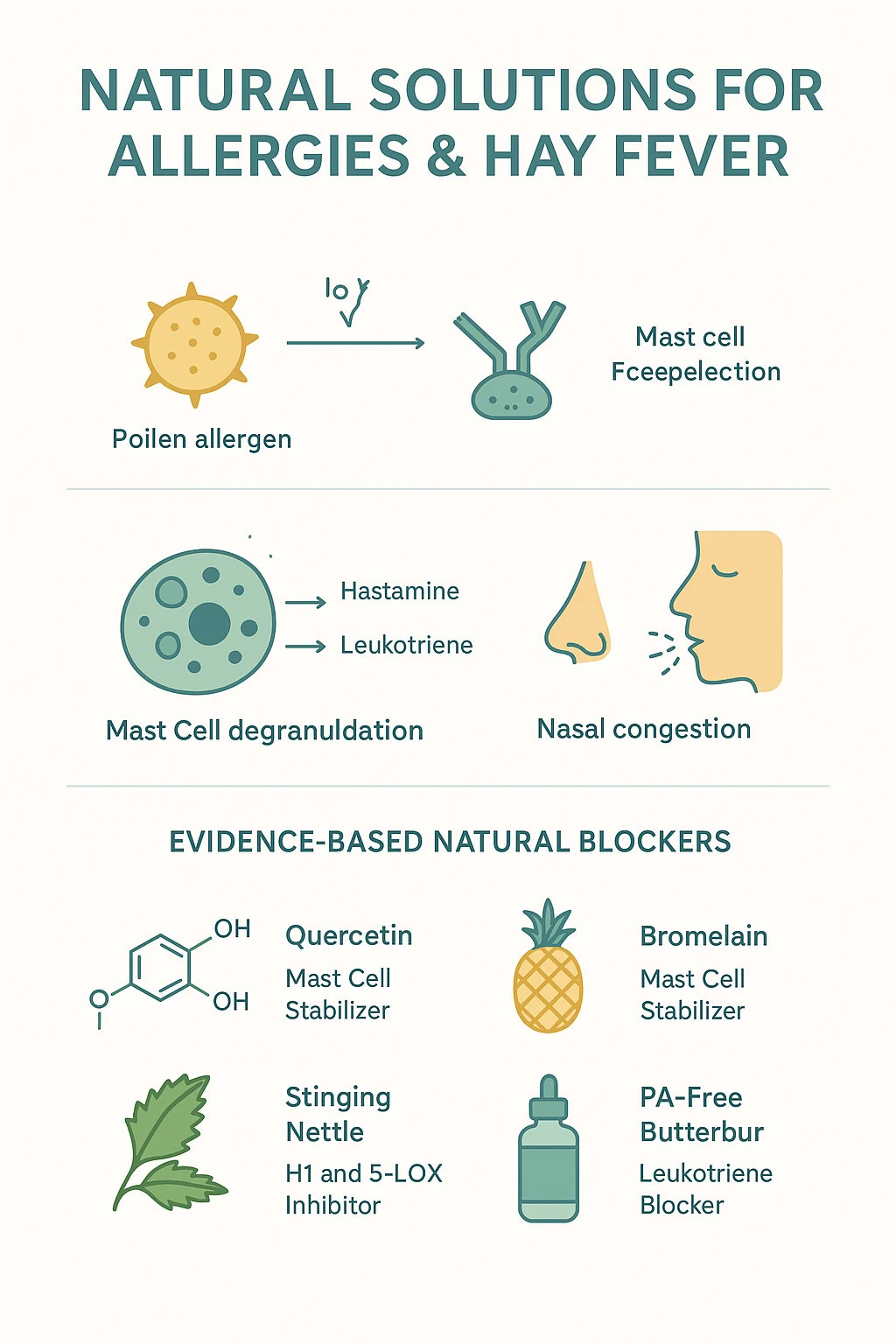
Quercetin is an abundant plant bioflavonoid that acts as a natural mast-cell stabilizer. In preclinical and clinical trials, quercetin inhibits the enzymatic release of histamine, leukotrienes, and pro-inflammatory prostaglandins. Pairing quercetin with bromelain (a pineapple enzyme) significantly enhances intestinal absorption and thins respiratory mucus.
3. Boswellia Serrata (Indian Frankincense)
In a landmark double-blind, placebo-controlled clinical trial published in the European Journal of Medical Research (PMID: 9865731), 70% of bronchial asthma patients receiving standardized Boswellia serrata gum resin extract showed significant clinical improvement in dyspnea, rhonchi, and FEV1 lung function parameters. Boswellia contains 3-O-acetyl-11-keto-beta-boswellic acid (AKBA), a specific inhibitor of the 5-lipoxygenase (5-LOX) enzyme. Because leukotrienes are 1,000 times more potent than histamine at inducing bronchospasm, suppressing their synthesis with Boswellia provides targeted support for clear, open bronchial passages.
4. Magnesium Glycinate
Magnesium acts as nature’s physiological calcium channel blocker, competing with calcium to relax contracted bronchial smooth muscle. Intravenous magnesium is widely used in hospital emergency departments to treat severe asthma exacerbations; maintaining optimal daily oral magnesium intake supports baseline bronchial dilation and neuromuscular calm.
5. Butterbur (Petasites hybridus — PA-Free)
Butterbur contains active sesquiterpenes known as petasins, which exhibit marked antispasmodic and anti-inflammatory properties in airway tissue. Safety Note: Always ensure butterbur supplements are certified 100% pyrrolizidine alkaloid-free (PA-free) to prevent liver toxicity.
How to “Trigger-Proof” Your Home: Indoor Air Optimization
Because modern humans spend up to 90% of their time indoors, optimizing home air quality provides immediate relief to reactive airways:
- Deploy True HEPA Air Filtration: Use an independently certified True HEPA air purifier in the bedroom. HEPA filters capture 99.97% of microscopic airborne particles down to 0.3 microns, including dust mite allergens, mold spores, and pet dander.
- Encase Mattresses & Pillows: Zip mattresses, box springs, and pillows into zippered allergen-barrier micro-weave encasements to starve dust mite colonies. Wash bed sheets weekly in hot water (at least 130°F / 54°C) to eliminate mite allergens.
- Maintain 30% to 50% Indoor Humidity: Keep indoor relative humidity strictly within this range. Humidity above 50% fuels rapid mold growth and dust mite breeding, while air drier than 30% dries out bronchial mucosal membranes.
- Eliminate Synthetic Combustion: Ban indoor cigarette smoking, wood-burning fireplaces, aerosol room sprays, and paraffin wax candles, all of which emit lung-irritating ultrafine soot and formaldehyde.
Recommended Respiratory & Airway Support Essentials
These three editor-vetted, third-party tested wellness products support daily respiratory ease, environmental air purity, and healthy bronchial function:
1. Traditional Medicinals Breathe Easy Tea
Formulated with organic eucalyptus, licorice root, peppermint, and fennel. This aromatic herbal infusion delivers soothing volatile oils and demulcent warmth to open chest congestion and comfort reactive airways naturally.
2. Doctor’s Best Quercetin with Bromelain
Features bioavailable quercetin paired with pineapple bromelain to stabilize histamine release from mast cells, support upper respiratory immune balance, and soothe bronchial inflammation year-round.
3. LEVOIT Core 300 True HEPA Air Purifier
High-efficiency, whisper-quiet 3-stage filtration with H13 True HEPA. Captures 99.97% of airborne dust, pollen, mold, and pet dander in bedrooms and living rooms without producing lung-irritating ozone.
Improving indoor air quality by removing volatile toxins can reduce bronchial irritation; discover the air-filtering benefits in our guide to the snake plant and indoor health.
Related Clinical & Respiratory Guides
- Underlying Immune Roots: The True Cause of Allergies: Immune Dysfunction & Histamine Overload
- Seasonal Airway Relief: Breathe Easy: Natural Remedies for Seasonal Allergies & Hay Fever
- Acute Cough Management: Natural Remedies for Cough: Evidence-Based Relief for Dry and Wet Coughs
- Afebrile Airway Spasms: Dry Cough Without Fever: 5 Causes, Clinical Diagnostics & Natural Treatments
- Viral Infection Defense: What Are the Best Natural Treatments for Colds and Flu? Antiviral Science
Frequently Asked Questions (FAQ)
Can adults develop asthma later in life?
Yes. Adult-onset asthma is increasingly common and often strikes people in their 30s, 40s, or 50s. It is frequently triggered by viral respiratory illnesses, hormonal fluctuations (such as perimenopause), workplace chemical exposures, or sudden changes in home indoor air quality.
Can natural supplements ever replace a rescue inhaler?
No. This is a critical medical distinction: while botanicals like mullein and quercetin help reduce chronic baseline inflammation over weeks of use, they have zero capacity to rapidly relax life-threatening smooth muscle spasms during an acute attack. Always keep your fast-acting prescription rescue inhaler (such as albuterol) accessible at all times.
Is exercise safe for individuals with asthma?
Yes! Regular cardiovascular exercise is strongly encouraged for people with asthma because it strengthens respiratory muscles and improves lung capacity. For exercise-induced bronchoconstriction (EIB), use your rescue inhaler 15 minutes before warm-up, warm up gradually, and breathe through your nose to warm and humidify incoming air.
What is an Asthma Action Plan?
An Asthma Action Plan is a customized, written medical roadmap developed with your pulmonologist or primary care physician. It categorizes your symptoms into Green (doing well), Yellow (caution / worsening symptoms), and Red (medical emergency) zones, providing exact instructions on when to adjust daily medications and when to call 911.
Medical Disclaimer: This guide is intended strictly for educational purposes and is not a substitute for professional medical diagnosis, advice, or treatment. Asthma is a serious, potentially fatal respiratory disease. Always collaborate closely with a board-certified pulmonologist or physician to develop an individualized asthma action plan, and never discontinue prescribed controller or rescue medications without medical supervision.