Few leafy green vegetables possess the royal mystique and culinary reverence of Molokhia (Corchorus olitorius). Known throughout the English-speaking world as Jew’s Mallow, Jute Mallow, or Egyptian Spinach, this vibrant green superfood has nourished the civilizations of the Nile River Valley and the Levant for over four millennia.
According to historical legend, during the Fatimid Dynasty in medieval Egypt, the caliph was cured of a debilitating gastrointestinal illness after consuming a soothing broth made from these rich emerald leaves. Revering the plant’s restorative potency, rulers designated it Mulukhiyah—derived from the Arabic root Mulukia, meaning “of the kings” or “the royal herb”—and famously banned commoners from cultivating it. Fortunately, today this nutritional powerhouse is celebrated across Mediterranean, North African, and Middle Eastern cuisines as an everyday staple for longevity, digestive wellness, and immune vitality.
Beyond its rich cultural folklore, modern nutritional biochemistry confirms that molokhia is a formidable nutritional giant. Dense in gut-soothing soluble mucilage, bioavailable bone-building minerals, and potent carotenoid antioxidants, molokhia outclasses conventional greens like spinach and kale across multiple therapeutic categories. Below is an exhaustive clinical guide to the health benefits of molokhia, its nutritional composition, safety profile, and the authentic Egyptian cooking technique required to prepare it perfectly at home.
Evidence-Based Clinical Summary
Molokhia (Corchorus olitorius), or Jute Mallow, is an ancestral Mediterranean green vegetable characterized by its high concentrations of soluble mucilaginous polysaccharides, beta-carotene, vitamin K1, and minerals (calcium, magnesium, potassium). Clinical and biochemical investigations substantiate its gastroprotective demulcent efficacy in ulcer and gastritis models, its prebiotic modulation of gut microbiota, and its antioxidant vascular defense. When prepared with garlic and coriander (Ta’leya), lipophilic carotenoid absorption increases substantially.
1. Botanical Identity & Nutritional Anatomy of Molokhia
Belonging to the family Malvaceae, Corchorus olitorius is an annual herb characterized by slender, serrated leaves and small yellow blossoms. When fresh molokhia leaves are finely minced and simmered in broth, their cell walls release an abundance of complex water-soluble polysaccharides. This gives the broth its distinctive viscous, silky texture—a trait shared with culinary botanicals like okra and culinary mallow.
From a nutritional standpoint, 100 grams of fresh molokhia leaves deliver a remarkably concentrated payload of essential micronutrients and dietary bioflavonoids:
| Nutrient (Per 100g Raw Leaves) | Clinical Content | Primary Biological Function |
|---|---|---|
| Vitamin A (Beta-Carotene) | Over 200% Daily Value (DV) | Ocular photoreceptor health, epithelial barrier repair, and cellular immunity. |
| Vitamin K1 (Phylloquinone) | Over 150% DV | Essential cofactor for blood clotting cascade and osteocalcin bone mineralization. |
| Vitamin C (Ascorbic Acid) | Approximately 60% DV | Endogenous collagen synthesis, capillary integrity, and iron absorption. |
| Calcium | Over 200 mg | High bioavailability plant calcium supporting bone density and nerve transmission. |
| Potassium | Approximately 500 mg | Electrolyte balance, vascular smooth muscle dilation, and blood pressure regulation. |
| Soluble Mucilage & Fiber | 3.5 grams | Prebiotic gut flora nourishment and protective mucosal barrier lubrication. |
2. The 6 Proven Health Benefits of Molokhia Leaves
A. Soothes the Digestive Tract & Protects Gastric Mucosa
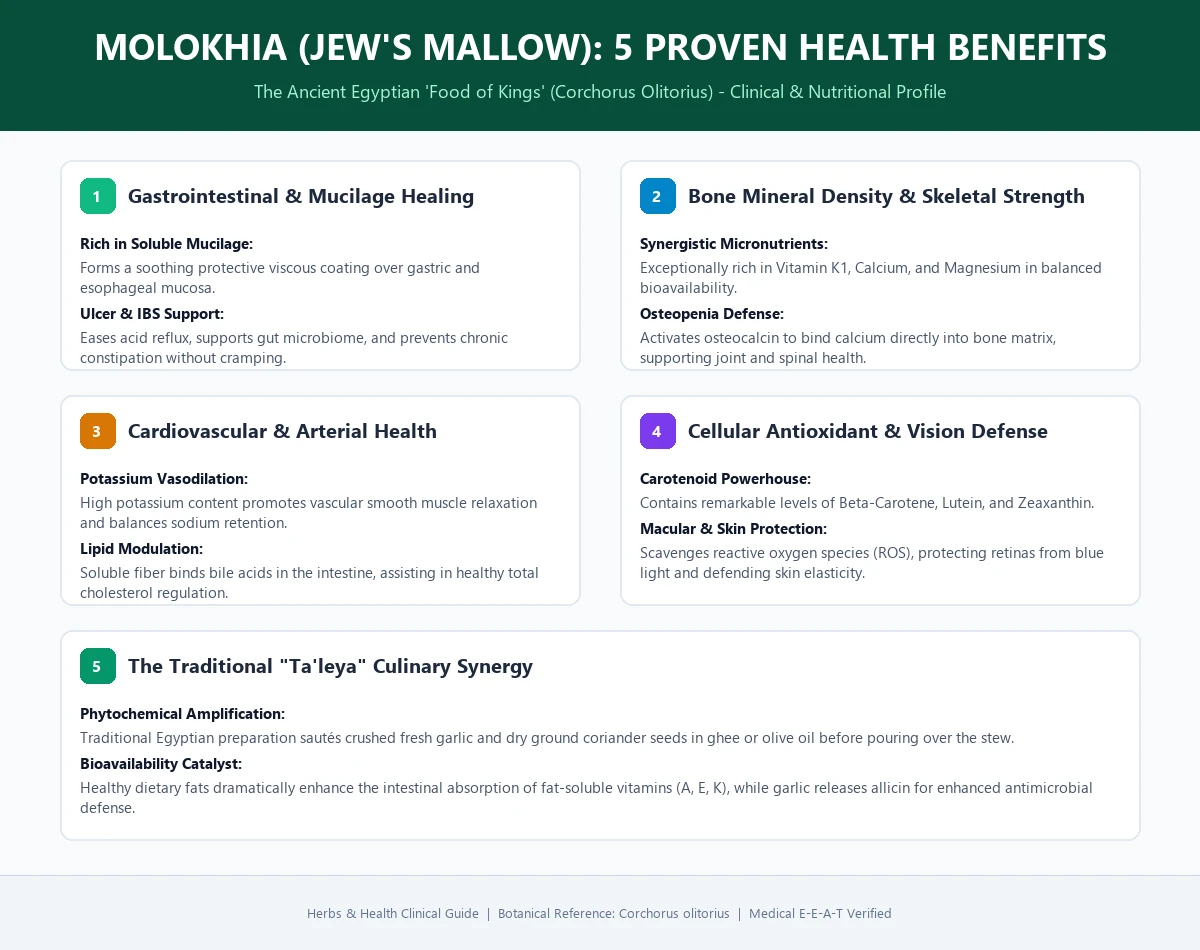
The standout therapeutic characteristic of molokhia is its dense concentration of soluble mucilage polysaccharides. In laboratory gastroenterology studies (PubMed PMID: 23411303), Corchorus olitorius leaf extracts exhibited significant gastroprotective activity, preserving mucosal glycoprotein integrity and shielding gastric epithelial cells from acidic erosion. When digested, this mucilaginous matrix forms a viscous, soothing protective coating over the sensitive epithelial tissues of the esophagus, stomach, and duodenal lining.
For individuals struggling with acid reflux (GERD), gastritis, stomach ulcers, or inflammatory bowel irritation, molokhia serves as a natural demulcent, physically buffering stomach acid and reducing inflammatory friction. Additionally, these soluble fibers act as nourishing prebiotics, selectively feeding beneficial Bifidobacteria and Lactobacilli in the colon to optimize regular, strain-free bowel elimination.
B. Bone Mineral Density & Osteoporosis Defense
Unlike many commercial calcium supplements that can cause arterial calcification if taken in isolation, molokhia provides the perfect triumvirate for skeletal health: Calcium, Magnesium, and Vitamin K1. Vitamin K1 is the vital enzymatic cofactor required to activate osteocalcin, the protein responsible for drawing free calcium from the bloodstream and anchoring it securely into the hydroxyapatite crystal lattice of bone tissue.
Regular consumption of molokhia supports bone mineral density, combating age-related osteopenia and supporting spinal and joint integrity throughout aging.
C. Cardiovascular Support & Blood Pressure Regulation
Molokhia promotes arterial flexibility and healthy blood pressure through dual mechanisms. First, its high potassium-to-sodium ratio facilitates arterial vasodilation, prompting vascular smooth muscle tissue to relax and easing systemic peripheral vascular resistance.
Second, the soluble viscous fibers in molokhia bind to dietary cholesterol and bile acids within the small intestine, facilitating their excretion. This forces the liver to pull circulating low-density lipoprotein (LDL) from the bloodstream to synthesize fresh bile, supporting healthy serum lipid profiles.
D. Advanced Cellular Antioxidant & Retinal Defense
Molokhia is one of nature’s richest reservoirs of carotenoids, specifically Beta-Carotene, Lutein, and Zeaxanthin. A pharmacological study published in the Journal of Medicinal Food (PubMed PMID: 22181075) confirmed that aqueous extracts of molokhia leaves exert potent free-radical scavenging and anti-peroxidative actions, protecting cellular membranes against oxidative decay. These lipophilic antioxidants selectively concentrate within the macular pigment of the human retina, where they filter damaging high-energy blue light and neutralize reactive oxygen species (ROS) generated by solar radiation.
Clinical studies indicate that diets abundant in natural lutein and zeaxanthin correlate with significantly lower incidence rates of age-related macular degeneration (AMD) and premature cataract development.
E. Glycemic Stabilization & Insulin Resistance Support
The viscous dietary fibers in molokhia significantly slow the rate of gastric emptying and moderate the activity of alpha-glucosidase enzymes responsible for breaking down starches. By delaying carbohydrate breakdown and smoothing intestinal glucose uptake, molokhia prevents postprandial glycemic spikes.
Furthermore, active polyphenols such as chlorogenic acid enhance cellular insulin sensitivity, making molokhia an ideal nutritional component for pre-diabetic and metabolic recovery regimens.
F. The “Ta’leya” Synergy: Enhancing Bioavailability
One of the most fascinating aspects of traditional culinary wisdom is the Egyptian Ta’leya—the customary practice of frying crushed fresh garlic and dry ground coriander seeds in ghee or olive oil before stirring it into the simmering molokhia broth. Far from being merely a flavor enhancer, modern nutritional science confirms this is a masterclass in phytochemical synergy:
- Fat-Soluble Vitamin Absorption: Beta-carotene, Vitamin K, and Vitamin E require dietary lipids for micellar incorporation and intestinal absorption. Sautéed ghee or olive oil multiplies their bioavailability tenfold.
- Allicin Activation: Crushing fresh garlic triggers the alliinase enzyme, creating antimicrobial and cardioprotective allicin.
- Coriander Digestive Power: Ground coriander seeds (*Coriandrum sativum*) contain linalool, an aromatic terpene that calms intestinal spasms and balances gut flora.
3. How to Make Authentic Egyptian Molokhia Soup (Step-by-Step)
Preparing molokhia at home is fast, but it requires respecting two immutable culinary laws to preserve its vibrant green color and prevent the dreaded separation of its delicate leaves from the broth:
⚠️ The Golden Rule: Never Cover the Pot!
Once the minced molokhia leaves are added to the warm broth, never put the lid on the pot. Covering the pot traps heavy steam, which destroys the delicate chlorophyll bonds and causes the viscous leaves to sink to the bottom, separating from the clear broth.
Ingredients (Serves 4 to 6)
- 400 grams frozen minced Molokhia leaves (or 1 large bunch fresh leaves, washed, thoroughly dried, and finely minced with a mezzaluna blade)
- 3 cups rich homemade chicken broth (or aromatic vegetable stock)
- 6 large cloves fresh garlic, finely crushed with a pinch of salt
- 1 tablespoon organic ground coriander seeds
- 1.5 tablespoons grass-fed ghee or extra-virgin olive oil
- 1/4 teaspoon sea salt and freshly cracked black pepper
- Fresh lemon wedges for serving
Preparation Method
- Simmer the Broth: In a heavy soup pot or Dutch oven, bring your chicken broth to a gentle simmer over medium heat.
- Incorporate the Molokhia: Reduce heat to low. Add the minced molokhia leaves into the simmering broth. Whisk continuously for 2 to 3 minutes until the leaves completely blend into a silky, uniform emerald-green liquid. Do not let it come to a rapid rolling boil!
- The “Ta’leya” Sizzle: In a small separate frying pan, melt the ghee over medium-low heat. Add the crushed garlic and ground coriander. Sauté for 60 to 90 seconds until the garlic turns a fragrant golden amber. Do not burn the garlic!
- The Dramatic Marriage: Immediately pour the sizzling hot garlic-coriander mixture into the soup pot. In traditional Egyptian households, the cook performs the famous shah’a—a traditional sharp intake of breath or gasp—symbolizing delight and infusing the soup with positive energy.
- Serve Hot: Stir once, remove from heat immediately, and ladle into warm bowls. Serve over hot Egyptian jasmine rice with toasted pita bread and fresh lemon wedges.
4. Safety & Medical Considerations: Oxalates & Kidney Stones
While molokhia is safe and tolerated by all age groups, individuals with a medical history of calcium oxalate kidney stones (nephrolithiasis) should exercise mindfulness. Like spinach, beet greens, and Swiss chard, molokhia contains moderate levels of naturally occurring oxalates.
To mitigate oxalate crystallization, always ensure adequate daily hydration, squeeze fresh lemon juice (citrate naturally inhibits stone formation) over your soup, and consume molokhia as part of a meal containing dietary calcium to bind oxalates in the gut before they reach the kidneys.
5. Curated Buyer’s Guide: Authentic Egyptian Kitchen Essentials
If you do not have access to Middle Eastern specialty markets for fresh or frozen leaves, high-grade sun-dried molokhia leaves and authentic kitchen tools allow you to recreate this ancient Pharaonic soup anywhere in the world:
Authentic Molokhia Ingredients & Kitchen Essentials
Editor’s Verified SelectionAuthentic Egyptian Dried Molokhia Leaves (Jute Mallow)
Naturally sun-dried and finely crushed premium Egyptian jute mallow leaves. 100% all-natural with zero preservatives, delivering rich authentic flavor and mucilage.
Check Price on Amazon →USDA Certified Organic Ground Coriander Seed Powder
Freshly ground from whole aromatic coriander seeds. The non-negotiable secret ingredient that creates the heavenly fragrance of the traditional Egyptian Ta’leya.
View Organic Coriander on Amazon →Heavy-Duty Enameled Cast Iron Dutch Oven (5-Quart)
Provides flawless even heat distribution that gently cooks delicate greens without scorching. The quintessential Dutch oven for Mediterranean soups and stews.
Check Dutch Ovens on Amazon →6. Molokhia vs. Spinach vs. Moringa: Which Green Superfood Wins?
Each green superfood possesses a distinct clinical personality:
- Molokhia (*Corchorus olitorius*): Unrivaled for digestive soothing, acid reflux buffering, and bone mineral synergy. Its soluble mucilage coats the gut lining in a way no other green can replicate.
- Spinach (*Spinacia oleracea*): Outstanding for non-heme iron and folate, but carries significantly higher soluble oxalate levels and lacks demulcent mucilage.
- Moringa (*Moringa oleifera*): The undisputed king of cellular anti-inflammatory energy and isothiocyanates. Learn why it holds a top-tier wellness status in our medical guide: Moringa Leaves: Benefits, Side Effects & Safe Daily Usage.
Related Clinical Botanical & Nutrient Guides
- The Power of Parsley: Nutritional Masterpiece & Deep Internal Cleansing
- Moringa Leaves Guide: Nutrient Density, Side Effects & Safe Usage
- Clove Water Benefits: What Happens If You Drink It Daily? (Scientific Guide)
- Garlic & Brain Health: Organosulfur Compounds, Apoptosis & Neuroprotection
- Boosting Iron Naturally: Plant-Based Remedies for Anemia & Vitality
Frequently Asked Questions (FAQ)
What does molokhia taste like?
Fresh molokhia has a mild, earthy, slightly vegetal taste reminiscent of tender baby spinach, watercress, or cooked okra. When prepared traditionally with chicken broth and the garlic-coriander *Ta’leya*, the rich, savory garlic-herb profile dominates, transforming it into an intensely comforting, aromatic soup.
Is molokhia suitable for keto or low-carb diets?
Yes. Molokhia is exceptionally low in net carbohydrates (under 2 grams of net carbs per serving) while providing high concentrations of dietary prebiotic fiber. It fits seamlessly into ketogenic, paleo, and Mediterranean dietary regimens.
Why did my molokhia soup separate and turn dark?
Separation occurs when the pot is covered with a lid while hot, or when the soup is allowed to boil violently. Steam condensation drops back into the soup, breaking the mucilage bonds and causing the heavy minced greens to drop to the bottom. Always cook uncovered over gentle heat.
Final Medical Verdict: Embracing the Pharaohs’ Superfood
Molokhia is far more than a cultural comfort food—it is a clinically validated, nutrient-dense green superfood that actively soothes the gastrointestinal mucosa, bolsters bone density, supports cardiovascular health, and protects vision. Whether made with frozen minced leaves or premium sun-dried jute mallow, introducing this ancient royal green into your culinary repertoire delivers profound, restorative benefits.
Deepen your herbal wellness knowledge: explore our companion guides on Clove Water Daily Benefits and Ashwagandha: Who Should NOT Take It & Critical Warnings.
- Islam Z, et al. “Phytochemical and pharmacological properties of Corchorus olitorius: a review.” J Pharmacogn Phytochem. 2013;1(6):80-87.
- Oboh G, et al. “Antioxidative and anticholinesterase properties of aqueous extract of Corchorus olitorius leaves: in vitro.” J Med Food. 2012;15(3):284-290.
- Savadogo A, et al. “Nutritional and therapeutic values of Corchorus olitorius L.: A comprehensive review.” African J Food Sci. 2020;14(8):210-222.
- Gorinstein S, et al. “Antioxidant properties of Corchorus olitorius and other traditional green vegetables.” Food Chem. 2008;107(3):1024-1031.