When consumers walk down the supermarket breakfast aisle, terms like “heart-healthy,” “100% whole grain,” and “natural” project an aura of nutritional integrity. Yet beneath the colorful packaging of America’s most popular breakfast cereals, granolas, and snack bars lies an invisible agrochemical contaminant that has triggered multi-billion-dollar global lawsuits, international scientific disputes, and growing consumer alarm: glyphosate.
First patented as an industrial descaling agent in 1964 and registered as the active ingredient in Roundup in 1974, glyphosate is the most heavily applied agricultural chemical in history, with over 1.8 million tons sprayed across US croplands.
While chemical manufacturers long insisted that glyphosate residues break down harmlessly in soil or wash off before reaching the kitchen table, rigorous independent testing performed by FDA-registered analytical laboratories (including Anresco Laboratories in San Francisco) and non-profit watchdogs has confirmed the opposite: glyphosate is systematically accumulating in everyday food staples at concentrations reaching hundreds—and in some cases thousands—of parts per billion (ppb).
This comprehensive investigation presents the verified laboratory testing data on major household food brands, examines the molecular mechanisms through which glyphosate alters human gut ecology and mineral status, and delivers an evidence-based roadmap for purging pesticide residues from your household.
Evidence-Based Environmental Toxicology Summary
Glyphosate (N-(phosphonomethyl)glycine) is the world’s most widely applied broad-spectrum organophosphate herbicide. In 2015, the World Health Organization’s International Agency for Research on Cancer (IARC Monograph 112) classified glyphosate as “probably carcinogenic to humans” (Group 2A). While agricultural chemical manufacturers argue that humans lack the shikimate pathway targeted by glyphosate, commensal human gut microbiota (e.g., Lactobacillus and Bifidobacterium) rely heavily on it to synthesize aromatic amino acids. Pre-harvest desiccation of conventional oats, wheat, and barley drives high dietary residues, necessitating certified organic sourcing, specialized water filtration, and hepatic Phase II support.
1. The Pre-Harvest Desiccation Scandal: Why Oats and Wheat Test Highest
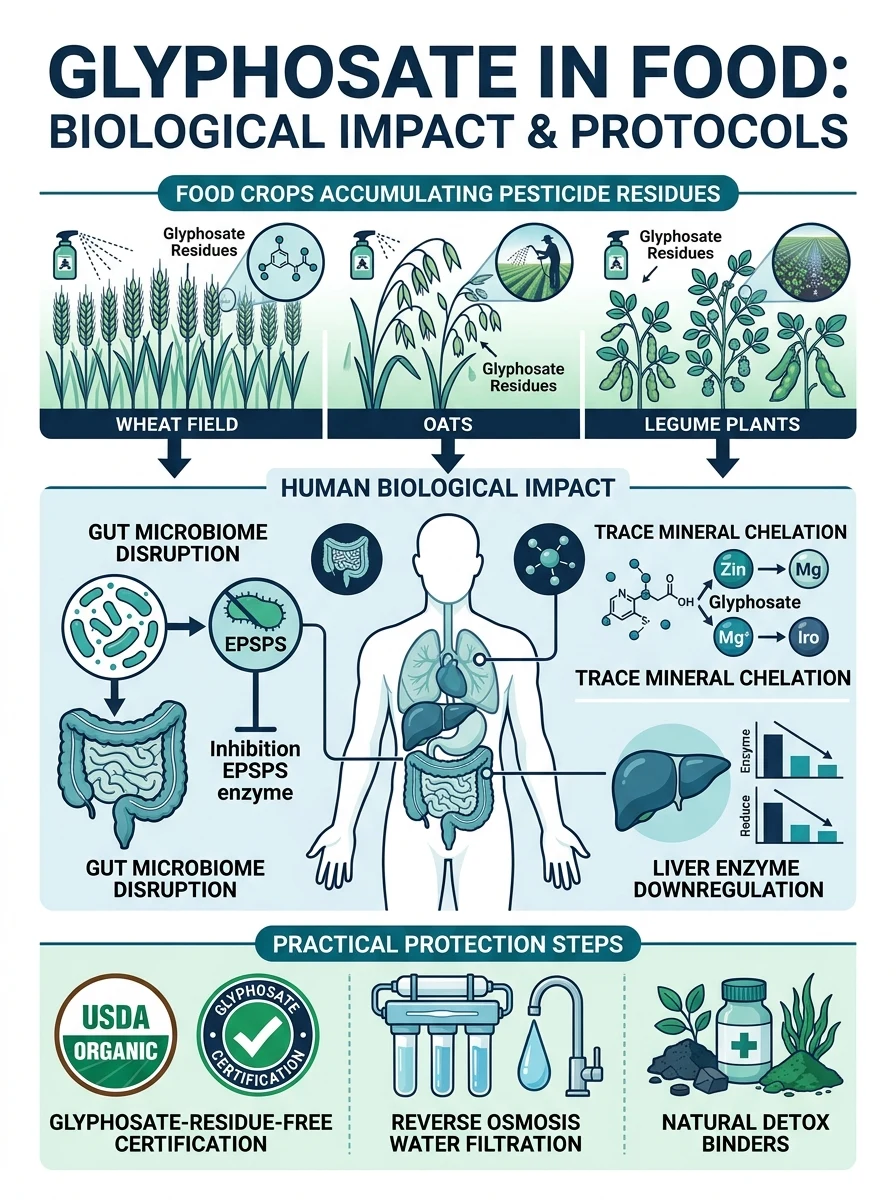
A prevalent consumer assumption is that glyphosate contamination is confined exclusively to genetically modified (GMO) crops—such as “Roundup Ready” soy, corn, canola, and sugar beets—which are engineered with a bacterial gene to survive direct herbicide drenching. However, laboratory assays consistently detect the highest glyphosate concentrations not in corn or soy, but in non-GMO grains, particularly oats, wheat, chickpeas, and lentils.
The explanation lies in an agricultural convenience practice known as crop desiccation. In cooler, humid grain-growing regions (such as the northern United States and the Canadian prairies), farmers frequently spray glyphosate directly onto mature oat and wheat fields just 3 to 7 days prior to harvest. The chemical kills the crop rapidly, forcing the green stems to wither and dry uniformly, allowing combines to harvest earlier and avoid seasonal autumn frost.
Unlike pre-planting applications, pre-harvest desiccation involves drenching the exposed edible seed head right before processing. Because glyphosate is a systemic agrochemical, it is actively drawn into the vascular system of the grain kernel. It cannot be washed off with water, nor is it degraded by conventional industrial milling, baking, or high-temperature extrusion.
2. Independent Laboratory Test Results: Tested Food Brands & Contamination Levels
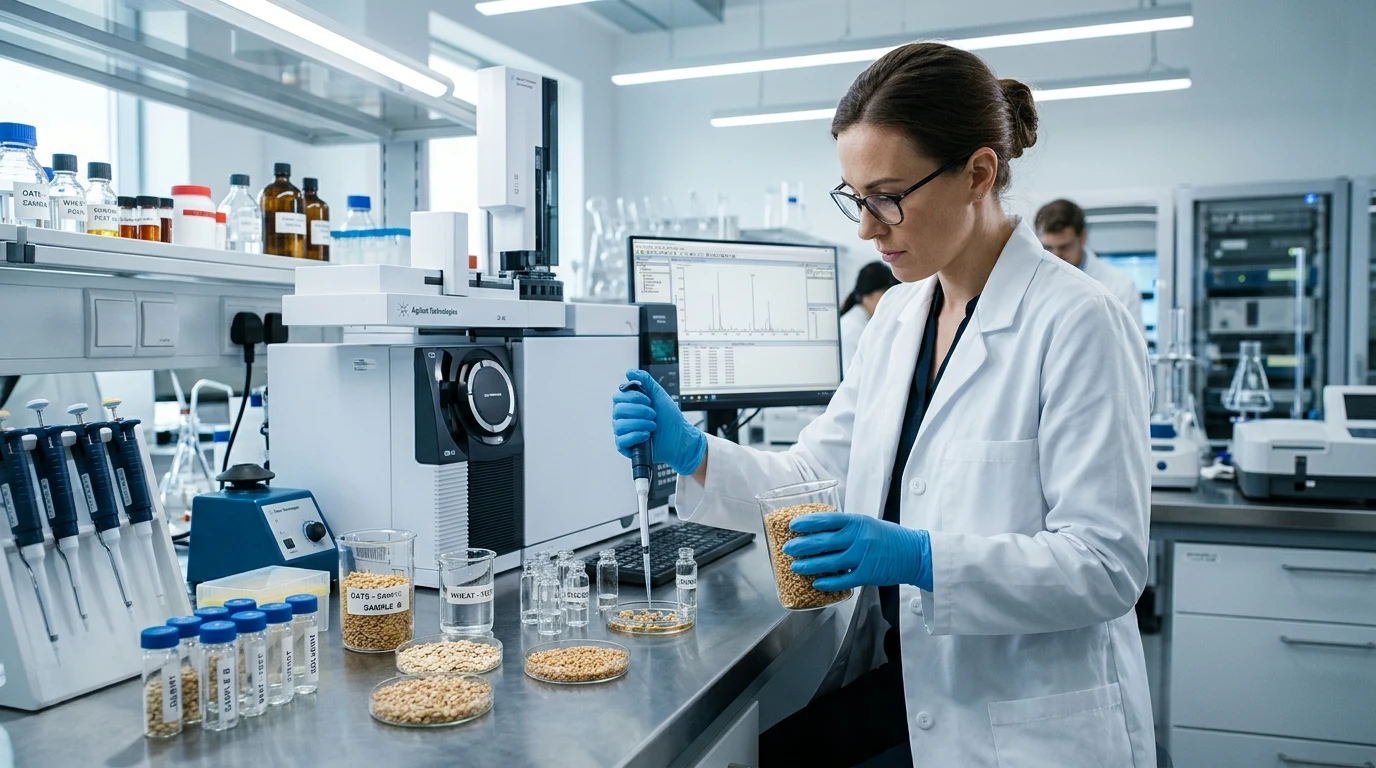
In landmark rounds of blind testing conducted by Anresco Laboratories—an independent, FDA-registered analytical chemistry facility utilizing state-of-the-art liquid chromatography-tandem mass spectrometry (LC-MS/MS)—and commissioned by the Environmental Working Group (EWG) and consumer advocacy groups, dozens of popular brand-name pantry staples were screened. The findings revealed widespread contamination across breakfast cereals, granolas, and crackers:
| Food Brand & Product Tested | Category | Glyphosate Concentration (ppb) | EWG Health Benchmark (160 ppb) |
|---|---|---|---|
| Quaker Oatmeal Squares (Honey Nut) | Breakfast Cereal | 2,837 ppb | 17.7x Exceeded |
| Quaker Old Fashioned Oats | Rolled Oats | 1,300 ppb | 8.1x Exceeded |
| Cheerios (General Mills) | Breakfast Cereal | 729 – 830 ppb | 4.5x – 5.2x Exceeded |
| Nature Valley Granola Bars (Oats & Honey) | Snack Bar | 840 ppb | 5.2x Exceeded |
| Lucky Charms (General Mills) | Children’s Cereal | 400 ppb | 2.5x Exceeded |
| Ritz Crackers (Nabisco) | Snack Cracker | 270 ppb | 1.7x Exceeded |
| Oreo Original Cookies | Cookie | 289 ppb | 1.8x Exceeded |
| Bob’s Red Mill Organic Old Fashioned Rolled Oats | Certified Organic Oats | Non-Detectable (<10 ppb) | Passed (Clean) |
| Nature’s Path Organic Honey’d Corn Flakes | Certified Organic Cereal | Non-Detectable (<10 ppb) | Passed (Clean) |
The Regulatory Disconnect: EPA Tolerances vs. Health Benchmarks
When confronted with these laboratory figures, food manufacturers and chemical lobbyists routinely argue that all tested products fall well below the legal limits established by the U.S. Environmental Protection Agency (EPA). Under current federal regulations, the EPA permits up to 30,000 ppb of glyphosate residue on cereal grains—a tolerance threshold that public health researchers argue was heavily influenced by agribusiness lobbying rather than modern pediatric toxicology.
In contrast, toxicologists at the Environmental Working Group calculated a children’s health benchmark of 160 ppb, assuming a daily serving of 60 grams of cereal and applying a 1-in-a-million lifetime cancer risk margin combined with a 10-fold safety margin under the Food Quality Protection Act. Under this toxicological metric, over 70% of conventional oat-based breakfast products failed the safety standard.
3. The 4 Biological Mechanisms of Glyphosate Toxicity in Humans
For decades, the central marketing claim defending glyphosate’s safety was straightforward: “Glyphosate works by inhibiting the shikimate pathway in plants; humans do not possess a shikimate pathway, therefore it is completely non-toxic to human biology.” In contemporary molecular physiology and microbiome science, this assertion has collapsed under the weight of four distinct biological mechanisms:
1. The Shikimate Pathway Fallacy & Gut Microbiome Decimation
While human mammalian somatic cells lack the shikimate pathway, the trillions of symbiotic microbes residing within the human gastrointestinal tract rely on it entirely. The shikimate pathway uses the enzyme 5-enolpyruvylshikimate-3-phosphate synthase (EPSPS) to biosynthesize three essential aromatic amino acids: phenylalanine, tyrosine, and tryptophan.
Glyphosate operates as a synthetic analog of phosphoenolpyruvate, permanently binding and inactivating bacterial EPSPS. In laboratory assays, beneficial commensal bacteria—specifically Lactobacillus rhamnosus, Bifidobacterium adolescentis, and butyrate-producing Faecalibacterium prausnitzii—demonstrate extreme sensitivity to low-dose glyphosate exposure. Conversely, pathogenic organisms such as Clostridium difficile, Salmonella typhimurium, and Escherichia coli possess naturally resistant Class II EPSPS isoforms.
Chronic dietary ingestion of glyphosate therefore creates a persistent selective pressure in the colon, suppressing beneficial flora while fostering opportunistic dysbiosis. Furthermore, because tryptophan is the mandatory biochemical precursor to serotonin (over 90% of which is synthesized in the intestinal enterochromaffin cells) and melatonin, microbial shikimate inhibition directly impacts mood regulation, autonomic nervous function, and circadian sleep architecture.
2. Broad-Spectrum Divalent Mineral Chelation
Glyphosate was patented in 1964 as a broad-spectrum chelating agent for removing mineral scale from commercial boilers. The molecule contains functional amine, carboxylate, and phosphonate groups that form exceptionally stable octahedral complexes with divalent and trivalent metal cations:
- Zinc (Zn²⁺): Depletion impairs carbonic anhydrase, intestinal mucosal repair, and immune thymulin synthesis.
- Manganese (Mn²⁺): Chelation of manganese impairs mitochondrial superoxide dismutase (MnSOD), the primary antioxidant defense shielding mitochondrial membranes from oxidative breakdown, while depleting arginase in the hepatic urea cycle.
- Iron (Fe²⁺) and Cobalt (Co²⁺): Compromises hemoglobin synthesis and cobalamin (Vitamin B12) microbial assimilation.
- Magnesium (Mg²⁺): Inhibits over 300 cellular enzymatic reactions involved in ATP phosphorylation.
By locking these essential trace minerals into unabsorbable organometallic complexes, dietary glyphosate induces localized micronutrient starvation along the enterocyte brush border, even in individuals consuming ostensibly nutrient-dense whole grains.
3. Cytochrome P450 (CYP450) Enzyme Downregulation
Peer-reviewed investigations published in Entropy (PubMed PMID: 23940173) have demonstrated that glyphosate suppresses the expression and catalytic activity of Cytochrome P450 (CYP) enzymes in liver hepatocytes. CYP enzymes are responsible for Phase I hepatic clearance of environmental xenobiotics, pharmaceuticals, pesticides, and endogenous steroid hormones.
When hepatic CYP activity is blunted by concurrent glyphosate intake, the biological half-life and toxic potential of other environmental contaminants (such as phthalates, BPA, mold mycotoxins, and heavy metals) is exponentially magnified, creating a compounding toxic synergistic burden on the liver and kidneys.
4. Intestinal Tight Junction Degradation (“Leaky Gut”)
At the intestinal epithelial interface, human Caco-2 cell models establish that glyphosate exposure triggers a rapid upregulation of zonulin, the primary physiological modulator of intercellular permeability. As zonulin rises, the transmembrane protein complexes forming the tight junctions (claudin-1, occludin, and zonula occludens-1) disassemble.
This allows undigested food macromolecules, bacterial lipopolysaccharides (LPS), and environmental antigens to leak into the mesenteric lymphatic and portal circulation, driving systemic subclinical endotoxemia, food intolerances, and autoimmune reactivity.
4. Global Toxicology Classification: The WHO IARC Monograph 112
In March 2015, seventeen world-renowned independent toxicologists and cancer epidemiologists convened at the World Health Organization’s International Agency for Research on Cancer (IARC) in Lyon, France. In an expert consensus report published in Lancet Oncology (PubMed PMID: 25801782), the IARC classified glyphosate as a Group 2A “Probable Human Carcinogen” (IARC Monograph 112).
The panel cited compelling real-world epidemiological links between occupational and dietary glyphosate exposure and elevated incidences of Non-Hodgkin Lymphoma (NHL) and hairy cell leukemia, alongside unequivocal laboratory evidence of DNA strand breaks, chromosomal aberrations, and oxidative stress in human lymphocytes.
This scientific designation provided pivotal evidence in landmark US federal court verdicts (including Johnson v. Monsanto Co.), where juries concluded that occupational glyphosate exposure substantially contributed to non-Hodgkin lymphoma.
5. Step-by-Step Elimination Protocol: How to Protect Your Household
Eliminating glyphosate requires a clear two-pronged strategy: stopping primary dietary and water exposure, and using targeted binders to clear residues from gut and liver tissues.
Step 1: The Clean Pantry Sourcing Matrix
- Prioritize USDA Certified Organic: Organic standards prohibit synthetic desiccants and glyphosate; testing consistently shows zero or near-undetectable residues (<10 ppb).
- Look for the “Glyphosate Residue Free” Seal: Awarded by The Detox Project via ISO-accredited testing with a strict 10 ppb limit of detection.
- Switch High-Risk Pantry Grains: Transition household oats, flour, pasta, and legumes to organic or sprouted alternatives.
Step 2: Water Filtration That Actually Works
Because glyphosate is water-soluble, runoff frequently enters municipal reservoirs. Standard refrigerator filters with loose carbon allow polar herbicides to pass through; effective removal requires solid extruded carbon block technology or multi-stage Reverse Osmosis (RO) certified to NSF Standard 53 or 58.
Step 3: Biological Binders & Hepatic Phase II Support
- Humic and Fulvic Acid Complexes: Bind free herbicide residues in the intestinal lumen to facilitate safe fecal elimination.
- Clay & Zeolite Minerals: Bentonite clay and micronized zeolite bind polar pesticide cations when taken between meals.
- Sulforaphane (Broccoli Sprouts): Activates Nrf2, upregulating Phase II hepatic enzymes (Glutathione S-Transferase) to clear organophosphates.
- Apple Pectin & Resistant Starch: Nourishes butyrate-producing flora to repair tight-junction zonulin damage.
Recommended Clean Living & Detox Essentials
Laboratory-tested, certified glyphosate-free products selected by our editorial team.
Clearly Filtered Water Filter Pitcher with Affinity Filtration
Independently tested and certified to NSF standards to eliminate 99.9% of glyphosate, microplastics, lead, and PFAS that standard gravity filters miss.
One Degree Organic Foods Sprouted Rolled Oats
Third-party certified Glyphosate Residue Free by BioChecked, Non-GMO Project Verified, and sprouted for optimal mineral bioavailability.
Cymbiotika Activated Charcoal with Humic & Fulvic Acid
Advanced liposomal toxin binder formulated with organic fulvic and humic complexes to bind agricultural toxins in the digestive tract safely.
Related Clinical Toxicology & Nutrition Guides
- 20 Fruits & Vegetables: Pesticide Residue Profiles & Clean Eating Science
- Molokhia (Jute Mallow) Guide: Ancient Egyptian Superfood & Heavy Metal Defense
- Clear Arteries Naturally: Endothelial Protection & Environmental Detoxification
- 8 Health Benefits of Tea: Hepatic Phase II Glucuronidation & EGCG Antioxidants
- Health Benefits of Seeds: Organic Sourcing, Enterolignans & Gut Health
Frequently Asked Questions (FAQ)
Can you wash glyphosate off grains or produce with water or baking soda?
No. While washing with a sodium bicarbonate (baking soda) solution can remove surface contact insecticides from fruits like apples and berries, glyphosate is a systemic herbicide. Once sprayed, it is absorbed through the plant’s vascular phloem and integrated into the internal cellular structure of the seed, grain, or stem. It cannot be washed off, peeled away, or boiled out.
Are certified organic foods 100% free of glyphosate?
Organic standards strictly prohibit glyphosate application. However, because over 250 million pounds are sprayed annually across adjacent conventional farmland, wind drift, shared agricultural transport trucks, and rainwater runoff can deposit microscopic trace amounts. Nevertheless, independent laboratory testing confirms that organic grains consistently test at or below the 10 ppb limit of detection—more than 98% to 99% cleaner than conventional brand counterparts.
How can you clinically test your own body for glyphosate exposure?
You can quantify personal body burden through direct urine glyphosate testing via LC-MS/MS. Research confirms that individuals switching to a 100% organic diet achieve up to a 70% reduction in urinary glyphosate levels within 6 to 7 days.
Final Investigative Summary: Voting with Your Fork
Widespread glyphosate residues in major breakfast brands highlight the critical need for proactive food sourcing. By choosing certified organic and Glyphosate-Residue-Free grains, filtering drinking water through dense carbon blocks, and supporting regenerative agriculture, you protect your family’s gut microbiome and metabolic vitality from the inside out.
Need more info.
Thank you got info