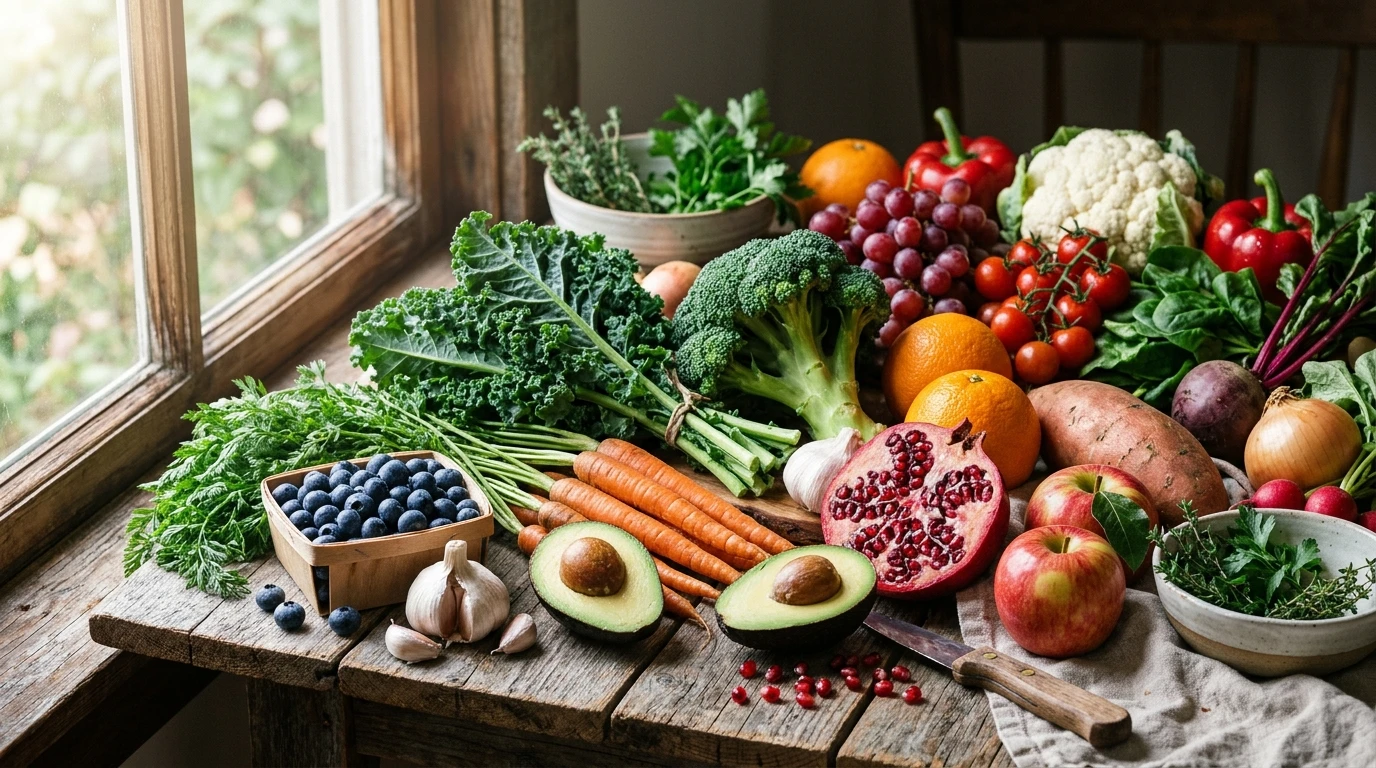
In modern nutritional medicine, human diets are increasingly characterized by high caloric density coupled with profound micronutrient starvation. Processed convenience foods supply abundant refined carbohydrates and oxidized fats while completely lacking the intricate biological compounds that co-evolved with human cellular physiology over hundreds of thousands of years: phytonutrients.
Consuming whole fruits and vegetables delivers nutrients within a living “whole food matrix,” where polyphenols, carotenoids, glucosinolates, and prebiotic fibers operate synergistically. For instance, the monounsaturated lipids in avocado multiply the cellular absorption of fat-soluble carotenoids from leafy greens by more than 400%, while vitamin C regenerates oxidized vitamin E.
Extensive clinical research confirms that individuals consuming a diverse spectrum of colorful plant foods experience substantially reduced disease risk. In a landmark meta-analysis of 95 prospective studies published in the International Journal of Epidemiology (PubMed PMID: 28338764), researchers demonstrated that daily fruit and vegetable intake up to 800 grams per day significantly reduces cardiovascular disease, stroke, cancer incidence, and all-cause mortality, with the strongest risk reductions associated with cruciferous and green-yellow vegetables.
Evidence-Based Nutritional Science Summary
Whole fruits and vegetables deliver an intricate matrix of secondary plant metabolites—specifically anthocyanins, glucosinolates, carotenoids, and flavonols—that function far beyond basic macro- and micronutrition. Extensive meta-analyses demonstrate that consuming 800 grams daily of diversified plant foods reduces all-cause mortality and cardiovascular disease through epigenetic gene modulation, activation of Nrf2 cellular defense pathways, endothelial nitric oxide synthesis, and short-chain fatty acid (butyrate) production by colonic commensal microflora. Sourcing clean produce and pairing fat-soluble carotenoids with healthy dietary lipids optimizes bioavailability.
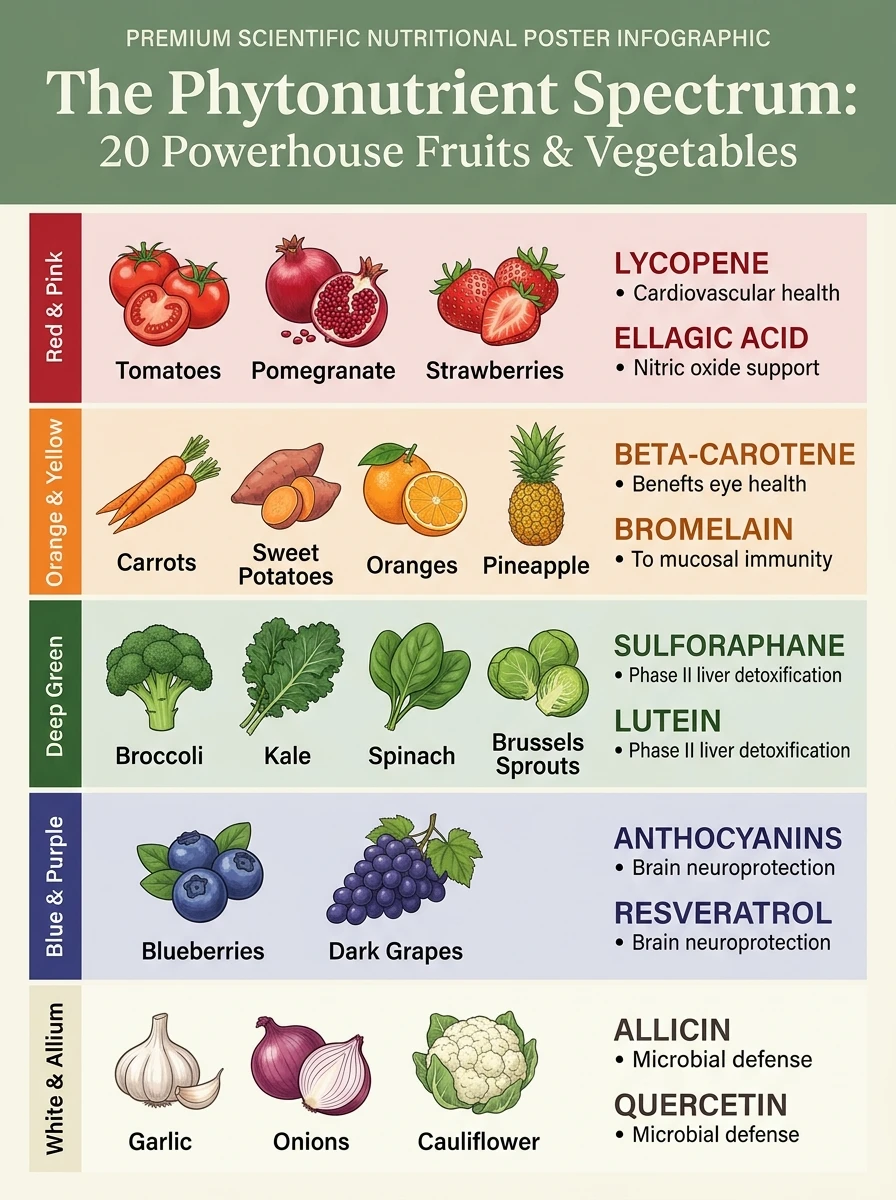
1. The Phytonutrient Spectrum: Color as a Biological Marker
Plants synthesize pigments not for aesthetics, but as evolutionary survival shields to deflect ultraviolet radiation and neutralize oxidative stress. In a seminal review published in Advances in Nutrition (PubMed PMID: 23674808), researchers confirmed that the complex phytochemical combinations in whole fruits and vegetables provide synergistic antioxidant and antiproliferative effects that cannot be replicated by single dietary supplements, activating our own cellular defense networks (such as the Nrf2 antioxidant response pathway).
2. Top 10 Therapeutic Fruits: Cellular Science & Bioactive Molecules
1. Wild Blueberries — Anthocyanins & Blood-Brain Barrier Neuroprotection
Blueberries are premier cognitive superfoods. Their deep indigo hue reflects high concentrations of anthocyanins (malvidin and delphinidin) that cross the blood-brain barrier, accumulating in the hippocampus to stimulate Brain-Derived Neurotrophic Factor (BDNF), enhance synaptic plasticity, and protect cerebral capillaries.
2. Hass Avocado — Oleic Fatty Acid Bioavailability Catalyst
Botanically a single-seeded berry, avocado is unique among fruits for its high content of heart-healthy monounsaturated oleic acid. Beyond its rich potassium and glutathione profile, avocado serves as an essential digestive catalyst: adding sliced avocado or cold-pressed avocado oil to a green salad multiplies the absorption of fat-soluble carotenoids (lutein, zeaxanthin, and beta-carotene) by over fourfold. To learn how healthy fats synergize with seeds, review our complete guide on 10 super seeds for longevity and heart health.
3. Pomegranate — Punicalagins & Endothelial Nitric Oxide
Pomegranate arils are packed with punicalagins, potent polyphenolic ellagitannins that stimulate endothelial nitric oxide synthase (eNOS), dilating arterial lumens, improving microvascular perfusion, and attenuating platelet hyper-aggregation.
4. Pineapple — Proteolytic Bromelain & Mucosal Decongestion
Pineapple contains bromelain, a complex of proteolytic enzymes. Ingested away from meals, bromelain enters circulation to downregulate inflammatory prostaglandins (PGE2) and dissolve micro-fibrin clots, accelerating tissue repair. Taken with food, it supports protein digestion.
5. Pink Grapefruit — Naringenin Bioflavonoids & Critical Drug Cautions
Rich in bitter citrus bioflavonoids such as naringin and naringenin, grapefruit supports healthy lipid profiles and cellular insulin sensitivity. (Crucial Clinical Mandate: Grapefruit contains furanocoumarins that potently inhibit the intestinal Cytochrome P450 3A4 [CYP3A4] enzyme. If you take statins, calcium channel blockers, or immunosuppressants, grapefruit can dangerously elevate serum medication levels; always consult your prescribing physician).
6. Crisp Apples — Soluble Pectin & Butyrate Production
The apple’s traditional reputation for sustaining health is validated by its concentration of apple pectin, a fermentable soluble fiber, alongside quercetin in its peel. In the large intestine, beneficial anaerobic microflora ferment pectin into butyrate, a short-chain fatty acid that serves as primary fuel for colonocytes, sealing tight junction proteins and reducing gut permeability.
7. Citrus Oranges — Hesperidin & Microvascular Integrity
Oranges provide far more than generic ascorbic acid. The white inner spongy pith (albedo) is rich in hesperidin, a citrus bioflavonoid proven in clinical trials to improve endothelial dysfunction, reduce capillary fragility, and dampen vascular inflammation. For refreshing ways to consume living citrus enzymes, see our tutorial on how to make probiotic lemonade.
8. Strawberries — Fisetin & Cellular Senescence Clearance
Strawberries are the richest dietary source of fisetin, a rare flavonoid undergoing groundbreaking clinical research in biogerontology. Fisetin acts as a potent natural senolytic, selectively inducing apoptosis in dysfunctional “senescent zombie cells” that accumulate with age and secrete destructive inflammatory SASP factors into surrounding healthy tissues.
9. Bananas — Resistant Starch & Potassium-Sodium Dynamics
While fully ripe bananas provide easily assimilated carbohydrates and potassium, greenish, slightly underripe bananas are packed with Type-2 Resistant Starch (RS2). Resistant starch completely bypasses enzymatic digestion in the small intestine, arriving intact in the colon where it selectively feeds friendly Bifidobacterium species without spiking blood sugar.
10. Dark Grapes — Resveratrol & SIRT1 Longevity Pathways
The skins of red and concord grapes contain concentrated trans-resveratrol and oligomeric proanthocyanidins (OPCs). Resveratrol is a documented allosteric activator of SIRT1 (Sirtuin 1), an ancient NAD+-dependent enzyme family responsible for chromatin regulation, mitochondrial biogenesis, and DNA repair.
3. Top 10 Therapeutic Vegetables: Hepatic Detoxification & Cellular Protection
11. Broccoli — Sulforaphane & Nrf2 Cellular Defense
Broccoli and broccoli sprouts are the undisputed kings of cruciferous medicine. They contain the glucosinolate precursor glucoraphanin. When cellular walls are chewed or finely chopped, the plant enzyme myrosinase converts glucoraphanin into sulforaphane—the single most potent natural inducer of human Phase II liver detoxification enzymes known to science.
(Preparation Rule: Heat destroys myrosinase. To maximize sulforaphane, chop broccoli and let it rest raw for 40 minutes before gentle steaming, or consume alongside fresh raw mustard seed powder).
12. Baby Spinach — Lutein, Zeaxanthin & Macular Pigment Density
Spinach provides rich reserves of the xanthophyll carotenoids lutein and zeaxanthin. These compounds accumulate selectively in the human retinal macula, forming an internal optical filter that absorbs damaging high-energy blue light and prevents photo-oxidative macular degeneration. Spinach also contains natural plant nitrates that convert into vascular nitric oxide.
13. Curly Tuscan Kale — Indole-3-Carbinol & Estrogen Detoxification
Kale delivers exceptional concentrations of Indole-3-Carbinol (I3C), which is converted in the acidic stomach into 3,3′-diindolylmethane (DIM). DIM favors the benign 2-hydroxyestrone metabolic pathway over the potentially pro-carcinogenic 16-alpha-hydroxyestrone pathway, promoting optimal hormonal homeostasis in both women and men.
14. Heirloom Carrots — Beta-Carotene & Polyacetylene Falcarinol
Carrots are synonymous with beta-carotene, an essential provitamin A carotenoid that the human enterocyte cleaves into retinol for night vision, corneal health, and epithelial tissue regeneration. Carrots also contain falcarinol, an acoustic bioactive oxylipin with documented anti-proliferative properties against abnormal cellular growth.
15. Sweet Potatoes — Sporamin Storage Proteins & Slow Complex Energy
Deep orange sweet potatoes provide over 400% of the daily RDA for provitamin A in a single medium root, alongside specialized storage proteins called sporamins. In biochemical studies, sporamins exhibit potent antioxidant actions, shielding gastrointestinal tissues from oxidative stress during active digestion.
16. Tomatoes — Cis-Lycopene Bioavailability Transformation
Tomatoes are the primary dietary source of lycopene, an acyclic carotenoid with immense affinity for prostate and cardiovascular tissues. In raw tomatoes, lycopene exists primarily in an all-trans molecular configuration that is poorly absorbed. However, when tomatoes are simmered with extra virgin olive oil, thermal processing converts lycopene into its cis-isomeric form, multiplying systemic bioavailability by up to 300%.
17. Bell Peppers — Non-Citrus Ascorbic Acid Champions
A common nutritional misconception is that citrus fruits provide the highest concentration of Vitamin C. In reality, a single medium red bell pepper contains more than double the Vitamin C of a typical naval orange (roughly 170 mg per pepper). Bell peppers also contain capsanthin, a rare red carotenoid with exceptional free-radical scavenging capacity.
18. Fresh Garlic — Allicin & Broad-Spectrum Antimicrobial Defense
In an intact clove of garlic, the compound alliin and the enzyme alliinase are stored in separate cellular compartments. When crushed, chewed, or minced, the cell walls break, triggering an enzymatic reaction that synthesizes allicin (diallyl thiosulfinate) within 60 seconds.
Allicin is a volatile organosulfur antimicrobial that penetrates bacterial membranes and inhibits essential sulfhydryl-containing enzymes. To maximize allicin potency, always crush garlic and allow it to sit exposed to air for 10 minutes before cooking. For further botanical antimicrobial protocols, see our clinical review on neem leaves and traditional botanical medicine.
19. Red & Yellow Onions — Quercetin & Inulin Prebiotics
Onions are rich in quercetin, particularly in the outermost edible rings directly beneath the papery skin. Quercetin acts as a natural mast-cell stabilizer, downregulating histamine release in seasonal allergies. Onions also supply abundant inulin, an indigestible fructan that fuels the proliferation of beneficial colonic microbiota.
20. Brussels Sprouts — Sinigrin & Mucosal DNA Protection
These miniature cruciferous cabbages contain concentrated sinigrin and glucobrassicin. In gastrointestinal research, the breakdown products of sinigrin have been shown to accelerate the apoptotic clearance of precancerous colonic cells while strengthening mucous secreting goblet cells.
4. Curated Kitchen Preparation & Preservation Essentials Buyer’s Guide
To extract the deepest therapeutic value from fresh produce without degrading heat-sensitive enzymes or allowing organic fruits to spoil rapidly in the refrigerator, investing in high-efficiency kitchen gear is indispensable:
Whole Food Nutrition & Kitchen Essentials Showcase
Chef & Nutritionist ApprovedMueller Ultra-Clarity Heavy Duty Cold Press Masticating Juicer
Slow 60 RPM cold-masticating mechanism that yields dry pulp and prevents heat oxidation of live enzymes, vitamin C, and delicate polyphenols from leafy greens and fruits.
Check Juicer on Amazon →Ninja Professional Plus Kitchen System with Auto-iQ (1400 Watts)
Heavy-duty 1400-peak-watt motor with stacked stainless blades that pulverizes tough vegetable cellulose, seeds, and stems into velvety, bioavailable nutrient smoothies without discarding fiber.
View Blender on Amazon →Debbie Meyer GreenBags Active Ethylene Gas Absorption Bags (20 Pack)
Revolutionary reusable storage bags impregnated with natural oya mineral that absorbs ethylene ripening gas, keeping organic berries, greens, and veggies crisp up to 3 times longer.
Check GreenBags on Amazon →5. The Raw vs. Cooked Bioavailability Matrix
Neither raw nor cooked is universally superior; each method alters nutrient bioavailability differently:
- Enhanced by Gentle Cooking: Lycopene in tomatoes, beta-carotene in carrots, and lutein in spinach are bound within cellular cellulose walls; gentle steaming with healthy oils dramatically increases their uptake.
- Degraded by Excessive Heat: Vitamin C, myrosinase enzymes in crucifers, and folate in greens are heat-labile; light steaming or raw consumption preserves them.
- The 50/50 Rule: Enjoy half your daily plants raw and the other half gently cooked to maximize the entire spectrum. For metabolic pH balance, read our guide on the evidence-based alkaline diet.
Related Clinical Nutrition & Metabolism Guides
- 25 Super Snacks Under 100 Calories: Nutrient-Dense Fruit & Veggie Portions
- Glyphosate in Food Brands: Pesticide Residue Data & Clean Eating Protocols
- Health Benefits of Seeds: Chia, Flax & Pumpkin Seed Phytonutrients
- Molokhia (Jute Mallow) Guide: High-Iron Ancient Egyptian Greens & Longevity
- Clear Arteries Naturally: 5 Clinical Dietary Strategies for Heart Health
Frequently Asked Questions (FAQ)
Does blending fruits and vegetables in a smoothie destroy dietary fiber?
No. High-speed blending mechanically shears insoluble cellulose walls into smaller micronized particles, but it does not break chemical fiber bonds. In fact, blending whole fruits and vegetables preserves 100% of the dietary fiber while making intracellular polyphenols more accessible to digestive enzymes compared to commercial juicing (which completely discards beneficial pulp).
Should you always peel apples, carrots, and sweet potatoes?
Whenever you are consuming certified organic produce, leave the peel intact. The outer skin is where the plant concentrates its highest protective defenses: apple peels contain up to 5 times more quercetin than the inner flesh, and potato skins house the vast majority of dietary fiber and trace minerals. Thoroughly wash produce under cool running water rather than stripping off its most nutritious layer.
How many different plant foods should I eat per week for gut diversity?
Landmark findings from the American Gut Project (analyzing thousands of human stool microbiomes) revealed that individuals who consumed 30 or more unique plant foods per week possessed significantly greater microbial diversity and higher short-chain fatty acid levels than those who ate fewer than 10. Counting different fruits, vegetables, seeds, herbs, and spices makes reaching this 30-plant benchmark effortless.
Final Medical Verdict: Diversity is the Key to Cellular Longevity
Achieving vibrant human health does not require rigid dietary dogmas or restrictive fad protocols. By purposefully rotating through the complete phytonutrient spectrum—nourishing your cells with cruciferous sulforaphane, deep allium allicin, vascular punicalagins, and neuroprotective anthocyanins—you supply your genome with the ancient, unrefined biochemical signals it requires for lifelong vitality, cardiovascular resilience, and metabolic harmony.