Quick Medical Summary: Athlete’s foot (medically known as tinea pedis) is a contagious fungal infection caused by dermatophytes—primarily Trichophyton rubrum and Trichophyton mentagrophytes. These organisms secrete keratinase enzymes that break down skin keratin in warm, damp shoes and sweaty socks. While many mistake the “moccasin” dry-scale form for simple cracked heels, untreated tinea pedis can spread to the toenails (onychomycosis) or groin (tinea cruris). Permanent clearance requires a two-part approach: applying fungicidal agents (like butenafine or clinical tea tree oil) for 2 to 4 weeks, and strictly eliminating the damp microclimate inside your footwear.
That familiar, burning itch between your toes after pulling off shoes is rarely a temporary nuisance. For millions of people, it is the classic signature of tinea pedis, commonly known as athlete’s foot. Despite its name, you do not need to be an athlete to contract it; anyone whose feet spend hours trapped in closed, warm footwear provides the precise humid conditions dermatophyte fungi need to multiply.
Athlete’s foot is frequently undertreated. Many sufferers apply anti-itch lotion or stop using medication the moment peeling subsides, leading to chronic relapses. Fungal hyphae burrow deep into the stratum corneum, lying dormant until warmth and moisture return. By understanding fungal biology and combining targeted antifungals with daily footwear hygiene, you can eliminate the infection for good.
The Microbiology of Tinea Pedis: How Dermatophytes Invade Skin
Athlete’s foot is driven by specialized fungi called dermatophytes. In over 80% of cases, the culprit is Trichophyton rubrum, followed by Trichophyton mentagrophytes and Epidermophyton floccosum.
These microbes thrive exclusively on keratin, the structural protein forming the outer layer of human skin, nails, and hair. To invade, dermatophytes secrete keratinase enzymes that dissolve cellular proteins, allowing fungal spores to germinate and extend branching filaments (hyphae) across the stratum corneum.
Inside a closed shoe where temperatures reach 90°F (32°C) and relative humidity exceeds 80%, fungal colonies expand rapidly. The immune system responds by releasing histamines and inflammatory cytokines, triggering intense itching, redness, and rapid epidermal shedding as the body tries to cast off infected cells.
Additionally, dermatophytes shed microscopic arthroconidia (infectious fungal cells) into the environment with every discarded skin flake. These spores can persist on dry, contaminated surfaces—such as bathroom mats, pool decks, and the interior canvas of sneakers—for months. Once reintroduced to sweat and heat, the dormant spores rehydrate and resume their invasive enzymatic lifecycle.
The 3 Clinical Patterns of Athlete’s Foot: Recognizing the Signs
In dermatology, tinea pedis appears in three distinct forms, each requiring tailored management:
1. Interdigital (Toe-Web) Tinea Pedis
The most common form occurs in the tight web spaces between the fourth and fifth toes. Symptoms include skin maceration (whitish, soggy tissue), redness, peeling, and stinging fissures. Untreated fissures invite secondary bacterial infections that cause foul odors.
2. Moccasin-Type (Chronic Hyperkeratotic) Tinea Pedis
Often mistaken for simple dry skin or cracked heels (compare with our clinical protocol on dry, itchy skin relief and barrier restoration), moccasin tinea pedis covers the soles, heels, and sides of the feet in a moccasin-like pattern. Skin becomes thickened, red, and covered in fine, silvery scales. Because itching is often mild, patients often moisturize for months without realizing an active fungal infection is seeding their shoes.
3. Vesiculobullous (Inflammatory) Tinea Pedis
Characterized by sudden outbreaks of small, itchy, fluid-filled blisters along the arch or instep. This form is an intense immune hypersensitivity reaction to T. mentagrophytes. Ruptured blisters leave tender erosions vulnerable to bacterial entry. This vesicular presentation can closely mimic acute dyshidrotic pompholyx; review our guide on what is eczema, causes, and barrier relief.
Dermatologist-Recommended Antifungal
Lotrimin Ultra Antifungal Cream with 1% Butenafine Hydrochloride
Prescription-Strength Fungicidal Cream Proven to Kill Fungus Between the Toes in 1 Week
Unlike older fungistatic treatments that merely pause fungal growth, Lotrimin Ultra features butenafine hydrochloride, an allylamine derivative that actively destroys fungal cell membranes. It cures interdigital tinea pedis in as little as 1 week of twice-daily use while quickly soothing burning and peeling.
Antifungal Pharmacology: Fungicidal vs. Fungistatic Options
Topical antifungals target the synthesis of ergosterol, a component required for fungal cell membrane integrity. According to a systematic meta-analysis published in the Cochrane Database of Systematic Reviews (PubMed PMID: 17636733), fungicidal allylamines like terbinafine and butenafine produce significantly higher mycological cure rates and lower recurrence rates than fungistatic azoles. However, they act via two distinct mechanisms:
| Drug Class | Active Agents | Action | Typical Duration | Key Benefit |
|---|---|---|---|---|
| Allylamines & Benzylamines | Terbinafine, Butenafine | Fungicidal: Inhibits squalene epoxidase; ruptures fungal cell membranes | 1 to 2 weeks | Higher cure rates; kills fungus directly; shorter treatment course |
| Azoles | Clotrimazole, Miconazole | Fungistatic: Inhibits 14-alpha-demethylase; halts cell replication | 2 to 4 weeks | Gentle, reliable broad-spectrum coverage when used for full 4-week cycle |
| Thiocarbamates | Tolnaftate | Fungistatic: Distorts hyphae and halts growth | 2 to 4 weeks | Approved for both treatment and daily long-term prevention |
The cardinal rule of antifungal therapy is compliance past visible healing. Because microscopic spores linger after redness disappears, always continue applying cream 1 inch past the rash margin for at least 7 days after the skin looks clear.
Evidence-Based Natural Remedies: Botanicals with Proven Antifungal Action
Several natural botanical remedies have demonstrated genuine antimycotic activity in peer-reviewed clinical trials.
1. Australian Tea Tree Oil (Melaleuca alternifolia): Terpinen-4-ol Science
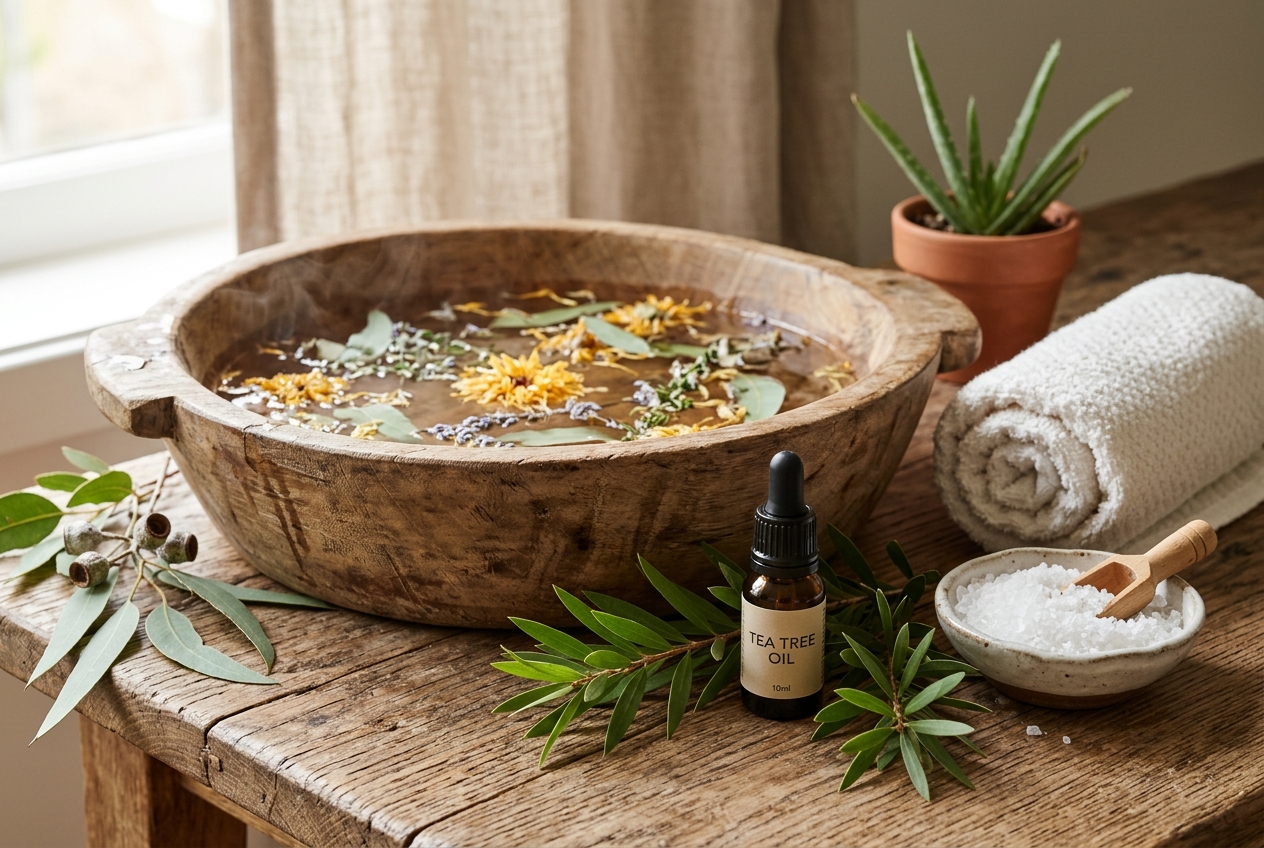
Tea tree oil owes its antifungal efficacy to terpinen-4-ol, a monoterpene that disrupts the permeability of fungal cell membranes. Clinical research published in the Australasian Journal of Dermatology (PubMed PMID: 12121393) showed that a 25% tea tree oil solution resolved symptoms in 64% of patients, while a 50% concentration achieved a 68% mycological cure rate—comparable to over-the-counter azole creams. Therapeutic tea tree foot soaks help soften calluses, soothe burning, and lower fungal spore counts.
2. Garlic Extract and Ajoene
When garlic (Allium sativum) is crushed, alliin converts into ajoene, a potent organosulfur compound. In clinical trials, a 0.4% topical ajoene cream produced a 100% cure rate in tinea pedis patients within one week, matching terbinafine in clinical speed.
3. Dilute Apple Cider Vinegar & Epsom Salt Soaks
Dermatophytes thrive in neutral pH environments (6.5 to 7.0). Soaking feet in warm water with dilute apple cider vinegar lowers cutaneous pH, creating an inhospitable acidic barrier. Adding Epsom salt draws excess moisture out of soggy, macerated toe webs, helping fissures dry and close.

Dermatologist-Recommended Antifungal
Purely Northwest Tea Tree Oil & Epsom Salt Antifungal Foot Soak
Therapeutic Mineral Soak Infused with Pure Australian Tea Tree Oil and Peppermint
Formulated with 100% pure Australian tea tree oil rich in terpinen-4-ol, Dead Sea salts, and Epsom salt, this therapeutic foot bath targets fungal spores lodged in toe webs and thickened calluses. It softens dry hyperkeratotic skin, neutralizes foot odor, and calms persistent burning.
The Daily Eradication Protocol: Decontaminating Feet, Socks & Shoes
Treating skin while neglecting footwear guarantees reinfection. Fungal spores shed from peeling feet survive inside shoes for up to 12 months. Follow this daily decontamination protocol:
Step 1: The Dedicated Toe-Drying Technique
Never use your body towel to dry your feet; this transfers spores to your groin, triggering jock itch (tinea cruris). Use a separate foot towel or a hair dryer on a cool setting to dry between every toe web until zero moisture remains.
Step 2: The 24-Hour Shoe Rotation Rule
Never wear the same pair of shoes two days in a row. Footwear requires 24 to 48 hours to dry completely. Alternate shoes daily and pull out insoles every evening to allow proper ventilation.
Step 3: Moisture-Wicking Sock Fabrics
Avoid 100% cotton socks, which hold sweat like sponges. Choose Merino wool or synthetic performance fibers (polyester, nylon, CoolMax) that pull perspiration away from the skin. Merino wool possesses natural thermoregulating and antimicrobial properties that discourage odor-causing bacteria while keeping feet dry. Change socks midday if you exercise or work in warm environments.
Before putting on fresh socks, dust the spaces between your toes with an antifungal medicated powder. This creates a dry, chemical buffer zone that neutralizes stray fungal spores before they can adhere to damp epidermal tissue during physical activity.
Step 4: Hot Laundry Disinfection
Cold water does not kill fungal spores. Wash socks in hot water (at least 140°F / 60°C) and dry on high heat to ensure complete spore inactivation.
Dermatologist-Recommended Antifungal
Lotrimin AF Daily Medicated Antifungal Foot Powder with 2% Miconazole Nitrate
Maximum Moisture-Absorbing Antifungal Shield for Feet, Socks & Footwear
Dermatophytes require darkness and moisture to survive. This clinical powder combines 2% miconazole nitrate with micro-fine moisture absorbers to keep toe webs dry. Dust directly onto feet, inside athletic shoes, and into socks to eliminate lingering fungal spores and halt recurring reinfection.
Red Flags: When Athlete’s Foot Requires Immediate Medical Care
While most healthy adults clear athlete’s foot at home within a few weeks, certain warning signs require professional care:
- Diabetes or Circulation Issues: Diabetics have reduced nerve sensation and poorer peripheral circulation. A minor skin fissure can escalate into a severe ulcer or systemic infection. Never self-treat without medical guidance.
- Bacterial Cellulitis: Spreading redness, localized warmth, red streaks traveling up the leg, swelling, or fever mean bacteria have breached the barrier. This is a medical emergency requiring antibiotics.
- Toenail Fungus (Onychomycosis): If toenails become thick, yellow, or crumbly, the infection has invaded the nail plate. Topical creams cannot penetrate the nail effectively; oral prescription antifungals are typically necessary.
- No Improvement After 2 Weeks: If consistent antifungal use brings no relief, the issue may be contact dermatitis, psoriasis, or eczema rather than a fungal infection.
Dermatological Comparison: Conventional vs. Natural Antifungals
Compare the mechanisms, speed, and cure rates of major tinea pedis treatment options:
| Treatment | Mechanism | Cure Rate | Speed | Best Role |
|---|---|---|---|---|
| Butenafine HCl (1%) | Fungicidal allylamine | 85-90% | 1 to 2 weeks | First-line pick for acute interdigital peeling and burning |
| Terbinafine HCl (1%) | Fungicidal allylamine | 80-85% | 1 to 2 weeks | Gold-standard choice for interdigital and sole infections |
| Clotrimazole (1%) | Fungistatic azole | 70-75% | 3 to 4 weeks | Gentle choice for sensitive skin; requires 4 full weeks |
| Tea Tree Oil (25-50%) | Botanical terpinen-4-ol | 65-70% | 2 to 3 weeks | Natural alternative and therapeutic foot soak agent |
| Miconazole Powder (2%) | Fungistatic moisture shield | High (Prevention) | Daily maintenance | Dusting shoes and socks to prevent reinfection |
Related Clinical & Dermatological Guides
- What is Eczema? Causes, Common Types, Triggers & Natural Barrier Relief
- Dry, Itchy Skin Relief: Causes, Lipid Barrier Science & Natural Remedies
- Naturally Clear Skin: The Science of Acne, Gut-Skin Axis & Proven Home Remedies
- The Dirty 30: Toxic Beauty Ingredients to Avoid for Cleaner, Safer Skin
- Apple Cider Vinegar: 7 Science-Backed Uses for Health, Beauty & Home
Frequently Asked Questions (FAQ)
Can athlete’s foot spread to other parts of my body?
Yes. Scratching infected feet transfers fungal spores under your nails. Touching your groin can produce tinea cruris (jock itch), and stepping into underwear before socks is a common transmission route. Always wash your hands after touching your feet, and put socks on before underwear.
Why does athlete’s foot keep returning?
Recurrent infections usually stem from stopping cream before dormant spores are cleared, failing to decontaminate footwear, or an untreated toenail fungal infection that continually reseeds the skin. Consistent shoe hygiene and antifungal powders prevent relapses.
Can I get athlete’s foot from hotel carpets and gym showers?
Yes. Fungal spores survive on damp surfaces like communal locker rooms, pool decks, and hotel carpets. Always wear shower sandals or flip-flops in shared wet environments.
Can soaking feet in bleach cure athlete’s foot?
No. Bleach is a harsh caustic chemical that damages the epidermal barrier and burns cracked skin. While bleach is fine for cleaning shower floors, it should never touch living skin. Use approved antifungals or gentle tea tree soaks instead.
How should I disinfect my shoes to prevent athlete’s foot?
Dust shoes daily with an antifungal powder containing miconazole, spray interiors with disinfectant, and leave footwear in direct sunlight whenever possible, as UV light and dry air suppress fungal spores.