
Clinical Dietetics & Satiety Science Summary
Clinical Status: Dietary compliance is the decisive determinant of sustainable fat loss. Restricting caloric intake inevitably triggers evolutionary survival pathways: circulating ghrelin surges while leptin plunges, provoking intense primal hunger that undermines long-term adherence.
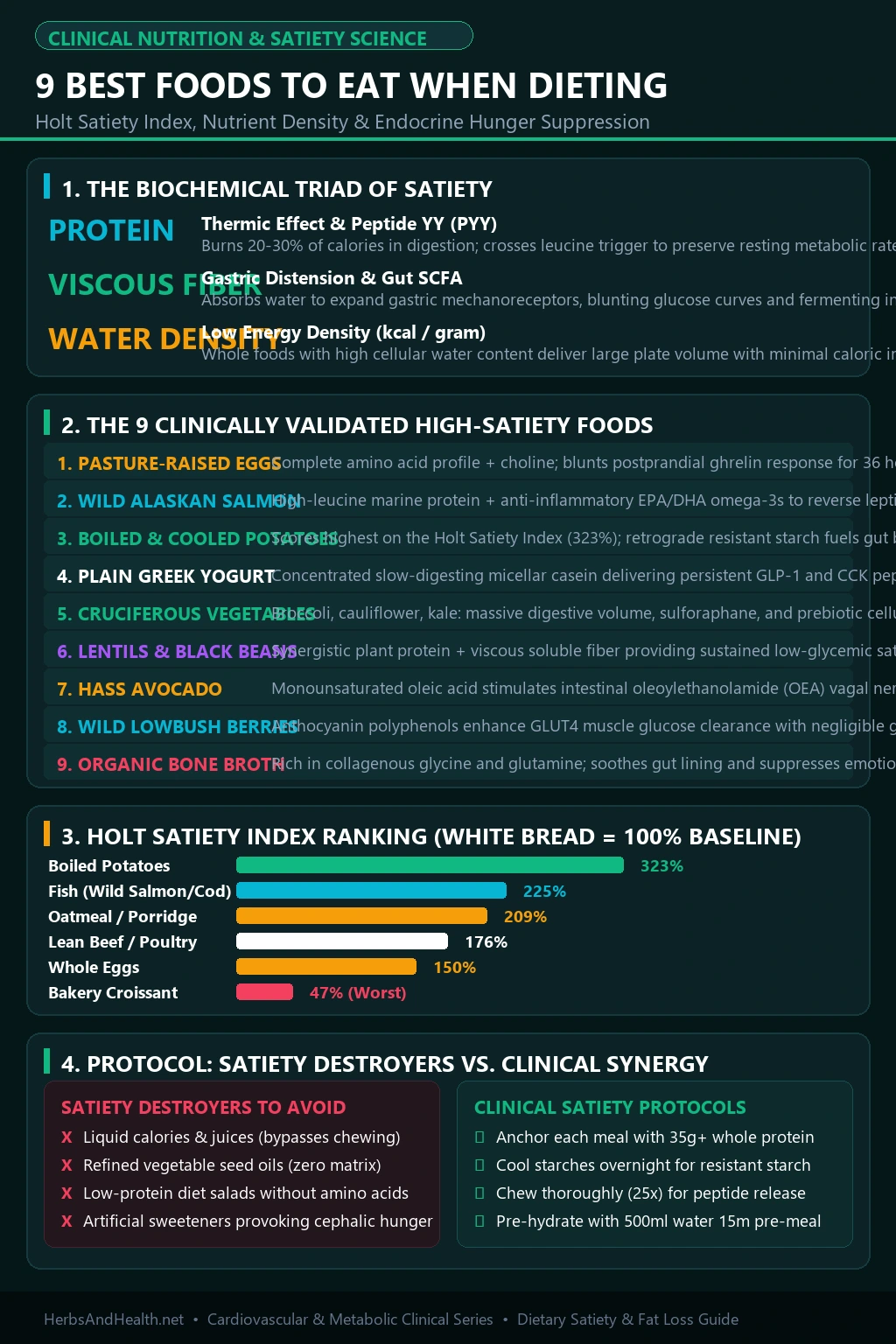
The Satiety Per Calorie Index: Maximizing fullness requires selecting whole foods with high protein density, viscous fiber, and low caloric density. Foods such as boiled and cooled potatoes, pasture-raised eggs, and wild salmon trigger potent neuroendocrine satiety peptides (PYY, CCK, GLP-1), allowing effortless caloric restriction without metabolic starvation.
The Neurobiology of Caloric Restriction: Why Primal Hunger Kills Diets
Across the fitness landscape, millions of individuals enter caloric deficits every year, yet clinical trials show that over 85% of conventional diets fail within twelve months. Diet abandonment is rarely a failure of willpower; it is driven by ancient neurobiological circuitry in the hypothalamus.
Throughout human history, food scarcity signaled an existential threat. When you restrict calories, your physiology interprets the deficit as impending starvation. Adipocytes shrink, lowering the satiety hormone leptin. Concurrently, the stomach fundus oversecretes ghrelin, the hunger peptide that activates Neuropeptide Y (NPY) and Agouti-Related Peptide (AgRP) neurons in the arcuate nucleus.
This hormonal cascade fuels obsessive food thoughts, lowers resting energy expenditure, and drives intense cravings for calorie-dense foods. To explore the cellular dynamics of adipose storage, review our guide on understanding fat gain and cellular adipogenesis.
The scientific solution is selecting whole foods that provide maximum gastric stretch, delayed digestion, and strong gut peptide release with minimal calories: a metric known as Satiety per Calorie.
The Triad of Satiety: Biophysical Mechanics of Fullness
A 400-calorie pastry leaves you hungry within two hours, whereas 400 calories of wild salmon and steamed broccoli provides four to five hours of unbroken satiety. This divergence is governed by three biophysical pillars:
1. High Protein Density & The Thermic Effect (TEF)
Dietary protein is the most satiating macronutrient per gram. Ingestion stimulates peptide YY (PYY) and glucagon-like peptide-1 (GLP-1) from intestinal L-cells while suppressing ghrelin. Additionally, protein carries a thermic effect of 20% to 30%, meaning nearly a third of its calories are expended during enzymatic digestion and urea synthesis.
2. Viscous Prebiotic Fiber & Physical Gel Barriers
Non-digestible soluble fibers (such as pectins and beta-glucans) absorb water in the upper gastrointestinal tract to form a viscous gel. This slows gastric emptying and carbohydrate absorption. In the colon, bacteria ferment these fibers into short-chain fatty acids (SCFAs) that bind to free fatty acid receptors, signaling sustained fullness.
3. Low Energy Density & Gastric Mechanoreceptors
The stomach detects volume via mechanoreceptors that fire when stretched. Foods rich in structural cellular water (vegetables, tubers, bone broths) deliver large physical plate volume for minimal calories, triggering early cephalic fullness cues.
The 9 Best Foods to Eat When Dieting for Sustainable Fat Loss
Based on clinical satiety scoring, nutrient density, and endocrine activation, these nine whole foods form the primary nutritional foundation for effortless fat loss:
1. Whole Pasture-Raised Eggs
Whole eggs represent the gold standard of biological satiety. A single egg provides 6 grams of complete protein with a biological value of 100. In clinical trials published in the International Journal of Obesity, an egg-based breakfast produced 65% greater weight loss and 34% greater waist reduction than an isocaloric bagel breakfast. Egg yolks provide dense choline, lutein, and healthy lipids that stabilize blood glucose and blunt ghrelin for up to 36 hours.
2. Wild Alaskan Salmon & Cold-Water Fish
In the Holt Satiety Index, fish ranked second among all tested protein foods, outscoring beef, chicken, and legumes. Wild salmon combines 35 grams of high-leucine protein per 6-ounce serving with anti-inflammatory marine omega-3 fatty acids (EPA and DHA). These fatty acids help reverse hypothalamic leptin resistance, restoring normal fullness signaling. Pairing fish with fibrous vegetables is a pillar of our clinical lunch and dinner meal planning guides.
3. Boiled & Cooled Potatoes (The Satiety King)
Whole boiled potatoes achieved the absolute highest score in the Holt Satiety Index: an astounding 323%, over three times more filling than white bread. Potatoes contain Protease Inhibitor II (PI2), which stimulates cholecystokinin (CCK) release. Clinical trials demonstrate that potato PI2 prolongs CCK activity by inhibiting the enzymes that normally degrade it, holding food inside the stomach longer. When boiled potatoes are cooled in the refrigerator, their digestible starches undergo retrogradation into Type-3 Resistant Starch, which resists upper digestion and fuels butyrate-producing gut microbes.
4. Plain Whole-Milk Greek Yogurt
Authentic Greek yogurt is strained to concentrate protein to 17–20 grams per cup. Its protein is 80% micellar casein, which coagulates in gastric acid and digests slowly over five hours. This steady amino acid release stimulates continuous GLP-1 secretion, preventing mid-afternoon hunger. Additionally, live probiotic cultures support the intestinal microenvironment, ensuring optimal gut-brain signaling.
5. Cruciferous Vegetables (Broccoli & Cauliflower)
Delivering just 30 to 45 calories per cup alongside 3 to 4 grams of insoluble cellulose fiber, cruciferous vegetables allow high volumetric intake without caloric excess. They also contain glucoraphanin, the precursor to sulforaphane, which activates the Nrf2 antioxidant pathway to reduce adipose tissue inflammation.
6. Legumes (Lentils, Chickpeas & Black Beans)
Legumes combine plant-based protein with viscous fiber and slow-digesting amylose starches. This induces the clinical second-meal effect: consuming lentils at lunch improves glucose tolerance and suppresses hunger for the next meal hours later. Meta-analyses show regular legume consumption promotes significant weight loss without formal calorie restrictions.
7. Hass Avocado
A medium avocado delivers 7 grams of prebiotic fiber and monounsaturated oleic acid. In the intestine, oleic acid converts to oleoylethanolamide (OEA), which activates PPAR-a and vagal afferents to induce deep neurological satiety, blunting cravings for hours.
8. Wild Lowbush Berries & Raspberries
With low glycemic loads and up to 8g fiber per cup, wild berries provide natural sweetness without insulin spikes. Their rich anthocyanins improve muscle GLUT-4 glucose uptake; explore the cellular mechanisms in our guide to 6 great fruits for fat loss and metabolic satiety.
9. Traditional Grass-Fed Bone Broth
Providing 10 to 12 grams of protein per cup for only 45 calories, bone broth is uniquely rich in glycine. Drinking warm broth 15 minutes before meals stretches gastric mechanoreceptors while glycine supports gut mucosal integrity and calms appetite.
Clinical Satiety Matrix: Nutritional & Endocrine Profile of the Top 9 Foods
Compare how these nine foods suppress appetite through their unique macronutrient composition and hormonal mechanisms:
| Food Item | Holt Satiety Index | Caloric Density | Key Bioactive / Nutrient | Primary Endocrine Satiety Pathway |
|---|---|---|---|---|
| Boiled & Cooled Potatoes | 323% (Highest) | 87 kcal / 100g | Protease Inhibitor II, Resistant Starch | CCK release, colon butyrate synthesis |
| Wild Alaskan Salmon | 225% (Very High) | 142 kcal / 100g | EPA / DHA Omega-3, Leucine | Reverses leptin resistance, elevates PYY |
| Whole Pasture Eggs | 150% (High) | 143 kcal / 100g | Choline, Complete Amino Acids | Suppresses ghrelin for up to 36 hours |
| Plain Greek Yogurt | 170% (High) | 73 kcal / 100g | Micellar Casein, Probiotic Strains | Slow gastric emptying, steady GLP-1 surge |
| Cruciferous Greens | 190% (Volumetric) | 34 kcal / 100g | Insoluble Cellulose, Sulforaphane | Vagal mechanoreceptor stomach distension |
| Legumes (Lentils) | 168% (High) | 116 kcal / 100g | Viscous Pectin, Amylose Starch | Second-meal effect, prolonged PYY release |
| Hass Avocado | 145% (High Fat) | 160 kcal / 100g | Oleic Acid, Prebiotic Fiber | OEA synthesis, vagal sensory nerve satiety |
| Wild Lowbush Berries | 140% (Moderate) | 57 kcal / 100g | Anthocyanins, Ellagic Acid | GLUT-4 muscle uptake, zero insulin spike |
| Grass-Fed Bone Broth | 155% (High Pre-Meal) | 20 kcal / 100g | Glycine, Proline, Electrolytes | Warm fluid gastric stretch, parasympathetic tone |
Kitchen & Nutritional Essentials to Maximize Dietary Satiety
Preparing high-satiety whole foods with clinical precision requires reliable kitchen tools and clean nutritional staples:
Great Lakes Wellness Hydrolyzed Collagen Peptides
Grass-fed collagen powder providing 12g of glycine-rich protein per serving. Stirs effortlessly into bone broth, coffee, or Greek yogurt to curb appetite without carbs.
Instant Pot Duo 7-in-1 Electric Pressure Cooker
the primary tool for batch-cooking high-satiety staples: pressure-cook dried lentils in 15 minutes, steam resistant-starch potatoes, or simmer rich bone broth with push-button ease.
Terrasoul Superfoods Organic Raw Pumpkin Seeds
Delivers 10 grams of complete plant protein and 5 grams of fiber per ounce. Rich in magnesium and zinc; sprinkling two tablespoons over salads delivers satisfying mastication and fullness.
Practical Satiety Strategy: How to Build Hunger-Proof Daily Meals
To optimize dietary compliance without counting calories compulsively, combine these nine foods using strategic pairings:
- The Power Breakfast: Scramble three whole pasture-raised eggs with two cups of fresh baby spinach, paired with a half-cup of wild blueberries. This delivers 22g of bioavailable protein, dense choline, and anthocyanins, suppressing ghrelin until afternoon.
- The Midday Resistant Starch Bowl: Pair 6 oz of wild salmon with 150g of boiled, cooled baby potatoes and two cups of steamed broccoli drizzled with lemon juice and olive oil. This triggers peak CCK and PYY release, maintaining afternoon energy.
- The Evening Volumetric Taper: Simmer 5 oz of lean beef or tempeh in one cup of organic bone broth with roasted cauliflower florets and black beans. For craving emergencies between meals, explore our curated list of 25 super snacks with 100 calories or less.
Frequently Asked Questions About Satiety and Weight Loss Foods
Are white potatoes safe to eat on a fat loss diet?
Yes, when prepared correctly. Plain boiled potatoes have the highest satiety index of any tested food (323%). Deep-frying or loading them with butter is what adds excess calories. Boiling and cooling converts starches into gut-healthy resistant starch.
Should I discard egg yolks to save calories?
No. While egg whites provide albumin protein, the yolk contains virtually all fat-soluble vitamins, choline, and essential fatty acids that signal hypothalamic fullness. Eating the whole egg produces significantly greater satiety.
Can you eat too much protein when dieting?
In individuals with normal kidney function, consuming 1.6 to 2.2 grams of protein per kilogram of body weight is safe and metabolically advantageous. Protein’s high thermic effect preserves lean mass during fat loss.
What is the most effective food to stop late-night snacking?
A cup of warm organic bone broth or 150g of plain Greek yogurt 90 minutes before bed. Casein protein or gelatinous glycine settles gastric acid and maintains nocturnal satiety without spiking insulin.
Do diet sodas help with satiety?
They generally impair satiety. Artificial sweeteners stimulate oral sweet taste receptors without delivering calories, which can provoke compensatory carbohydrate cravings later in the day.
Peer-Reviewed Clinical References & Satiety Research
- Holt, S. H., et al. (1995). A satiety index of common foods. European Journal of Clinical Nutrition, 49(9), 675-690.
- Vander Wal, J. S., et al. (2008). Egg breakfast enhances weight loss. International Journal of Obesity, 32(10), 1545-1551.
- Rolls, B. J. (2014). Dietary energy density: Applying behavioural science to weight management. Nutrition Bulletin, 39(1), 85-93.
- Kim, S. J., et al. (2016). Effects of dietary pulse consumption on body weight: a systematic review and meta-analysis of randomized controlled trials. American Journal of Clinical Nutrition, 103(5), 1213-1223.
- Leidy, H. J., et al. (2015). The role of protein in weight loss and maintenance. American Journal of Clinical Nutrition, 101(6), 1320S-1329S.