NECK TENSION? Try This — Side‑Lying Spine Rotation (Quick Relief)
Quick Overview
The side‑lying spine rotation for neck tension is a short mobility drill that targets the thoracic spine to reduce cervical (neck) tightness. It takes about 2–5 minutes per side and requires only a foam roller or any object of similar height. Recommended for desk workers, frequent travelers, and anyone with upper‑back stiffness contributing to neck discomfort.
Why This Helps Neck Tension
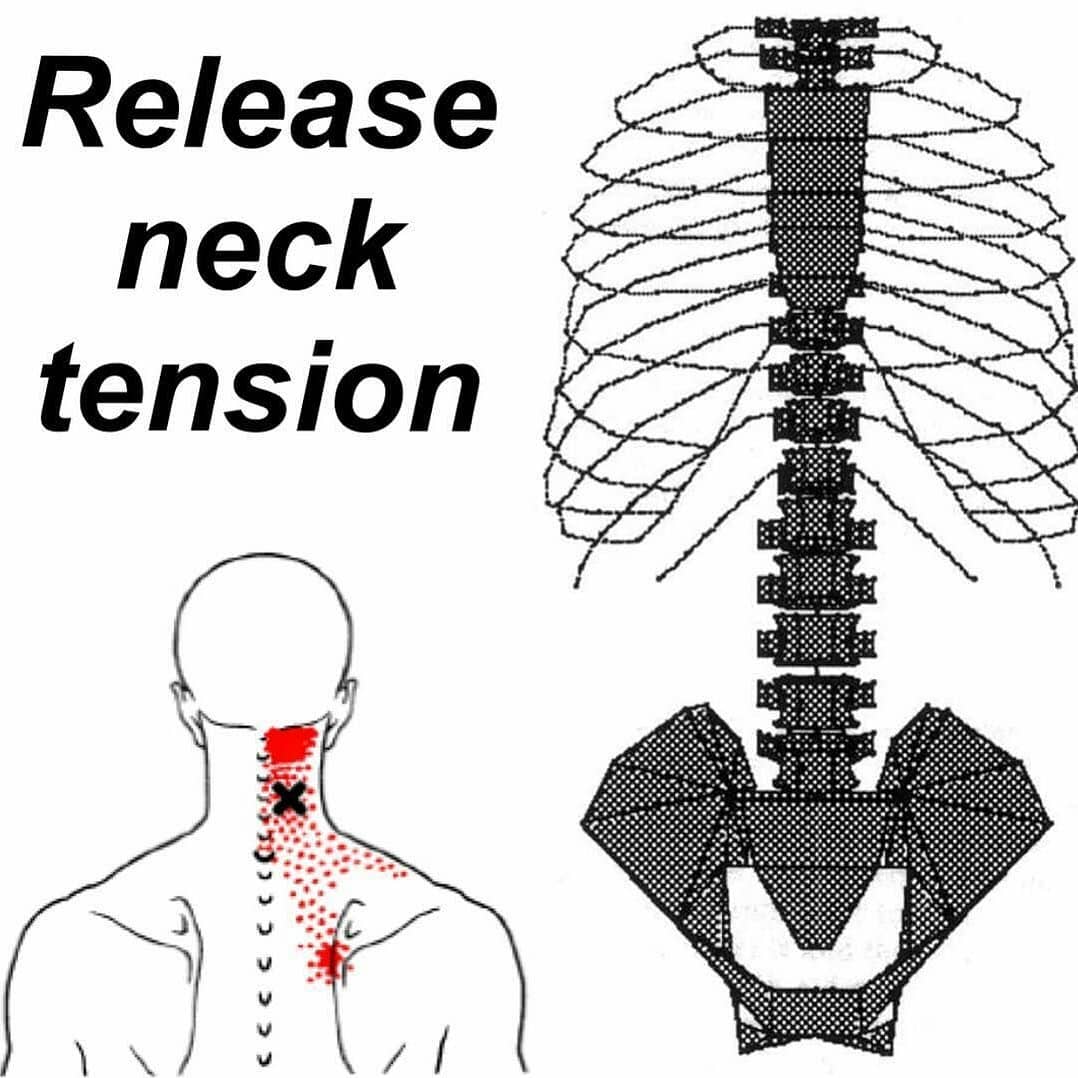
Neck tightness often stems from restricted rotation or extension in the thoracic spine. By improving thoracic rotation and creating movement through the mid‑back, you reduce compensatory strain in the neck and improve overall cervical posture. Clinicians and physical therapists commonly use thoracic mobility drills to complement direct neck care and muscle release techniques.
Step‑by‑Step Instructions
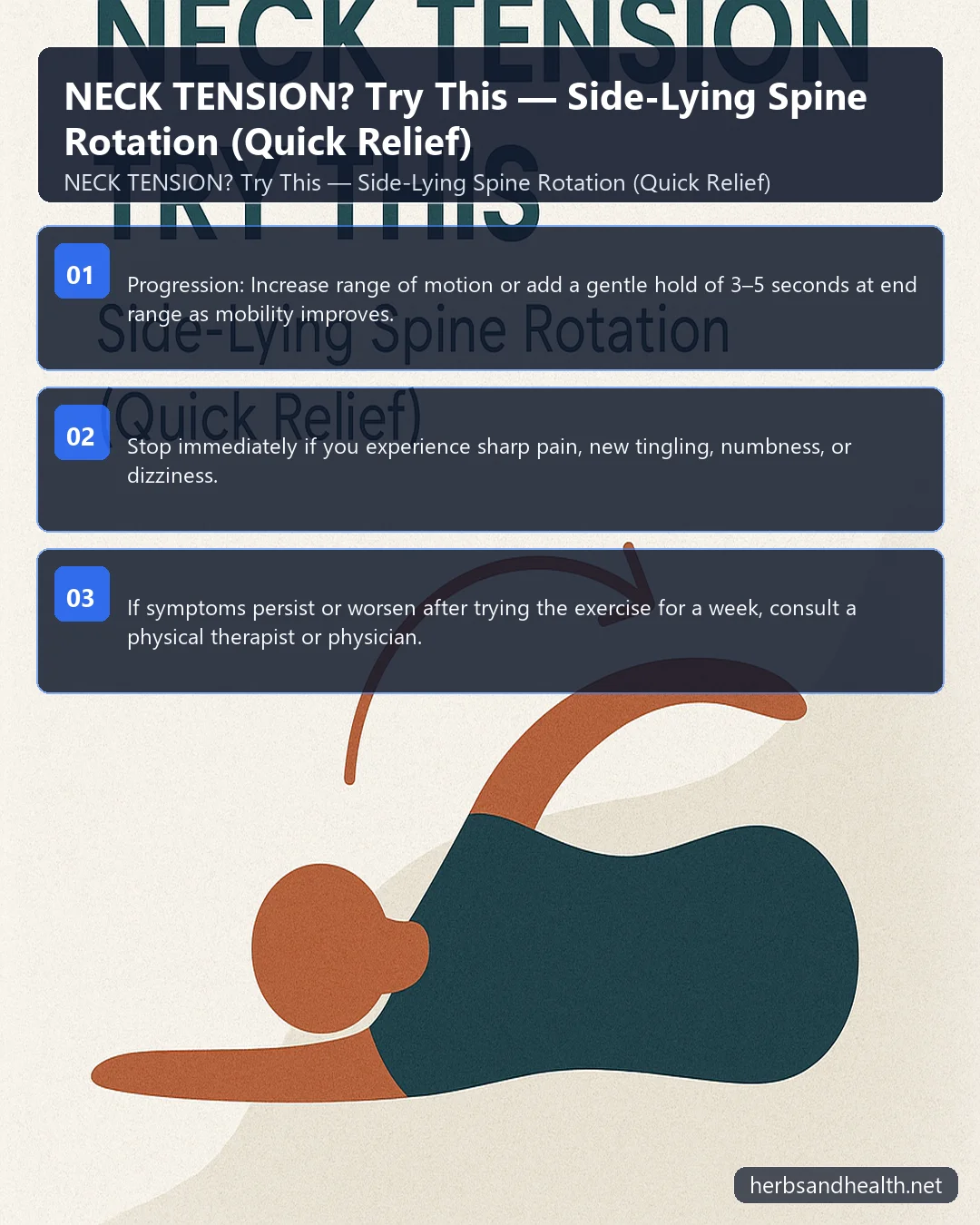
- Setup: Lie on your side on a firm surface. Straighten the bottom leg. Bend the top leg to 90° at the hip and knee, placing the foot on the floor (or keep the top leg elevated if preferred).
- Position the roller: Place a foam roller (or a firm pillow/rolled towel) under your lower ribcage/upper abdomen so the roller sits roughly at the lower thoracic area.
- Arm placement: Place the bottom arm forward, resting the hand on the floor or knee for stability. Cross the top arm across your chest or hold it on the roller for feedback.
- Movement: Begin by folding your chest toward the floor over the roller while inhaling for 2 seconds. As you exhale for 2 seconds, rotate your thorax and head behind you (look toward the ceiling) as far as you can while keeping the roller pressure. Use a controlled 2s fold / 2s rotate tempo.
- Dosage: Perform 2 sets of 8 reps per side (beginner), or 3 sets of 10 reps per side (intermediate). Pause briefly at the end range for 1–2 seconds if comfortable.
- Progression: Increase range of motion or add a gentle hold of 3–5 seconds at end range as mobility improves.
Common Mistakes & Modifications
- Common mistakes: Twisting only the neck (rather than rotating the thorax), letting hips roll backward, overextending the lumbar spine, or using a roller placed too high or low.
- Beginner modification: Use a firmer pillow instead of a roller, reduce rotation range, keep both knees bent for added stability.
- Advanced progression: Hold a light band across the chest for resistance, or perform the movement with the bottom leg slightly lifted to challenge core control.
Precautions & When to Avoid
- If you have an acute cervical injury, recent whiplash, severe radiculopathy, or diagnosed spinal instability, avoid this drill until cleared by a clinician.
- Stop immediately if you experience sharp pain, new tingling, numbness, or dizziness.
- If symptoms persist or worsen after trying the exercise for a week, consult a physical therapist or physician.
How Often & Progressions
Use the drill 3–5 times per week as part of a mobility routine. Start with 2 sets of 8 reps per side for 1–2 weeks and progress to 3 sets or longer holds as range and comfort improve. Reassess every 4 weeks and increase challenge gradually.
Related Exercises & Next Steps
- Complement this drill with chin tucks (for neck posture), thoracic extensions over a foam roller, and pec stretches to address anterior tightness.
- If you want additional non‑exercise relief, consider adjuncts like essential oils for relaxation and the calming benefits of tea as part of a recovery routine.
- For chronic inflammation concerns, explore natural options such as clove water benefits for pain relief or moringa’s anti‑inflammatory benefits alongside professional advice.
Follow for More Tips
Tag a friend who needs neck love and follow for more quick mobility tips, posture routines, and evidence‑informed self‑care ideas. Original exercise demonstration credited to @vinnierehab and @roydianchan (video source). Include embedded video or step images in the editor for best results.
Author & Sources
Curated by a licensed physiotherapist (content editor). Exercise instructions adapted from the original creators @vinnierehab and @roydianchan. For clinical questions, consult a physical therapist or healthcare provider.