
We have all experienced that moment of quiet anxiety: you go in for your routine annual checkup, wait a few days for blood work, and receive a voicemail saying, “Your total cholesterol is slightly elevated; we need to talk about medication.” Immediately, your mind races. You picture clogged pipes, throw away egg yolks in your fridge, and wonder how normal eating turned your cardiovascular system into a ticking time bomb.
Here is the reassuring truth that decades of outdated diet advice failed to mention: cholesterol is not a toxic villain out to destroy your arteries. In fact, if your body had zero cholesterol right now, you could not survive. Cholesterol is an indispensable building block that your cells use to build flexible membranes, produce vitamin D, synthesize digestive bile, and manufacture vital hormones like testosterone, estrogen, and cortisol.
So where did this massive health scare come from, and what do those mysterious numbers on your lab results actually mean? In this friendly guide, we will cut through the 1980s myths, explain the real difference between HDL and LDL in plain English, and reveal the practical daily habits that keep your arteries youthful, flexible, and completely protected.
💡 Cholesterol at a Glance
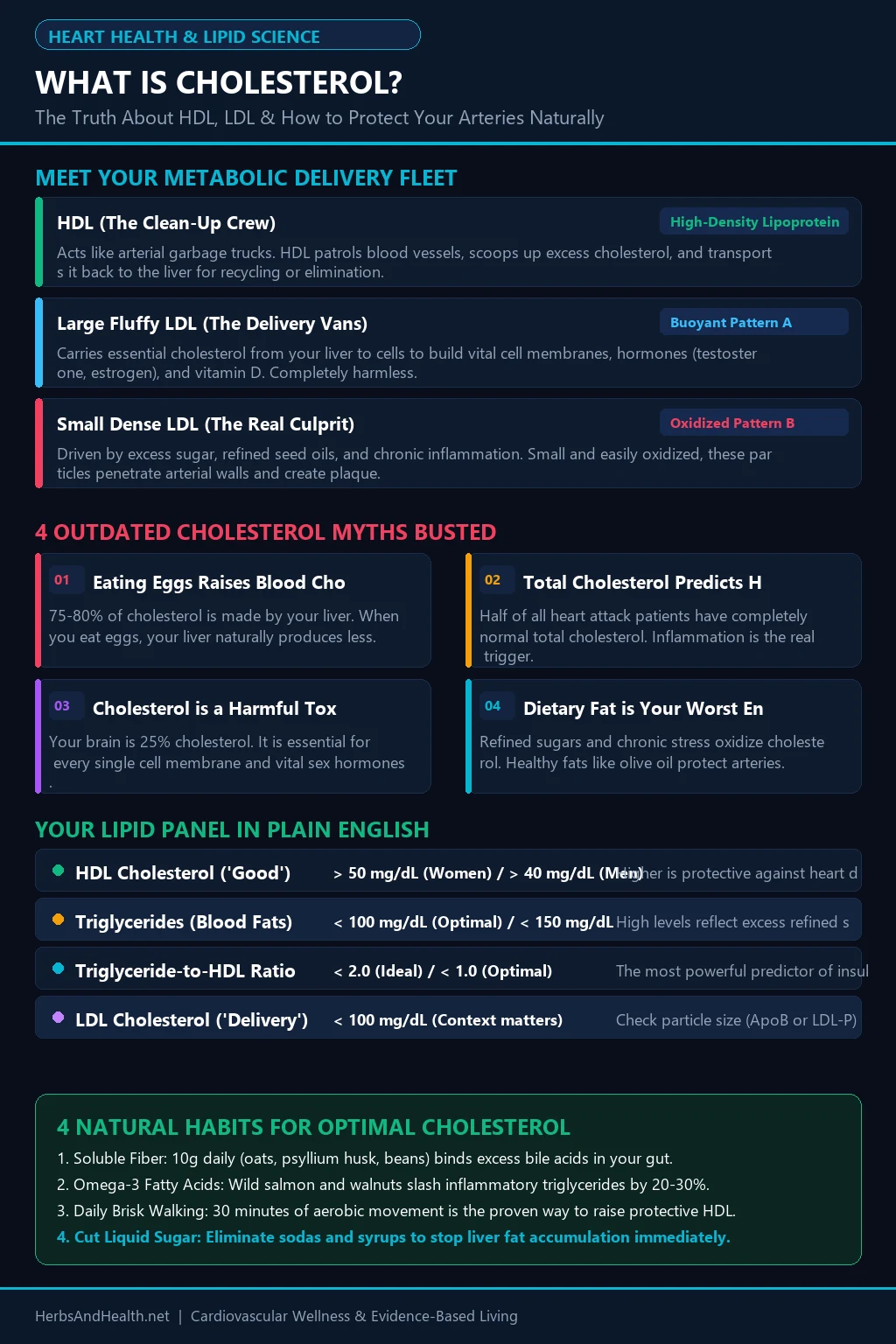
- Internal Production: Roughly 75% to 80% of circulating cholesterol is made by your liver, while only 20% to 25% comes from food.
- The Delivery Vans (LDL): Carries vital repair cholesterol to cells and organs. It only becomes dangerous when oxidized by excess sugar and chronic inflammation.
- The Clean-Up Crew (HDL): Acts like arterial garbage trucks, collecting excess cholesterol from blood vessels and returning it to the liver for recycling.
- The Real Predictor: Your Triglyceride-to-HDL ratio (ideally under 2.0) is a vastly more accurate marker of cardiovascular risk than total cholesterol alone.
- Simple Daily Habits: Soluble fiber, omega-3 fatty acids, and a daily 30-minute brisk walk naturally optimize your lipid profile without fear or misery.
What Is Cholesterol, Really? (The Body’s Essential Brick and Mortar)
To understand cholesterol, imagine your body as an enormous bustling city undergoing continuous maintenance. Cholesterol is a soft, waxy lipid substance that serves as the city’s essential concrete, insulation, and repair mortar.
Every single one of your roughly 37 trillion cells contains cholesterol in its outer membrane. It gives cell walls structural integrity while keeping them fluid enough to exchange nutrients. Your liver uses cholesterol to produce bile acids that break down dietary fats. Sunlight turns cholesterol in your skin into active vitamin D, and your endocrine glands use it to make essential hormones like estrogen, testosterone, and cortisol.
Because cholesterol is a fat and blood is primarily water, they cannot mix directly, like oil and water in salad dressing. To transport it safely, your liver packages cholesterol inside tiny spherical transport vessels called lipoproteins. These protein-coated submarines cruise effortlessly through your blood vessels, delivering cholesterol wherever repairs are needed.
Meet Your Metabolic Delivery Fleet: HDL vs. LDL in Plain English
You have likely heard LDL called “bad” cholesterol and HDL called “good” cholesterol. While catchy, this label does a massive disservice to how your heart actually works. Neither molecule is evil; they are simply complementary parts of a transportation network:
1. LDL (Low-Density Lipoprotein): The Delivery Vans
Think of LDL particles as the dedicated delivery vans of your bloodstream. Their biological job is leaving the liver warehouse and traveling outward to deliver fresh cholesterol, triglycerides, and antioxidants to cells needing repair or hormone production.
Having LDL in your blood is completely normal and necessary. The trouble only begins when delivery vans encounter chronic arterial inflammation and high blood sugar. Under these stressful conditions, small dense LDL particles become oxidized. These sticky particles can slip beneath the arterial lining, attracting immune cells and gradually forming plaque over time.
2. HDL (High-Density Lipoprotein): The Clean-Up Trucks
If LDL particles are delivery vans, HDL particles are the city’s recycling and garbage trucks. HDL patrols your blood vessels looking for excess, unused cholesterol, scooping it up from arterial walls and carrying it safely back to the liver.
Once back at the liver, this retrieved cholesterol is recycled into fresh bile or safely excreted. Having high levels of robust HDL is one of the most powerful cardiovascular protectors known, which is why lifestyle habits that boost HDL are so foundational. Combining these insights with our natural remedies for cholesterol control provides a clear roadmap for arterial protection.
4 Outdated Cholesterol Myths You Can Finally Stop Believing
Much of what people believe about cholesterol is rooted in flawed 1970s hypotheses that modern clinical science has refuted. Here are four widespread myths you can safely leave behind:
Myth 1: Eating Eggs and Shrimp Will Spike Your Blood Cholesterol
For decades, people were warned to avoid egg yolks and shellfish because they contain dietary cholesterol. But extensive trials show that for about 75% of people, dietary cholesterol has virtually zero meaningful impact on blood cholesterol levels.
Your liver synthesizes roughly 1,000 to 1,400 milligrams of cholesterol daily. When you eat eggs, your liver simply makes less to maintain balance. Eggs are loaded with choline, lutein, and high-quality protein that support vibrant health.
Myth 2: Total Cholesterol Predicts Heart Attacks
A high total cholesterol reading frequently causes unnecessary panic. Yet major cardiovascular studies reveal that nearly 50% of people hospitalized with heart attacks have normal or low total cholesterol.
Total cholesterol simply adds HDL, LDL, and a fraction of triglycerides together. If your total cholesterol is 220 mg/dL because you have high protective HDL (such as 85 mg/dL) and low triglycerides, your risk is actually very low. Looking at total cholesterol alone is like judging a book by its page count rather than its content.
Myth 3: Dietary Fat Is the True Enemy of Heart Health
The “low-fat, high-carb” craze was supposed to eradicate heart disease. Instead, rates of obesity and diabetes soared because food companies replaced healthy fats with refined starches and high-fructose corn syrup.
Refined sugars and processed vegetable oils trigger rapid liver fat accumulation and systemic inflammation, which oxidizes LDL particles. In contrast, wholesome fats like extra virgin olive oil, wild salmon, and avocados nourish your cardiovascular system, as outlined in our heart-healthy cardiac nutrition guide.
Myth 4: Lower Is Always Better When It Comes to Cholesterol
While extremely elevated LDL in genetic conditions warrants clinical care, aggressively driving cholesterol down to unnatural lows carries its own risks. Multiple large studies demonstrate that individuals with abnormally low cholesterol often face higher risks of mood issues, cognitive decline, and hormonal imbalances, because the brain and adrenal glands require cholesterol to thrive.
4 Proven Lifestyle Habits to Naturally Optimize Your Lipid Profile
To support your heart and keep cholesterol particles harmless, you do not need extreme deprivation. Focusing on these four evidence-based daily habits yields remarkable improvements within 8 to 12 weeks:
1. Load Up on Soluble Fiber Daily (10 to 15 Grams)
Soluble fiber is nature’s cholesterol sponge. In foods like oatmeal, chia seeds, psyllium husk, black beans, and Brussels sprouts, soluble fiber forms a thick gel in your gut. This gel binds tightly to cholesterol-rich bile acids, carrying them out through waste.
To replace lost bile, your liver pulls circulating LDL out of your bloodstream to make fresh bile acids, naturally dropping oxidized LDL levels by 8% to 15% without medication side effects.
2. Flood Your System with Anti-Inflammatory Omega-3s & Monounsaturated Fats
Swap industrial vegetable oils for cold-pressed extra virgin olive oil, avocado oil, and grass-fed butter. Extra virgin olive oil is rich in polyphenols that shield LDL particles from oxidation.
Simultaneously, consume fatty fish (wild salmon, sardines, mackerel) twice weekly or take a molecularly distilled omega-3 supplement. Clinical trials consistently prove that EPA and DHA reduce blood triglycerides by 20% to 30%, preventing the liver stress detailed in our guide on understanding why fat gain happens.
3. Walk for 30 Minutes Every Day (the primary HDL Booster)
While medication can lower LDL, raising protective HDL through drugs is notoriously difficult. The single most potent, proven way to increase HDL is regular aerobic movement.
A brisk 30-minute daily walk, especially taken outdoors after meals, stimulates lipoprotein lipase activity, nudging protective HDL upward while shrinking visceral abdominal fat and regulating blood pressure.
4. Adopt an Overnight Fasting Window (14 to 16 Hours)
Giving your digestive system a clean 14-to-16-hour overnight break clears circulating triglycerides and resets insulin receptors. As covered in our intermittent fasting guide, lowering nighttime insulin prevents fatty liver accumulation and improves the size and quality of your LDL particles.
Helpful Tools & Heart-Healthy Essentials
Supporting cardiovascular wellness is easiest when you incorporate pure, evidence-backed staples into your pantry and daily routine:
Triple Strength Omega-3 Fish Oil (EPA/DHA)
Delivers 2,200 mg of molecularly distilled, wild-caught omega-3s with high EPA and DHA concentrations. Proven to slash circulating triglycerides and protect vascular walls.
Organic Whole Psyllium Husk Powder
Pure, unflavored soluble prebiotic fiber that gently binds to intestinal bile acids, supporting healthy digestion and promoting natural LDL cholesterol clearance.
Cold-Pressed Extra Virgin Olive Oil
Single-estate, high-polyphenol olive oil packed with oleic acid and antioxidants. The cornerstone of cardiovascular longevity that shields arterial cells from oxidative damage.
Frequently Asked Questions About Cholesterol
How many eggs can I safely eat per day without harming my heart?
For most healthy adults, consuming two to three whole eggs daily is completely safe and beneficial. Research shows whole eggs improve the size of LDL particles, increase protective HDL, and provide essential choline for brain and liver health without elevating heart risk.
What is the Triglyceride-to-HDL ratio and why is it so important?
Divide your triglyceride number by your HDL number (for example, 100 mg/dL triglycerides ÷ 50 mg/dL HDL = 2.0). A ratio below 2.0 indicates healthy insulin sensitivity and predominantly large, harmless LDL particles. A ratio above 3.5 strongly suggests insulin resistance and small dense LDL.
Can stress really elevate my cholesterol levels?
Yes. Chronic stress triggers cortisol and adrenaline, prompting your liver to release more glucose and cholesterol into your bloodstream as emergency fuel. Managing stress through sleep, walking, and deep breathing is essential for healthy lipids.
How long does it take for diet changes to improve a lipid panel?
Blood lipids respond dynamically: noticeable improvements in triglycerides and HDL often appear in 4 to 6 weeks. Significant reductions in oxidized LDL and total cholesterol through soluble fiber and daily movement typically show on lab work within 8 to 12 weeks.
Scientific References & Peer-Reviewed Sources
- Fernandez, M. L. (2006). Dietary cholesterol provided by eggs and plasma lipoproteins in healthy populations. Current Opinion in Clinical Nutrition & Metabolic Care, 9(1), 8-12.
- Krauss, R. M. (2010). Dietary and genetic probes of atherogenic dyslipidemia. Arteriosclerosis, Thrombosis, and Vascular Biology, 30(12), 2329-2334.
- Brown, L., et al. (1999). Cholesterol-lowering effects of dietary fiber: a meta-analysis. The American Journal of Clinical Nutrition, 69(1), 30-42.
- McLaughlin, T., et al. (2003). Use of metabolic markers to identify overweight individuals who are insulin resistant. Annals of Internal Medicine, 139(10), 802-809.
Medical Disclaimer: The information in this article is for educational and informational purposes only and is not medical advice. Always consult a licensed physician regarding personal lab results, cardiovascular risk assessments, or medication adjustments.