
If you have ever felt completely exhausted by weighing chicken breasts on a food scale, tracking every grape on your phone, or trying to pack six tiny Tupperware containers everywhere you go, intermittent fasting might feel like the biggest breath of fresh air you have ever experienced. It is not another miserable crash diet, an extreme starvation plan, or a strange juice cleanse. In fact, intermittent fasting is not about what you eat at all, it is simply about when you eat.
By giving your digestive system a clean, uninterrupted overnight break, your body unlocks a natural metabolic superpower that modern snacking culture has shut off: the ability to tap directly into stored body fat for clean, steady morning energy. No afternoon sugar crashes, no constant food obsession, and no complicated rules that make dinners with family feel like a logistical nightmare.
Whether you want to drop stubborn belly fat, clear morning brain fog, or build a peaceful relationship with food, this guide walks you through everything step by step, from the simple science to effortless daily routines.
💡 Fasting at a Glance
- How It Burns Fat: Lowering baseline insulin lets your body switch from burning incoming meal carbs to melting stored body fat for daily energy.
- Easiest Schedule: The 16/8 routine, fasting overnight for 16 hours and enjoying all your meals within an 8-hour window (like 12:00 PM to 8:00 PM).
- Fasting Allies: Pure water, black coffee, unsweetened green tea, and mineral sea salt keep your appetite calm without raising blood sugar.
- Cellular Renewal: Extended fasting stimulates autophagy, a natural self-cleaning process where cells recycle worn-out parts.
- Golden Rule: Consistency beats perfection. Fasting should make your life simpler and more energetic, not stressful.
The Refrigerator vs. Freezer Analogy: How Fasting Flips Your Fat-Burning Switch
To understand why intermittent fasting works so well, you do not need an advanced biology degree. Just picture your body like a kitchen with two distinct food storage spots: your kitchen refrigerator and your chest freezer down in the basement.
Every time you eat a meal, your body breaks down carbohydrates into glucose. To manage this fuel, your pancreas releases insulin, which opens your cells to use glucose for immediate energy. Extra glucose is neatly stored in your liver and muscles as glycogen.
This glycogen is your kitchen refrigerator: quick to access, but with limited shelf space. Your stored body fat is the chest freezer in your basement, holding thousands of calories of survival fuel. But whenever insulin is elevated from frequent snacking, your body locks the basement door to protect stored fat reserves.
Intermittent fasting simply unlocks that basement door. By extending your overnight break to 14 or 16 hours, insulin levels drop, your body finishes the food in the fridge, and you smoothly transition to burning stored body fat for fuel. Pairing this natural rhythm with our practical lunch and dinner meal guide ensures you fuel your body with wholesome meals when your eating window opens.
The 24-Hour Fasting Timeline: What Happens Hour by Hour
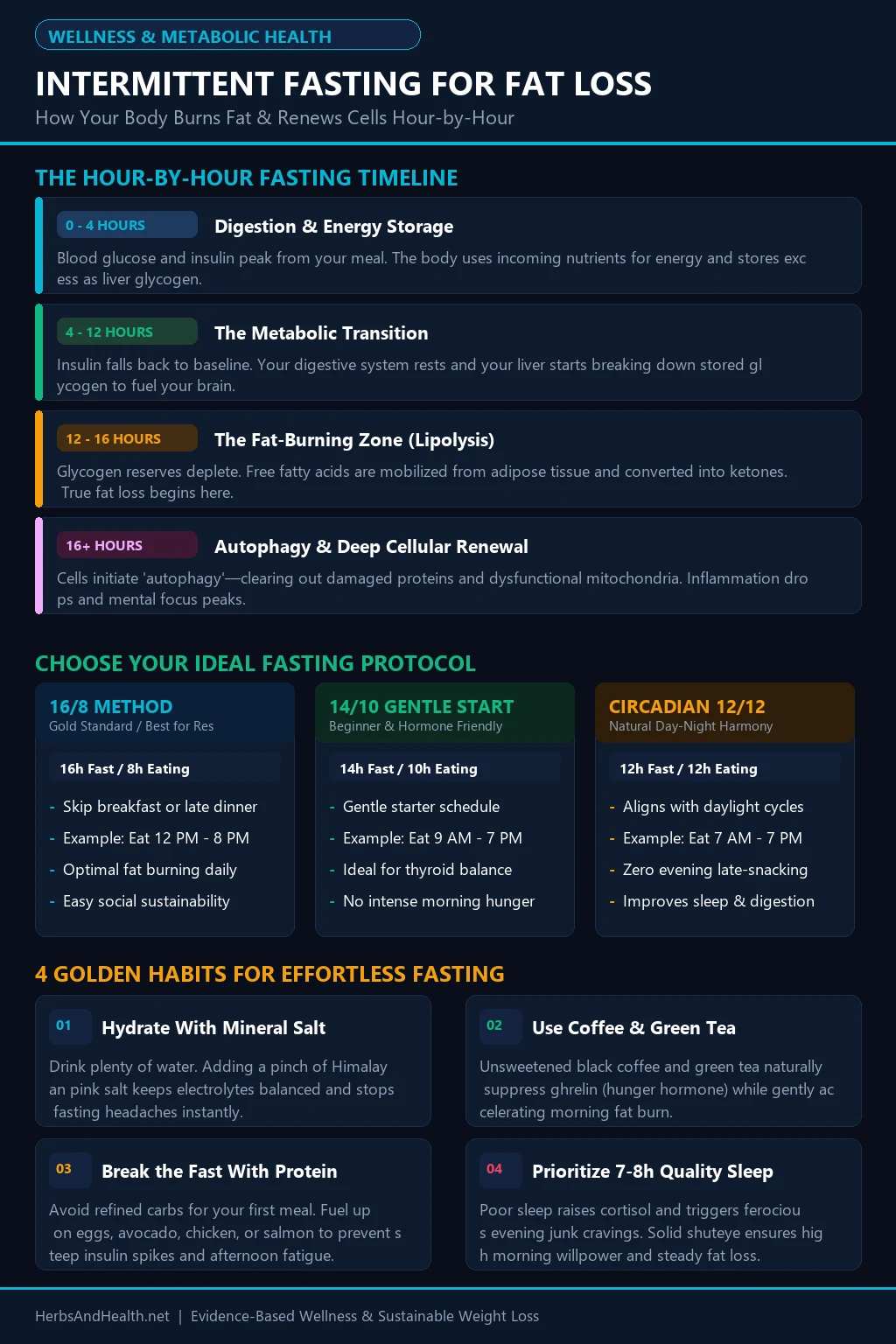
Many beginners worry that skipping breakfast will leave them exhausted. But fasting is our most natural, restorative state. Here is the friendly roadmap of what happens inside your body during a standard fast:
Digestion & Storage
Your body digests your last meal. Nutrients enter the bloodstream, and insulin directs energy into cells and glycogen stores.
The Metabolic Shift
Your stomach empties and your gut rests. Insulin returns to baseline. Your liver releases stored glycogen to maintain steady blood sugar.
The Fat-Burning Zone
Glycogen reserves run low. Your body ramps up fat oxidation, releasing stored body fat for fuel with clear, alert morning energy.
Cellular Autophagy
Cells activate autophagy, a biological recycling system where worn-out proteins and damaged components are recycled.
Most of this happens while you sleep. If you finish dinner by 7:30 PM and sleep eight hours, you wake up past the halfway mark. Enjoy water or black coffee, and your first meal is just a few hours away.
Choosing Your Ideal Fasting Schedule
The best fasting schedule is the one that fits naturally into your routine. Here are the three most popular options:
1. The 16/8 Method (The Most Popular Choice)
On 16/8, you fast for 16 hours overnight and eat all your meals within an 8-hour window. The simplest approach is skipping breakfast: finish dinner by 8:00 PM, fast overnight, drink water and black coffee in the morning, and enjoy your first meal at 12:00 PM noon. Your second meal happens around 7:30 PM. You get two hearty, delicious meals each day instead of tiny low-calorie portions.
2. The 14/10 Gentle Start (Great for Beginners & Hormonal Balance)
If 16 hours sounds intimidating, or if you are sensitive to morning blood sugar dips, 14/10 is an ideal starting place. You fast for 14 hours and eat within a 10-hour window, such as 9:00 AM to 7:00 PM. This stops late-night snacking, lets your gut rest for 14 hours, and still allows breakfast. Many people start here before comfortably transitioning to 16/8.
3. Circadian 12/12 (The Natural Baseline)
Eating with the sun is how our ancestors ate for thousands of years: dinner by 7:00 PM and breakfast at 7:00 AM. It prevents late-night insulin spikes that ruin deep sleep. Pairing this with our daily fat loss checklist helps you build sustainable habits that protect your metabolism long-term.
What Can You Drink During Your Fast? (Clean Fasting Rules)
A common question is: “Will my morning drink ruin my fast?” The rule is simple: anything that spikes blood sugar, raises insulin, or starts active liver digestion will interrupt your fast. But there are several zero-calorie beverages that keep your appetite calm and support fat loss.
Here are your four best green-light drinks:
- Pure Water (Still or Sparkling): Dehydration often masquerades as false hunger. When a stomach growl hits at 10:30 AM, drink a tall glass of cool water. The craving usually fades within minutes.
- Plain Black Coffee: Contains virtually zero calories and provides chlorogenic acid, an antioxidant that blunts ghrelin. It also gives a mild metabolic boost without creamers or sweeteners.
- Unsweetened Green & Herbal Tea: Green tea provides EGCG catechins that support fat oxidation and L-theanine for calm morning focus. Peppermint and chamomile are soothing calorie-free evening choices.
- Mineral Sea Salt: When insulin drops, kidneys excrete more sodium. Adding a small pinch of Himalayan pink salt to your morning water prevents lightheadedness and the common “fasting headache.”
⚠ What Breaks a Fast? Watch Out for Sneaky Calories
Artificial sweeteners, flavored coffee creamers, oat milk, collagen powders, BCAAs, fruit juices, and gummy vitamins all trigger digestive pathways or insulin responses. If it has calories or sweet taste, save it for your meal window. To understand how sneaky calories add up, check our guide on understanding why fat gain happens.
How to Break Your Fast Like a Pro (Avoid the Afternoon Slump)
How you break your fast is just as important as how long you fasted. After 16 hours of digestive rest, your gut is sensitive and insulin receptors are primed. If your first meal is greasy takeout pizza, a sugary bagel, or sweet pastries, blood sugar spikes rapidly, causing an insulin surge followed by an exhausting 2:00 PM crash.
To keep your energy high and fat loss on track, follow this simple three-step formula when your eating window opens:
- Lead with Protein (30 to 40 grams): Eggs, chicken breast, salmon, turkey, or tofu stimulate muscle protein synthesis and trigger satiety hormones that keep you satisfied for hours.
- Include Healthy Fats: Avocado, extra virgin olive oil, or raw walnuts slow digestion and stabilize hunger.
- Add Fiber-Rich Greens & Low-Sugar Whole Fruits: Spinach, salad greens, or fresh berries provide vitamins and antioxidants without causing a glucose spike. Adding fresh whole fruit, as explained in our guide to the best fruits for fat loss, satisfies your natural sweet craving while feeding healthy gut bacteria.
5 Common Fasting Mistakes & How to Fix Them
Intermittent fasting is simple, but newcomers often make a few predictable missteps. Here are the top five mistakes to avoid:
The Quick Fasting Fix Checklist
Mistake 1: Treating Your Window Like a Buffet
Fasting does not cancel out excess junk calories. Focus on nourishing, whole foods during your meals to ensure consistent fat loss.
Mistake 2: Forgetting Electrolytes and Water
If you feel sluggish or get a headache at 11:00 AM, you are likely low on sodium. Drink water with a pinch of sea salt to restore energy quickly.
Mistake 3: Under-Eating Protein
Prioritize protein at lunch and dinner. Aim for 0.7 to 1.0 grams of protein per pound of target body weight to protect lean muscle mass.
Mistake 4: Panicking Over Normal Hunger Waves
Hunger comes in brief, 15-minute waves driven by ghrelin. If you sip warm tea, drink water, and stay engaged in your work, the wave passes.
Mistake 5: Shortchanging Your Sleep
Sleeping under 7 hours spikes cortisol and raises ghrelin. Prioritizing solid sleep makes morning fasting feel effortless.
Helpful Tools & Essentials to Make Fasting Effortless
You do not need expensive supplements to practice fasting, but having a few clean, quality tools on hand makes your daily routine smoother and more enjoyable:
Organic Green & Herbal Fasting Tea Sampler
Rich in pure EGCG catechins and natural L-theanine to calm morning hunger pangs, sharpen focus, and gently support cellular fat oxidation without breaking your fast.
Pure Unsweetened Electrolyte Powder
Provides an optimal ratio of sodium, potassium, and magnesium with zero sugar, maltodextrin, or sweeteners. Stops morning headaches and keeps energy high.
Daily Fasting & Habit Wellness Planner
A durable physical notebook to track your fasting hours, water intake, daily energy, and meal contentment. Proven to significantly improve habit consistency.
Frequently Asked Questions About Intermittent Fasting
Will intermittent fasting slow down my metabolism?
No. Short-term fasting (up to 36 hours) produces a slight boost in metabolic rate. As insulin drops, your nervous system releases small amounts of norepinephrine, signaling your body to burn fat and maintain alertness. Metabolic slowdown only happens with severe, continuous multi-week calorie restriction.
Can I exercise while fasting in the morning?
Yes. Moderate cardio or brisk walking in a fasted state enhances fat oxidation and improves insulin sensitivity. If you do intense strength training, hydrate with electrolytes beforehand. Many people find lifting weights toward the end of their fast, followed by a protein meal, provides excellent results.
Will I lose muscle while fasting?
Not if you consume adequate daily protein and do regular resistance training. During fasting, human growth hormone (HGH) naturally rises to protect lean muscle tissue while stored fat is burned. As long as you hit your protein target during your eating window, muscle mass is protected.
What if I feel dizzy or get a morning headache?
Dizziness and fasting headaches are almost always caused by low sodium rather than low blood sugar. When insulin drops, kidneys excrete sodium quickly. Stir a pinch of sea salt into water and drink it. If you do not feel better within 20 minutes, break your fast gently and try again tomorrow.
Scientific References & Peer-Reviewed Sources
- de Cabo, R., & Mattson, M. P. (2019). Effects of Intermittent Fasting on Health, Aging, and Disease. The New England Journal of Medicine, 381(26), 2541-2551.
- Sutton, E. F., et al. (2018). Early Time-Restricted Feeding Improves Insulin Sensitivity and Blood Pressure. Cell Metabolism, 27(6), 1212-1221.
- Patterson, R. E., & Sears, D. D. (2017). Metabolic Effects of Intermittent Fasting. Annual Review of Nutrition, 37, 371-393.
- Antoni, R., et al. (2018). Intermittent Fasting: A Review of the Mechanisms Underlying Weight Loss. Nutrients, 10(9), 1221.
Medical Disclaimer: This article is for informational purposes only and is not medical advice. Always consult a physician or healthcare provider before making significant dietary changes, especially if you are pregnant, nursing, taking medications, or have a history of chronic medical conditions.