
Clinical Behavioral Medicine & Energy Balance Summary
Clinical Status: Successful, long-term fat reduction is rarely the result of extreme temporary restrictions; rather, it is dictated by consistent circadian habits and metabolic preservation. Arbitrary starvation diets trigger compensatory biological defenses that crash basal metabolic rate and accelerate lean muscle proteolysis.
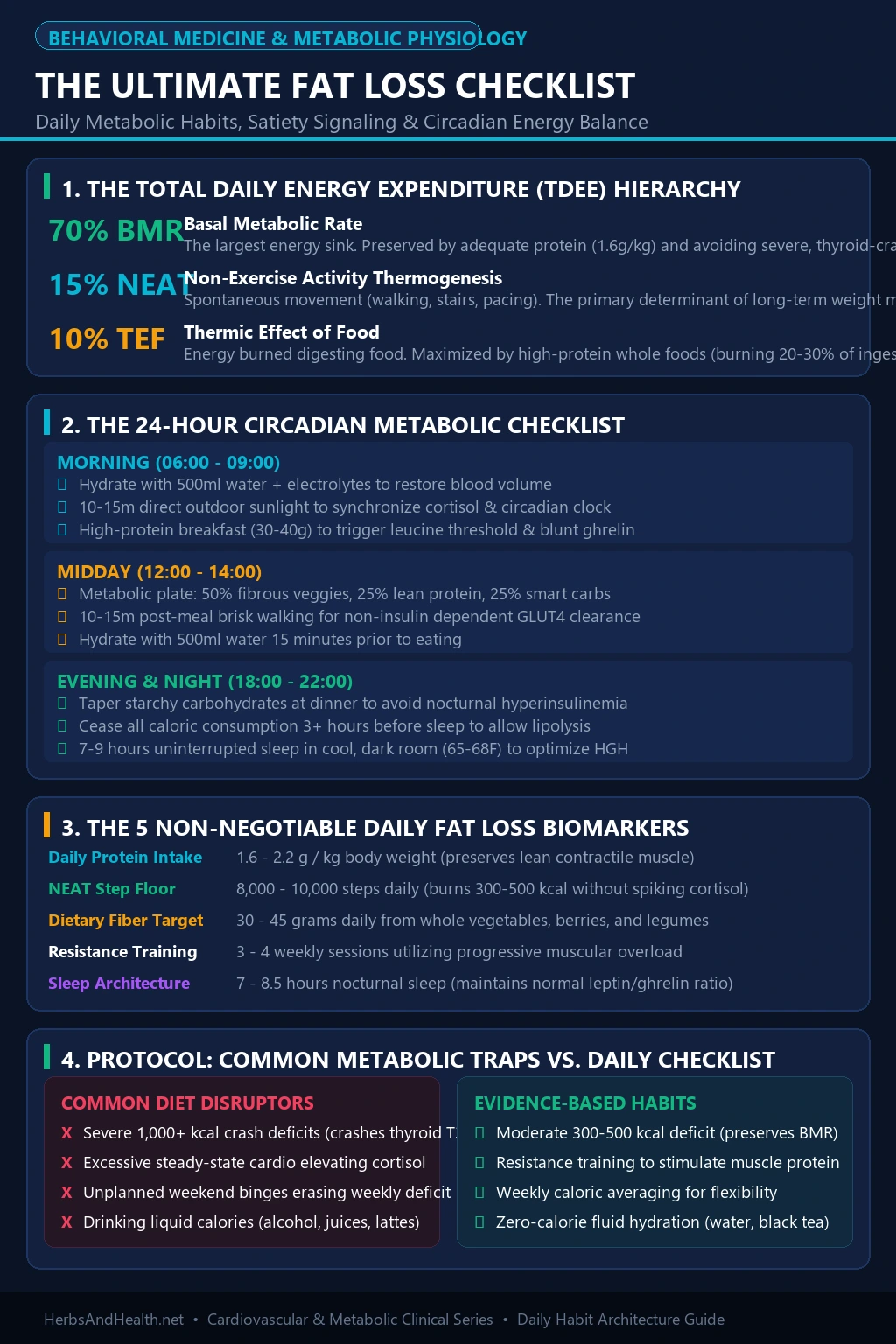
The Daily Metabolic Checklist: Sustaining fat loss requires aligning daily actions with five foundational physiological levers: moderate caloric deficit (300–500 kcal), optimal protein intake (1.6–2.2 g/kg), non-exercise activity thermogenesis (8,000–10,000 steps), progressive resistance stimulus, and restorative slow-wave sleep.
The Bioenergetics of Fat Loss: Beyond “Eating Less and Moving More”
For decades, conventional weight loss guidance has relied on the simplistic adage: “eat less, move more.” While negative energy balance remains an absolute thermodynamic requirement for adipose tissue reduction, treating the human body like a mechanical calculator ignores the complex neuroendocrine network that governs energy expenditure.
Total Daily Energy Expenditure (TDEE) is divided into four distinct physiological compartments:
- Basal Metabolic Rate (BMR, ~70%): The energy required to maintain cellular respiration, hepatic function, cardiovascular circulation, and central nervous system operation at complete rest.
- Non-Exercise Activity Thermogenesis (NEAT, ~15%): Spontaneous physical movement, including walking, standing, occupational movement, and postural adjustments. NEAT is the most variable component of daily energy expenditure.
- Thermic Effect of Food (TEF, ~10%): The metabolic cost of digesting, absorbing, and assimilating macronutrients, highly elevated by dietary protein.
- Exercise Activity Thermogenesis (EAT, ~5%): Purposeful physical conditioning and resistance workouts.
When you impose an overly aggressive caloric restriction, the body initiates adaptive thermogenesis: down-regulating thyroid triiodothyronine (T3), suppressing spontaneous NEAT, and elevating cortisol. To understand how hormones orchestrate energy storage, review our clinical guide on understanding fat gain and cellular adipogenesis.
The 24-Hour Circadian Checklist: Synchronizing Habits with Metabolism
Optimizing fat loss requires coordinating your nutritional, behavioral, and physical stimuli with the body’s natural diurnal endocrine rhythms:
Phase 1: Morning Metabolic Anchor (06:00 – 09:00)
- Cellular Rehydration (500 ml Water + Pinch of Sea Salt): Ingesting pure water upon waking restores plasma volume following nocturnal respiratory water loss, expanding gastric mechanoreceptors and stimulating sympathetic thermogenesis.
- Circadian Photic Alignment (10–15 Minutes Outdoor Sunlight): Direct exposure of retinal ganglion cells to natural morning lux suppresses lingering pineal melatonin and anchors cortisol’s diurnal peak, setting the master suprachiasmatic clock for evening sleep onset.
- Strategic Caffeine Timing (90 Minutes Post-Waking): Delaying morning coffee by 90 minutes allows natural adenosine clearance while supporting the cortisol awakening response (CAR). Caffeine stimulates hormone-sensitive lipase (HSL), mobilizing free fatty acids prior to mid-morning physical tasks.
- High-Protein Breakfast (30–40g Protein): Consuming whole eggs, Greek yogurt, or salmon crosses the intramuscular leucine trigger, stimulating muscle protein synthesis and suppressing circulating ghrelin throughout the morning.
Phase 2: Midday Satiety & Fuel Partitioning (12:00 – 14:00)
- Execute the 50/25/25 Plate Architecture: Allocate 50% of your lunch plate to fibrous vegetables, 25% to high-thermic lean protein, and 25% to low-glycemic smart carbohydrates; see our lunch and dinner meal planning guide for precise templates.
- Postprandial 15-Minute Ambulation: A brisk 15-minute walk following lunch stimulates skeletal muscle contraction, promoting non-insulin-dependent GLUT-4 glucose clearance and reducing post-meal insulin excursions by up to 30%.
- Cold Thermogenesis & Posture Breaks: Utilizing a standing desk or taking brief movement breaks activates brown adipose tissue (BAT) and uncoupling protein-1 (UCP-1), dissipating calories as heat.
Phase 3: Evening Nocturnal Lipolysis Shield (18:00 – 22:00)
- Taper Starchy Carbohydrates at Dinner: Focus evening nutrition on lean proteins and double portions of cruciferous greens to prevent late-night hyperinsulinemia, which suppresses nocturnal growth hormone secretion.
- Enforce the 3-Hour Caloric Cutoff: Conclude all eating at least 180 minutes prior to sleep. This allows digestive enzymes and portal insulin to return to baseline, enabling overnight fatty acid beta-oxidation.
- Dark, Cool Sleep Architecture (65–68°F / 18°C): Sleeping in a cold, completely dark environment optimizes deep slow-wave sleep, resetting leptin receptor sensitivity for the following day.
The 5 Non-Negotiable Fat Loss Pillars: Clinical Benchmarks
Regardless of your dietary philosophy, these five quantifiable parameters determine the rate, quality, and sustainability of body composition change:
1. Caloric Deficit Calibration (The 300–500 kcal Sweet Spot)
Aggressive deficits exceeding 1,000 calories trigger severe metabolic slowdown, gallbladder stasis, and rapid muscle wasting; understand these physiological hazards in our analysis of the metabolic dangers of rapid crash starvation diets. A moderate 300 to 500 kcal deficit preserves basal metabolic rate while achieving steady fat loss.
2. Daily Protein Floor (1.6–2.2 g/kg Body Weight)
Consuming adequate amino acids spares lean muscle tissue from gluconeogenesis during negative energy balance. High protein intake also elevates glucagon-like peptide-1 (GLP-1) and peptide YY (PYY) while delivering a 20% to 30% thermic advantage over dietary fats and carbohydrates.
3. NEAT Step Floor (8,000–10,000 Steps Daily)
While formal gym sessions last 45 minutes, Non-Exercise Activity Thermogenesis (NEAT) operates across all 16 waking hours. Crucially, when dieters reduce caloric intake, spontaneous unconscious fidgeting and walking naturally drop by up to 30%. Maintaining an intentional 8,000 to 10,000 daily step floor prevents this stealth metabolic slowdown, burning 350 to 500 extra calories without spiking systemic cortisol.
4. Progressive Resistance Training (3–4 Sessions Weekly)
Cardiovascular training burns calories acutely, but progressive resistance training sends an unmistakable mechanical signal to retain lean contractile muscle mass. Preserving skeletal muscle maintains mitochondrial density and resting metabolic capacity throughout dieting phases.
5. Uninterrupted Sleep Duration (7–8.5 Hours)
In clinical trials at the University of Chicago, dieters sleeping 5.5 hours lost 55% less body fat and 60% more lean mass compared to identical dieters sleeping 8.5 hours. Sleep deprivation induces acute peripheral insulin resistance and spikes nocturnal ghrelin.
Nutritional Execution: Budget-Friendly High-Satiety Integration
Executing this daily checklist does not require expensive gym memberships, organic specialty food stores, or boutique meal deliveries. Structuring your meals around foundational whole food commodities makes optimal nutrition accessible to any budget:
By combining high-satiety staples, such as whole pasture-raised eggs, dry lentils, canned fish, and boiled potatoes, you can effortlessly hit your 140g protein and 35g fiber targets for under $6.50 per day; explore our practical blueprint for fat loss on a budget and affordable meal prep.
Additionally, selecting whole foods with the highest Satiety-per-Calorie scores guarantees that your stomach remains physically distended with viscous fiber and high cellular water, neutralizing the primal hunger signals that cause dieters to quit; consult our review of the 9 best high-satiety foods to eat when dieting.
Clinical Habit Matrix: Biomarkers, Targets & Metabolic Mechanisms
Review how each component of the daily checklist directly influences fat loss and hormonal regulation:
| Checklist Parameter | Daily Clinical Target | Primary Endocrine Mechanism | Impact on Fat Oxidation |
|---|---|---|---|
| Caloric Deficit | 300–500 kcal below TDEE | Preserves thyroid T3 and BMR | Sustainable 1–2 lbs/week adipose loss |
| Protein Intake | 1.6–2.2 g / kg body weight | Crosses leucine threshold, elevates PYY | Saves lean muscle; high thermic burn |
| Daily NEAT Steps | 8,000–10,000 steps | Activates lipoprotein lipase without cortisol | Burns 300–450 kcal of free fatty acids |
| Resistance Training | 3–4 sessions per week | mTORC1 stimulation; GLUT4 translocation | Maintains metabolic rate & glucose sink |
| Sleep Duration | 7–8.5 hours nocturnal sleep | Suppresses nocturnal ghrelin & cortisol | Directs 80%+ weight loss toward body fat |
| Hydration Floor | 2.5–3.5 liters pure water | Restores cellular hydration & blood volume | Prevents water retention; suppresses false hunger |
Evidence-Based Habit & Metabolic Tracking Essentials
Tracking quantifiable biofeedback keeps you objective and consistent throughout your fat loss journey:
Withings Body+ Smart Wi-Fi Body Composition Scale
Delivers precision body composition tracking, measuring fat mass, muscle mass, and water percentage. Automatically syncs via Wi-Fi to eliminate subjective scale anxiety.
Iron Bull Strength Pull Up Resistance Bands Set
Heavy-duty natural latex resistance bands for progressive overload strength training anywhere. Essential for maintaining muscle tension while traveling or training at home.
Hydro Flask 32 oz Wide Mouth Insulated Bottle
Double-wall vacuum insulation keeps water ice-cold for 24 hours. Durable stainless steel ensures you effortlessly hit your 3-liter daily metabolic hydration baseline.
Behavioral Psychology: Troubleshooting Common Fat Loss Plateaus
Even when executing your daily checklist, weight loss stalls can occur. Understanding physiological fluctuations prevents premature diet abandonment:
- Cortisol-Induced Water Retention: Caloric restriction and intense training naturally elevate cortisol, which binds to aldosterone mineralocorticoid receptors and causes intracellular water retention. You may be losing genuine body fat while the bathroom scale stays flat for two to three weeks until a sudden “whoosh” occurs.
- Beware the Weekend Deficit Erasure: Maintaining a 400 kcal deficit Monday through Friday creates a 2,000 kcal deficit. However, an unmonitored restaurant dinner and drinks on Saturday can easily add 2,500 calories, completely wiping out your entire week’s progress. Track weekly averages rather than single days.
- Deploy Structured Diet Refeeds: If fat loss stalls after 8 to 12 consecutive weeks, implement a 48-to-72-hour diet refeed at maintenance calories (predominantly from complex carbohydrates). This signals the hypothalamus that food is abundant, transiently restoring leptin and thyroid T3 output.
Frequently Asked Questions About Daily Fat Loss Habits
What should I do if my weight hasn’t changed for two weeks?
Check non-scale metrics first: waist circumference, clothing fit, and progression in the gym. If all metrics are stagnant for 14 days, evaluate hidden calories in cooking oils and condiments, or modestly reduce daily intake by 150–200 calories while maintaining your step floor.
Is cardiovascular exercise or weight training more important on the checklist?
Resistance training is vastly more important. While cardio burns energy during the session, resistance training prevents skeletal muscle catabolism. Losing muscle lowers your BMR, making future weight regain almost inevitable.
How many daily steps are truly necessary for noticeable fat loss?
Clinical trials demonstrate that 8,000 to 10,000 steps daily provides an ideal metabolic sweet spot: burning approximately 300 to 450 calories of free fatty acids without elevating systemic cortisol or driving compensatory appetite surges.
Should I weigh myself every day or once a week?
Weighing daily under identical conditions (first thing in the morning after using the restroom, before eating or drinking) and calculating a 7-day rolling average is clinically superior. It eliminates emotional overreactions to normal day-to-day water weight fluctuations.
How do I stop intense evening hunger pangs?
Ensure you hit your 30g+ protein threshold at dinner and finish your meal with a cup of warm bone broth or peppermint tea. If physical hunger persists, consuming 150g of plain Greek yogurt provides slow-release micellar casein that settles gastric acid.
Peer-Reviewed Clinical References & Behavioral Medicine
- Levine, J. A. (2002). Non-exercise activity thermogenesis (NEAT). Best Practice & Research Clinical Endocrinology & Metabolism, 16(4), 679-702.
- Nedeltcheva, A. V., et al. (2010). Insufficient sleep undermines dietary efforts to reduce adiposity. Annals of Internal Medicine, 153(7), 435-441.
- Helms, E. R., et al. (2014). Evidence-based recommendations for natural bodybuilding contest preparation: nutrition and supplementation. Journal of the International Society of Sports Nutrition, 11(1), 20.
- Hall, K. D., et al. (2012). Energy balance and its components: implications for body weight regulation. American Journal of Clinical Nutrition, 95(4), 989-994.
- Shukla, A. P., et al. (2015). Food order has a significant impact on postprandial glucose and insulin levels. Diabetes Care, 38(7), e98-e99.