There are few dermatological challenges quite as physically uncomfortable, emotionally distressing, or socially frustrating as waking up to an aggressive breakout of acne. You inspect your face in the mirror and are confronted by inflamed red bumps, tender cysts beneath the surface, and clogged pores across your forehead, cheeks, and jawline. The instinctive response is almost always aggressive: scrub the face with abrasive exfoliators, apply harsh drying alcohols, and slather on burning chemical spot treatments in a desperate bid to “kill the bacteria.”
Yet modern dermatological science reveals that this war-like approach to skincare almost always backfires. Acne is not a consequence of poor hygiene or “dirty skin.” In reality, acne vulgaris is a multifaceted inflammatory disorder of the pilosebaceous unit governed by hormonal signaling, sebum lipid chemistry, follicular hyperkeratinization, and skin barrier compromise. When you attack your skin with harsh astringents, you strip away the stratum corneum’s essential protective lipids, causing micro-fissures and triggering rebound hyper-secretion of inflammatory sebum.
To achieve lasting, radiant skin clarity, you must transition from aggressive stripping to intelligent, restorative balance. By addressing the root metabolic drivers, including dietary IGF-1 surges, zinc deficiencies, and follicular congestion, and deploying clinically validated botanical antimicrobials like tea tree oil and green tea extract, you can clear breakouts without peeling, redness, or scarring. Here is your evidence-based medical guide to natural acne remedies that work in harmony with your skin’s biological intelligence.
The Pathophysiology of Acne: Inside the Pilosebaceous Unit
To permanently resolve acne, we must understand the microscopic anatomy of the pilosebaceous unit, which consists of a hair follicle, a hair shaft, and an attached sebaceous gland.
Every acne lesion, from a microscopic subclinical comedone to a deep, painful inflammatory cyst, develops through four interlocking pathological stages:
- Follicular Hyperkeratinization: Normal skin cells lining the follicular canal mature and shed invisibly into the sebum stream. In acne-prone skin, keratinocytes become abnormally cohesive and “sticky,” failing to detach. Together with sebum, they form an invisible microscopic plug called a microcomedone, sealing off the pore entrance.
- Sebum Hypersecretion (Seborrhea): Under the influence of androgens (specifically dihydrotestosterone, or DHT) and dietary growth hormones, sebaceous glands produce an excessive volume of sebum. Crucially, the quality of this sebum is altered: it becomes depleted in essential linoleic acid and enriched in squalene peroxides, making it thick, viscous, and highly inflammatory.
- Cutibacterium acnes Proliferation: Deep inside the oxygen-depleted, sealed microcomedone, an anaerobic bacterium formerly known as Propionibacterium acnes (now classified as Cutibacterium acnes) flourishes, feeding greedily on trapped sebum triglycerides.
- Immunological Inflammatory Cascade: C. acnes releases lipases, chemotactic factors, and stimulates Toll-like receptor 2 (TLR-2) on surrounding immune cells. This triggers a massive surge of inflammatory cytokines (interleukin-1, interleukin-8, and TNF-alpha), flooding the follicle with neutrophils. The follicular wall ruptures under pressure, spilling bacteria, keratin, and lipids into the surrounding dermis, manifesting as the swollen, red, painful papules and pustules we recognize as active acne.
The Dietary Drivers: The IGF-1 / mTORC1 Axis
For decades, dermatologists insisted that diet had no bearing on acne. Today, molecular dermatology has completely overturned this misconception. The Western diet, dominated by high-glycemic refined carbohydrates, industrial seed oils, and bovine dairy, is directly linked to acne severity through a specific hormonal cascade.
When you consume sugary drinks, white bread, or pastries, your pancreas secretes a surge of insulin. High insulin stimulates hepatic production of Insulin-Like Growth Factor 1 (IGF-1). Elevated IGF-1 acts directly on sebocytes and follicular keratinocytes by activating the mTORC1 (mammalian target of rapamycin complex 1) nutrient-sensing pathway. This biological switch ramps up cellular proliferation, thickens follicular walls, and accelerates sebaceous lipogenesis.
Additionally, cow’s milk naturally contains bovine growth hormones, androgens, and whey proteins that potently activate IGF-1 signaling. Transitioning toward whole, unrefined plant foods, as detailed in our comprehensive guide on a plant-based diet for radiant skin, suppresses mTORC1 over-activation, helping calm stubborn hormonal acne from the inside out.
The Natural Acne Clearing & Sebum Balance Protocol
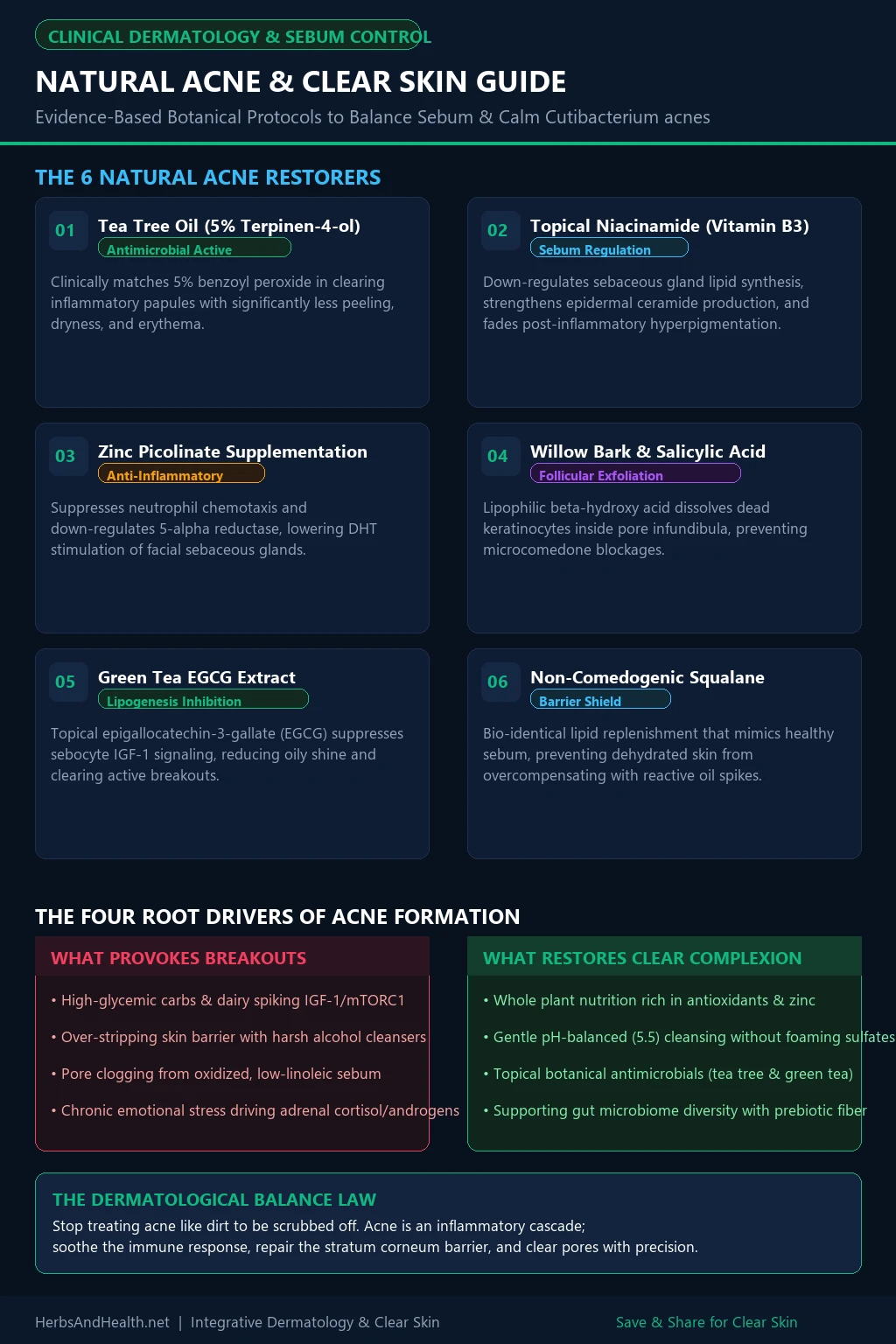
Save this visual clear-skin roadmap to Pinterest or your phone to calm inflammation and restore a blemish-free complexion.
Top 6 Evidence-Based Natural Remedies for Acne
1. Pure Tea Tree Oil (5% Terpinen-4-ol): The Gold-Standard Antimicrobial
If there is one botanical intervention with rock-solid, randomized clinical trial proof against acne, it is pure tea tree oil (Melaleuca alternifolia). Its primary bioactive constituent, terpinen-4-ol, penetrates deep into sebaceous follicles, disrupting the cellular membranes of Cutibacterium acnes and reducing bacterial colonization.
In a landmark single-blind randomized clinical trial published in the Medical Journal of Australia involving 124 patients, researchers compared 5% tea tree oil gel against 5% benzoyl peroxide lotion. Both treatments produced a statistically significant reduction in inflamed and non-inflamed acne lesions. Crucially, while benzoyl peroxide worked slightly faster initially, patients in the tea tree oil group experienced significantly fewer side effects: virtually zero burning, stinging, scaling, or excessive peeling compared to the benzoyl peroxide group.
How to use: Never apply pure 100% undiluted tea tree oil directly to the skin, as it can cause contact sensitization. Instead, dilute two drops of pure organic tea tree oil into a teaspoon of jojoba oil or pure aloe vera gel as a targeted evening spot treatment, or select a standardized 5% formulation.
2. Topical Niacinamide (Vitamin B3): Calming Erythema & Sebum
Niacinamide is a water-soluble form of vitamin B3 that has become a cornerstone of integrative dermatology. It addresses three simultaneous facets of acne pathogenesis:
- Sebum Excretion Rate Reduction: Double-blind clinical trials demonstrate that applying 2% to 4% topical niacinamide for four weeks significantly reduces the facial sebum excretion rate, blunting oily shine.
- Anti-Inflammatory Cytokine Blockade: Niacinamide inhibits the production of interleukin-8 and suppresses neutrophil chemotaxis, reducing the throbbing swelling of red papules.
- Post-Inflammatory Hyperpigmentation (PIH): Niacinamide blocks the transfer of melanosomes from melanocytes to keratinocytes, rapidly fading the dark red or brown marks left behind after a blemish resolves.
3. Zinc Picolinate: Systemic Immune and Androgen Regulation
Zinc is an essential trace mineral indispensable for cellular division, wound healing, and immune balance. Multiple clinical studies have revealed that individuals with moderate-to-severe acne consistently display lower serum zinc levels compared to clear-skinned controls.
Zinc acts as a natural acne fighter from the inside: it down-regulates 5-alpha reductase (the enzyme converting testosterone into potent DHT in the skin), suppresses inflammatory Toll-like receptor signaling, and inhibits inflammatory bacterial lipases. In clinical trials published in Dermatology, oral zinc supplementation (30 mg of elemental zinc as zinc picolinate or zinc gluconate daily) yielded substantial reductions in inflammatory acne lesions over twelve weeks, matching the efficacy of low-dose minocycline without antibiotic resistance risks.
Clinical Clear Skin & Sebum Defense Staples
Vetted botanical and nutritional formulations supporting follicular clarity, barrier defense, and calm skin:
Paula’s Choice 10% Niacinamide Booster
High-potency clinical vitamin B3 serum enriched with licorice and vitamin C to refine enlarged pores, regulate sebum, and fade post-breakout dark marks.
Thorne Zinc Picolinate (30mg)
Highly absorbable chelated zinc supporting immune resilience, wound repair, and follicular hormone balance without upsetting sensitive stomach linings.
Biossance 100% Sugarcane Squalane Oil
Weightless, non-pore-clogging bio-identical hydrator that repairs compromised skin barriers, stopping reactive oily spikes without triggering blemishes.
4. Willow Bark Extract (Natural Salicylic Acid): Clearing the Pores
While alpha-hydroxy acids (like glycolic and lactic acid) are water-soluble and exfoliate only the outer surface of the epidermis, salicylic acid (derived from natural white willow bark, Salix alba) is a lipophilic beta-hydroxy acid (BHA).
Because it dissolves in lipids, salicylic acid penetrates directly through oily sebum into the follicular infundibulum. It acts as a targeted keratolytic, dissolving the intercellular desmosomes that glue sticky keratinocytes together. By clearing microscopic plugs before bacteria can multiply, salicylic acid prevents microcomedones from transforming into inflammatory papules. A gentle 1% to 2% willow bark or salicylic acid toner applied three times weekly keeps pores unobstructed without compromising the skin’s moisture barrier (reinforcing the principles of barrier defense outlined in our natural anti-aging skin guide).
5. Green Tea Extract (EGCG): Quelling Sebocyte Lipogenesis
Green tea (Camellia sinensis) is renowned for its health benefits, but its primary catechin, epigallocatechin-3-gallate (EGCG), is an extraordinary topical therapeutic for acne.
Research published in the Journal of Investigative Dermatology demonstrated that topical EGCG targets acne on multiple levels: it inhibits 5-alpha reductase to reduce intracellular DHT, suppresses sebocyte intracellular lipid synthesis by modulating AMPK-SREBP-1 signaling, and exerts strong antimicrobial activity against C. acnes. Additionally, EGCG scavenges reactive oxygen species, protecting sebum squalene from oxidizing into comedogenic squalene peroxide. Applying a cooled green tea compress or using an EGCG-infused serum provides instant anti-inflammatory relief to red, throbbing cystic breakouts.
6. Bio-Identical Squalane & Jojoba: The Hydration Paradox
One of the most catastrophic errors acne sufferers make is completely depriving their skin of moisture. When you strip oily skin with harsh cleansers and omit moisturizer, the stratum corneum dehydrates. In response, sebaceous glands perceive an acute barrier crisis and reflexively pump out even more thick, reactive sebum, creating a vicious cycle of persistent breakouts.
The solution is applying non-comedogenic, bio-identical plant lipids:
- Pure Sugarcane Squalane: Squalane is the hydrogenated, stable form of squalene, a natural constituent of human sebum. It has a comedogenic rating of zero, absorbs instantly without greasy residue, and signals sebaceous glands that the barrier is secure, terminating rebound oiliness.
- Organic Jojoba Oil: Jojoba is technically a liquid polyunsaturated wax ester that mimics human sebum more closely than any other botanical oil. It dissolves hardened sebum plugs in pores while delivering anti-inflammatory eicosenoic acid.
Frequently Asked Questions About Natural Acne Treatment
How long does it take for natural acne remedies to produce visible results?
Because human epidermal cells take twenty-eight to forty days to complete a full renewal cycle, natural acne treatments require patience. While topical tea tree oil and green tea compresses can calm active redness within 48 to 72 hours, permanent reductions in new lesion formation typically require six to eight weeks of consistent dietary and topical care.
Does drinking more water really help clear acne?
Adequate hydration supports renal waste filtration and ensures optimal cellular turgor, preventing the stratum corneum from becoming brittle and clogged. While drinking water alone will not cure deep hormonal acne, maintaining 2.5 liters of daily fluid intake combined with fiber-rich whole foods promotes smooth bowel motility, ensuring excess steroid hormones and metabolic wastes are cleared through the gut rather than burdening the skin (as detailed in our digestive motility guide).
Should I pop a pimple if it has a white head?
No. Popping a pimple squeezes inflammatory bacteria and keratin downward into the deeper dermis, rupturing follicular walls, spreading infection, and drastically increasing the likelihood of permanent pitted scars (icepick or rolling scars) and long-lasting post-inflammatory hyperpigmentation. Apply a hydrocolloid blemish patch or a targeted drop of diluted tea tree oil and allow natural macrophage phagocytosis to resolve the lesion safely.
Why does acne flare up right before a menstrual cycle?
During the luteal phase (the week preceding menstruation), estrogen and progesterone levels drop sharply, leaving androgen levels relatively higher. Androgens stimulate sebaceous glands to produce thicker sebum while narrowing pore openings. Managing stress, supplementing with zinc, and adopting a low-glycemic plant-focused diet blunts this premenstrual hormonal surge.
Can stress really cause acne breakouts, or is that a myth?
It is absolute scientific reality. Psychological stress stimulates the hypothalamic-pituitary-adrenal (HPA) axis, releasing corticotropin-releasing hormone (CRH) and cortisol. Human sebocytes have direct CRH receptors; when stimulated by stress hormones, they dramatically increase sebum production and release localized pro-inflammatory cytokines, triggering sudden stress breakouts. Daily mindfulness, adequate sleep, and gentle breathwork directly calm cutaneous neurogenic inflammation.
Peer-Reviewed Clinical References & Evidence
- Bassett, I. B., et al. (1990). A comparative study of tea-tree oil versus benzoylperoxide in the treatment of acne. Medical Journal of Australia, 153(8), 455-458.
- Dreno, B., et al. (2001). Multicenter randomized comparative double-blind controlled clinical trial of the safety and efficacy of zinc gluconate versus minocycline hydrochloride in the treatment of inflammatory acne vulgaris. Dermatology, 203(2), 135-140.
- Yoon, J. Y., et al. (2013). Epigallocatechin-3-gallate improves acne in humans by modulating intracellular molecular targets and inhibiting P. acnes. Journal of Investigative Dermatology, 133(2), 429-440.
- Melnik, B. C. (2012). Dietary intervention in acne: Attenuation of increased mTORC1 signaling promoted by Western diet. Dermato-Endocrinology, 4(1), 20-32.
- Kaymak, Y., & Onder, M. (2006). An investigation of zinc substance for the management of acne vulgaris. Journal of the European Academy of Dermatology and Venereology, 20(6), 661-666.
I want tto to thank you for this fantastic read!!
I absolutely enjoyed every bbit of it. I have gott you book-marked to look
aat new stuf you post?
Hey there! I simply wish to offer you a huge thumbs up for your excellent info
yyou have here on this post. I aam returning to your
website ffor more soon.