Long dismissed as a decorative garnish, parsley (Petroselinum crispum) is an extraordinary medicinal herb rich in bioactive flavonoids, tissue-cleansing chlorophyll, and volatile oils.
Below is an evidence-based clinical guide to parsley’s nutrient density, organ-cleansing capabilities, and daily culinary applications.
Evidence-Based Clinical Summary
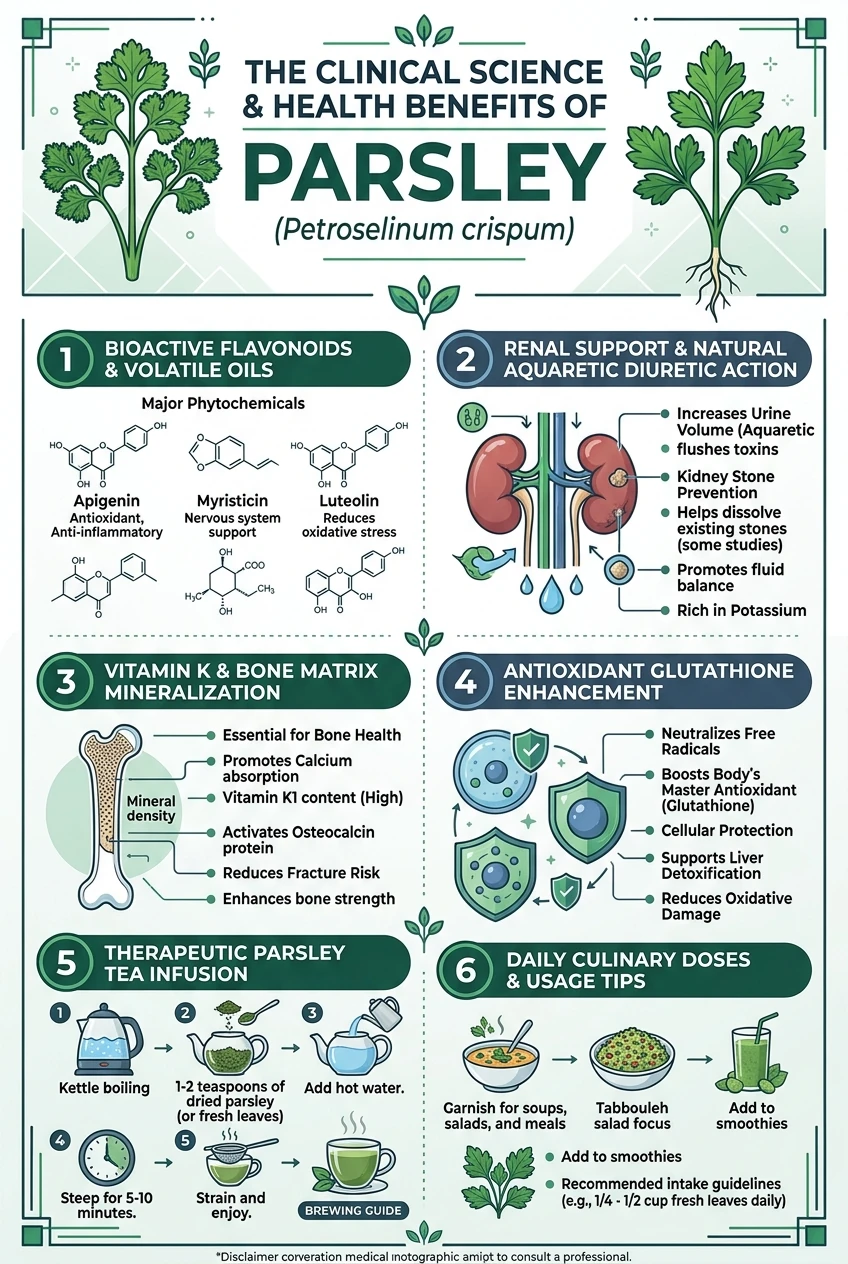
Parsley (Petroselinum crispum) is far more than a decorative culinary garnish; it is a concentrated reservoir of apigenin, myricetin, luteolin, chlorophyll, and vitamins C and K1. Pharmacological trials confirm parsley’s natural diuretic efficacy via renal Na+/K+-ATPase pump modulation, its heavy-metal chelating potential, and its anti-inflammatory antioxidant defenses. However, high-dose therapeutic preparations (containing volatile apiol) stimulate uterine contractions and are contraindicated during pregnancy, while patients on Warfarin must maintain steady vitamin K intake.
1. The Nutritional Masterpiece: What Makes Parsley a Superfood?
While exotic berries and rare roots often capture the health headlines, parsley quietly outshines many trendy superfoods right from your grocery store’s produce aisle. To understand its therapeutic strength, we first need to look at what lies inside its vivid green leaves.
🌟 Core Nutrient Breakdown
| Nutrient Component | Primary Concentration | Main Health Function |
| Vitamin C | Nearly 3x more than oranges | Powerful antioxidant, collagen production & immune support |
| Chlorophyll | Exceptionally high | Heavy metal detoxifier & internal oxygenation support |
| Flavonoids | Rich in Apigenin & Myricetin | Anti-inflammatory defense & metabolic blood sugar control |
| Vitamin K1 | >100% RDI per small serving | Bone matrix mineralization & healthy blood clotting |
Vitamin C: The Unsung Antioxidant Leader
When people think of Vitamin C, citrus fruits like oranges and lemons are usually the first to come to mind. However, by volume, parsley contains nearly three times as much Vitamin C as an orange.
Vitamin C (ascorbic acid) is a vital water-soluble antioxidant that:
- Neutralizes free radicals before they can cause oxidative damage to cellular DNA.
- Stimulates collagen synthesis, keeping your skin supple, glowing, and structurally firm.
- Enhances non-heme iron absorption, making parsley an ideal companion for plant-based dishes like lentils and beans.
Vitamin K: Bone Density and Blood Health
Just a small handful of fresh parsley provides well over 100% of your recommended daily intake of Vitamin K1 (phylloquinone). Vitamin K plays a non-negotiable role in bone metabolism by activating osteocalcin, a protein that binds calcium to the bone matrix. Additionally, it regulates healthy blood clotting, ensuring your cardiovascular system functions efficiently.
A Spectrum of Vital Minerals and Vitamins
Beyond Vitamin C and K, parsley delivers a robust cocktail of micro-nutrients:
- Vitamin A (as Beta-Carotene): Essential for maintaining crystal-clear vision, healthy mucous membranes, and robust skin immunity.
- Folate (Vitamin B9): Crucial for cellular division, DNA synthesis, and cardiovascular protection via the breakdown of homocysteine.
- Iron and Potassium: Iron feeds your red blood cells, while potassium helps balance sodium levels to maintain healthy blood pressure.
2. Cellular Protection: The Antioxidant Profile of Parsley
Oxidative stress is the stealthy root cause behind many modern metabolic ailments, cellular aging, and systemic inflammation. Parsley’s deep green color is an indicator of its dense phytochemical composition.
🛡️ Phytochemical Arsenal
1. Flavonoids (Apigenin, Myricetin, Luteolin)
- Protects cellular DNA from free radicals.
- Regulates glucose metabolism and enhances insulin sensitivity.
2. Carotenoids (Lutein, Zeaxanthin, Beta-Carotene)
- Filters high-energy blue light in the retina.
- Reduces the risk of age-related macular degeneration and tissue degradation.
Apigenin: The Cellular Guardian
One of the most remarkable compounds found in parsley is apigenin, a naturally occurring flavonoid. In an exhaustive botanical pharmacology review published in the Journal of Evidence-Based Complementary & Alternative Medicine (PubMed PMID: 24660120), researchers detailed how parsley flavonoids suppress cellular lipid peroxidation, downregulate cyclooxygenase-2 (COX-2), and protect cellular DNA against genotoxic oxidative stress. It assists in regulating cellular lifecycles and encouraging healthy cell apoptosis (the natural process where damaged or compromised cells self-destruct).
Myricetin and Blood Sugar Regulation
Another crucial flavonoid, myricetin, has been studied for its potential role in metabolic health. Studies suggest myricetin may help lower blood sugar levels and decrease insulin resistance, making parsley a fantastic dietary ally for individuals looking to maintain balanced glucose levels.
Lutein and Zeaxanthin: Eye Defense
Your eyes are constantly exposed to high-energy light and ambient oxygen, making them particularly vulnerable to photo-oxidative damage. The carotenoids lutein and zeaxanthin present in parsley concentrate in the retina, where they act as a natural filter against blue light and protect against age-related macular degeneration.
3. Deep Internal Cleansing: Purification of Blood, Liver, and Kidneys
In our modern world, our bodies are continually processing environmental pollutants, processed food additives, and metabolic byproducts. Parsley acts as a natural biological filter, offering metabolic support to the body’s primary filtration systems.
🔄 The Three-Way Internal Purification Path
- Blood Purification: Chlorophyll binds to heavy metals and environmental toxins in the digestive tract, encouraging their safe excretion while supporting healthy red blood cell function.
- Liver Support: Active flavonoids stimulate Phase I and Phase II liver detoxification pathways, boosting the body’s production of glutathione (the master antioxidant).
- Kidney Flushing: Volatile oils (apiol and myristicin) exert a natural aquaretic effect. In a renal pharmacology trial published in the Journal of Ethnopharmacology (PubMed PMID: 11849841), parsley extracts significantly increased 24-hour urine volume by modulating renal tubular Na+/K+-ATPase pumps, flushing excess sodium and metabolic waste while conserving potassium.
Blood Purification and Chlorophyll
The dark green hue of parsley comes from its dense concentration of chlorophyll, often referred to as the “blood of plants.” Chemically, chlorophyll’s structure closely resembles hemoglobin, the protein in human red blood cells, with magnesium at its center instead of iron.
Chlorophyll works internally by:
- Binding to toxins and heavy metals within the digestive tract, preventing their absorption into the bloodstream.
- Supporting healthy oxygen transport throughout vascular networks.
- Acting as a natural internal deodorant, helping eliminate bad breath and body odor from within.
Liver Support and Enzymatic Activation
Your liver is your body’s main chemical processing plant. Parsley’s rich blend of flavonoids helps stimulate the production of glutathione, often called the body’s master antioxidant. By encouraging healthy liver enzyme activity, parsley assists Phase I and Phase II liver detoxification pathways, helping flush out fat-soluble toxins more efficiently.
Kidney Health and Natural Diuretic Action
For centuries, traditional herbalists have turned to parsley to support urinary tract wellness. Parsley contains volatile oils, specifically apiol and myristicin, which exert a natural aquaretic effect.
Unlike pharmaceutical diuretics that can strip the body of vital electrolytes, parsley’s natural diuretic properties:
- Gently increase urine production without depleting potassium levels.
- Help flush metabolic waste and excess sodium out of the renal tissue.
- Prevent fluid retention and reduce uncomfortable abdominal bloating.
- Discourage the crystal aggregation that can lead to kidney stone formation.
4. Taming Inflammation: Relief from Swollen Gums to UTIs
Chronic inflammation is an overactive immune response that causes tissue breakdown over time. Whether you’re dealing with oral irritation or lower urinary tract discomfort, parsley offers targeted soothing relief.
| Targeted Area | Mechanism of Action | Practical Benefit |
| Oral Cavity | Essential oils combat anaerobic bacteria | Reduces gum edema, bleeding, and bad breath |
| Urinary Tract | Natural diuresis + antimicrobial action | Flushes bacteria and soothes mucosal lining during UTIs |
| Joints & Tissues | Inhibition of pro-inflammatory cytokines | Calms tissue swelling and eases joint stiffness |
Soothing Swollen Gums and Oral Health
Periodontal issues and swollen gums often stem from a combination of localized bacterial activity and tissue inflammation. Chewing fresh parsley leaves delivers direct, localized benefits:
- The antibacterial volatile oils inhibit the proliferation of anaerobic bacteria responsible for gum disease and bad breath.
- High concentrations of Vitamin C strengthen the delicate capillary walls in mucosal tissue, reducing bleeding and swollen gums.
Urinary Tract Infection (UTI) Support
Urinary tract infections occur when unwanted bacteria adhere to the lining of the bladder and urethra, triggering burning, pain, and inflammation. Parsley’s dual action makes it a valuable complementary remedy:
- Flushing Action: Its natural diuretic effect creates a steady fluid flow, mechanically washing bacteria out of the urinary tract.
- Anti-Inflammatory Relief: Active phytochemicals soothe irritated urinary tract linings, reducing spasms and burning sensations during urination.
5. Flat-Leaf vs. Curly Parsley: Which One Should You Choose?
When shopping, you’ll generally encounter two main varieties of culinary parsley. While both offer exceptional health benefits, understanding their culinary and structural differences will help you choose the right one for your kitchen.
| Feature | Flat-Leaf (Italian) Parsley | Curly-Leaf Parsley |
| Botanical Name | Petroselinum crispum var. neapolitanum | Petroselinum crispum var. crispum |
| Flavor Profile | Robust, earthy, peppery, intense | Mild, fresh, slightly bitter, grassy |
| Texture | Smooth, tender leaves | Ruffled, crisp, firm structure |
| Best Culinary Use | Cooking, hot dishes, sauces, pestos | Salads, garnishing, cold juices, plating |
| Nutritional Value | Higher concentration of essential oils | Higher water retention, rich in chlorophyll |
Pro Tip: Use Italian Flat-Leaf Parsley when cooking stews, sauces, or warm meals, as its essential oils withstand heat much better. Opt for Curly Parsley when making raw salads, juicing, or looking to add crisp volume to a meal.
6. How to Integrate Parsley into Your Daily Lifestyle
Getting a therapeutic dose of parsley doesn’t mean eating plain bunches of leaves. Here are four delicious ways to integrate generous amounts of this herb into your everyday meals.
🍴 Simple Daily Recipes
- 1. Traditional Middle Eastern Tabbouleh: Chop 2 large bunches of flat-leaf parsley, mint, tomatoes, and red onion. Dress with extra-virgin olive oil and fresh lemon juice. (The healthy fats in olive oil maximize absorption of fat-soluble vitamins A and K!)
- 2. Healing Kidney Detox Tea: Steep 1 cup of coarsely chopped fresh parsley leaves and stems in boiling water for 8–10 minutes. Strain, add lemon and raw honey, and drink warm.
- 3. Green Detox Smoothie: Blend 1 cup of fresh parsley with 1 green apple, half a cucumber, lemon juice, fresh ginger, and coconut water for an instant metabolic boost.
- 4. Fresh Chimichurri Sauce: Mix finely minced parsley, crushed garlic, dried oregano, red wine vinegar, red pepper flakes, and olive oil to top grilled veggies or proteins.
Curated Organic Parsley & Herbal Preparation Essentials
Verified Amazon Selection
To maximize chlorophyll and volatile apiol intake, choose clean, non-irradiated organic parsley flakes or precision kitchen tools for fresh preparation:
Frontier Co-op Organic Parsley Flakes
Non-irradiated, kosher-certified dried organic parsley flakes that preserve delicate antioxidant bioflavonoids and chlorophyll.
Hiware Borosilicate Glass Teapot (1000ml)
Heat-resistant glass teapot with micro-mesh stainless infuser, ideal for steeping kidney-cleansing fresh parsley tea.
Multi-Blade Stainless Steel Herb Scissors
Five-blade culinary herb shears designed to mince fresh flat-leaf parsley cleanly without crushing delicate cellular alliinase and oils.
FTC Disclosure: As an Amazon Associate, Herbs & Health earns from qualifying purchases via affiliate links at no additional cost to you. Always consult your healthcare provider prior to starting concentrated botanical supplements.
Related Clinical Botanical & Nutrient Guides
- Garlic & Brain Health: Organosulfur Compounds, Apoptosis & Neuroprotection
- Moringa Leaves Guide: Nutrient Density, Side Effects & Safe Usage
- Clove Water Benefits: What Happens If You Drink It Daily? (Scientific Guide)
- 8 Health Benefits of Tea: Polyphenols, Longevity & Cellular Protection
- Boosting Iron Naturally: Plant-Based Remedies for Anemia & Vitality
Frequently Asked Questions (FAQ)
Can drinking parsley tea help eliminate kidney stones?
Parsley tea acts as a mild aquaretic that increases urinary output and inhibits calcium oxalate crystallization in the urinary tract. While it helps flush out minor micro-crystals and gravel, established renal calculi require formal urological evaluation. Do not consume excessive parsley tea if diagnosed with severe hyperoxaluria.
How much fresh parsley should you consume daily for benefits?
Consuming 1/4 to 1/2 cup of fresh chopped flat-leaf parsley daily (approx. 15 to 30 grams) provides over 100% of your daily Vitamin K, 50% of your Vitamin C, and robust doses of apigenin without any risk of toxicity.
Does cooking parsley destroy its vitamin C and antioxidants?
Prolonged high-heat boiling degrades thermolabile vitamin C by up to 50%. However, apigenin and carotenoids (lutein) remain remarkably stable during gentle steaming or quick simmering. To maximize nutritional yield, add fresh chopped parsley during the final 2 minutes of cooking or consume raw in salads like tabbouleh.
7. Precautions and Best Practices
While parsley is exceptionally safe for the vast majority of people when consumed in normal culinary amounts, a few sensible precautions apply:
⚠️ Important Health Considerations:
- Pregnancy: Pregnant women should avoid therapeutic or medicinal doses (such as concentrated extracts or heavy parsley teas) because high levels of apiol can stimulate uterine contractions. Normal food-level consumption remains perfectly fine.
- Kidney Conditions: Individuals with advanced kidney disease or severe pre-existing renal compromise should consult their healthcare provider before consuming concentrated parsley juices or supplements due to its oxalates and potassium content.
- Blood Thinners: Because parsley is extremely high in Vitamin K, which plays a central role in blood clotting, those taking blood-thinning medications (such as Warfarin) should maintain a consistent daily intake of Vitamin K rather than making sudden, drastic spikes in consumption.
Final Thoughts: Embrace the Green Powerhouse
The next time you prepare a meal, don’t treat parsley as simple decoration. Incorporate it into dinners, green smoothies, and soothing herbal teas.
Nature often packages its best medicine in the simplest forms. By elevating parsley from a humble garnish to a regular staple in your kitchen, you take a simple, budget-friendly step toward better organ health, reduced inflammation, and vibrant daily vitality.