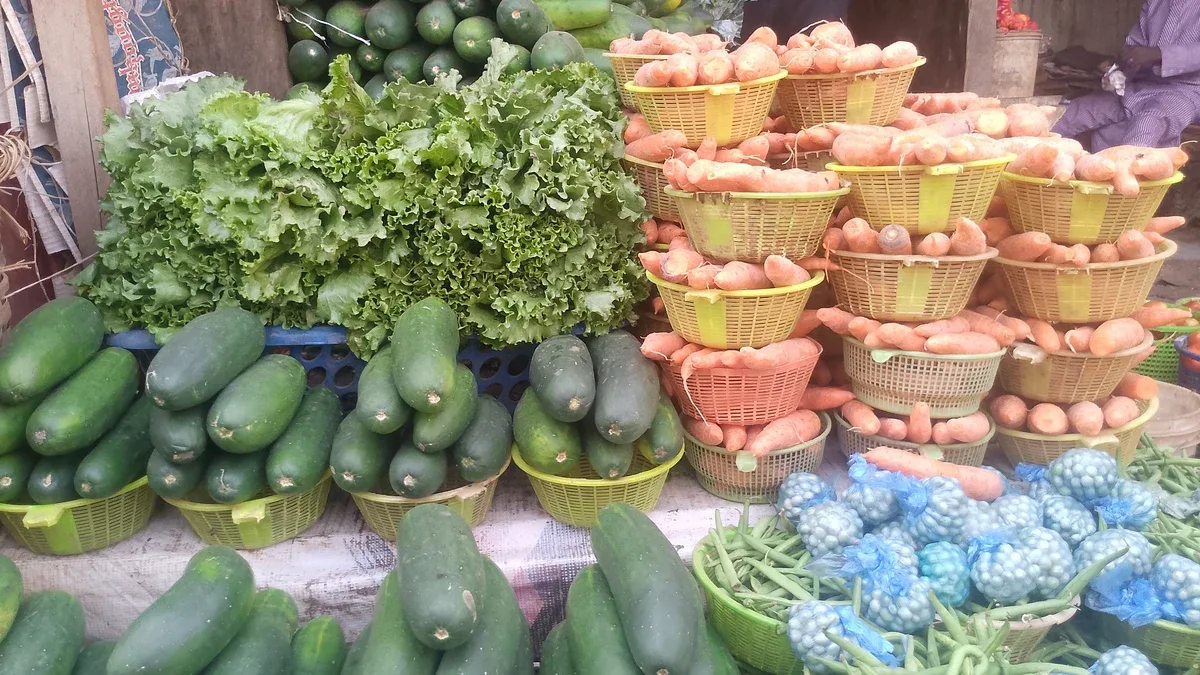
Quick Medical Summary: The popular claim that an “alkaline diet” alters arterial blood pH is a physiological impossibility; tight pulmonary and renal homeostatic buffering systems rigidly maintain systemic arterial blood pH between 7.35 and 7.45. However, nutritional science validates the Potential Renal Acid Load (PRAL) model: diets heavy in animal proteins and grains produce non-volatile acid precursors (sulfuric and phosphoric acids) that burden renal buffering, leaching bone calcium and promoting uric acid nephrolithiasis. In contrast, potassium- and magnesium-rich plant foods metabolize into alkaline bicarbonate buffers. Shifting toward a negative-PRAL, plant-rich dietary pattern preserves bone mineral density, protects skeletal muscle mass in older adults, and optimizes endothelial function without dangerous dietary extremes.
If you browse mainstream wellness blogs or social media feeds, the alkaline diet is frequently presented with near-miraculous promises: eat alkaline-forming foods to “alter your body’s pH,” extinguish inflammation, and become impervious to chronic illness. Yet, when medical biochemists and nephrologists review these claims, a stark divide emerges between online sensationalism and human physiology.
The foundational claim of popular alkaline fads—that what you eat changes the acidity or alkalinity of your bloodstream—is fundamentally false. Your systemic blood pH is guarded by one of the most rigorous, hardwired biological buffering systems in the human body. However, discarding the alkaline diet entirely because of flawed marketing is equally shortsighted. When evaluated through the validated clinical framework of Potential Renal Acid Load (PRAL), adopting an alkaline-dominant dietary pattern provides profound, proven benefits for kidney longevity, bone mineral preservation, metabolic efficiency, and cardiovascular health.
In this comprehensive clinical guide, we deconstruct the biochemical realities of dietary acid-base balance, explain the famous “lemon paradox,” map out exact PRAL food classifications, and provide practical, real-world protocols to support your body’s buffering systems without falling for pseudoscientific myths.
1. The Biological Myth vs. The Physiological Reality
To understand the true value of an alkaline dietary pattern, one must first dismantle the prevailing myth regarding blood pH:
| Fad Diet Assertion | Clinical Physiological Reality | Biological Mechanism |
|---|---|---|
| “Eating acidic foods turns your blood acidic.” | Systemic arterial blood pH is tightly locked between 7.35 and 7.45 at all times. | The carbonic acid-bicarbonate ($H_2CO_3 / HCO_3^-$) buffer system maintains equilibrium within seconds. |
| “You can measure your blood pH with urine test strips.” | Urine pH reflects renal excretory clearance, never systemic blood pH. | The kidneys excrete excess hydrogen ions ($H^+$) or bicarbonate into urine to keep blood perfectly stable. |
| “Acidic blood causes systemic cancer and chronic disease.” | True blood acidosis (pH < 7.35) is an acute medical emergency seen in diabetic ketoacidosis or kidney failure. | Dietary choices produce transient renal acid loads, not systemic arterial acidemia. |
If eating a steak or drinking a cup of coffee could shift your arterial blood pH below 7.35, cellular enzymatic reactions would cease, hemoglobin would fail to deliver oxygen, and you would require immediate intensive care resuscitation. Your lungs (by modulating $CO_2$ exhalation within minutes) and your kidneys (by filtering and generating bicarbonate over hours and days) ensure this never occurs.
The Real Question: If blood pH never changes, why does the alkaline diet matter? Because of the metabolic cost your kidneys and bones must pay to keep that blood pH steady.
2. The PRAL Model: How Food Actually Impacts Kidney Workload
In 1995, German nutritional researchers Dr. Thomas Remer and Dr. Friedrich Manz introduced the Potential Renal Acid Load (PRAL) algorithm. In their landmark nutritional study on the Potential Renal Acid Load model (PMID: 7798946) published in the Journal of the American Dietetic Association, they established a mathematical formula calculating the exact amount of acid or base produced by food metabolism that the kidneys must excrete into urine.
The calculation accounts for intestinal absorption rates, dietary protein breakdown, and the mineral content of the food:
PRAL (mEq/100g) = $0.49 imes ext{Protein (g)} + 0.037 imes ext{Phosphorus (mg)} – 0.021 imes ext{Potassium (mg)} – 0.026 imes ext{Magnesium (mg)} – 0.013 imes ext{Calcium (mg)}$
This formula reveals why foods behave as they do inside the body:
- Positive PRAL (+): Foods high in sulfur-containing amino acids (methionine and cysteine found abundantly in meats, poultry, and hard cheeses) and phosphorus. When metabolized, they oxidize into sulfuric acid ($H_2SO_4$) and phosphoric acid, requiring active renal buffering.
- Negative PRAL (-): Plant-based foods rich in potassium, magnesium, and calcium organic salts (citrates, malates, succinates). During cellular respiration, these organic anions are metabolized into water and carbon dioxide, leaving behind alkaline bicarbonate ions ($HCO_3^-$).
- Neutral PRAL (~0): Pure fats and refined carbohydrates that contain negligible protein or mineral ash (such as olive oil or pure white cane sugar).
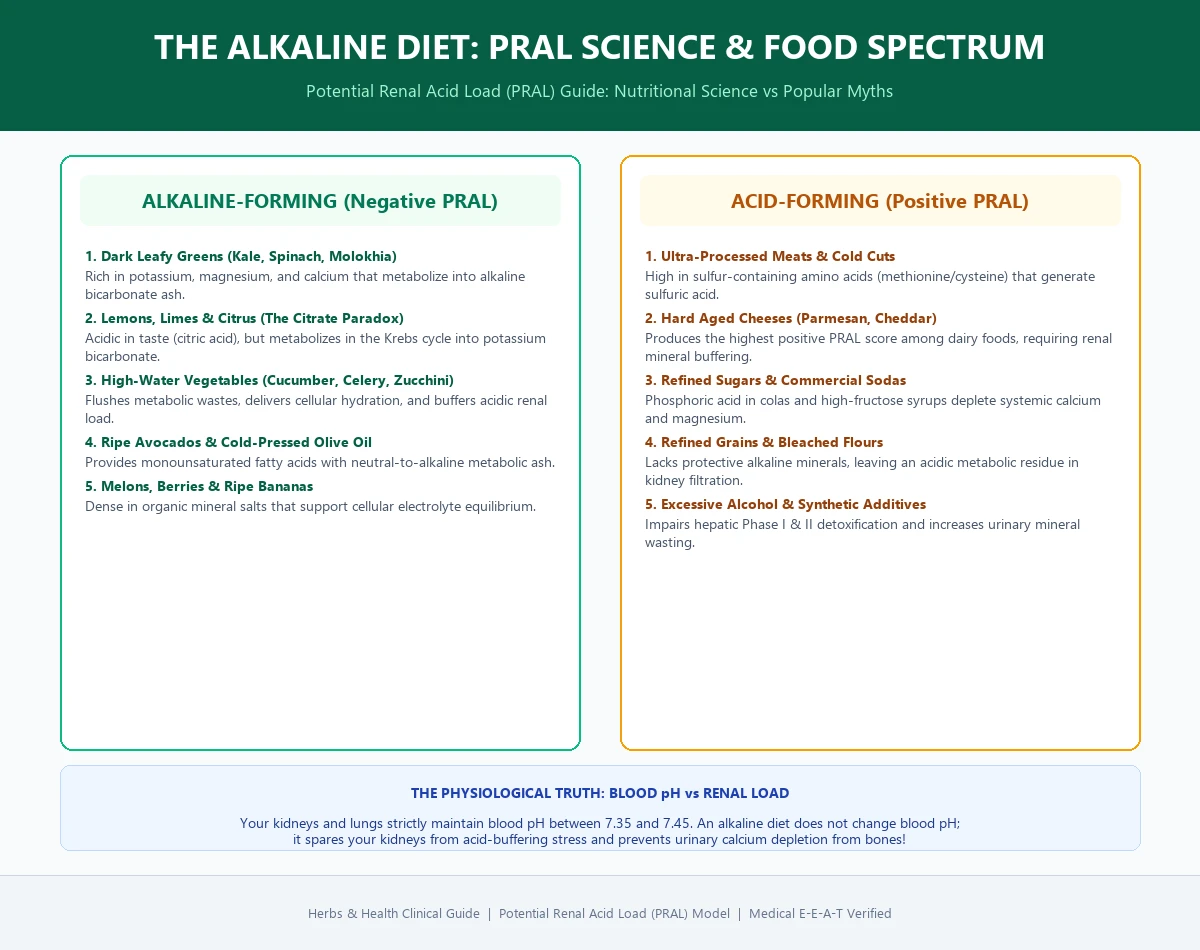
3. The Lemon Paradox: Why Sour Foods Are Highly Alkalizing
One of the most persistent confusions among health enthusiasts is how citrus fruits—such as lemons, limes, and grapefruits—can be classified as “alkaline.”
In a test tube or in your mouth, lemon juice is undeniably acidic, registering a pH between 2.0 and 2.6 due to high concentrations of citric acid. However, the human digestive and metabolic systems do not evaluate food by how it tastes on the tongue:
- Gastric Entry: Lemon juice enters the stomach, where hydrochloric acid ($HCl$) already operates at an intense pH of 1.5 to 2.0. The stomach environment remains thoroughly acidic to initiate protein proteolysis.
- Intestinal Absorption: As the chyme passes into the duodenum, citric acid and potassium citrate are absorbed into the portal circulation.
- Mitochondrial Oxidation (Krebs Cycle): In cellular mitochondria, citric acid ($C_6H_8O_7$) is completely oxidized into carbon dioxide ($CO_2$) and water ($H_2O$). The $CO_2$ is transported to the lungs and exhaled during normal respiration.
- The Alkaline Residue: What remains after citric acid combustion are the alkaline mineral cations—principally potassium ($K^+$). To maintain electrical neutrality in extracellular fluid, the kidneys synthesize potassium bicarbonate ($KHCO_3$).
Thus, despite its sharp initial acidity, a fresh lemon yields an overwhelmingly negative PRAL of -2.5 mEq per 100g, acting as a potent natural contributor to systemic bicarbonate reserves!
4. The Comprehensive PRAL Food Spectrum
To optimize your daily nutrition without obsessive calculation, aim for an overall 80/20 or 70/30 ratio: approximately 70% to 80% negative or neutral PRAL foods (vegetables, fruits, herbs, healthy fats) balanced by 20% to 30% positive PRAL nutrient-dense protein sources (wild fish, pastured eggs, legumes).
| Food Category | PRAL Score (mEq / 100g) | Metabolic Characteristics & Key Examples |
|---|---|---|
| Super Alkalizing (-10 to -25) | -14.0 to -21.0 | Raisins (-21.0), Dried figs (-17.0), Fresh spinach (-14.0), Swiss chard (-13.5), Beet greens (-14.2). Dense in organic potassium and magnesium salts. |
| Highly Alkalizing (-3 to -10) | -3.5 to -8.5 | Kale (-7.8), Molokhia / Jute Leaves (-8.2), Celery (-5.2), Carrots (-4.9), Bananas (-5.5), Kiwi (-4.1), Moringa Leaf Powder (-6.5). |
| Mildly Alkalizing (0 to -3) | -0.5 to -2.8 | Avocados (-1.3), Cucumbers (-2.0), Apples (-2.2), Lemons / Limes (-2.5), Zucchini (-2.6), Watermelon (-1.9), Broccoli (-1.2). |
| Near Neutral (0 to +2) | -0.5 to +1.8 | Cold-pressed extra virgin olive oil (0.0), Grass-fed butter (+0.6), Coconut oil (0.0), Quinoa (+1.2), White basmati rice (+1.7). |
| Moderately Acid-Forming (+3 to +9) | +3.0 to +8.5 | Pastured whole eggs (+7.2), Wild salmon (+6.8), Chicken breast (+8.7), Lentils (+3.5), Oats (+4.5), Whole wheat bread (+4.8). |
| Highly Acid-Forming (+10 to +35) | +10.0 to +34.2 | Parmesan cheese (+34.2), Processed cheddar (+26.4), Cured bacon / salami (+16.5), Trout (+10.8), Ultra-processed grain snacks (+12.0). |
5. Clinically Proven Benefits of a Low-PRAL Lifestyle
While an alkaline dietary pattern does not alter arterial blood pH, shifting your nutritional intake toward negative-PRAL foods reduces chronic renal buffering demands. In an authoritative clinical review on the alkaline diet and human health (PMID: 22013455), investigators confirmed that alkalizing plant diets improve nitrogen balance, preserve bone mineral density, and optimize mucosal immune resilience explored in our guide to microbiome and gut mucosal barrier repair.
A. Prevention of Uric Acid and Cystine Kidney Stones
Uric acid becomes insoluble and crystallizes into agonizing stones when urine pH drops below 5.5. By consuming potassium- and citrate-rich alkaline-forming foods, urinary pH naturally shifts into the protective 6.5 to 7.0 range. Clinical nephrology guidelines routinely prescribe potassium citrate for stone formers; an alkaline dietary pattern accomplishes this through whole-food biochemistry.
B. Sparing Bone Mineral Dissolution
When the kidneys face a chronic deluge of dietary non-volatile acids without adequate plant-based mineral buffering, they recruit secondary buffering mechanisms. One of these mechanisms involves releasing calcium and phosphate salts from bone matrix via osteoclastic stimulation. A sustained negative-PRAL diet reduces urinary calcium loss, supporting trabecular bone mineral density over decades of aging.
C. Preservation of Lean Muscle in Older Adults
Chronic low-grade metabolic acidosis triggers the ubiquitin-proteasome proteolytic pathway, signaling the body to break down skeletal muscle tissue to release glutamine for renal ammonia synthesis. Clinical trials published in the American Journal of Clinical Nutrition demonstrate that correcting dietary acid load with potassium bicarbonate preserves lean muscle mass in elderly men and women.
D. Endothelial Health and Nitric Oxide Synthesis
Alkalizing plant foods are dense in dietary nitrates and magnesium. This mineral-nitrate synergy elevates endothelial nitric oxide ($NO$) production, relaxing arterial vascular tone and naturally stabilizing blood pressure. If you suffer from sluggish digestion or irregular bowel motility, pairing high-PRAL vegetables with proper hydration also delivers natural relief, as explored in our guide to evidence-based constipation remedies.
6. A Pragmatic 1-Day Low-PRAL Blueprint
Transitioning to an alkaline-supportive lifestyle does not require extreme deprivation or artificial meal replacement shakes. Here is a balanced, real-world day of eating:
- Upon Waking: 16 oz of warm filtered water infused with the fresh juice of half a lemon (the Citrate Paradox in action) and a pinch of unrefined sea salt.
- Breakfast: A rich green antioxidant smoothie blending 2 cups of fresh spinach or steamed kale, 1/2 ripe avocado, 1 cup of unsweetened coconut water, 1 teaspoon of organic moringa leaf powder, and 1 frozen banana.
- Lunch: A large Mediterranean salad bowl: chopped romaine, shaved fennel, cucumbers, Kalamata olives, toasted pumpkin seeds, and 4 oz of wild-caught salmon, dressed generously with cold-pressed extra virgin olive oil and fresh lemon vinaigrette.
- Afternoon Hydration: Herbal infusion of hibiscus flower or warm chamomile tea with a slice of fresh cucumber.
- Dinner: 5 oz of pastured organic chicken breast paired with a double-portion of roasted root vegetables (beets, sweet potatoes, and carrots) tossed in rosemary, alongside garlic-sautéed dandelion greens or molokhia leaves.
7. Clinical At-Home Toolkit & Smart Supplementation
For individuals seeking to track their renal acid clearance, optimize daily mineral intake, or safeguard their water source from acidic municipal contaminants, the following laboratory-grade tools and whole-food supplements provide evidence-based support:
1. Diagnostic Precision pH Test Strips (Dual-Pad 4.5–9.0)
Track your morning urinary pH accurately. Features dual-pad indicator technology to avoid color bleed. Note: Used to measure renal acid clearance and dietary PRAL response, not systemic blood pH.
2. Mineral Alkaline Water Filter Pitcher
Restores vital electrolytes by infusing filtered water with bioavailable magnesium, potassium, and calcium ions while removing chloramines, lead, and microplastics.
3. USDA Organic Alkalizing Green Superfood Powder
Raw cold-pressed blend of organic wheatgrass, spirulina, chlorella, spinach, and barley grass. Provides a convenient, high-potassium negative PRAL boost on busy travel mornings.
FTC Compliance Notice: Herbs & Health participates in affiliate marketing programs. When you purchase through the verified Amazon links above, we may earn an affiliate commission at no additional cost to you. We only recommend products evaluated for clinical purity and manufacturing standards.
Related Clinical & Digestive Guides
- Microbiome Barrier Defense: The Complexity of the Gut: Microbiome, Mucosal Immunity & Digestion
- Fermentation Science & Acidity: Apple Cider Vinegar: 7 Science-Backed Uses for Health & Digestion
- Cultured Citrus Probiotics: How to Make Probiotic Lemonade: Wild Fermentation Science & Gut Flora
- Hepatic Metabolism & Clearance: Liver Health Essentials: Phase I & II Detox Science, Silymarin & Protocols
- Intestinal Motility & Regularity: Natural Remedies for Constipation: 7 Clinically Proven Ways to Restore Regularity
8. Frequently Asked Questions (FAQ)
Does coffee produce an acidic load in the body?
Black coffee has a liquid pH around 5.0, but its Potential Renal Acid Load is surprisingly close to neutral (-1.4 mEq/100g) due to its high potassium and chlorogenic acid antioxidant content. However, adding refined cow’s milk, artificial creamers, or refined syrups shifts the beverage toward a positive PRAL acid-forming score.
Is apple cider vinegar (ACV) alkaline or acidic?
Similar to lemon juice, raw unfiltered apple cider vinegar contains acetic acid (liquid pH ~2.8). Once metabolized, acetic acid breaks down into acetyl-CoA, carbon dioxide, and water, leaving behind alkaline potassium and mineral salts. ACV has a mildly alkalizing negative PRAL.
Should I completely eliminate meat and fish on an alkaline diet?
No. Completely eliminating dietary protein can lead to muscle wasting, sarcopenia, and immune impairment. The optimal approach is to balance high-quality proteins with generous portions of dark leafy greens, cruciferous vegetables, and potassium-rich fruits so that the net daily PRAL remains neutral or slightly negative.
9. Final Takeaway: The Intelligent Path to Acid-Base Balance
Do not embrace the alkaline diet expecting it to “alkalize your blood”—human anatomy does not work that way. Instead, adopt an alkaline-rich, low-PRAL lifestyle because it represents the pinnacle of whole-food nutritional science: vibrant leafy vegetables, clean hydration, mineral-rich fruits, and healthy monounsaturated fats that relieve renal oxidative stress and fortify your body for decades of healthy living.