
For decades, society has been locked in an intense debate over breakfast: is it truly the most important meal of the day, or should you skip it entirely in favor of intermittent fasting? While meal timing is ultimately a matter of personal lifestyle preference, clinical nutrition research reveals one indisputable truth: if you choose to eat breakfast, what you put on your plate sets the biological tone for your entire metabolic day. A breakfast high in refined carbohydrates and sugar triggers a hormonal roller coaster that guarantees intense cravings by mid-morning. Conversely, a breakfast anchored in high-quality protein, viscous dietary fiber, and healthy fats transforms your body into a stable, fat-burning engine.
When you consume a balanced, nutrient-dense breakfast, you elevate peptide YY and glucagon-like peptide-1 (GLP-1), your body’s natural fullness hormones, while dramatically suppressing circulating ghrelin, the hormone responsible for stomach growling. Additionally, digesting whole proteins and complex fibers elevates your Thermic Effect of Food (TEF), forcing your body to expend extra calories merely processing your morning meal. Here are the ten best evidence-based breakfast foods for sustainable weight loss, along with practical tips to turn them into delicious, stress-free morning routines.
1. Pasture-Raised Whole Eggs: The Gold Standard Satiety Anchor
For years, well-meaning health enthusiasts tossed egg yolks into the trash, believing dietary cholesterol caused heart disease. Modern cardiovascular science has thoroughly debunked this myth, revealing that whole eggs are nutritional powerhouses. A single large egg delivers 6 grams of complete, high-biological-value protein containing all nine essential amino acids, alongside vital micronutrients like choline, lutein, and vitamin D.
Landmark clinical trials published in the International Journal of Obesity demonstrated that individuals who consumed an egg-based breakfast lost 65 percent more body weight and experienced a 34 percent greater reduction in waist circumference over eight weeks compared to those consuming an isocaloric bagel breakfast. The healthy fats in the yolk slow gastric emptying, preventing mid-morning energy dips. Scramble two or three whole eggs with a handful of baby spinach and a pinch of sea salt for a five-minute metabolic foundation.
2. Plain Non-Fat or Low-Fat Greek Yogurt: The Protein Powerhouse
Traditional yogurt is pleasant, but Greek yogurt undergoes a specialized straining process that removes liquid whey, concentrating the remaining protein. A single one-cup serving of plain Greek yogurt packs an impressive 15 to 20 grams of protein, nearly triple the amount found in standard yogurt, with only a fraction of the carbohydrates.
Greek yogurt is exceptionally rich in casein, a slow-digesting milk protein that provides a sustained, steady release of amino acids into the bloodstream over several hours. In addition, its rich concentration of live probiotic cultures supports a diverse gut microbiome, which clinical research increasingly links to improved insulin sensitivity and reduced abdominal adiposity. Skip pre-flavored supermarket yogurts, which often hide up to 20 grams of added cane sugar per cup; buy plain Greek yogurt and sweeten it naturally with fresh berries and a sprinkle of ground cinnamon.
3. Low-Fat Cottage Cheese: the primary Casein Satiety Weapon
Cottage cheese has experienced a massive resurgence in sports nutrition, and for good reason: it is one of the most cost-effective, protein-dense foods on the planet. One cup of low-fat (1% to 2%) cottage cheese delivers an astonishing 28 grams of protein with fewer than 160 calories.
Research comparing the satiety effects of cottage cheese to whole eggs found that both foods produce virtually identical fullness scores and suppress subsequent food intake with equal potency. Cottage cheese contains predominantly micellar casein, which forms a gentle gel in the stomach, taking up to six hours to fully digest. Enjoy it savory with diced cucumbers, cherry tomatoes, and cracked black pepper, or blend it into morning pancake batter for a fluffy, high-protein breakfast.
4. Steel-Cut and Rolled Oats: Viscous Beta-Glucan Fiber
While boxed instant oatmeal packets loaded with brown sugar flavorings cause rapid blood sugar surges, whole rolled oats and minimally processed steel-cut oats are magnificent tools for fat loss. Oats are rich in beta-glucan, a unique type of soluble dietary fiber that forms a thick, viscous gel when mixed with liquid in the digestive tract.
This beta-glucan gel significantly delays gastric emptying, blunts postprandial glucose spikes, and promotes the release of satiety hormones in the ileum. Additionally, gut bacteria ferment beta-glucan into short-chain fatty acids (SCFAs) like butyrate, which nourish colonocytes and reduce systemic inflammation. To maximize fat loss, always pair oatmeal with a direct protein source: stir in a scoop of protein powder, mix with egg whites on the stove, or top with hemp seeds.
Top Breakfast Staples for Fat Loss at a Glance
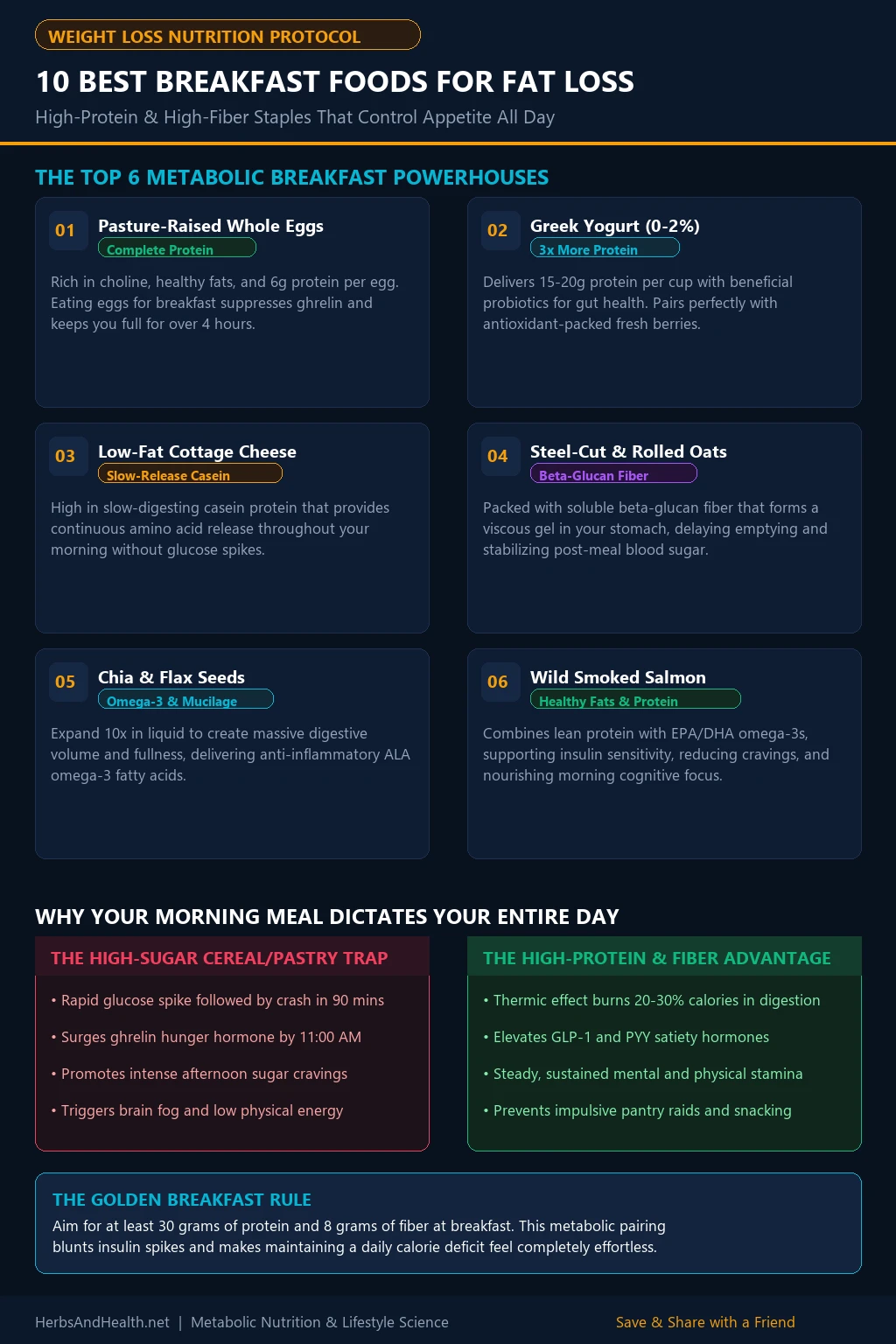
Save this visual guide to Pinterest or your phone to plan high-protein, cravings-crushing morning meals.
5. Chia Seeds: The High-Volume Digestive Expander
Chia seeds are one of the most concentrated sources of dietary fiber in existence: a simple two-tablespoon serving provides 10 grams of fiber, 5 grams of plant-based protein, and generous amounts of anti-inflammatory alpha-linolenic acid (ALA) omega-3s.
What makes chia seeds extraordinary for weight loss is their hydrophilic mucilage coating. When exposed to liquid, chia seeds absorb up to twelve times their weight in water, expanding into a thick, tapioca-like gel. Inside the stomach, this expansion creates significant physical volume, activating stretch mechanoreceptors that send immediate neural signals to the brain that your stomach is comfortably full. Prepare overnight chia pudding by soaking two tablespoons of chia seeds in unsweetened almond milk with a scoop of vanilla whey protein for an effortless grab-and-go morning meal.
6. Fresh Berries (Raspberries, Blackberries, and Blueberries)
When dieting, many people mistakenly avoid all fruit due to fear of carbohydrates. However, berries are fundamentally different from tropical high-glycemic fruits. Raspberries and blackberries provide an incredible 8 grams of dietary fiber per cup with only 60 calories and negligible natural sugars.
Berries are packed with anthocyanins, potent polyphenol flavonoids that give them their vibrant purple and red pigments. Clinical research demonstrates that anthocyanins improve peripheral insulin sensitivity, enhance cellular glucose disposal, and reduce systemic vascular inflammation. Stirring a cup of fresh or frozen wild blueberries into your Greek yogurt or oatmeal adds immense natural sweetness and chewy volume without threatening your daily caloric budget.
7. Wild Smoked or Canned Salmon: Healthy Fats & Lean Protein
While salmon is more commonly associated with dinner, making it a regular breakfast component is a transformative metabolic strategy. A three-ounce serving of wild salmon provides 22 grams of premium protein alongside over 1,500 mg of bioavailable EPA and DHA long-chain omega-3 fatty acids.
Omega-3 fatty acids reduce cellular inflammation in the hypothalamus, restoring healthy leptin sensitivity so your brain accurately detects your body’s energy reserves. Pair a couple of slices of wild smoked salmon with scrambled eggs, a quarter of an avocado, and sliced tomatoes for a luxurious, restaurant-quality breakfast that crushes hunger until well past lunchtime.
8. Avocados: Oleic Acid and Satiety Lipids
Avocados are a nutritional anomaly: unlike almost all other fruits that provide simple sugars, avocados are packed with heart-healthy monounsaturated oleic acid and remarkable amounts of dietary fiber. Half of a medium avocado delivers approximately 7 grams of fiber alongside 15 grams of healthy fats.
Clinical studies published in the Nutrition Journal found that adding half an avocado to a morning meal significantly increased post-meal satisfaction and reduced the desire to eat over the subsequent five hours by 28 percent. The monounsaturated fats in avocado assist in the absorption of fat-soluble vitamins (A, D, E, and K) from other foods on your plate. Mash a quarter or half avocado over a slice of sprouted whole-grain toast and top with a poached egg.
Curated Morning Nutrition Staples
Upgrade your morning routine with these clean, high-protein pantry staples:
PBfit All-Natural Peanut Butter Powder
Delivers real roasted peanut flavor with 87% less fat and only 60 calories per serving. Perfect for mixing into Greek yogurt, morning oatmeal, and smoothies without oil surplus.
Purely Elizabeth Ancient Grain Granola
Certified organic gluten-free oats, chia, and amaranth baked with organic coconut oil. Low in added sugar and rich in prebiotic fiber to top yogurt bowls with a satisfying crunch.
Kicking Horse Organic Dark Roast Coffee
Fairtrade whole bean dark roast rich in chlorogenic acid polyphenols that naturally stimulate resting metabolic rate and provide alert energy without sugar or syrups.
9. Whey or Plant Protein Powder: the primary Convenience Accelerator
In an ideal world, we would all have twenty tranquil minutes each morning to gently scramble farm-fresh eggs and sauté greens. In the real world of bustling morning commutes, family routines, and early meetings, convenience often dictates dietary choices. This is where a high-quality protein powder becomes an invaluable dietary tool.
A single scoop of micro-filtered whey protein isolate or high-grade pea-and-rice plant protein delivers 20 to 25 grams of pure protein with virtually zero carbohydrates or fat. Whey is naturally abundant in leucine, the critical branched-chain amino acid that triggers the mTOR pathway, initiating muscle protein synthesis and preserving resting metabolic rate during a caloric deficit. Blend a scoop with cold brew coffee, unsweetened almond milk, a handful of frozen berries, and a tablespoon of ground flaxseed for a complete, travel-ready breakfast.
10. Sprouted Whole-Grain Bread (Ezekiel Bread)
If you love having toast in the morning, ditch standard ultra-processed white or whole-wheat sandwich bread. Commercial bread is made from refined flour that digests almost as rapidly as pure table sugar, spiking insulin and leaving you lethargic an hour later.
Sprouted grain bread (such as Ezekiel 4:9 bread) is made from live sprouted organic grains and legumes, including wheat, barley, millet, lentils, and soybeans. The sprouting process breaks down enzyme inhibitors and phytic acid, dramatically increasing the bioavailability of zinc, iron, and magnesium while boosting digestible protein to 5 grams per slice. Sprouted bread has a significantly lower glycemic index than regular bread, giving you steady, sustained energy.
To learn how balanced nutrition frameworks fit into overall lifestyle leanness, review our comprehensive guide on hidden reasons you are not losing fat.
Frequently Asked Questions About Weight Loss Breakfasts
Is it better to eat breakfast or fast if I want to lose weight?
Neither approach has an intrinsic metabolic advantage over the other; what matters is total daily caloric deficit and consistency. If skipping breakfast feels natural and helps you control daytime calorie intake, intermittent fasting is fantastic. However, if skipping morning food leaves you ravenous, lightheaded, and prone to evening binges, eating a high-protein breakfast is far superior for your long-term success.
How many grams of protein should I aim for at breakfast?
Clinical nutrition guidelines recommend aiming for a minimum of 25 to 35 grams of protein at breakfast. This threshold stimulates muscle protein synthesis through adequate leucine intake and triggers the sustained release of intestinal satiety hormones (PYY and GLP-1).
Can I drink coffee with milk and sweetener on a fat loss diet?
Black coffee or coffee with a splash of unsweetened almond or oat milk is wonderful for fat loss, providing caffeine and polyphenols that mildly boost thermogenesis. However, commercial coffee beverages with flavored syrups, whipped cream, or heavy sugars often contain 300 to 500 hidden calories, completely erasing your caloric deficit.
Are breakfast smoothies good for losing body fat?
Smoothies can be great or terrible depending on how they are constructed. Commercially purchased fruit smoothies are frequently sugar bombs delivering 50 grams of fast-digesting fructose. A homemade smoothie built with protein powder, unsweetened liquid, dark leafy greens, a tablespoon of chia seeds, and half a cup of berries provides excellent volume and sustained satiety.
What if I am genuinely not hungry when I wake up in the morning?
Never force-feed yourself if you have no appetite. Instead, pack a portable high-protein meal, such as hard-boiled eggs with fruit, or a protein shaker cup with whey powder, and enjoy it at 10:00 AM or 11:00 AM when your natural biological hunger signals emerge.
Peer-Reviewed Clinical References & Evidence
- Vander Wal, J. S., et al. (2008). Egg breakfast enhances weight loss. International Journal of Obesity, 32(10), 1545-1551.
- Leidy, H. J., et al. (2013). Beneficial effects of a higher-protein breakfast on the appetitive, hormonal, and neural signals to control food intake in overweight/obese, breakfast-skipping late-adolescent girls. American Journal of Clinical Nutrition, 97(4), 677-688.
- Whitehead, A., et al. (2014). Cholesterol-lowering effects of oat beta-glucan: a meta-analysis of randomized controlled trials. American Journal of Clinical Nutrition, 100(6), 1413-1421.
- Wien, M., et al. (2013). A randomized 3×3 crossover study to evaluate the effect of Hass avocado intake on post-ingestive satiety, glucose and insulin levels, and subsequent energy intake in overweight adults. Nutrition Journal, 12, 155.
- Jakubowicz, D., et al. (2013). High caloric intake at breakfast vs. dinner differentially influences weight loss of overweight and obese women. Obesity, 21(12), 2504-2512.