Undergoing cancer treatment is an intense physical and emotional journey. While systemic chemotherapy and modern targeted therapies work diligently to target malignant cells, their systemic nature often affects healthy, rapidly dividing tissues throughout the body—most visibly the epithelial cells and sebaceous glands of your skin.
Between 50% and 90% of cancer patients receiving certain therapies—especially Epidermal Growth Factor Receptor (EGFR) inhibitors (such as cetuximab, panitumumab, and erlotinib), tyrosine kinase inhibitors (TKIs), and traditional cytotoxic agents (like taxanes and 5-FU)—develop a chemotherapy-induced skin eruption commonly referred to as chemo rash. This condition can manifest as papulopustular eruptions, profound xerosis (extreme dryness), debilitating pruritus (intense itching), and micro-fissuring of the fingertips and heels.
The physical discomfort, burning sensations, and altered appearance can significantly impair daily quality of life and sleep. However, managing this skin sensitivity requires extreme clinical care. Because the protective stratum corneum is thinned and immunocompromised, conventional over-the-counter remedies can cause severe chemical injury. Below is an exhaustive, oncology-aligned guide to safe, evidence-based natural remedies for chemo rash, what ingredients you must strictly avoid, and how to protect your delicate skin barrier throughout treatment.
🚨 Critical Medical Truth: Chemo Rash is NOT Acne!
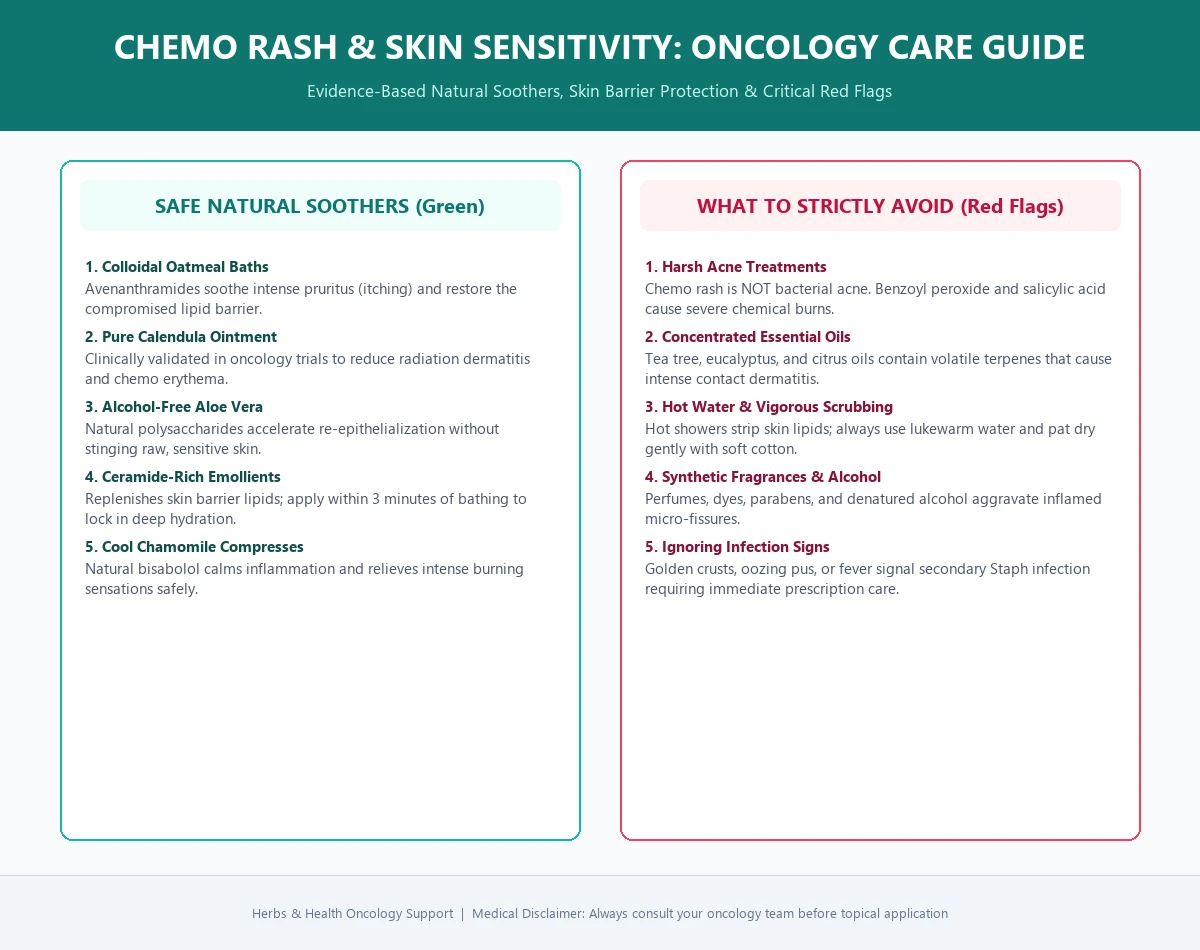
Although papulopustular chemo rash presents with red bumps and whitehead-like pustules resembling acne, it is completely non-bacterial. Never apply acne treatments containing benzoyl peroxide, salicylic acid, glycolic acid, or alcohol. These drying keratolytic agents cause excruciating chemical burns, ulcerations, and open routes for systemic bacterial infections on chemo-sensitized skin.
1. Understanding Chemo Rash: Why Does It Happen?
To safely soothe a chemo rash, you must understand the underlying biological mechanism. The epidermal growth factor receptor (EGFR) is heavily expressed not only on cancer cells but also on the basal keratinocytes of healthy human skin, hair follicles, and nails. EGFR signaling regulates normal skin cell differentiation, moisture retention, and wound repair.
When chemotherapy or targeted molecular therapies inhibit this signaling pathway, skin cells cannot mature properly. The natural lipid barrier breaks down, trans-epidermal water loss (TEWL) skyrockets, and microscopic inflammation surrounds hair follicles. The resulting skin becomes hyper-reactive, fragile, and prone to painful micro-fissures (cracking).
Clinical Note: In oncology research, the emergence of an EGFR-induced skin rash is frequently correlated with positive therapeutic tumor response—meaning the medication is effectively hitting its biological target. However, patients should never have to suffer in silence through severe discomfort.
2. The 5 Safe, Clinically Supported Natural Remedies
Natural remedies for chemo rash focus strictly on barrier restoration, gentle anti-inflammatory soothing, and microbial defense without stripping natural lipids:
A. Colloidal Oatmeal Soaks & Compresses
USP pharmaceutical-grade colloidal oatmeal (*Avena sativa*) is an FDA-recognized skin protectant. Oats contain specialized polyphenols called avenanthramides, which exhibit potent anti-pruritic (anti-itch) and anti-inflammatory properties by inhibiting the release of pro-inflammatory cytokines and histamine.
Clinical Protocol: Dissolve 1 cup of 100% pure colloidal oatmeal into a lukewarm (never hot) bath. Soak for 10 to 15 minutes. Alternatively, prepare a warm oatmeal wash by soaking an oatmeal pouch in water and gently pressing the milky fluid against irritated facial or neck rashes. Pat dry with a clean, ultra-soft cotton towel—never rub.
B. Pure Medical-Grade Calendula Ointment
Calendula (*Calendula officinalis*, commonly known as pot marigold) has been subjected to extensive clinical evaluation in oncology dermatology. In a landmark randomized controlled trial published in the Journal of Clinical Oncology, topical calendula ointment was shown to significantly reduce the incidence of severe radiation- and chemo-induced dermatitis compared to standard petroleum-based treatments.
Calendula’s triterpenoids and flavonoids stimulate granulation tissue formation, accelerate re-epithelialization, and provide mild natural antimicrobial protection. Always choose an alcohol-free, fragrance-free calendula cream formulated specifically for oncology or sensitive skin.
C. Ceramide-Dominant Emollients (The “3-Minute Rule”)
Chemotherapy severely depletes intercellular ceramides—the biological mortar that holds skin cells together. Without ceramides, moisture evaporates, leaving skin intensely dry, tight, and itchy.
The 3-Minute Rule: Immediately after bathing, gently pat skin until lightly damp, and within 180 seconds, apply a thick, fragrance-free ceramide-rich cream (containing a physiological ratio of ceramides, cholesterol, and free fatty acids). Applying moisturizer to damp skin locks hydration into the stratum corneum before atmospheric evaporation occurs.
D. Pure Cold-Pressed Jojoba Oil
For patients experiencing extreme dryness and flaky facial scaling, pure organic jojoba (*Simmondsia chinensis*) oil is an exceptional natural emollient. Technically a liquid wax ester rather than a triglyceride oil, jojoba closely mimics natural human sebum.
It absorbs effortlessly into inflamed follicles without clogging pores or fueling microbial overgrowth. Gently press 2 to 3 drops between clean palms and pat onto dry, irritated areas twice daily.
E. Cooling Chamomile & Green Tea Compresses
When skin feels intensely hot, flushed, or stinging, cool herbal compresses provide instant neuro-vascular relief. Brew an organic German chamomile (*Matricaria chamomilla*) or green tea bag in boiling water, chill the tea in the refrigerator, and soak sterile gauze pads in the cool infusion.
Chamomile’s bisabolol and green tea’s epigallocatechin gallate (EGCG) deliver localized vasoconstriction, calming erythematous flushing and soothing neuropathic burning without drying out delicate skin.
3. What to Strictly Avoid: Common Pitfalls That Worsen Chemo Rash
Protecting sensitized skin often hinges on what you stop doing rather than what you apply. Eliminate the following triggers immediately:
- Hot Showers and Saunas: Hot water dissolves remaining sebum lipids, exacerbates capillary dilation, and triggers uncontrollable itching cascades. Wash exclusively with lukewarm water for no longer than 5 to 7 minutes.
- Fragrances, Dyes & Parabens: Scented soaps, synthetic body washes, and perfumes contain volatile aromatic compounds that trigger severe contact dermatitis on thinned skin. Look for products certified by the National Eczema Association.
- Essential Oils: Never apply neat or concentrated essential oils (like tea tree, oregano, or eucalyptus) to chemo rashes. Their high terpene volatility can cause allergic sensitization and chemical blistering.
- Direct Sunlight (Extreme UV Sensitivity): Many chemotherapy drugs are photosensitizers. Even brief sun exposure can provoke severe erythema and hyperpigmentation. Wear wide-brimmed hats, protective clothing, and use mineral-based (zinc oxide/titanium dioxide) sunscreen SPF 30+.
- Rough Fabrics & Loofahs: Synthetic polyesters, wool, and abrasive washcloths create mechanical friction that breaks open pustules. Wear loose, 100% breathable organic cotton clothing.
4. Red Flag Warning: Identifying Secondary Bacterial Infections
Because chemotherapy suppresses circulating white blood cell counts (neutropenia), chemo-induced skin lesions are highly susceptible to secondary bacterial superinfections—most commonly Staphylococcus aureus.
If you observe any of the following clinical warning signs, discontinue home remedies immediately and contact your oncology care team or hospital hotline:
- Honey-Colored / Golden Crusting: The classic diagnostic sign of secondary staphylococcal impetiginization.
- Spreading Warmth, Severe Swelling, or Pain: Possible indication of cellulitis.
- Oozing Pus from Broken Blisters or Lesions.
- Systemic Fever (Oral temperature above 38.0°C / 100.4°F) or Shivering: In an immunocompromised cancer patient, this is a medical emergency requiring immediate evaluation.
5. Curated Oncology Skin Care Essentials Buyer’s Guide
To shield skin against contamination, always utilize sealed, pump-dispensed or tube-packaged barrier creams rather than open jars where fingers can introduce bacteria:
Dermatologist-Approved Oncology Skin Care Recommendations
Fragrance-Free & Hypoallergenic100% Pure Colloidal Oatmeal Soothing Bath Treatment
Ultra-fine micro-ground pure oat flour that disperses into a soothing, milky bath. Clinically relieves neurogenic itching and redness without stinging raw skin.
Check Price on Amazon →Pure Calendula Officinalis Soothing Skin Cream
French pharmaceutical-grade calendula formulation. Specifically researched for radiation dermatitis, skin erythema, and superficial skin irritation.
View Calendula on Amazon →Triple Ceramide & Hyaluronic Acid Moisturizing Cream
Non-greasy, rich moisturizing cream with 3 essential ceramides. Restores the protective stratum corneum barrier within 3 minutes of bathing.
Check Ceramide Creams on Amazon →Frequently Asked Questions (FAQ)
How long does chemo rash typically last?
Chemo rash typically appears within the first 1 to 2 weeks of initiating targeted therapies or chemotherapy, peaking in severity around weeks 3 to 4. For most patients, the skin gradually adapts, and the rash subsides significantly within 4 to 8 weeks after treatment concludes.
Can I use pure coconut oil on a chemo rash?
While virgin coconut oil has antimicrobial and moisturizing qualities, it has a high comedogenic rating (it easily clogs hair follicles). On an EGFR inhibitor papulopustular rash, thick coconut oil can trap heat and sebum, worsening follicular inflammation. Non-comedogenic jojoba oil or ceramide-based creams are clinically preferable.
Should I stop chemotherapy if my rash becomes severe?
Never stop or alter your chemotherapy regimen without explicit medical instruction. Severe grade 3 rashes are effectively managed by oncologists through short courses of oral antibiotics (such as doxycycline or minocycline) or mild prescription topical corticosteroids without abandoning life-saving cancer therapy.
Final Medical Verdict: Gentle Care for Resilient Skin
Managing chemo rash requires patience, gentle barrier protection, and close partnership with your oncology care team. By eliminating harsh irritants, embracing pure colloidal oatmeal and calendula, and honoring the 3-minute ceramide moisturizing rule, you can restore skin comfort and maintain the resilience needed to focus on your healing.
Explore more evidence-based natural health guides: read our clinical reviews on Evidence-Based Mood & Neurotransmitter Protocols, Moringa Leaves: Clinical Benefits & Nutrition, and Ashwagandha: Who Should NOT Take It? Critical Medical Warnings.
- Lacouture ME, et al. “Clinical practice guidelines for the prevention and treatment of EGFR inhibitor-associated dermatologic toxicities.” Support Care Cancer. 2011;19(8):1079-1095.
- Pommier P, et al. “Phase III randomized trial of Calendula officinalis compared with trolamine for the prevention of acute dermatitis during irradiation for breast cancer.” J Clin Oncol. 2004;22(8):1447-1453.
- Fowler JF, et al. “Colloidal oatmeal formulations and the treatment of atopic dermatitis and xerosis: A review of the literature.” J Drugs Dermatol. 2014;13(10):1180-1183.
- Multinational Association of Supportive Care in Cancer (MASCC). “Management of skin toxicities related to targeted cancer therapies.” MASCC Guidelines.