
Bipolar disorder is a complex mental health condition characterized by significant shifts in mood, energy, activity levels, and the ability to carry out daily tasks. People living with bipolar disorder may experience episodes of depression, mania, or hypomania, often requiring long-term medical treatment and professional support.
While prescription medications and psychotherapy remain the foundation of bipolar disorder treatment, many individuals seek complementary approaches that may help improve mood stability, reduce stress, and support overall well-being. Natural treatments cannot replace medical care, but certain lifestyle strategies, nutritional approaches, and evidence-informed supplements may play a supportive role when used responsibly and under professional supervision.
In this guide, we’ll explore nine natural treatments that may help manage bipolar disorder, discuss the science behind them, and explain how they fit into a comprehensive treatment plan.
Understanding Bipolar Disorder
Bipolar disorder affects millions of people worldwide and is generally categorized into:
- Bipolar I Disorder
- Bipolar II Disorder
- Cyclothymic Disorder
- Other specified bipolar disorders
Symptoms can include:
Depressive Symptoms
- Persistent sadness
- Fatigue
- Loss of interest in activities
- Difficulty concentrating
- Changes in appetite
- Sleep disturbances
Manic or Hypomanic Symptoms
- Elevated mood
- Increased energy
- Racing thoughts
- Reduced need for sleep
- Impulsive behavior
- Risk-taking activities
Because bipolar disorder involves significant changes in brain chemistry and mood regulation, treatment often requires a multifaceted approach.
Can Natural Treatments Help Bipolar Disorder?
Natural approaches are best viewed as complementary therapies rather than alternatives to medication or psychotherapy.
Research suggests that certain lifestyle interventions may help improve overall wellness, support emotional regulation, reduce stress, and potentially decrease the frequency of mood episodes when combined with evidence-based treatment. Studies have particularly highlighted the importance of sleep regulation, exercise, nutrition, and structured daily routines for people living with bipolar disorder.
Let’s examine the most promising options.
1. Establish a Consistent Sleep Schedule
One of the most important natural strategies for managing bipolar disorder is maintaining healthy sleep habits.
Sleep disruption is both a symptom and a trigger of bipolar episodes. Irregular sleep patterns can contribute to mood instability, while sleep deprivation may increase the risk of manic episodes.
Tips for Better Sleep
- Go to bed at the same time every night.
- Wake up at a consistent time.
- Avoid caffeine late in the day.
- Limit screen exposure before bedtime.
- Create a relaxing nighttime routine.
Many mental health professionals consider sleep regulation one of the most effective lifestyle interventions for bipolar disorder management.
Why It Matters
Stable sleep helps regulate circadian rhythms, which play a crucial role in mood stability and emotional health. Research on Interpersonal and Social Rhythm Therapy (IPSRT) specifically emphasizes maintaining regular sleep, eating, and activity schedules to reduce relapse risk.
2. Regular Physical Exercise
Exercise is widely recognized as a natural mood-supporting intervention.
Physical activity may:
- Reduce symptoms of depression
- Improve sleep quality
- Lower stress levels
- Enhance cognitive function
- Increase overall well-being
Best Exercises for Bipolar Disorder
- Walking
- Swimming
- Cycling
- Strength training
- Yoga
- Pilates
Moderate, consistent exercise is generally preferable to extreme workout routines that may contribute to overstimulation.
How Much Exercise Is Recommended?
Aim for:
- 150 minutes of moderate aerobic activity weekly
- 2 strength-training sessions per week
Even short daily walks can provide meaningful benefits.
3. Omega-3 Fatty Acids
Omega-3 fatty acids are among the most researched nutritional supplements for mood disorders.
These healthy fats are found in:
- Salmon
- Sardines
- Mackerel
- Tuna
- Flaxseeds
- Chia seeds
- Fish oil supplements
Potential Benefits
Research suggests omega-3 fatty acids may:
- Support brain function
- Improve depressive symptoms
- Promote mood stability
- Reduce inflammation
Some studies have shown promising results for bipolar depression, though evidence remains mixed and supplementation should never replace prescribed treatment.
4. Mindfulness Meditation
Mindfulness practices can help individuals become more aware of thoughts, emotions, and triggers without reacting impulsively.
Benefits of Meditation
- Reduced stress
- Better emotional regulation
- Improved focus
- Lower anxiety levels
- Enhanced self-awareness
Simple Beginner Practice
Spend 10 minutes daily:
- Sit comfortably.
- Focus on your breathing.
- Notice thoughts without judgment.
- Return attention to your breath.
Consistency is more important than duration.
5. Maintain a Structured Daily Routine
People with bipolar disorder often benefit from predictable routines.
Daily structure helps regulate biological rhythms and reduces stress associated with unpredictability.
Important Areas to Structure
- Sleep
- Meals
- Exercise
- Work schedules
- Social activities
- Medication schedules
Routine stability is a central component of therapies specifically designed for bipolar disorder management.
6. Adopt a Brain-Healthy Diet
Nutrition influences both physical and mental health.
Although no specific “bipolar diet” exists, many experts recommend focusing on whole-food nutrition.
Foods to Prioritize
- Vegetables
- Fruits
- Whole grains
- Lean proteins
- Fatty fish
- Nuts and seeds
- Legumes
Foods to Limit
- Excessive sugar
- Ultra-processed foods
- Excess alcohol
- Highly refined carbohydrates
A nutrient-rich diet may support mood regulation, energy levels, and overall brain function.
7. Consider N-Acetylcysteine (NAC)
N-Acetylcysteine (NAC) is an antioxidant supplement that has received increasing attention in bipolar disorder research.
Possible Benefits
NAC may:
- Reduce oxidative stress
- Support brain health
- Improve depressive symptoms
- Complement existing treatments
Some studies have reported improvements in bipolar depression, while others have shown less consistent results. Current evidence suggests NAC may be useful as an adjunctive treatment under professional supervision.
Important Note
Always consult a healthcare provider before adding NAC or any supplement to your treatment plan.
8. Stress Management Techniques
Stress is one of the most common triggers for mood episodes.
Developing effective stress-management skills can significantly improve quality of life.
Helpful Techniques
- Deep breathing exercises
- Progressive muscle relaxation
- Journaling
- Nature walks
- Guided imagery
- Mindfulness-based stress reduction
Reducing chronic stress may lower the likelihood of mood destabilization and improve resilience during challenging periods.
9. Build Strong Social Support Networks
Isolation can worsen symptoms of depression and make bipolar disorder more difficult to manage.
A strong support system can provide:
- Emotional encouragement
- Accountability
- Early recognition of mood changes
- Practical assistance during difficult periods
Sources of Support
- Family members
- Trusted friends
- Peer support groups
- Therapists
- Community organizations
Supportive relationships are frequently associated with better long-term mental health outcomes.
Natural Treatments to Approach with Caution
Not all “natural” remedies are safe for bipolar disorder.
Some supplements and herbs may trigger mania or interact with medications.
Examples include:
- St. John’s Wort
- Rhodiola rosea
- SAMe
- Certain stimulant-containing supplements
Before trying any herbal remedy, consult a psychiatrist, physician, or qualified healthcare professional.
The Importance of Professional Treatment
Natural approaches can be valuable tools, but they should not replace evidence-based medical care.
Current treatment guidelines generally recommend:
- Mood stabilizers
- Psychotherapy
- Education and support
- Lifestyle management
Medication remains one of the most effective interventions for preventing relapse and maintaining long-term stability.
Creating a Holistic Bipolar Disorder Management Plan
An effective bipolar wellness strategy often combines:
- Medical treatment
- Therapy
- Sleep regulation
- Exercise
- Nutrition
- Stress reduction
- Social support
The goal is not to replace conventional treatment but to strengthen it.
Individuals who consistently prioritize healthy habits may experience better overall functioning, improved quality of life, and greater resilience when facing mood fluctuations.
Final Thoughts
Living with bipolar disorder can be challenging, but many people successfully manage their symptoms through a combination of professional treatment and healthy lifestyle choices.
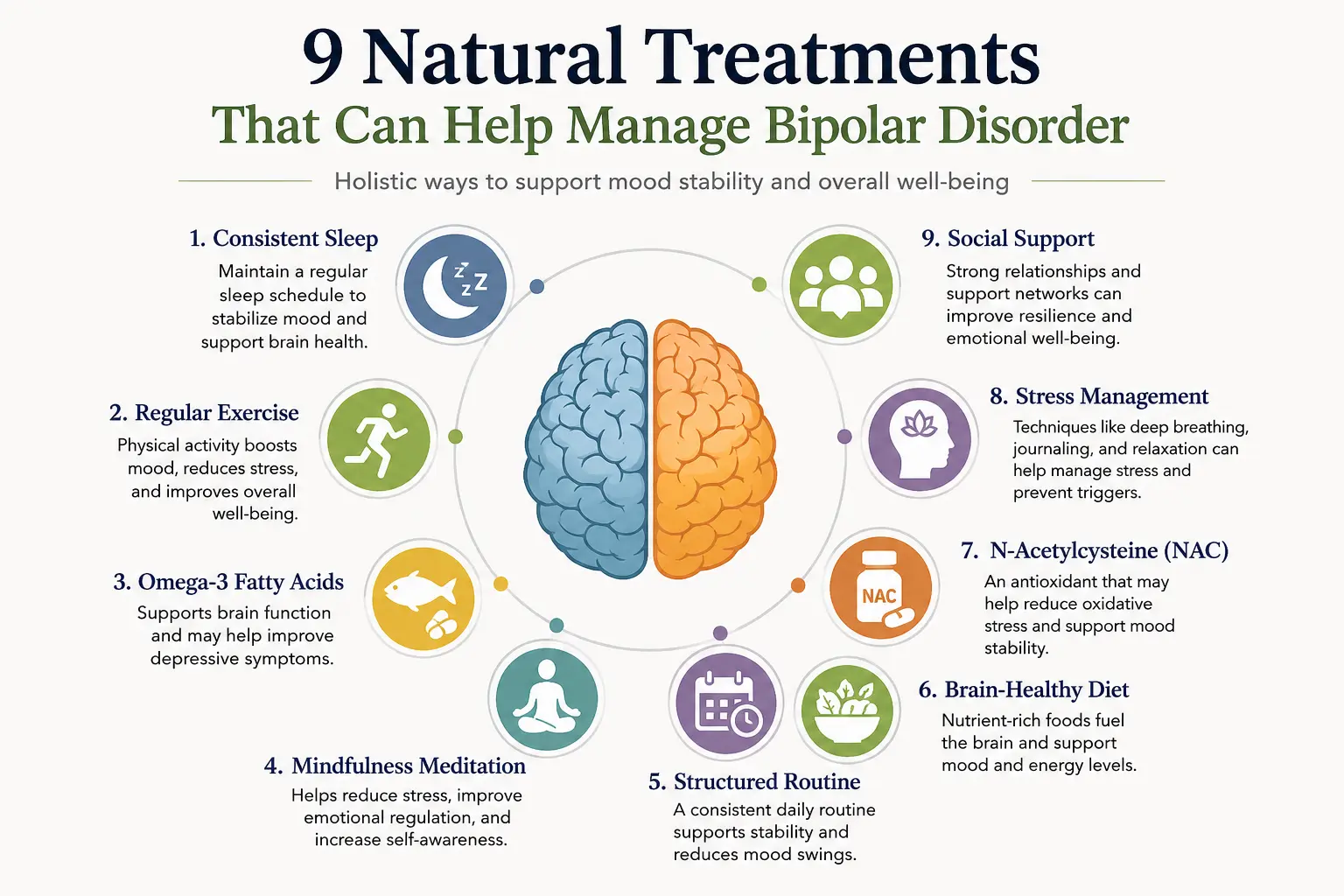
Natural treatments such as consistent sleep schedules, exercise, mindfulness, structured routines, omega-3 fatty acids, balanced nutrition, NAC supplementation, stress management, and strong social support may provide valuable complementary benefits.
Because bipolar disorder is highly individual, what works for one person may not work for another. Always discuss any new supplement, diet change, or alternative therapy with a qualified healthcare provider to ensure it is safe and appropriate for your situation.
Frequently Asked Questions (FAQ)
What is the best natural treatment for bipolar disorder?
There is no single best natural treatment. Sleep regulation, regular exercise, structured routines, and stress management are among the most consistently recommended lifestyle approaches.
Can bipolar disorder be treated naturally without medication?
Most experts do not recommend relying solely on natural treatments. Bipolar disorder typically requires professional medical care, and natural therapies should be viewed as complementary strategies.
Do omega-3 supplements help bipolar disorder?
Research suggests omega-3 fatty acids may help support mood stability and depressive symptoms, but results are mixed and supplements should not replace prescribed treatment.
Is exercise good for bipolar disorder?
Yes. Regular physical activity may improve mood, reduce stress, enhance sleep quality, and support overall mental health.
Can meditation help bipolar disorder?
Mindfulness meditation may help reduce stress, improve emotional regulation, and support mental well-being when used alongside professional treatment.
Is NAC effective for bipolar disorder?
Some research suggests NAC may improve depressive symptoms in bipolar disorder, although evidence remains mixed and more studies are needed.
What foods should people with bipolar disorder avoid?
Many experts recommend limiting highly processed foods, excessive sugar, and alcohol while prioritizing nutrient-dense whole foods.
Can lack of sleep trigger bipolar episodes?
Yes. Sleep disruption is one of the most common triggers of both manic and depressive episodes in bipolar disorder.
Are herbal remedies safe for bipolar disorder?
Not always. Some herbs may trigger mania or interact with medications. Always consult a healthcare professional before using herbal supplements.
How can I support someone with bipolar disorder?
Offer understanding, encourage treatment adherence, help maintain routines, and learn to recognize signs of mood changes so support can be provided early.