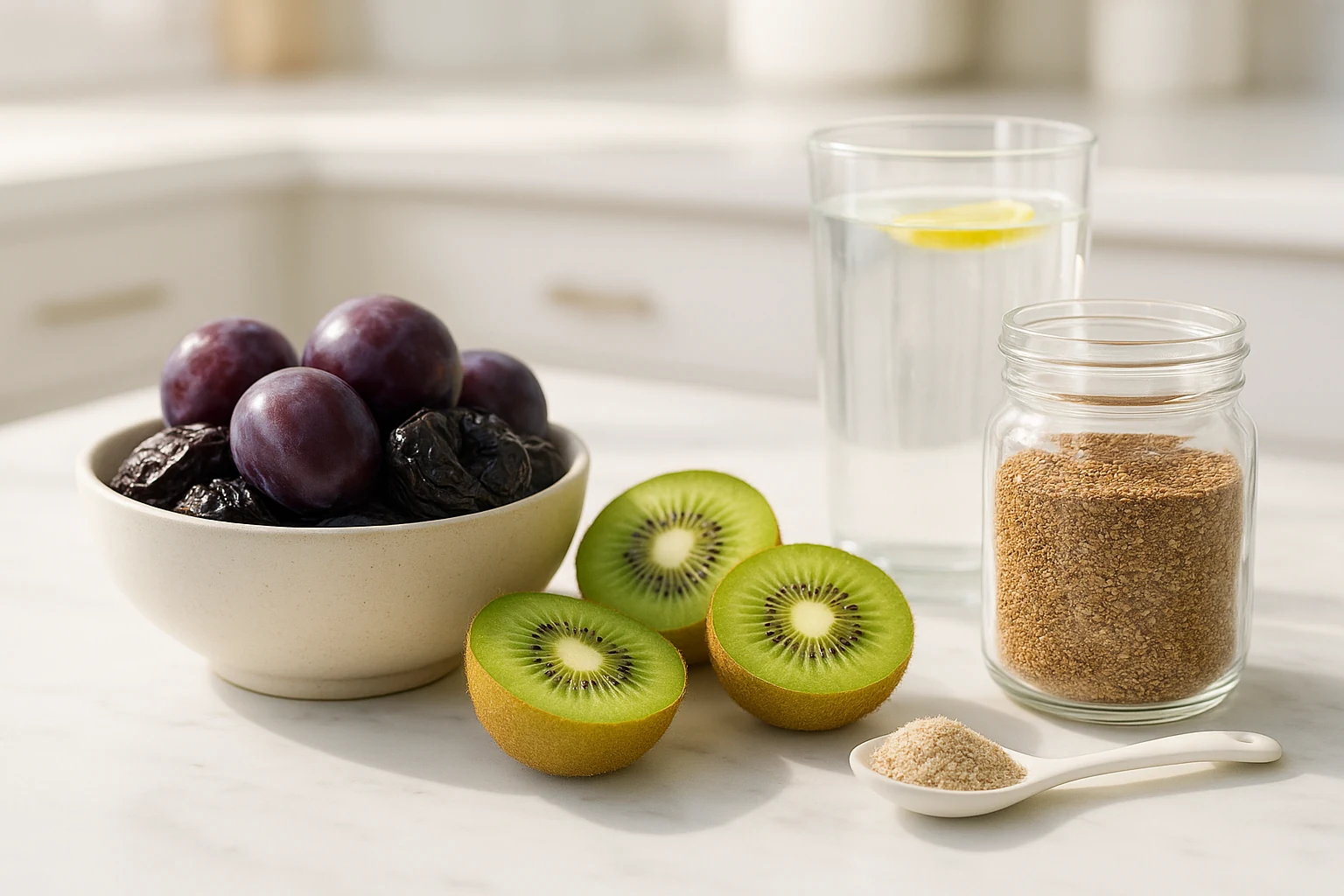
Quick Medical Summary: Chronic functional constipation affects over 16% of adults and stems from slowed intestinal transit, inadequate luminal hydration, and pelvic floor dyssynergia. While chronic reliance on stimulant laxatives (senna, bisacodyl) carries risks of cathartic colon and electrolyte depletion, evidence-based gastroenterology demonstrates that non-habit-forming osmotic agents (magnesium citrate), soluble hydrocolloids (psyllium husk), and natural sorbitol-rich fruits (prunes, actinidin-rich kiwifruit) accelerate colonic transit safely. Pairing nutritional protocols with a 35-degree squatting posture straightens the anorectal canal for effortless elimination. Seek urgent medical care for rectal bleeding, sudden constipation onset over age 50, or inability to pass gas accompanied by vomiting.
Few gastrointestinal conditions are as universally frustrating, physically uncomfortable, and quietly disruptive to daily vitality as constipation. Across the globe, an estimated 16% of adults—and more than 33% of adults over the age of 60—suffer from chronic functional constipation. Characterized clinically by infrequent bowel movements (fewer than three per week), excessive straining, lumpy or pebble-like stools (Bristol Stool Chart Types 1 and 2), and an uncomfortable sensation of incomplete rectal evacuation, constipation is a clear distress signal that intestinal transit has stalled.
Faced with acute discomfort, many people reflexively reach for over-the-counter stimulant laxatives containing senna, cascara, or bisacodyl. While these drugs can force immediate bowel contractions, chronic reliance on chemical stimulants frequently leads to cathartic colon syndrome, physical dependency, electrolyte depletion, and rebound constipation. The digestive system deserves a far smarter, physiologically aligned approach.
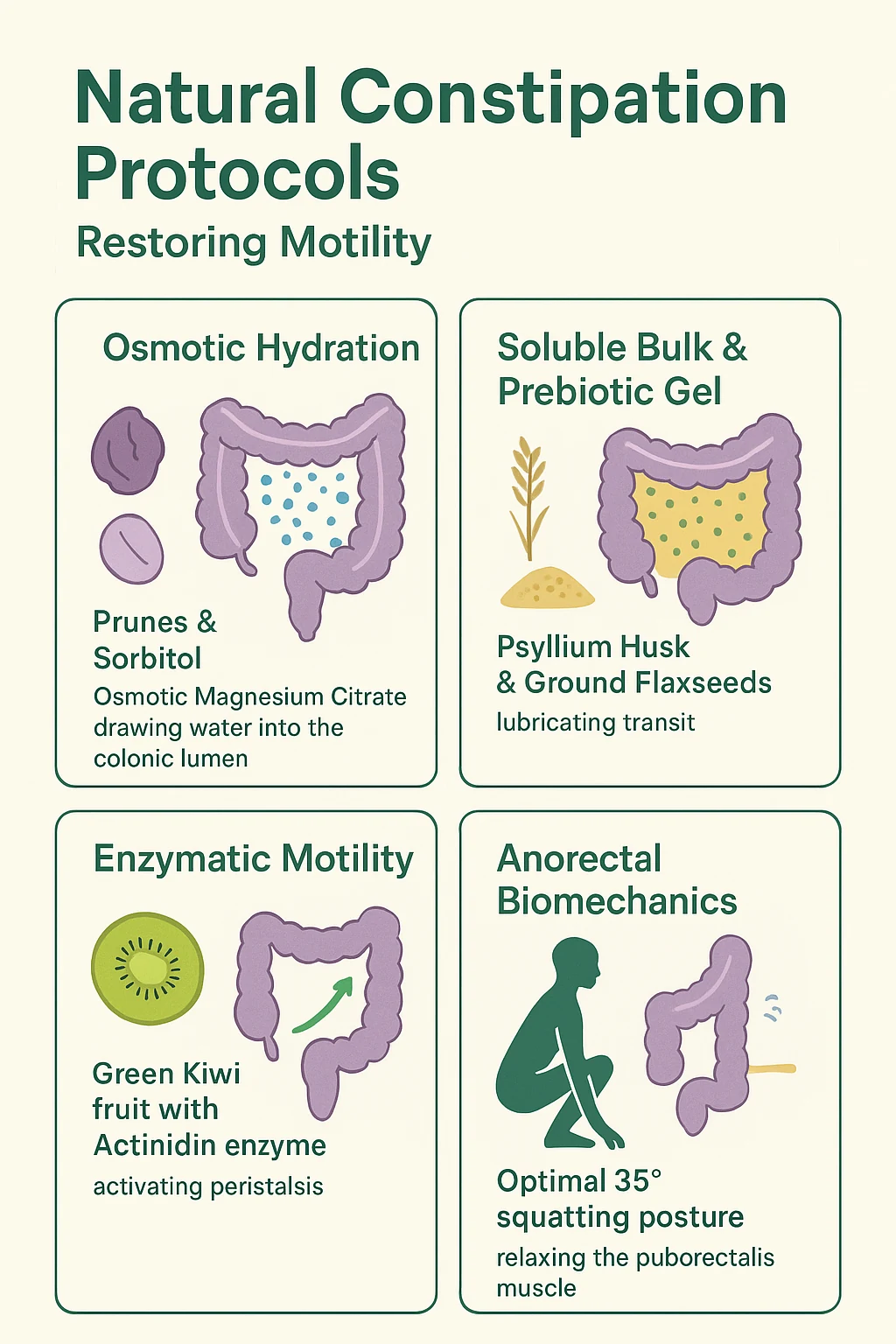
Gastroenterological science confirms that restoring smooth, effortless colonic transit requires addressing three fundamental biological pillars: osmotic hydration, soluble fiber hydrocolloid bulking, and anatomical pelvic floor relaxation. Below is a comprehensive, evidence-based guide to the seven most effective natural remedies for constipation, how they work biochemically, and when immediate medical evaluation is required.
1. The 7 Clinically Proven Natural Remedies for Constipation
A. Osmotic Magnesium (Magnesium Citrate & Oxide)
If you need gentle, reliable relief within 6 to 12 hours without stimulant cramping, Magnesium Citrate is widely regarded by gastroenterologists as the gold standard natural osmotic agent. As validated in a randomized, double-blind placebo-controlled trial published in the Journal of Neurogastroenterology and Motility (PMID: 31587548), osmotic magnesium significantly improves stool frequency and consistency without mucosal irritation.
Through natural osmotic pressure, magnesium draws surrounding water from bodily tissues directly into the bowel lumen. This sudden influx of fluid rehydrates hard, dry, impacted fecal matter, increasing stool volume and triggering the colon’s natural peristaltic stretch reflex. A standard clinical nighttime dose of 300 mg to 500 mg of elemental magnesium citrate powder dissolved in warm water reliably facilitates a soft, effortless morning evacuation.
B. Psyllium Husk (Soluble Bulk-Forming Hydrocolloid)
Derived from the seeds of Plantago ovata, psyllium husk is a unique water-soluble fiber characterized by its high mucilage content. Unlike insoluble fibers (such as coarse wheat bran) which can aggravate sensitive colons and trigger painful gas in individuals managing constipation-predominant irritable bowel syndrome (IBS), psyllium forms a soft, gelatinous hydrocolloid matrix. Understanding the complexity of the gut microbiome explains why psyllium fermentation produces protective short-chain fatty acids.
This gel holds moisture through the entire length of the large intestine, ensuring stools remain pliable, bulky, and easy to pass. Furthermore, colonic microflora ferment psyllium into short-chain fatty acids (SCFAs), notably butyrate, which nourishes colonocytes, reduces mucosal inflammation, and strengthens gut barrier function. (Clinical Mandate: Always consume psyllium with a full 8-ounce glass of water to prevent esophageal or intestinal blockages).
C. Dried Plums (Prunes) & Natural Sorbitol
Prunes (Prunus domestica) are not merely a folkloric home remedy; their therapeutic efficacy has been proven superior to psyllium in multiple randomized controlled trials. In a definitive systematic review and meta-analysis published in Alimentary Pharmacology & Therapeutics (PMID: 25109788), consuming prunes daily produced significantly greater improvements in stool frequency and consistency than psyllium husk.
This clinical power stems from sorbitol, a naturally occurring sugar alcohol found in high concentrations in dried plums. Because the human small intestine lacks the transport enzymes to rapidly absorb sorbitol, it travels intact into the colon, where it acts as a gentle, natural hyperosmotic laxative, drawing fluid into the stool while prebiotic polyphenols stimulate motility.
D. Green Kiwifruit (Actinidin Enzyme Motility)
For individuals prone to severe bloating from fiber supplements, green kiwifruit (*Actinidia deliciosa*) represents a breakthrough dietary therapy. A multicenter clinical trial published in the American Journal of Gastroenterology (PMID: 36537785) confirmed that eating two green kiwifruits daily matched psyllium in relieving chronic constipation, but with virtually zero reports of gas or abdominal pain.
Kiwi contains a specialized proteolytic enzyme called actinidin, which breaks down dietary proteins and accelerates gastric emptying. Combined with its unique swelling ratio of soluble and insoluble fiber, kiwi holds immense water weight in the colon, stimulating smooth transit.
E. Ground Flaxseeds & Chia Seeds (Mucilaginous Lubricants)
Whole flaxseeds frequently pass through the human gastrointestinal tract undigested due to their resilient outer hulls. However, when freshly ground, flaxseeds release a dual therapeutic payload: rich soluble mucilage that coats the intestinal lumen and high concentrations of alpha-linolenic acid (ALA) omega-3 fatty acids.
These mucilaginous compounds absorb up to 10 times their weight in water, acting as natural internal lubricants. Adding 1 to 2 tablespoons of ground flaxseed or pre-soaked chia seeds to morning oatmeal, yogurt, or smoothies provides effortless mechanical lubrication for sluggish bowels.
F. The “Morning Warm Water Flush” & Gastrocolic Reflex
Human colonic motility operates on an innate circadian rhythm. Upon waking, your body is primed to initiate the gastrocolic reflex—a physiological signal that triggers high-amplitude propagating contractions in the colon when warm liquids or food hit an empty stomach.
Drinking 16 to 20 ounces of warm water—optionally enhanced with a tablespoon of raw organic apple cider vinegar or a glass of home-fermented probiotic lemonade—activates this peristaltic wave. Pairing this with a light morning walk stimulates abdominal muscle engagement, encouraging a spontaneous bowel movement before leaving the house.
G. Anatomical Squatting Posture (The 35° Anorectal Angle)
Modern conventional toilets force the human body into a 90-degree sitting posture. From an evolutionary biomechanics standpoint, this sitting angle forces the puborectalis muscle to remain choked around the lower rectum, creating a sharp bend that obstructs the natural passage of stool and forces strenuous pushing.
By placing your feet on an elevated bathroom footstool (raising knees above hips into a natural 35-degree squatting angle), the puborectalis muscle completely relaxes, aligning the rectum into a straight vertical conduit. Radiological defecography studies confirm that squatting significantly reduces evacuation time, eliminates straining, and prevents painful hemorrhoids and anal fissures.
2. The Bristol Stool Chart: Tracking Your Motility Recovery
Gastroenterologists utilize the Bristol Stool Form Scale to assess colonic transit time and diagnostic health. Tracking your stool type helps you gauge the effectiveness of natural interventions:
- Type 1: Separate hard lumps, like nuts (Severe constipation; indicates prolonged colonic transit time of over 100 hours).
- Type 2: Sausage-shaped, but lumpy (Mild constipation; signifies insufficient water retention and inadequate soluble fiber).
- Type 3 & 4 (The Golden Benchmark): Like a sausage or snake, smooth, soft, and passed with zero straining (Optimal intestinal transit of 24 to 48 hours).
- Type 5 to 7: Soft blobs, fluffy pieces, or liquid consistency (Diarrhea; indicates an excessively high dose of magnesium or acute gastrointestinal irritation).
3. The Danger of Stimulant Laxative Dependency
Herbal “slimming teas” and over-the-counter laxatives frequently contain concentrated anthraquinones (senna, cascara sagrada, aloe latex). While natural, anthraquinones work by directly irritating the enteric nerve plexus of the colon wall, inducing violent muscular spasms.
Long-term daily use of stimulant laxatives leads to melanosis coli (dark pigmentation of the colon lining), potassium wasting, and progressive desensitization of the neuromuscular bowel reflex. Once the bowel becomes dependent on stimulant irritation, voluntary peristalsis ceases, worsening chronic constipation. Always reserve stimulant herbs for short-term acute emergencies and rely on osmotic and bulk-forming agents for sustainable daily health.
4. Red Flag Symptoms: When to See a Gastroenterologist Immediately
While the vast majority of constipation cases stem from lifestyle, low fiber, dehydration, and sedentary habits, new-onset constipation can occasionally signify underlying structural pathology, thyroid dysfunction, or colorectal disease. Seek immediate medical evaluation if you experience:
- Blood in the stool (bright red blood on toilet paper or maroon/black tarry stools).
- Unexplained involuntary weight loss accompanying bowel changes.
- Severe, persistent abdominal pain or cramping that prevents eating.
- Nausea and vomiting accompanied by an inability to pass stool or gas (signs of complete mechanical bowel obstruction).
- Sudden onset of persistent constipation after age 50 without prior history.
5. Curated Digestive Health Essentials Buyer’s Guide
To establish effortless, sustainable morning regularity, investing in pure, additive-free botanical fiber supplements and ergonomic bathroom tools delivers compounding lifelong digestive relief:
Gastroenterologist-Approved Regularity Essentials
Non-Habit Forming Formulas100% Pure Organic Whole Psyllium Husk Powder
Non-GMO, unflavored whole soluble fiber. Forms a lubricating hydrocolloid gel that bulks and softens stools without artificial sweeteners, dyes, or sugar.
Check Price on Amazon →High-Purity Magnesium Citrate Powder (Unflavored)
Gentle, non-habit forming nighttime osmotic drink mix. Draws water into the colon lumen to facilitate a soft, natural bowel movement upon waking.
View Magnesium on Amazon →Ergonomic Bathroom Toilet Stool (Squat Posture 35°)
Doctor-recommended bathroom footstool that elevates knees to open the anorectal canal, completely eliminating straining and protecting against hemorrhoids.
Check Stool on Amazon →Related Clinical & Digestive Guides
- IBS Subtypes & Motility: What is IBS? Clinical Guide to Irritable Bowel Syndrome Subtypes & Relief
- Microbiome Architecture: The Complexity of the Gut: Microbiome, Mucosal Immunity & Digestion
- Fermented Digestive Support: How to Make Probiotic Lemonade: Step-by-Step Fermentation Guide
- Acetic Acid Digestion: Apple Cider Vinegar: 7 Science-Backed Uses for Health & Digestion
- Hepatic Bile Flow: Liver Health Essentials: Phase I & II Detox Pathways & Herbal Remedies
Frequently Asked Questions (FAQ)
What is the fastest natural remedy for constipation?
For rapid acute relief, Magnesium Citrate (300–400 mg) dissolved in 12 ounces of warm water produces bowel movement within 6 to 12 hours. Drinking 8 ounces of warm prune juice with a splash of fresh lemon juice also acts rapidly due to concentrated sorbitol.
Does morning coffee really help with constipation?
Yes. Clinical studies show that coffee stimulates distal colonic motor activity in approximately 30% of adults within 4 minutes of consumption. Interestingly, both caffeinated and decaffeinated coffee trigger this response by releasing cholecystokinin (CCK) and gastrin hormones, proving that chlorogenic acids—not solely caffeine—drive motility.
Are bananas good or bad for constipation?
Ripeness dictates the outcome. Unripe, green bananas contain high levels of resistant starch and tannins that can exacerbate constipation and slow transit. Conversely, fully ripe bananas with brown spots are rich in soluble pectin fiber, which softens stools and supports healthy elimination.
Final Medical Verdict: Restoring Lifelong Digestive Harmony
Chronic constipation is not an inescapable fate, nor does it require harsh pharmaceutical dependency. By working in harmony with human digestive physiology—leveraging osmotic magnesium, nourishing the colon with soluble psyllium and kiwifruit, and aligning pelvic posture with a bathroom footstool—you can achieve consistent, comfortable morning regularity naturally.
Discover more evidence-based digestive wellness guides: explore our clinical articles on Molokhia Leaves: Ancient Mucilage & Gut Healing, Clove Water Daily Benefits for Digestive Enzymes, and Moringa Leaves: Complete Health & Nutrition Profile.
- Lever E, et al. “The effect of prunes on stool frequency and consistency in adults with constipation: a systematic review and meta-analysis.” Aliment Pharmacol Ther. 2014;40(7):727-738.
- Gearry R, et al. “Consumption of 2 Green Kiwifruits Daily Improves Constipation and Abdominal Comfort in Patients with Functional Constipation and Constipation-Predominant IBS.” Am J Gastroenterol. 2023;118(6):1058-1068.
- Mori S, et al. “A randomized double-blind placebo-controlled trial of magnesium oxide for functional constipation.” J Neurogastroenterol Motil. 2019;25(4):569-575.
- Sikirov D. “Comparison of straining during defecation in three positions: results and implications for human health.” Dig Dis Sci. 2003;48(7):1201-1205.