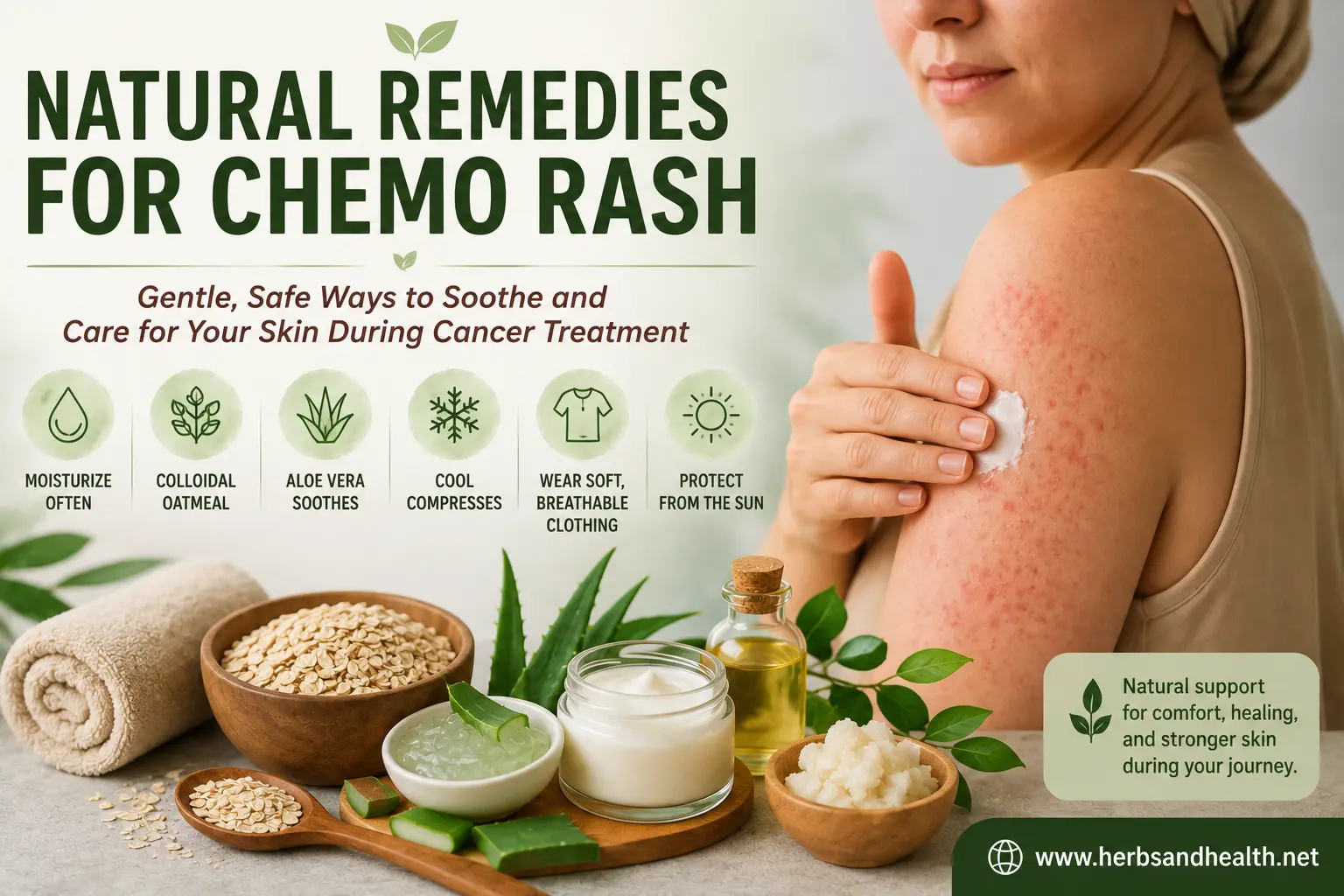
Chemotherapy is a powerful treatment that helps fight many types of cancer, but it can also affect healthy cells—including those that make up your skin. As a result, some people develop chemotherapy-related skin rashes, dryness, itching, redness, or increased sensitivity during treatment.
Although a chemo rash can be uncomfortable, there are several natural and supportive measures that may help soothe irritated skin and improve comfort. These remedies are not a substitute for medical treatment, but they may complement the skincare plan recommended by your oncology team.
This guide explains what causes chemo rash, which natural remedies may provide relief, what ingredients to avoid, and when you should contact your healthcare provider.
What Is a Chemo Rash?
A chemo rash is a skin reaction that develops during or after chemotherapy. The appearance varies depending on the medication being used, the individual’s skin type, and other health factors.
Symptoms may include:
- Redness
- Dry, flaky skin
- Itching
- Small bumps
- Tenderness
- Burning sensation
- Peeling
- Increased sensitivity to sunlight
Some targeted cancer therapies and immunotherapies can also cause skin changes that resemble chemotherapy rashes.
Why Does Chemotherapy Affect the Skin?
Chemotherapy targets rapidly dividing cells. While this helps destroy cancer cells, it can also affect healthy skin cells responsible for maintaining the skin’s protective barrier.
As the skin barrier weakens, moisture escapes more easily, making the skin:
- Drier
- More fragile
- Easier to irritate
- More susceptible to inflammation
Some chemotherapy drugs also increase sensitivity to sunlight or trigger immune responses that contribute to rashes.
Can Natural Remedies Help?
Natural remedies cannot prevent or cure chemotherapy-related skin reactions, but they may help:
- Reduce dryness
- Calm irritation
- Relieve itching
- Support the skin barrier
- Improve overall comfort
Always discuss new skincare products—including natural ones—with your oncology team before use.
Remedy 1: Moisturize Frequently
Keeping the skin well moisturized is one of the most effective ways to reduce discomfort.
Choose fragrance-free moisturizers that contain ingredients known to support the skin barrier, such as:
- Ceramides
- Glycerin
- Hyaluronic acid
- Colloidal oatmeal
- Shea butter
Apply moisturizer:
- Immediately after bathing
- Before bedtime
- Whenever skin feels dry
Creams and ointments generally provide more hydration than lotions.
Remedy 2: Colloidal Oatmeal Baths
Colloidal oatmeal has been used for generations to soothe irritated skin.
It may help:
- Reduce itching
- Calm inflammation
- Protect the skin barrier
- Improve hydration
How to Use
- Add colloidal oatmeal to lukewarm bathwater.
- Soak for 10–15 minutes.
- Pat the skin dry rather than rubbing it.
- Apply moisturizer immediately afterward.
Avoid hot water, which can worsen dryness.
Remedy 3: Aloe Vera Gel
Pure aloe vera gel provides a cooling sensation that many people find soothing.
Potential benefits include:
- Temporary cooling
- Moisturizing
- Supporting skin comfort
Use only alcohol-free, fragrance-free aloe vera gel.
Before applying it to larger areas, test a small patch of skin to ensure it does not cause irritation.
Do not apply aloe vera to open wounds unless advised by your healthcare provider.
Remedy 4: Cool Compresses
Cool compresses can quickly relieve itching and burning.
Instructions
- Soak a clean cloth in cool water.
- Wring out excess water.
- Place over affected skin for 10–15 minutes.
Repeat several times daily if needed.
Ice should never be placed directly on irritated skin.
Remedy 5: Wear Soft, Breathable Clothing
Skin affected by chemotherapy is often more sensitive to friction.
Choose:
- Cotton clothing
- Bamboo fabrics
- Loose-fitting garments
- Soft pajamas
Avoid:
- Wool
- Rough fabrics
- Tight clothing
- Heavy seams rubbing against irritated areas
Gentle fabrics reduce additional irritation.
Remedy 6: Use Mild, Fragrance-Free Cleansers
Harsh soaps can strip away natural oils.
Instead, use gentle cleansers labeled:
- Fragrance-free
- Soap-free
- Sensitive skin
- Dye-free
When bathing:
- Use lukewarm water
- Limit showers to about 10 minutes
- Pat skin dry
- Moisturize immediately afterward
Remedy 7: Stay Hydrated
Hydration supports overall health and helps maintain skin moisture.
Aim to drink fluids consistently throughout the day unless your healthcare provider has recommended fluid restrictions.
Good options include:
- Water
- Herbal tea (if approved by your care team)
- Broth-based soups
- Water-rich fruits and vegetables
Hydration alone will not eliminate a rash, but it supports healthy skin function.
Remedy 8: Protect Your Skin From the Sun
Some chemotherapy drugs increase photosensitivity.
Protect your skin by:
- Wearing long sleeves
- Using wide-brimmed hats
- Seeking shade
- Avoiding midday sun
- Applying a broad-spectrum sunscreen if approved by your healthcare provider
Mineral sunscreens containing zinc oxide or titanium dioxide are often better tolerated by sensitive skin.
Remedy 9: Consider Humidifying Dry Indoor Air
Indoor heating and air conditioning can dry the skin.
A cool-mist humidifier may help maintain moisture in the environment.
To reduce the risk of mold and bacteria:
- Clean the humidifier regularly.
- Replace water daily.
- Follow the manufacturer’s instructions.
Foods That Support Healthy Skin
While no food cures chemo rash, a balanced diet supports healing.
Include foods rich in:
Omega-3 Fatty Acids
Examples include:
- Salmon
- Sardines
- Walnuts
- Chia seeds
- Flaxseeds
Vitamin C
Sources include:
- Strawberries
- Bell peppers
- Oranges
- Kiwi
- Broccoli
Protein
Protein supports tissue repair.
Healthy options include:
- Fish
- Eggs
- Beans
- Lentils
- Greek yogurt
- Chicken
Discuss dietary supplements with your oncology team before taking them.
Ingredients to Avoid
Some skincare ingredients may worsen irritation.
Avoid products containing:
- Alcohol
- Strong fragrances
- Menthol (if irritating)
- Harsh exfoliants
- Retinoids unless prescribed
- Strong acids such as glycolic acid
- Abrasive scrubs
Simple skincare routines are usually best during chemotherapy.
When Should You Call Your Healthcare Provider?
Contact your oncology team immediately if you experience:
- Fever
- Severe pain
- Blistering
- Pus or drainage
- Rapidly spreading rash
- Skin peeling over large areas
- Difficulty breathing
- Swelling of the lips or face
- Signs of infection
Some chemotherapy rashes require prescription creams or adjustments to treatment.
Never stop chemotherapy without consulting your cancer care team.
Can Prescription Treatment Be Necessary?
Yes.
Your healthcare provider may recommend:
- Prescription moisturizers
- Topical corticosteroids
- Oral antihistamines
- Antibiotics if infection develops
- Dose adjustments when medically appropriate
Natural remedies work best as supportive care—not replacements for prescribed treatments.
Emotional Well-Being Matters Too
Visible skin changes can affect confidence and emotional health during cancer treatment.
Helpful strategies include:
- Talking openly with your oncology nurse
- Joining cancer support groups
- Practicing relaxation techniques
- Asking about oncology-focused skincare specialists
- Leaning on family and friends for support
Remember that many chemotherapy-related skin changes improve after treatment ends.
Frequently Asked Questions
How long does chemo rash last?
The duration varies depending on the chemotherapy medication and individual response. Some rashes improve within weeks, while others may persist throughout treatment.
Can aloe vera cure chemo rash?
No. Aloe vera may provide temporary soothing and moisturizing effects, but it does not treat the underlying cause of chemotherapy-related skin reactions.
Is coconut oil safe?
Some people tolerate pure coconut oil well, while others may find it too heavy or irritating. Ask your healthcare provider before using it, especially if your skin is broken or infected.
Can I use essential oils?
Essential oils are highly concentrated and may irritate sensitive skin during chemotherapy. They should not be applied directly unless specifically recommended by a qualified healthcare professional.
Should I avoid the sun?
Yes. Many chemotherapy medications increase sun sensitivity, making sun protection especially important.
Can drinking more water prevent chemo rash?
Hydration supports healthy skin but cannot prevent chemotherapy-induced rashes on its own.
Should I stop chemotherapy if I develop a rash?
No. Contact your oncology team promptly for guidance rather than stopping treatment yourself.
Key Takeaways
- Chemo rash is a common side effect of some cancer treatments.
- Gentle skincare can improve comfort and support the skin barrier.
- Moisturizers, colloidal oatmeal, aloe vera, cool compresses, hydration, and sun protection may help relieve symptoms.
- Avoid harsh skincare products and fragrances.
- Always report severe or worsening skin reactions to your oncology team.
Conclusion
Chemotherapy-related skin rashes can be uncomfortable, but thoughtful skincare can make a meaningful difference. Keeping the skin moisturized, using gentle cleansing products, protecting against sun exposure, and incorporating soothing natural remedies may help reduce dryness, itching, and irritation during treatment.
Because every chemotherapy regimen is different, it’s important to work closely with your oncology team before trying new skincare products or natural remedies. They can help you choose options that are appropriate for your treatment plan while ensuring that skin symptoms are managed safely and effectively. With proper care and medical guidance, many people are able to minimize discomfort and maintain healthier skin throughout their cancer journey.